Tag Archives: North Dakota

Grand Father’s Day Memories

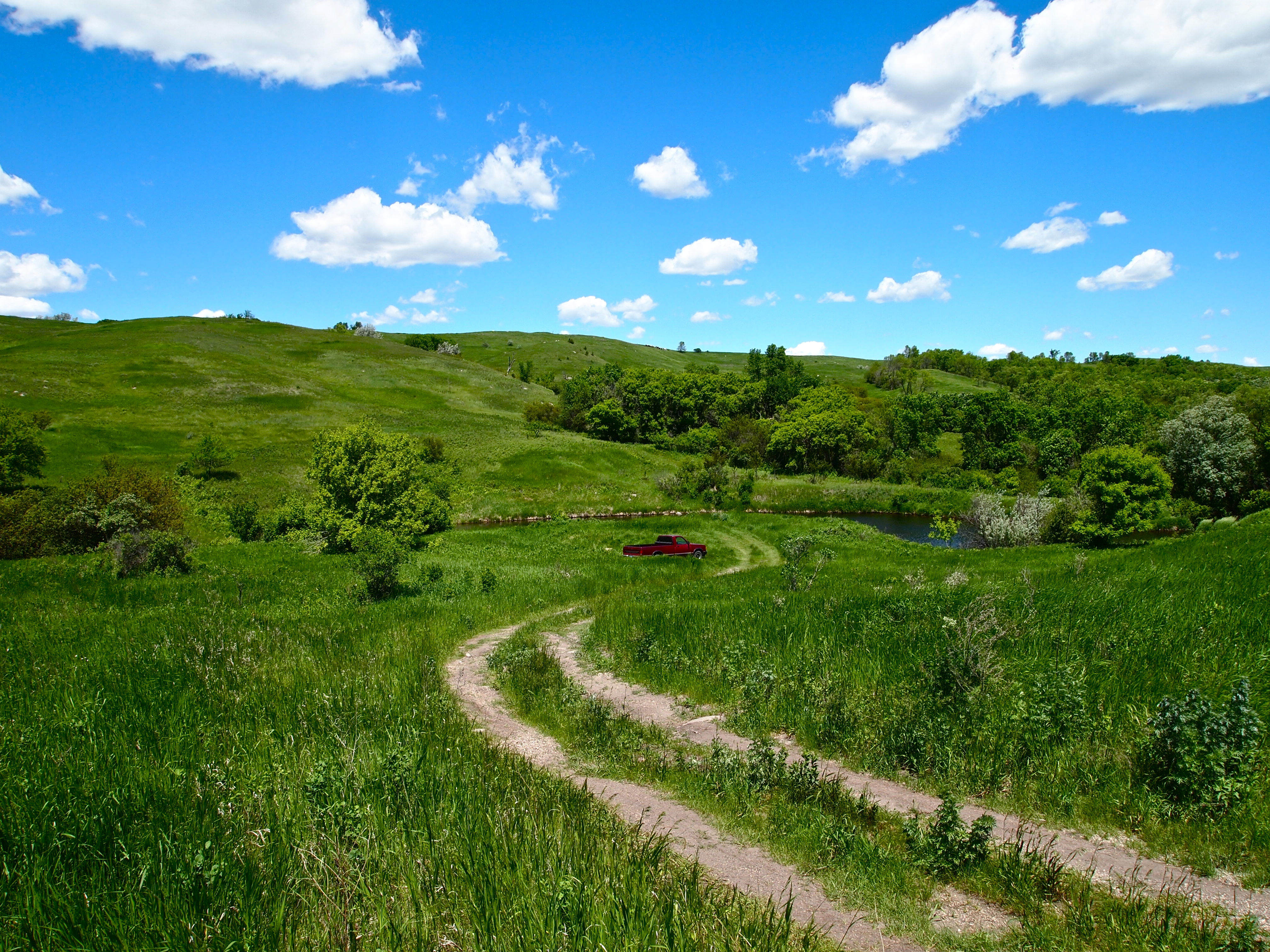
Mooringstone Pond view to the north-northwest, just west of Fort Ransom State Historic Site, Sheyenne River Valley, North Dakota.

Mooringstone Pond view to the north-northwest, just west of Fort Ransom State Historic Site, Sheyenne River Valley, North Dakota.

It’s Father’s Day, and I’m on the northern Great Plains and my dad is visiting his grandchildren in the desert southwest that is Las Vegas, Nevada. I will schedule a make-up grilling session with my dad when we’re within range of another soon enough. I called him earlier today to give him props. He has worked at the locally-owned automotive parts store for longer (over 40 years) than my folks have been married (something like 42 or more years), and his dad (or my Grandpa Barth, along with his brother) worked at Hedahl’s as well. It’s one of those family operations, as Dick Hedahl’s dad hired my grandpa back in the day (or something along those lines: it may have been Dick Hedahl’s grandpa that hired my grandpa. You get the idea, though).

I thought I’d post this photo I took this afternoon, an overview of a project area I was working in just west of Fort Ransom State Historic Site in the Sheyenne River Valley, North Dakota. Note the greenery (like I need to tell folks): this is the result of about two or more weeks of pretty sustained rain followed by about 5 or 7 days of intermittent sunshine. I snapped this photo overview of the project area (among others), downloaded it, and took a look this evening (I’m in Jamestown at Molly’s right now). Snapping photos is a peculiar business: when I looked at this photo, my trusty S-10 is visible. That pick up is 20 years old, first purchased by my late Grandpa Barth at a rural dealership (either Linton or Hazen). I remember he rationalized this purchase by saying, “Now I’ll be able to transport 8-foot boards and 4’x8′ sheets of plywood from Menards to my shop.” That seemed reasonable to me.

An archaeological dry screen, built on June 15, 2013.

An archaeological dry screen, built on June 15, 2013.

That pick up in the photo has transferred hands from my grandpa to my dad and mom, and they eventually passed it along to me. It is starting to show rust, this emerging up out of the paint, and the A/C has long since been shot. I love it. My cousin (Josh Christy) and I replaced the spark plugs, distributor cap and plug wires over a year ago. And a couple weeks ago I had a shade tree mechanic replace the waterpump, alternator, cab mounts, belts, and 2 or 3 pulleys. I like working with my hands. I tend to think that I got this ethos from my Grandpa Barth and Dad. The pick up runs very well. In the summer, I deploy what is known as the 2-by-75 A/C: two windows down at 75mph. Eventually I’ll need to purchase another vehicle, but this 20-year-old pick up still gives memories of driving to and from Menards with my grandpa. I posted another photo of an archaeological dry screen I built this weekend as well: my Grandpa Barth was the first one to show me the ways of woodworking. One day we drove from his place to the Woodhouse in Bismarck, and my grandpa confessed to me that he was so glad he survived his 1975 heart attack because, in his words, “I got to see you grandkids born and grow up.” He passed away on November 23, 2003. That’s what I’ve been thinking about on Father’s Day. I’m gonna call my other Papa now, Grandpa Christy.


Iconic Railroads on the Great Plains

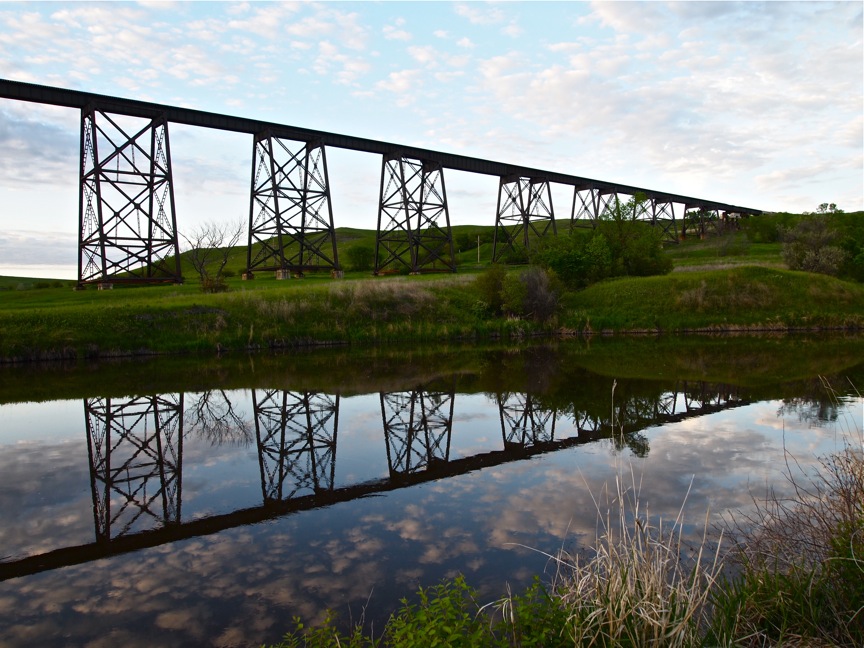
High Line BridgeA couple days ago I snapped some photos and a video short in Chautauqua Park, Valley City, North Dakota. While looking at the High Line railroad bridge (built in the first decade of the 20th century), I was kind of thinking about how elder Euro-American frontiersmen (or frontierspeople? — what the heck is the non-gender form of frontiersmen?) might have been thinking about this and railroads around the turn of the 19th century, especially as younger industrial laborers swarmed into the area.

The idea of history is to understand understanding, or understand how others understood their world. To apply my historical sense of place, a frontiersman, along with Natives in the area, would have looked at this industrial expanse of railroad as something out of place; or as a way to populate the Great Plains and American West with non-Natives; or as a new industrial icon supplanting a time and place that had passed (Fred Turner rambled on about this at great length in Chicago in 1893).

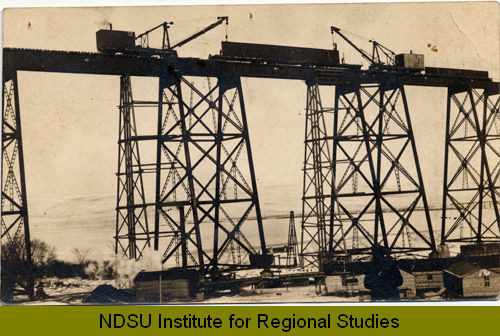
A historic photo of the construction of the High Line. Photo from Digital Horizon's, NDSU Institute for Regional Studies.

A historic photo of the construction of the High Line. Photo from Digital Horizon’s, NDSU Institute for Regional Studies.

Today, though, there are many that say Valley City wouldn’t be Valley City sans the High-Line bridge. History is both complex and universal that way: the sensibilities of younger generations will supplant those of the older generations — both might presume or assume that the way they grew up and the time they lived in was and always had been. (this is often captured in the phrase, “Things just aren’t like they used to be…”)

If you overnight, and it’s a pleasant enough evening to have the windows open (or even closed), you’ll be woken up by the thumping cha-chunk, cha-chunk of today’s diesel locomotives playing the Hi-Line bridge like an instrument. I find the noise soothing.

Here is the link to the historic High Line photo from NDSU’s Institute for Regional Studies. The video short and another photo below.

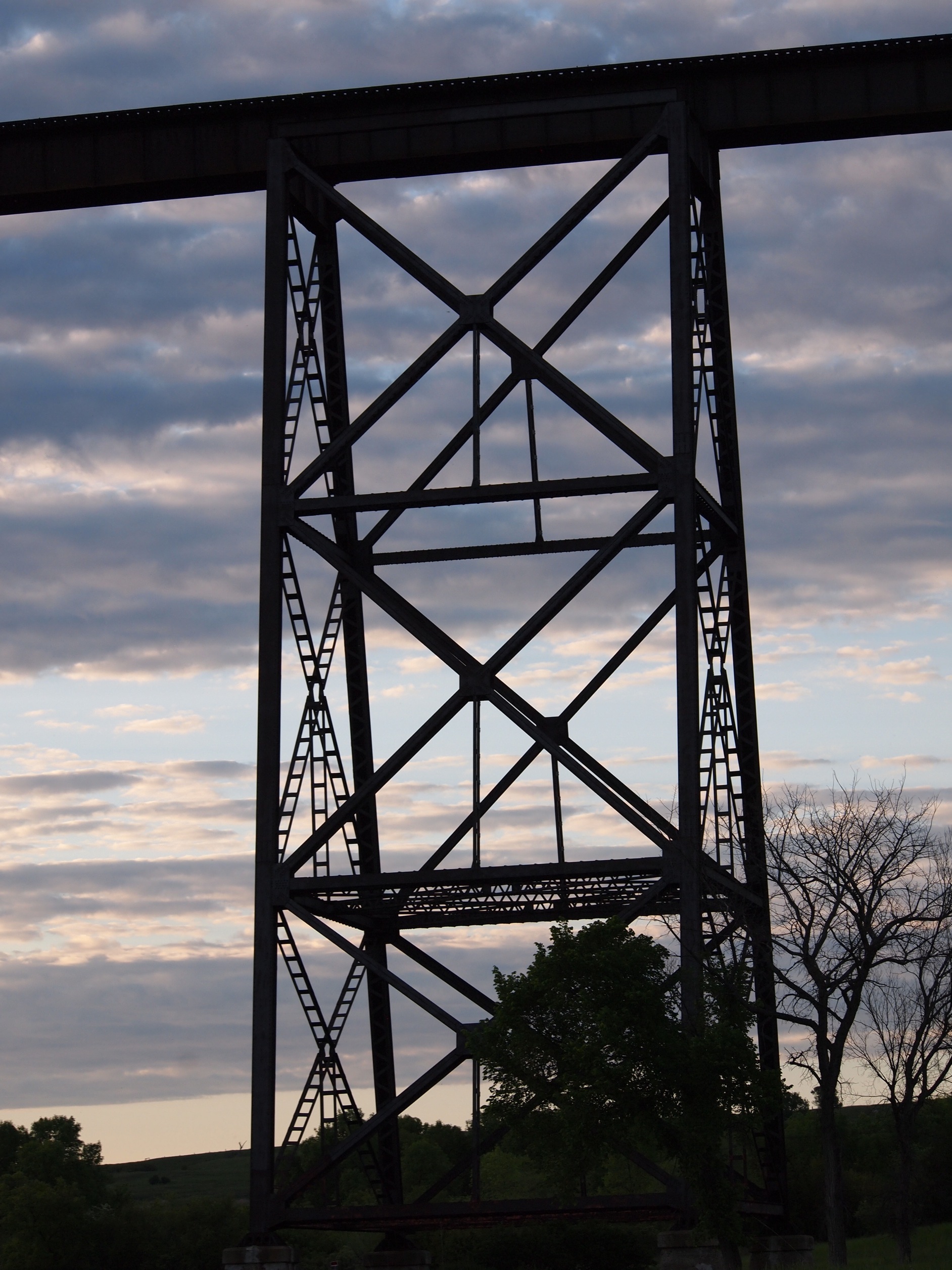
A detail of the High Line substructure.

A detail of the High Line substructure.


One Longue Durée of Mosaic History

Molly is finalizing the mosaic grouting process on a reused terra-cotta potter.

Molly is finalizing the mosaic grouting process on a reused terra-cotta potter salvaged from someone’s trash pile.

It is the weekend and projects are happening: plans have been set in motion to slow-smoke some baby back ribs, and Molly is out front of her sister’s Valley City home, toiling away at a mosaic project. I’ve busied myself with reading James Belich, The Victorian Interpretation of Racial Conflict: The Maori, The British, and the New Zealand Wars (McGill-Queen’s University Press, 1986 & 1989), but have set it down to do a bit of immediate chores.

So while taking the trash out from the kitchen to the dumpster, I passed by Molly’s ongoing mosaic project. Then I started thinking about how Molly’s mosaic project today reminded me of the Late Roman mosaics I saw a year ago in the historic archaeological village of Kourion, Cyprus. Then I started thinking about how historians and archaeologists — depending on what cultural settings they were born into, and depending on what previous experiences they have had — bring individual and disparate meanings to the stuff they come across. (This may be getting a bit too self-absorbed, so if you’ve noticed it, and it offends you, please stop reading here if you already haven’t. I will not take offense. But it is a line of thinking with universal application.)

So without slamming out any more dialog (we are packing up and readying to go, which is timely to end this short entry), I will upload a couple pictures I snapped a year ago in Kourion, and a couple pictures from today in Valley City. Taking massive leaps through space and time, this is what I call a global and local longue durée of mosaic history, from Kourion, the Roman Empire, to Valley City, North Dakota.

Close-up mosaic detail from Kourion, Cyprus.

Close-up mosaic detail from Kourion, Cyprus.

A mosaic from a Roman gladiator's home in Kourion, Cyprus. Mosaics are not for cowards.

A mosaic from a Roman gladiator’s home in Kourion, Cyprus. Mosaics are not for cowards.


Some Archaeology of Food

Pheasant and BarthSome years ago I decided to take up bird hunting for this main reason: if I was going to purchase saran-wrapped chicken legs, thighs and breasts in the refrigerator section of the grocery store, I thought it was more respectful to at least experience what it was like to kill wildlife — in this case pheasant, doves and grouse — for the purpose of feeding family, friends and myself. This decision required me to purchase a bird gun (in my case, I bought a double-barrel, side-by-side 12-gauge shotgun), shotgun shells, and the necessary hunting permits. Since then I have hunted with at least four friends, including Rod Austin (accompanied by Grizzly, his beagle), Tayo Basquiat, Ed Stine, and Bob Shannon.

After identifying suitable areas to hunt (in ND, PLOTs land provides excellent public hunting grounds), walking several miles, spooking pheasant from the brush, identifying the roosters from the hens, and then downing a rooster, one of the first impressions I had (and I’m presuming I’m not the only one here) in picking up a recently-killed pheasant rooster was the warmth. This stands in contrast to the cold feel of a saran-wrapped chicken breast in the grocery store, or the increasingly ubiquitous appetizer called “bone-in” and “boneless” chicken wings (culturally, we shovel these into our mouths, kind of on autopilot, as we watch the 37 flat-screen televisions broadcast UFC fights and sporting events, and as additional juke box and video game machines drown out any kind of conversation that could have been had in our drinking warehouses throughout America).

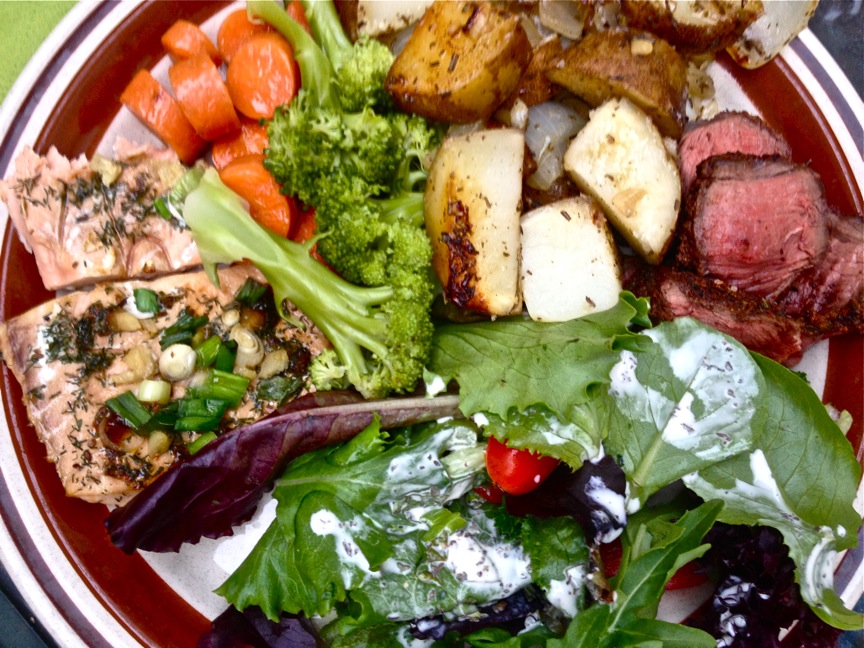
A local plate of food. Slices of bison (medium-rare) from south-central North Dakota, this topped with a sauté of locally-harvested morel mushrooms. The origin of the salmon is unknown, but comes from Valley Meats in Valley City, North Dakota. The remaining vegetables were organic, or from what I call historic farming practices.

A local plate of food. Slices of bison (medium-rare) from south-central North Dakota, this topped with a sauté of locally-harvested morel mushrooms. The origin of the salmon is unknown, but comes from Valley Meats in Valley City, North Dakota. The remaining vegetables were organic, or from what I call historic farming practices.

No doubt, authors such as Michael Pollan have tapped into a growing social structure that concerns itself with the technics of how and philosophies of why food is produced. As an observer of this growing movement, international and local journals have also turned attention to reporting on these stories. Or at least the stories that involve individuals who want to know where their food comes from. These groups are bringing attention to multi-national corporations, and the stories have been picked up by The New York Times, CNN and, locally, WDAY News in the Red River Valley of North Dakota and Minnesota.

In this latter story, the reporter focused on something North Dakotans are very aware of: heritage. This heritage is in turn used to consider how our grandparents and great grandparents produced food on family farms in contrast to how the Agricultural Industrial Complex produces food today. I remember when I was 10 or 11 years old (or thereabouts) in the kitchen of my late Grandma Barth. She had just sliced up a tomato, and in putting it on the table in front of me she said, “Here is a tomato, although they probably gassed it just a couple days ago.” My grandmother was communicating something to me that has been lost (and what I’m trying to recover by hunting): a connection with the land, and the landscape, and the food we eat that comes from that land. Although she didn’t say it directly, she was also concerned with what a gassed tomato (which is how the Agricultural Industrial Complex turns a green tomato into a red-colored tomato to simulate ripeness) might do to physiological early childhood development of her grandchildren.

The main point of this, though, is that individual consumers continue to consider and ask questions about where the food is coming from. (I’m a bit amazed by this point, too: if Monsanto made this great bio-tech seed that is going to feed the world, why aren’t they proud about labeling it so you and I can easily identify it when in the grocery store?)

Another note: North Dakota legislators recently said it was okay for individuals to purchase unpasteurized or raw milk, so long as they owned a share in the cow. Below is the local WDAY story, and also the CNN story too.

The CNN story:

The WDAY story, which won’t imbed for some reason, so you have to just click on this link here.


Garages Then and Now

Governor's MansionThe Former Governors’ Mansion of North Dakota (1893-1960) in Bismarck. This is the southeast elevation. The carriage house is a separate structure behind the house, built in the days before garages became permanent attachments in the design of homes. Carriage houses and garages were often not attached to the homes, and were hidden (this in contrast to garages being the central foci of the home today — friend, colleague and fellow blogger Richard Rothaus has some more thoughts on that linked to here). One hundred years ago, horses were smelly (or organic) and automobiles were noisy and they produced exhaust and smelled of petroleum and they leaked a lot of oil. If you were elite-elite, you would install a carousel in your carriage house to rotate your automobile 180-degrees since said automobiles didn’t yet have a reverse function (this is a feature of the carriage house/garage at the American-Swedish Institute in Minneapolis). There was always a chance (or thought) that automobiles would or could catch fire. So it was better to keep them separate from the house. As well, you’ll often see kitchens from elite late-19th century homes as separate structures from the rest of the house for this reason too: if the kitchen went up in flames, at least the house would be spared.


Bringing American Public History to New Zealand

Just moments ago, from the northern Great Plains of North America, I submitted a short paper proposal to the other side of the planet, this to the New Zealand Historical Association (NZHA) in Dunedin, New Zealand. It is for the NZHA 2013 Biennial Conference (click the blue link to the left for direct details) on November 20-22, 2013. My paper concerns the contested public memory of Whitestone Hill, and concludes with some World Historical considerations. It builds off landscape memory and history, and research from 2009 to the present. The intent is to join two additional landscape historians, Dr. Thomas D. Isern and Dr. Suzzanne Kelley, to make a complete panel. Tom and Suzzanne are considering the public memory of local New Zealand history specific to the Lindis. I am bringing some public memory from the northern Great Plains to the mix. I thought I would share my paper title and abstract here.

Photo of Whitestone Hill from April 2012.

Photo of Whitestone Hill from April 2012.

Title: Aaron L. Barth, “A Contested Site of Memory from the American Civil War: Whitestone Hill 150 Years Later”

Abstract: In early September of 1863, as the American Civil War raged in the eastern half of the continental United States, General Alfred Sully led a military column on a punitive campaign against the Dakota (aka, Sioux) on the northern Great Plains. The military goal was to punish the Dakota majority, en masse, for the atrocities committed by a small Dakota minority the previous year in the Minnesota River Valley. Sully’s 1863 campaign culminated in an action at Whitestone Hill, this in present-day North Dakota. In his official words, Sully said he engaged Dakota “warriors… squaws, [and] children” in a “melée” and “murderous slaughter” of a “promiscuous nature.” His command killed 150 to 300 Dakota, and if he had another hour or two of light, he said, “I could have annihilated the enemy,” giving “one of the most severe punishments that the Indians have ever received.” For 150 years, the public memory of Whitestone Hill has been contested, called a “battlefield” by a United States Congressman, and called a “mistake” by Sully and Episcopalian Reverend Aaron McGaffey Beede. This paper tracks the public tension in the remembrance of Whitestone Hill, and concludes with samples of how sites of memory from this period are contested in World History.


Adventure Science and the North American Landscape

Reinhard and Rothaus set out on the first day of Adventure Science's fieldwork in western North Dakota.

Reinhard and Rothaus set out on the first day of Adventure Science’s fieldwork in western North Dakota.

This morning I’ve been listening to one of Adventure Science‘s raw audio press conferences and forums, this concerning the latest trek through the badlands of western North Dakota, and I couldn’t stop thinking about the divide between the hard and soft sciences and the humanities, and how it is so necessary for conversations to take place between them (another interview from Prairie Public can be found here). Throughout academia, this is often called “crossing disciplinary lines.” In non-academic jargon, this means that you walk down the hall or out the building and across the courtyard to someone else’s office, kitchen, machine shop or garage, and ask her or him why and how they are working on a problem, whether an abstract theorem or a carburetor.

In the case of this Adventure Science press conference (which everyone should listen to at least once), Simon Donato and Richard Rothaus explain at the outset that they undertook this project in a completely scientific and objective fashion, and by this they were not obligated to produce — ahem — results for one public or private group or another. This is true, to a point. Yet the cultures that we are born into also contributes to the way we see the world, and consciously or unconsciously we will speak to a variety of these groups whether we like it or not.

I was thinking about this in relation to an observation Simon, who hails from the culture of Alberta, Canada (this is important, just stay with me here), made about half way into the press conference or conversation (or press conference-sation). In the history of the British-Canadian West and the American West, Euro-American settlement above and below the 49th parallel played out in much different ways. Simon consciously or unconsciously hints at this. There is historical reason for this (something the late historian Paul Sharp researched at-length, and some comments on that here and here).

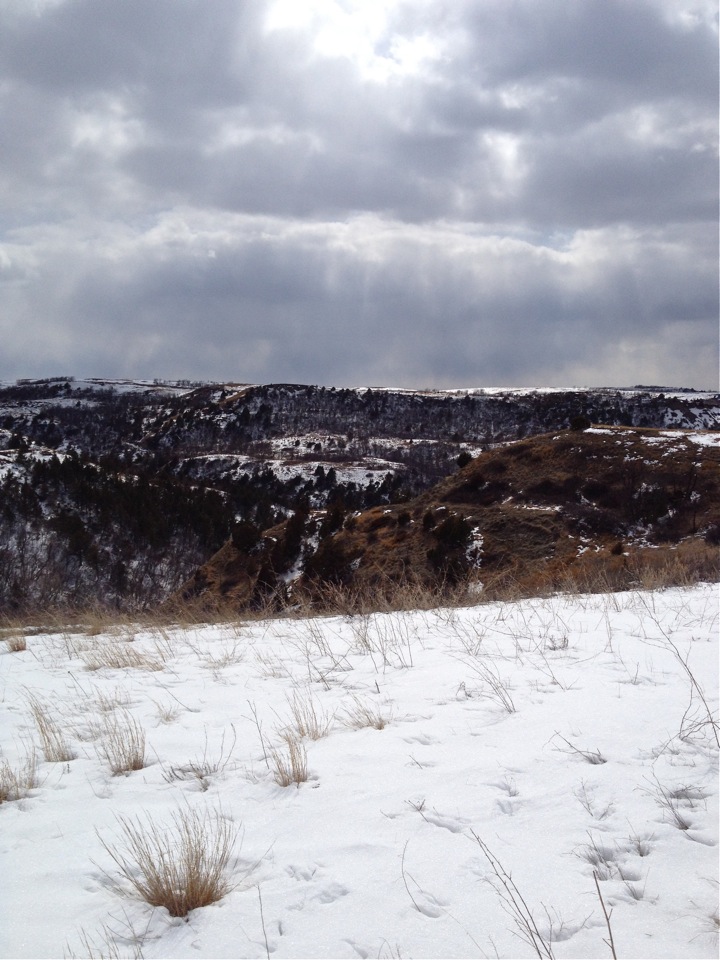
Some badlands beauty, on the abrupt cusp of the winter to spring transition.

Some badlands beauty, on the abrupt cusp of the winter to spring transition.

In the history of the Canadian West, Anglo- and Euro-American settlement was deliberate. This is often symbolized by the Royal Canadian Mounties, who would patrol and police the areas, ensuring that the Crown’s Law and Order would be maintained across all the land, and ideally across the global empire. Through this order, land would be settled in an orderly fashion, and be made “useful” and useful for the commonwealth and crown (see Thomas Hobbes for intellectual exegesis). If coming from that Canadian backdrop, either yesteryear and today, when you enter the American West, including western North Dakota, it still looks like a crazed free-for-all, even in the wilderness. At the Adventure Science forum, beginning at 35:20 in the audio, Simon said,

…As we got into some of the ranching areas where, again it’s vast, you know you feel like you’re kind of on the edge of a wilderness area, but there’s no houses… there’s fences, there’s obviously been cattle through there, but there’s no houses and no structures at all, and that was really surprising to me. Where I’m from in Alberta, if you got fences, there’s gonna be a farmhouse somewhere, there’s gonna be a barn somewhere. You get into these areas, and I was really surprised that I didn’t find these structures out there, I mean, not even hunting cabins.

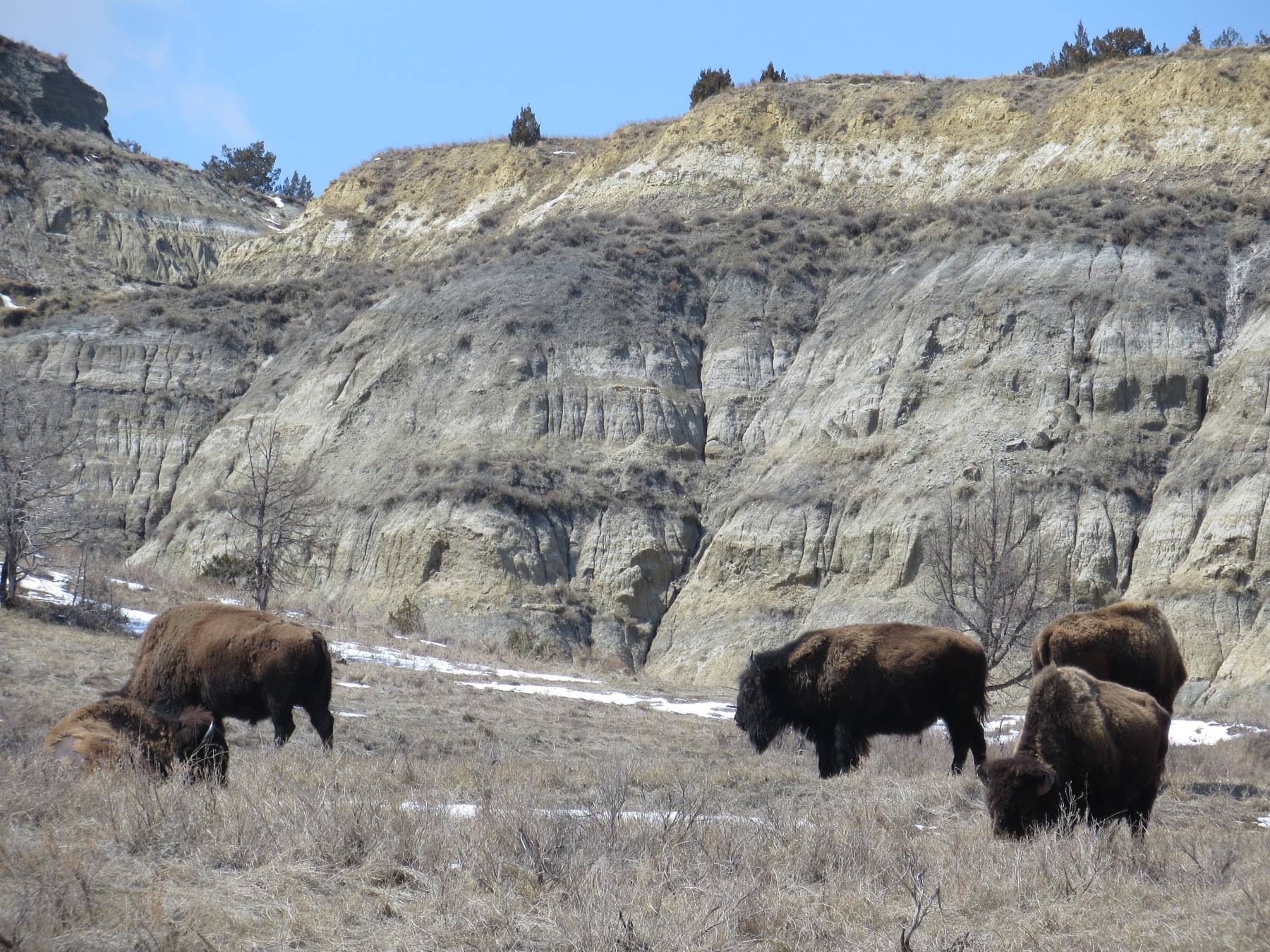
Bison in the badlands of western North Dakota.

Bison in the badlands of western North Dakota.

So I guess what Simon hints at and what I’m communicating here is that yes, science tries to be as objective as possible. But there is no amount of finality to that objective science, because as cultures evolve, so does science, and so do perceptions. What appears normal to one person will be abnormal to an outsider. This is why cross-cultural and cross-disciplinary studies and conversations absolutely have to take place, and this is why it is worth our while to conserve and preserve some of these places (one of the reasons Theodore Roosevelt set up the national parks).

Note: Native America/First Nations had occupied these badlands and North America for millenia, at least 12,000 to 13,000 years (and even this is contested by Native friends, as they have told me much longer), before non-Natives got to the area. Even the fact that we call a wilderness a “wilderness” today is a cultural bias worthy of consideration and contemplation.


The Archaeology of Gardening

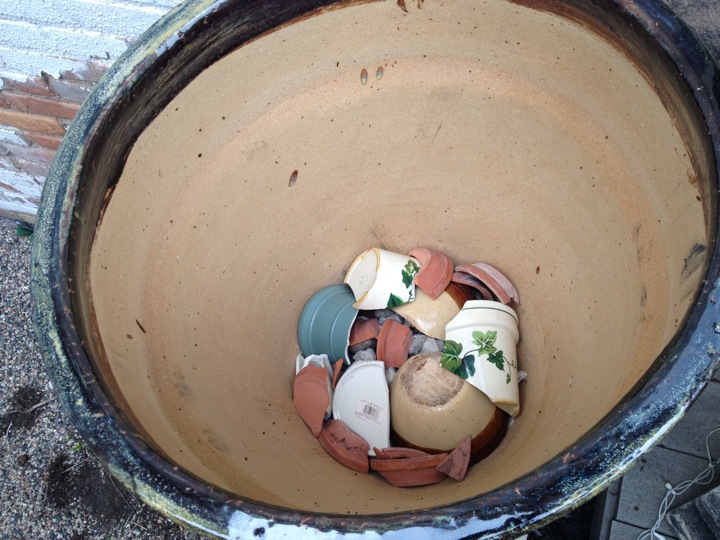
Pottery SherdsThis evening, while bracing for full throttle summer and the planting that goes with it, I prepped one huge planter (it took on three of those huge bags of dirt) adjacent to the patio. Before dumping in the dirt, and for reasons that will never be made clear to me, the word “drainage” bounced through my brain. So instead of just dumping in the dirt (and dooming a plant to drown), I looked about and gathered up some small cobbles (way larger than what in the archaeology business we call a Size Grade 1). I dumped what small rocks I could find into the planter, but it was a smattering and did not seem enough. So I looked around, and found a — or, if you prefer, an — historic archaeological solution: smash up the already busted up pottery, some terra-cotta, and put the sherds into the huge planter as foundation for drainage. Last week, Molly and I salvaged these sherds while trolling up and down the streets, eyeing the curbsides during the annual, city-wide dispose-of-anything-and-everything day. As I was situating the sherds in the bottom of the huge pot, I also thought about excavating northern Great Plains, North American midden mounds and Hellenistic garbage piles in the eastern Mediterranean Levant.

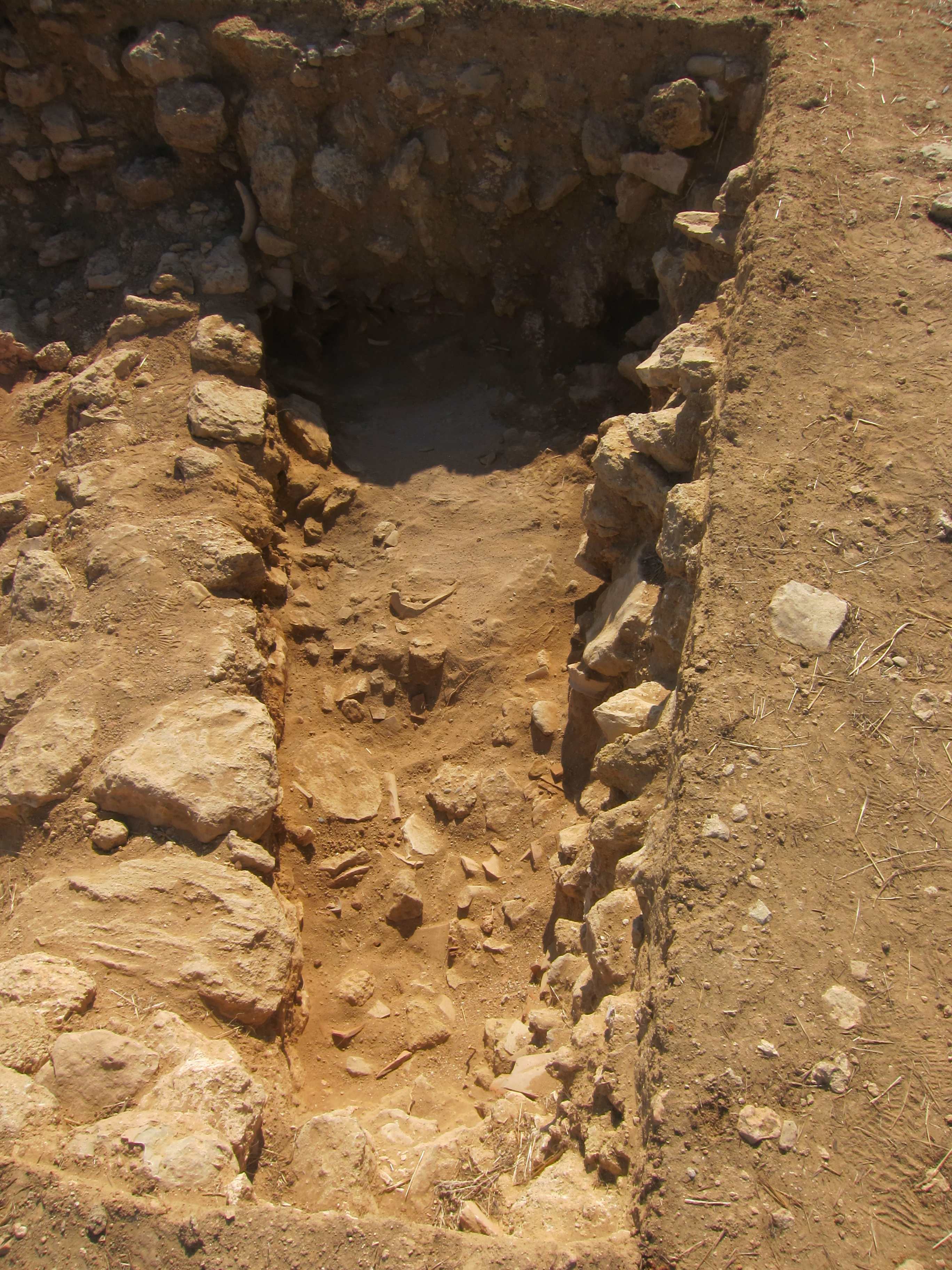
BackfillAncient and prehistoric pottery is everywhere, and more often than not, ceramics and pottery uncovered by archaeologists today has, throughout the course of its own life, undergone a series of adaptive reuses: the artifacts we uncover today have been recycled for a long time, by disparate cultures and for different reasons. In using my archaeological imagination, I also couldn’t help but thinking how Ancient Romans and Hellenistic Cypriots, and Ancient Mandan-Hidatsa, would have used busted pottery for a variety of purposes, either as backfill, drainage for planters, and so on.

An aside: there is something soothing about the noise of used terra-cotta bases smashing against a brick wall. To the right is a photo of an excavation unit from the PKAP archaeological dig of May-June 2012 on Cyprus. At the bottom of the deepest strata, you can see the terra-cotta back fill emerging from a 3rd-century BC Hellenistic site.


Real, Surreal, Romantic, and Wilderness

Last week while tooling around with and providing basecamp support for Richard Rothaus, Andrew Reinhard, and Adventure Science in the badlands and above the Bakken oil patch in western North Dakota, one of the evening camp sites we occupied was located in the National Grasslands. Starting on the evening of April 25, 2013, a Thursday, and ending on the morning of April 26, 2013, a Friday, I noticed that over the course of about 10 hours, depending on the direction one looked and at what time of day, the spot of our camp site was on a borderland between the city and the country, the petroleum industry and the grassland wilderness.

Reinhard ultimately found the place we would camp that night, this on one of the thousands of finger-ridge buttes that the badlands offers. On the butte of our campsite (about 15 to 20 miles west of Grassy Butte, North Dakota), short trees and shrubbery protected our spot from any potential winds that would come out of the west and north, and just a bit to the east. A larger butte to the south would provide additional wind break. A raised and ditched scoria/clinker road wrapped around this larger butte, and like most of these roads, it was made sturdy enough for semi tractor trailer traffic.

Below are photos arranged in chronological order, and this speaks to how the surreal and romantic, the wilderness and industry, all intersect at one particular location, and all in less than half a day.

Photo of evening campsite, looking north, tent at bottom-center.

Photo of evening campsite, looking north, tent at bottom-center.


Just as the sun dips down and sets in the west behind the badlands buttes.

Just as the sun dips down and sets in the west behind the badland buttes.

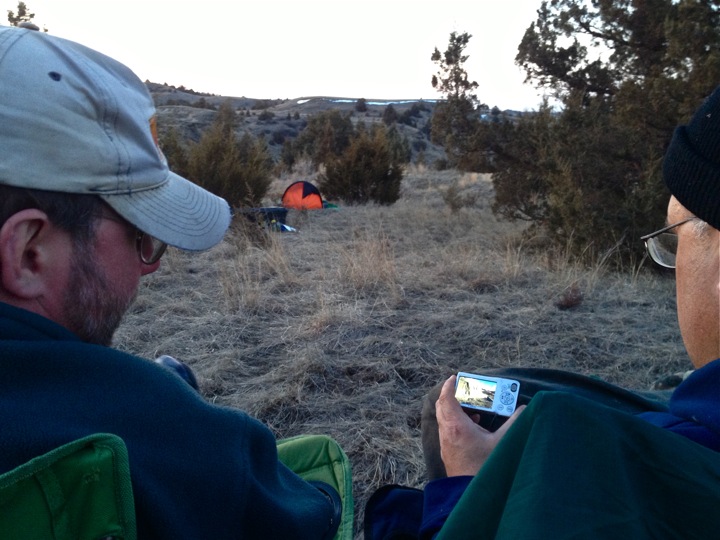
Andrew Reinhard at left has Richard Rothaus go over his photos from another 10+ mile leg of Adventure Science's 100 miles of North Dakota Wild.

Photo looking to the north. Andrew Reinhard at left has Richard Rothaus at right go over his photos from another 10+ mile leg of Adventure Science’s 100 miles of North Dakota Wild.

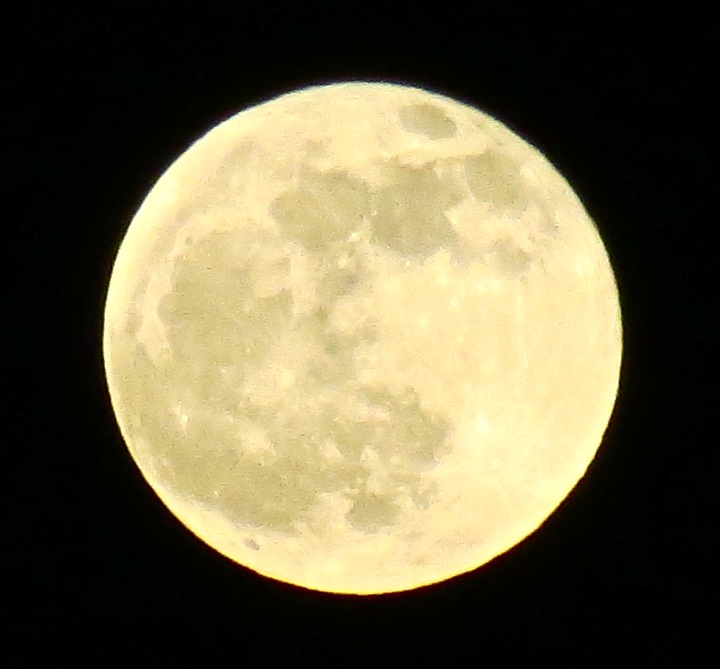
Not long after the sun set in the west, I looked to the east and saw this moon rising.

Not long after the sun set in the west, I looked to the east and saw this moon rising.

While the moon was low in the sky, it looked like this, with serious camera zoom.

While the moon was low in the sky, it looked like this, with serious camera zoom.

An hour or two later, when the moon got much higher in the sky, it looked like this.

An hour or two later, when the moon got much higher in the sky, it looked like this.

Just as the sun starts to rise, the petroleum industry returns.

Just as the sun starts to rise, the petroleum industry returns. This photo is from our National Grasslands campsite, early morning, facing south.

Eventually one embraces the industrial surreal and absurd, and begins to make morning coffee, while smiling.

Eventually one embraces the industrial surreal and absurd, and begins to make morning coffee while smiling. This photo is from the campsite, facing south toward the scoria/clinker road and taller butte.

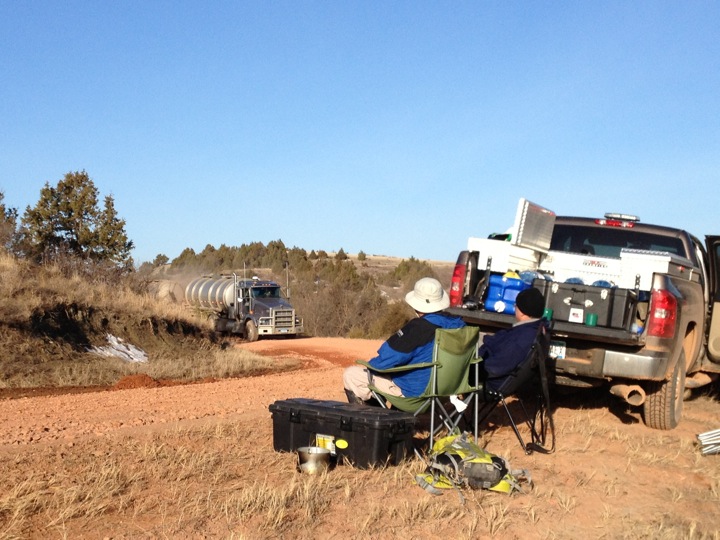
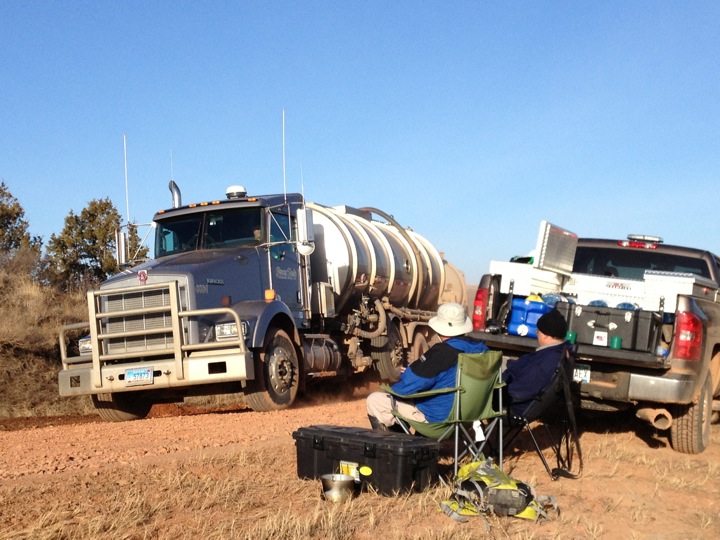
After the coffee is made, chairs were set up along the roadside to take in the industrial sounds of a morning in western North Dakota.

After the coffee was made, chairs were set up along the roadside to take in the industrial sounds of a morning in western North Dakota. This photo is from the campsite, facing west-southwest.

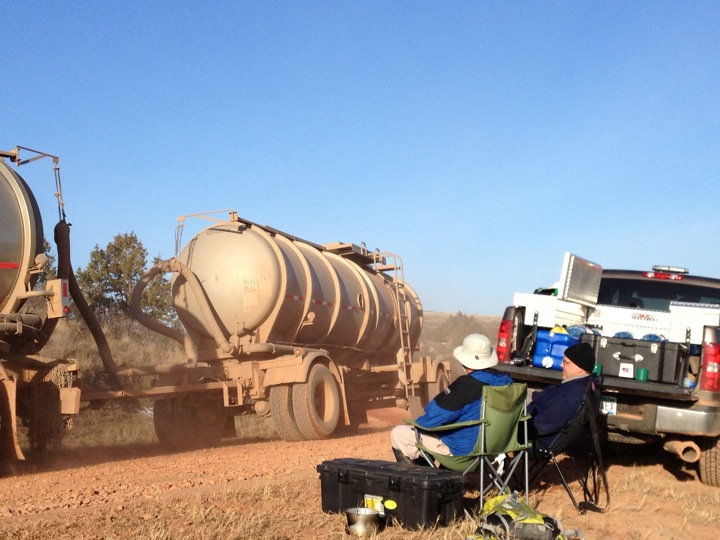
More industry, or Leo Marx's idea and reality of that machine in the garden. I like to think of it more as an industrial playground in our family livingroom.

More industry, or Leo Marx’s idea and reality of that machine in the garden. I like to think of it more as an industrial playground in our North Dakota livingroom.

It is 1.5 trailers of industrial semi.

1.5 trailers of industrial semi.


Notes from the Basecamp (04/23/2013)

Basecamp water wagon and supplies.

Basecamp water wagon and supplies.

On April 4, 2013, Richard Rothaus and I chatted via e-mail about some base camp logistics for Adventure Science’s 100 miles of North Dakota wild, a pedestrian overland trek through ephemeral drainages and butte plateaus in the nation’s #2-producing oil field that is western North Dakota. We came to the conclusion that I could 1) be useful and helpful in coordinating points of drop off and extraction, and evening details for Rothaus and Andrew Reinhard; and 2) in the interim, between dropping off the team and setting up camp, I could read for comprehensive exams (also known as “comps”). On the April 21, 2013 drive out to western North Dakota, I also thought it would be a good idea to capture some traffic samples that are part and parcel to the borderline anarchy of any blossoming petroleum industry throughout the planet.

After dropping off Rothaus and Reinhard yesterday (04/22/2013) morning, I drove the field vehicle around to where they would arrive that evening, and set to reading for comps (“comps” is one part of the intellectual bootcamp, or disciplinary training, when working on a doctor of philosophy, in my case with North Dakota State University and the University of North Dakota). Winter in North Dakota is holding on a bit more than usual, and it is getting the attention of folks in both the city and in the countryside. The late winter means a late spring, and so the snow has been gradually melting.

While reading for comps, and while temporally in late spring and spatially in western North Dakota, I revisited a short passage from the first chapter of Elwyn B. Robinson’s 1966 History of North Dakota (University of Nebraska Press), entitled, “The Grassland Setting.” In this, Robinson says,

For hundreds of millions of years the Williston Basin [of western ND] and the area surrounding it were intermittently covered by a salt sea stretching from the Gulf of Mexico to the Arctic. Sediment carried into the sea by flowing water was deposited on the bottom and slowly compacted into strata, or layers, of sedimentary rock made up of clay, shale, sandstone, and limestone. (Robinson, 1966: 2)

Basecamp 2 TrafficIf wandering around in the badlands today, the tops of all the buttes represent the bottom of that ancient and dried up sea floor. Erosion from glacial advances and retreats helped shape what we see and make up our landscape on the northern Great Plains, and also what Rothaus and Reinhard slogged through all day. I noticed the slipperiness of this clay and mud about mid-morning (04/22/2013): while sitting in the cab and reading, and while the mid-morning sun warmed the badlands, the snow and mud went from frozen to melt, and this caused the field vehicle to start sliding from a standstill. This feeling is at first a bit unsettling, at least before realizing what is happening. I fired up the vehicle and drove it to a less-remote location, namely a raised and ditched off-road of Highway 85, not too far north of Grassy Butte, North Dakota. That solved the vehicle sliding problem.

From here I collected some traffic samples, capturing the number of vehicles that passed by in two separate 15-minute windows. Below is a short clip of the traffic (arguably a way to humanize the social science).