Great Plains East vs. West

In the last couple weeks, or in the last week, I’ve noticed how the national and international news have ran stories on Sioux Falls, South Dakota and Fargo, North Dakota. Sioux Falls and Fargo fall along the north-south Interstate 29 corridor in far eastern Dakotas, and they originally served as railroad gateways to the northern portion of the Great Plains and American West. They share some similarities because of this. As well, they got one of the earliest urban foot-holds, and they also attracted colleges (back when the distinction between college and university was still quite distinct — a college could be a part of a larger university).

In the first pieces — here, and here — on the “Fringe City” of Sioux Falls, The Atlantic Monthly’s James Fallows compared and contrasted this South Dakota city with Burlington, Vermont. The problem with this, of course, is realized when one looks at the history of both cities. Burlington, Vermont is a place with a dense population, and dense populations surrounding it. Sioux Falls and Fargo, in contrast, are places with comparatively dense populations, and they serve a rural surround that is much more sparsely populated. If you’re from Bismarck, ND (like I am), you will have in your collective memory stories about certain economically privileged friends in grade school and junior high and high school regularly getting to go to Fargo for the weekend so their parents could purchase them designer clothes. These friends could then return and inform the rest of us what was hip and cool. This, I have found, is one of the personal historical memories that I use to argue why I would be totally cool with a return to the school uniform (something Angus Young appropriated and continues to own on stage quite well). But that is another topic for another blog.

The main point is that it reflects the reliance and tension, at least from the 80s and 90s, that Fargo and Sioux Falls and the rural surrounding areas generated: individuals living in these cities both loved them, and they loved to have contempt toward them as well. This, in turn, is a larger theme of the Great Plains, as you’ll hear similar stories from what central and western Nebraskans and Kansans have to say about their eastern cities.

In the second piece, Fallows opines on the architectural history of Sioux Falls, and this reflects the larger theme of architectural history in the American West. Go to any town in the Dakotas, and a large chunk of the monumental architecture dates from before and just after the turn of the 19th century. This is often the period when the wood structures either succumbed to city-wide fires, or were torn down to make way for superstructures with sturdy granite and brick foundations (Fallows mentions the Richardsonian Romanesque architecture of Sioux Falls, and a comparable building in Fargo would be North Dakota State University’s Putnam Hall). This is also a period of history that had some of the greatest economic and un-ashamed monopolistic magnates, individuals with operations based out of the Twin Cities (for example, one of the prime reasons North Dakota has a state bank and a state elevator has to do with big Twin Cities bankers knowingly or unknowingly fleecing North Dakota farmers — eventually, North Dakota farmers said we’ll just create our own bank and mill if we can’t get decent rates and grain prices from Minneapolis and St. Paul).
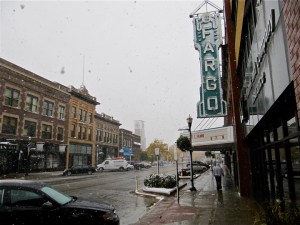
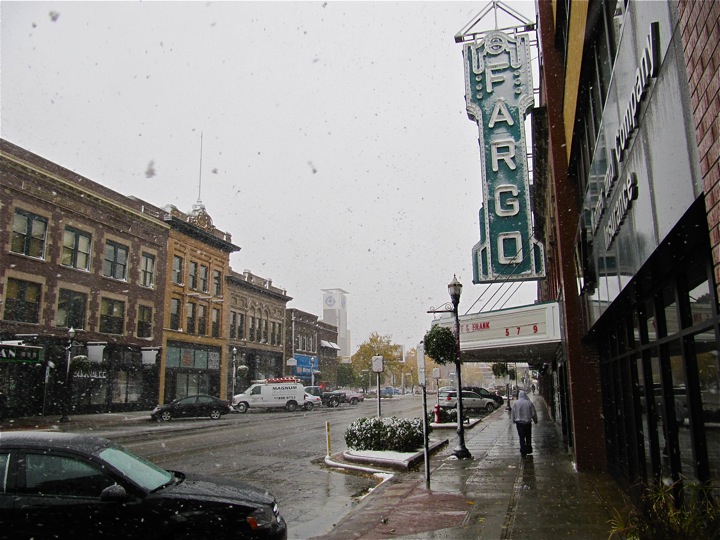
The iconic Fargo theater signage in downtown Fargo, North Dakota. ESPN's College Game Day is looking to use this as a backdrop for their coverage of Saturday's game.

The iconic Fargo theater signage in downtown Fargo, North Dakota. ESPN’s College Game Day is looking to use this as a backdrop for their coverage of Saturday’s game. Photo by Aaron Barth, from October 2012.

In the realm of Fargo, Slate.com ran a short piece on a proposed skyscraper to be built in downtown, Fargo (about 6 blocks from where I live). Skyscrapers (and grain elevators for that matter) on the prairie, I argue, look all the more cool because they are set against the horizontal backdrop of the Great Plains. Fargo, and North Dakota, are indeed booming, and not just because of petroleum. This Saturday, ESPN’s College Game Day is coming to downtown Fargo, to broadcast the football game between North Dakota State University and Delaware State University. While NDSU and the University of North Dakota (Grand Forks) no longer play one another in the historic regional football rivalry, I think both universities are getting more mileage for the state by playing non-North Dakota audiences. Even if a North Dakotan has absolutely no affiliation with NDSU or UND (which, considering the state is about 700,000, would be almost impossible), all of non-North Dakota watching this ESPN game may at some point attach said game to future encounters with North Dakotans. It’ll be up to us to figure out how we want to respond to that. I’m all for it.




Historic Preservation in Medora, North Dakota

Badlands SaloonThis morning I read a story in the Fargo Forum on how numerous business owners in the historic heritage tourism town of Medora, southwestern North Dakota, said no, they will not be razing a couple historic buildings from the 19th century to make way for shiny new construction. The story reminded me of Jonathan Twingley’s The Badlands Saloon: A Novel (Scribner, 2009), at least how Jon lays out the “fictional” town of Maryville (which is based off the reality of Medora).

In the Fargo Forum story, Loren and Jennifer Morlock were present at the Medora Planning and Zoning Board meeting (held at the Badlands Pizza Parlor), and their Dakota Cyclery bicycle shop has been a long-standing fixture in one of the historic buildings. In the article, Loren said, “In our building, people come in with video cameras just to look at the structure and the building… People think it’s one of the coolest places for a bike shop that there is — we get that once per week. It works so well. I think there needs to be more research done before we just knock this stuff over.” Loren is spot-on here.

Now contrast this with one of the opening chapters in Jonathan’s novel, The Badlands Saloon. The main character finished his first year of art school in New York City, and returned to take a summer job in “Marysville,” aka Medora. He called his long time friend, Tank Wilson, who he knew from Bismarck, to see if he could fix flat bicycle tires for a summer at his bike shop in Medora — I mean “Marysville.” Jonathan further describes Marysville as follows (compare this with the Fargo Forum story as well):

In town there was the Old West Shooting Gallery and bumper cars, everything done up in an Old Western style. The sidewalk that ran past the Badlands Saloon and the old-timey pizza parlor was a wooden boardwalk like the ones in the John Wayne movies. The town had become a strange version of itself, the old and the new functioning in some sort of syncopation, a generic vision of what towns once looked like when there were cowboys and Indians and wagon wheels and campfires. But there was an authenticity to it all, too. Marysville had been around for so long that it embodied several pasts at the same time, each one elbowing out some room for itself among the newer versions of the Old Town(Twingley, 2009: 15)

These are the fixtures in a nationally-published novel by a local Bismarck artist and writer who lives in New York City (Twingley’s blogspot is linked in the Blogroll sidebar to the right) and Loren Morlock and others are spot-on when they oppose the razing of historic structures. I just thought I’d share some of what came to me when I read about their efforts this morning. Medora has a soul, and it is best not to gut it, lest we raze and smother the deep culture intrinsic to historic buildings, and historic preservation. Development is good, but there are an infinite number of ways to go about it without having to crush the material culture of yesteryear.


Official and Un-Official (authentic) Remembrance

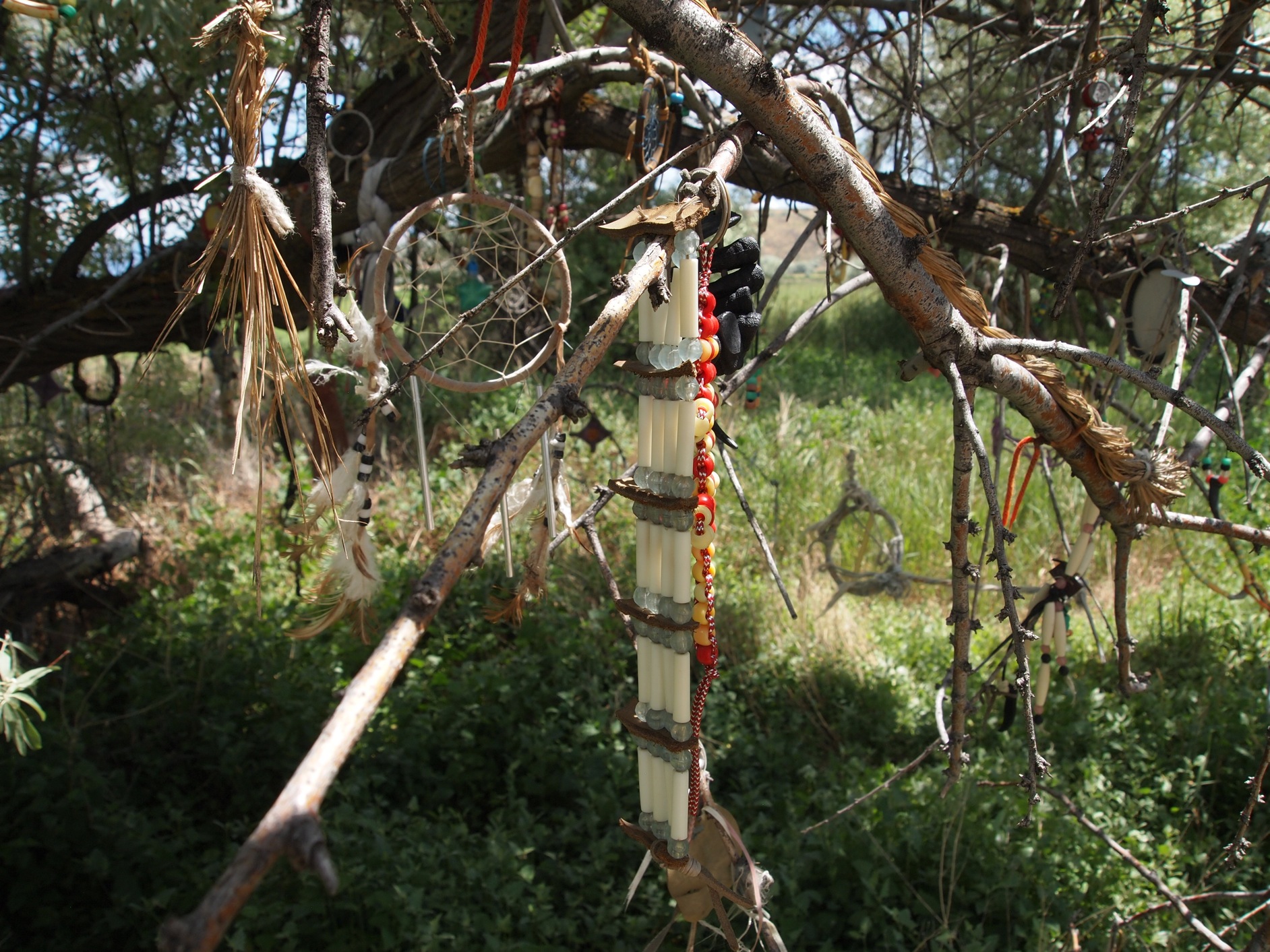
The memorial tree at the Bear River Massacre site in southeastern Idaho. Photo from July 2013.

The memorial tree at the Bear River Massacre site in southeastern Idaho. Photo from July 2013.

This last July, Molly (an accomplished artist who is also my girlfriend) and I had a chance to tour the northern inner-mountain American West. One of the stops on this road tripped concerned a massacre site from 150 years ago, this at Bear River in southeastern Idaho. It seems appropriate to talk about and consider memorials and remembrance, especially today (09/11/2013).

While at Bear River, I documented the site, and this morning I thought I’d finally get around to posting an audio-video short to help others who aren’t immediately able to visit get a slice of the sense of place. In the video there are three official memorials, but what I was really pulled toward the day we visited was the un-official memorial tree. This in my mind was all the more authentic because of its un-official-ness: often times, official memorials get politicized (or they can), and this officialdom and politicization undermines the sacredness intrinsic to reflection and mourning that can be emotionally spontaneous. Infrastructure can also undermine that reflection, something Muir went on about at length in the 19th century, and something we’re contending with in the Bakken today.

Back to the July 2013 audio clip, though. Toward the end of the clip, I started closing in on the un-official memorial tree at the Bear River Massacre site. For a glimpse of some of the memorials and remembrances, click on the link referenced above (or the Bear River Massacre tag below). Or best of all, visit the site directly.


Book Shelves and Nails: Quick Fix

In the last couple weeks I relocated a number of book shelves, and in the process a couple of those small but important shelf pegs disappeared. So this morning I sat and stared at one of the pegs to think about how to replace them. The gauge looked close to that of a 16 penny nail, so I hit up the local hardware store that sells loose nails. I grabbed two 16 penny double-headed nails and snipped them with the bolt cutters. The photo below shows the original book shelf peg in between the two DIY home-made book shelf pegs. Worked like a charm. Books will continue going back on the shelves this weekend.

Non-galvanized nails cut to book-shelf peg length in front of Michele Butts, "Galvanized Yankees on the Upper Missouri: The Face of Loyalty" (University Press of Colorado, 2003).

Non-galvanized nails cut to book-shelf peg length in front of Michele Butts, “Galvanized Yankees on the Upper Missouri: The Face of Loyalty” (University Press of Colorado, 2003).


Teddy Roosevelt’s Inaugural Home and Buffalo Wings

This past weekend Molly and I visited Buffalo, New York, primarily to attend one of our friend’s weddings. While in Buffalo, we enjoyed the hospitality of Rich and Susan Bring Tobe. Rich and Susan know the deep culture of Buffalo, New York, and they showed us a variety of historic architecture and landscape architecture (including homes by Frank Lloyd Wright, and parks designed by Frederick L. Olmsted). In addition to this, they also pointed out the home where Theodore Roosevelt was sworn into office, this after William McKinley died from an assassin’s bullet in Buffalo. Before Molly and I departed yesterday, we stopped to take some photos of the home. I thought I’d upload and share one here (the house is on the National Register of Historic Places, the site narrative linked to here).

A photo of the home in Buffalo, New York where Theodore Roosevelt was sworn into U.S. Presidential Office after the death of McKinley.

This also got me to thinking how altered the monopolistic trust-busting might have been had Teddy not become president through this awful tragedy (that’s kind of the way with life, though: redemption can result from tragedy, at least in this case). Of course, had McKinley survived, we would not even know how things would have been otherwise. But that’s another discussion entirely (arguably presented much more intelligibly by Doc in Back to the Future).

While in Buffalo, I also got to thinking about just how many chicken wings Teddy could have inhaled at the Anchor Bar, the birthplace of the “Buffalo” wing (in Buffalo, they just call Buffalo wings “wings” much in the same way that the French refer to French onion soup as “onion soup.”).

Anchor Bar merchandise at the original birthplace of the Buffalo chicken wing, this in Buffalo, New York.


Learning Dakota

Tom Isern and I (among others) are taking an introduction to the Dakota language with Dakota elder Dr. Clifford Canku (pronounced “Chanku,” with emphasis on the first syllable; the word Canku means “the way” or “the road” in Dakota). I thought I’d snap a panoramic photo of what class room looks like, at least from my seat.

Canku and Isern

More on this all in future posts. As an aside, folks can go on-line and hear Canku learn Dakota at this website here. Okay. Tokesta ake (“See you later.”).


The Killdeer Mountain Battlefield Landscape

Basin Killdeer Proposed Route

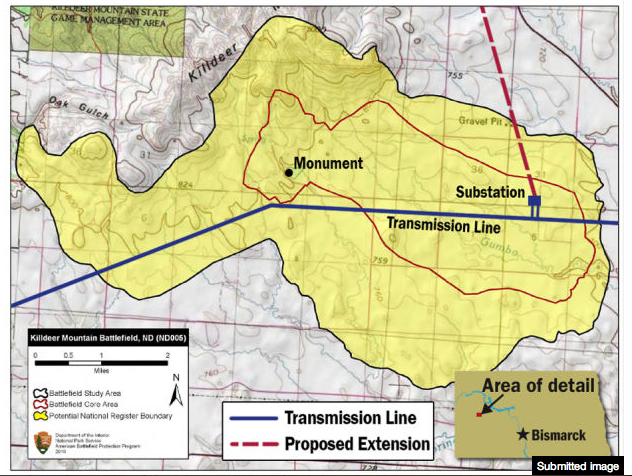
The Bismarck Tribune’s graphic of the proposed route through what essentially is the Gettysburg of the Northern Great Plains, the Killdeer Mountain Battlefield from 1864. Historical actors involved included Sitting Bull, Inkpaduta, Gall, Sully, among others.

This morning a story broke in The Bismarck Tribune on a proposed transmission line route directly through the core area of the Killdeer Mountain Battlefield. North Dakota State University’s Center for Heritage Renewal, led by Professor Tom Isern, responded with the following media release:

Aug. 30, 2013

Media Advisory

The Center for Heritage Renewal at North Dakota State University is preparing a submission for the North Dakota Public Service Commission hearing in Killdeer on Sept. 4. The subject is an electrical power transmission line and substation proposed to be built, by Basin Electric, in the core area of the Killdeer Mountain Battlefield. The topic has been covered by North Dakota media, starting yesterday.

The Center for Heritage Renewal was established to identify, preserve and capitalize on the heritage resources of North Dakota and the northern plains. One of the center’s objectives is to assist state agencies, private organizations and the people of the state and region in generating prosperity and quality of life from heritage resources. Another objective is to provide expertise and action in the fields of historic preservation and heritage tourism.

The center recognizes the efforts of Basin Electric to support regional development but is concerned that the environmental impact statement for the project takes no cognizance of the historical significance of Killdeer Mountain. 

The center has signed a contract with the National Park Service to survey and study the Killdeer Mountain Battlefield, which the park service has identified as a significant Civil War-era site in North Dakota. The contract is with the American Battlefield Protection Program of the National Park Service.

Killdeer Mountain was the chosen ground on which Dakota and Lakota fighters, including Inkpaduta and Sitting Bull, confronted the Northwest Expedition, commanded by General Alfred Sully, on July 28, 1864. This was the largest military engagement ever to take place on the Great Plains of North America, and a crucial episode in the Dakota War of 1862-1864.

University Distinguished Professor Tom Isern, founding director of the center, observes, “Killdeer Mountain is the Gettysburg of the Plains. It is, arguably, the most significant historic site in all of North Dakota.”

Isern is available to discuss this issue. He can be reached at 701-799-2942

More to come…


Punk Practice Last Night

I’m about ready to dash out the door, pick up Molly from work and grab lunch at Lucy’s with two long-time friends, Tiffany Johnson and Justin Vinje. But I wanted to upload a photo from last night, my second practice with Fargo-based punk band, Les Dirty Frenchmen. Last January-February, two of the Frenchmen, Todd and Troy, collaborated with the Punk Archaeology un-conference at Sidestreet Grille and Pub. A couple months after that, they said their drummer was moving to a non-Fargo location (I think the Twin Cities), and they asked me to consider taking up the drums for LDF. I said sure, I’d be glad to.

LDF


I keep fiddling with the panoramic feature on my iPhone 4s, and so here is what it looked like from the drummer’s perspective last night in the LDF top secret practice space. I think we might start working on some new songs, too. One of those is titled, “Budget Fracking,” a kind of absurdist nod to the Bakken of western ND. Long live local punk.


Notes from Whitestone Hill: August 24, 2013

Last week I returned from the National Archives in DC, and over the weekend I attended and was one of the speakers for the 150th Whitestone Hill observances not too far south of Kulm, in Dickey County, southeastern North Dakota. There has been much said about Whitestone Hill (it is a piece of genocide in American history), and much more to be said too. I have a forthcoming article in The Public Historian (“Imagining a Battle at a Civil War Mistake: The Public History of Whitestone Hill, 1863-2013” Vol. 35, No. 3, August 2013) that concerns the remembrance of this site, and this induced me to note, at least to myself, how history is never final.

During the August 24, 2013 day of observances, I took some notes, photos, and video. Here is a link to the line-up. I thought I’d share some more notes from the day here, but they are not exhaustive (I tried to scribble when I could). Kevin Locke opened the observances around 9:00AM with a Native prayer, and he spoke to the temporality of life. He described this in Dakota and Lakota language, and also noted a word that defined something that was fleeting, a philosophical universal of life. Also, the essence of the word “Dakota” means peace, ally, friend.

Under the tent, the morning at Whitestone Hill. Ladonna is speaking at left.

Under the tent, the morning at Whitestone Hill. Ladonna is speaking at left.

Also: Frogs were everywhere at the site that morning. With every couple steps, a couple little jumps would happen in the grass below. Upon closer inspection, you could see the little frogs. This, of course, provided untold of amusement for youngsters and biologists, and basically any of us city types who don’t regularly get to see frogs in this kind of battalion strength.

I caught up with a good friend, Dakota Goodhouse, and he said he arrived a little late because his son asked him to have breakfast. Note: having breakfast with your son is a good idea, especially if your son wants to.

One of the coolest things ever, especially at these sites and on our northern Great Plains, is coming upon a tipi. Even better, coming upon more than one tipi. And even better-better, coming upon one tipi, and the raising of another. Here is a short video of that. There is a charcoal marker on the top of the last tipi pole, the one where the canvas is fixed to and hoisted up (in pre-canvas days, before Euro-American industrialization nearly wiped out every last bison, these bison hides would be used). Notice the kind of community that simply “happens” with the raising of a tipi.

It’s akin to the pre-Industrial raising of a barn, or relocating a Mongolian ger from one pasture to the next: everyone gets involved, either directly or in supportive spirit. There are smiles everywhere as well. Architecturally the tipi is so fascinating because its verticality rises right out of the horizontal landscape that is the Great Plains. It gets your attention for sure. The new east-facing elevation of the State Historical Society of North Dakota has a brilliant entryway with, impressionistically, a tipi-looking piece of modern art. I think it is excellent.

Tipis at Whitestone Hill, August 24, 2013.

Tipis at Whitestone Hill, August 24, 2013. Note the verticality in contrast to the horizontal landscape of the Great Plains. Everyone should raise more tipis.


Understandable resistance to the name of Whitestone Hill as a "battlefield."

Understandable resistance to the name of Whitestone Hill as a “battlefield.” Photo from August 24, 2013.


Photos of the National Archives

I finished up what I needed to finish up at the National Archives in Washington, DC today, and I thought I’d post just a couple photos of this spectacular building. Within this building is an incredibly helpful and friendly staff, all of which is used to house and protect historical documents both foreign and domestic. These documents — hand-written memos, notes, and journals, and beyond — allow us insight into yesteryear, ever helping us develop a kind of deep culture and a philosophical and psychological connection and tension with the past. I’m glad my tax dollars go toward this institution. The hand-written docs I worked over today further humanized what we often read about in text books and historical narratives. I’ll try to remember to blog on those points later. For now, here are a couple photos.

East elevation of the National Archives.

East elevation of the National Archives.

Sipping on coffee and waiting for my documents to be retrieved with a bunch of dead Anglo-Americans in the basement cafe of the National Archives.

Sipping on coffee and waiting for my documents to be retrieved with a bunch of dead Anglo-Americans behind me, this in the basement cafe of the National Archives.

The 2nd floor reading room of the National Archives.

The 2nd floor reading room of the National Archives.