Tag Archives: University of North Dakota

Clellification for Halloween, 2024

I’m currently working on a project with Bill Caraher who is the pilot of The Digital Press at University of North Dakota. For a year, or beyond a year now, Caraher and I have been thinking about Clell Gannon, and Gannon’s 1924 publication, Songs of the Bunch Grass Acres (SoBGA). I’m working on revisions from a first draft submitted to The Digital Press, and after letting editorial comments sit with me for a while, I have decided to recalibrate a bit of the original narrative. Like it is the case with many texts, the more you read, revisit, and think about SoBGA, the more the text starts speaking to the reader in different ways. The recalibration of the first draft will look something like this:

  1. Clell Gannon intellectually situates (indirectly and directly) his 1924 SoBGA into the current of Romanticism. And not the romanticism that you’re thinking about. Like he’s not poeming (poem is now a verb) the reader to go pick flowers and let your feelings rather than your brain dictate your moment to moment actions. Rather, in the original intellectual vein of Romanticism (which was a counter balance to the, ahem, Enlightenment), he’s saying (I’m paraphrasing here), Hey, this northern plains and Great Plains and Western Americana place we all live in: this place is completely worth living in. And not only is it worth living it, it deserves our contemplation, and this place is deserving of a sustained relationship with us.
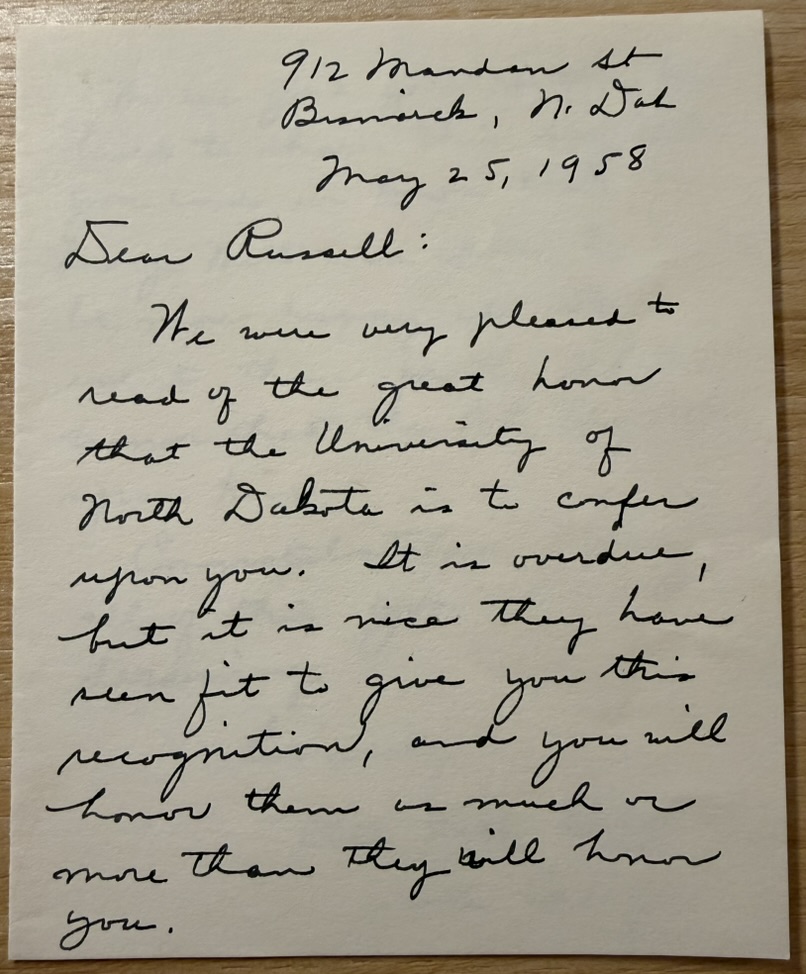
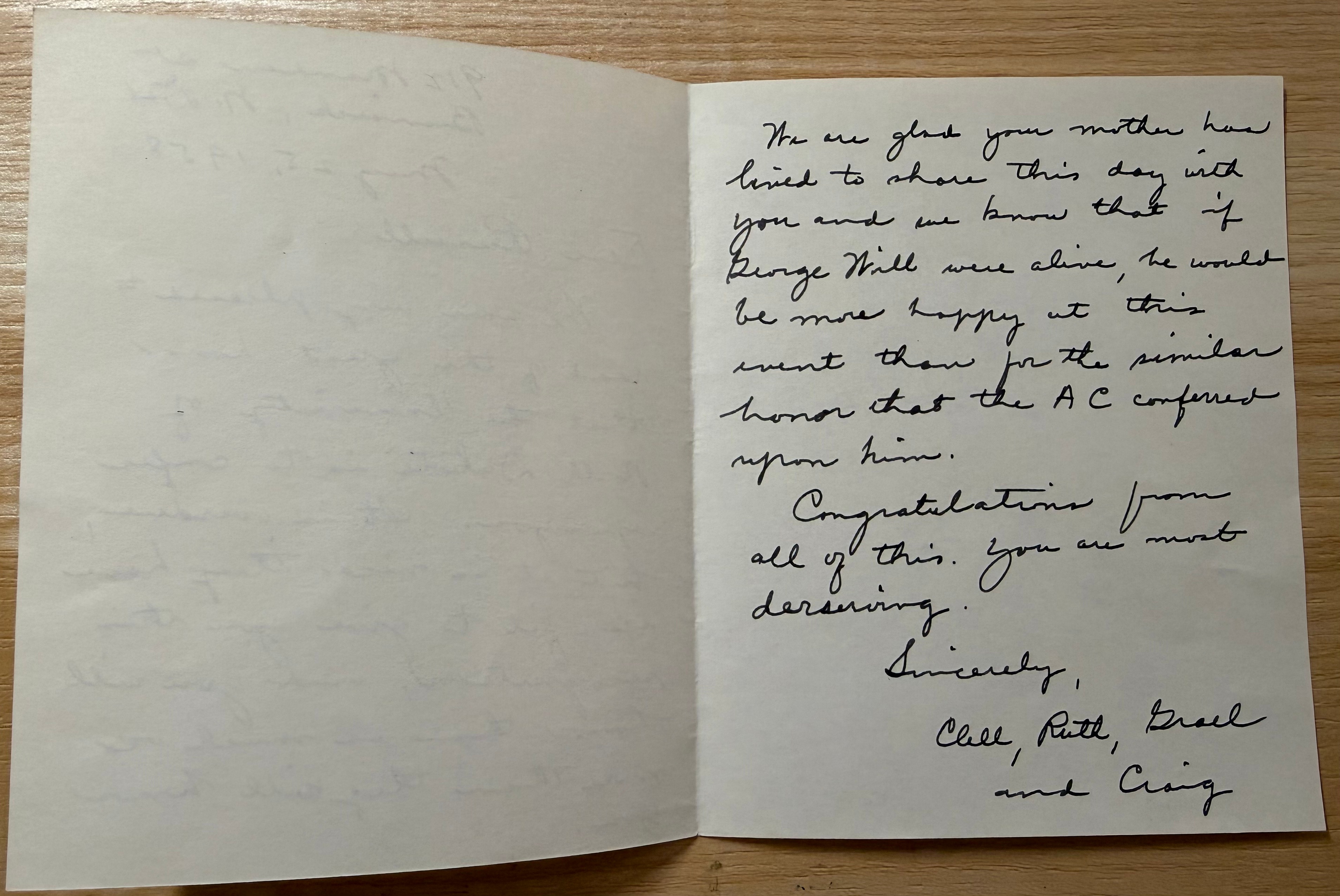
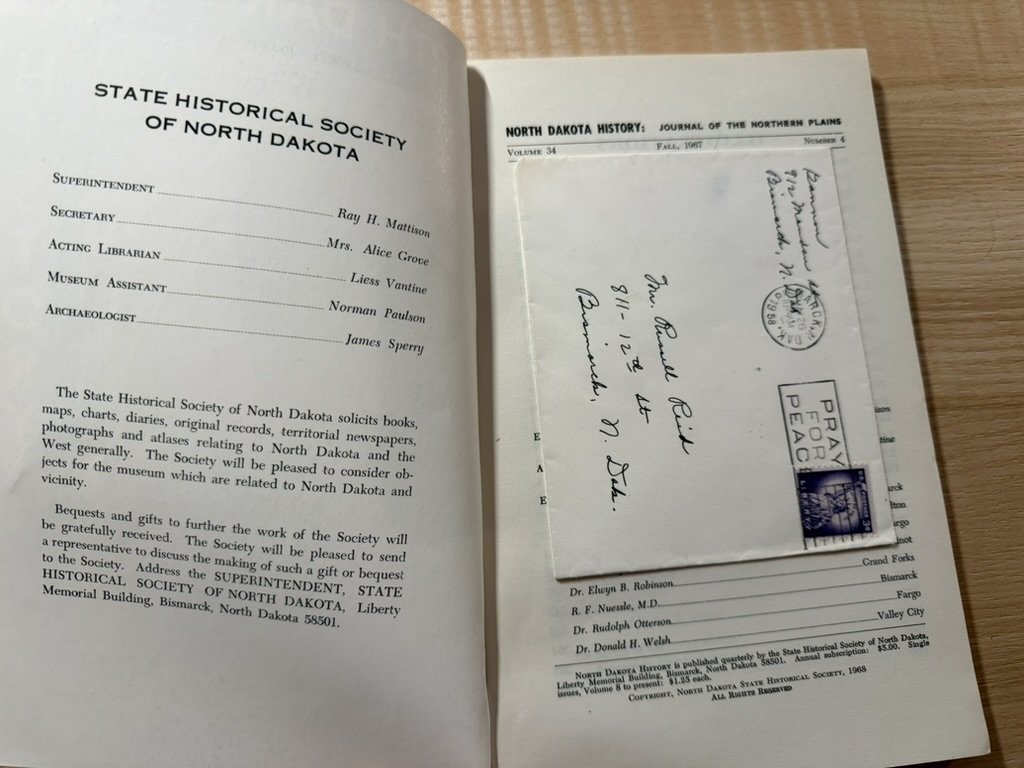
  2. Who else did Clell Gannon roll with at this time? He was a mover and shaker. Also one who was a joy to be around. Thoughtful. And nothing that is in his writings, or others who have written about him, suggests he was a chest thumper. He was friends with Russell Reid and George Will (son of Oscar Will and his vegetable seed empire). The same Russell Reid who acted as secretary of the State Historical Society of North Dakota for decades: when it evolved from the basement of one of the buildings on the State Capitol Grounds eventually to the building that today houses the State Library. Clell would likely lose his mind (in a good way) if he saw the geothermal-heated footprint of today’s State Historical Society of North Dakota, and in-motion expansion of the Military Wing.
    • Clell was unable to physically make the requirements to be mustered into World War I. I do wonder what contributions he might suggest for interpretive exhibits in the 21st military wing following the Great War of the 20th century? Might they have read something along the lines of what Willa Cather spoke of in 1922? “…the world broke in two in 1922 or thereabouts…” In 1922, Cather had seen veterans return from the Great War, and as returned veterans, they were told (not even really told) to navigate the ascent of the industrial capitalistic roaring 20s.
  3. In conversations with Shadd Piehl (ahem, recognized poet of the American West, cowboy poet, teacher, listener, encourager of the written and spoken word, and former bronc rider, etc), Piehl noted that Clell reminded him of the poem American Names that Stephen Vincent Benét set down in 1927, or 3 years after publication of SoBGA. So the revisions of this draft will take into greater account a couple other datum points, including Willa Cather and Stephen Vincent Benét.
  4. Clell Gannon’s introduction (very short) of SoBGA is good.
    • In the first paragraph he sets out his flag of love of regional place. Not nationalistic love. But of the regions within this nation: northern plains. Great Plains. American West.
    • The second paragraph is on about poetic structure, meter to be exact, and with a sampling of how a west of the Mississippi River person pronounces “coyote”: say ki’ot, Clell instructs, as two syllables. Don’t get all sophisticated and say “ki’ot’eee.” Don’t do that. Nobody would ever do that. Use two syllables to say coyote, and the meter of the poems will flow.
    • The third paragraph calls out Florence Harriet Davis, librarian in 1924 of what would have been the beautiful Carnegie Library in Bismarck (it was completely razed in the 1970s or 1960s for progress. Poetically, a parking ramp is located there today.). Who is Florence? In a word search in the Library of Congress searchable newspaper database, she surfaces here and there in Bismarck Tribune articles.
    • Clell’s final poem in SoBGA is to Hazel Dell Gannon, who at 17 years old passed away in what Clell describes as Grand Valley, South Dakota. Maybe she was preparing to attend teachers college? Or something? I Google’d Grand Valley, and the closest thing that surfaces is place names in Lincoln County, southeastern South Dakota.
    • Clell signs off on his short introduction with “Bismarck-by-the-river, North Dakota.” Today, in 2024, this is another great reminder to readers to recenter their view of North Dakota’s capital city as one that is a river city as well. Clell understood the importance of the Missouri River to the early history of the region and, eventually, to the state.

Okay, that’s all the Clell-ification I have for the moment. Gotta get after the other items for this Thörsdag, October 31, 2024, Halloween Day (the pumpkins were carved last night).


Northern Plainsing Summer 2024

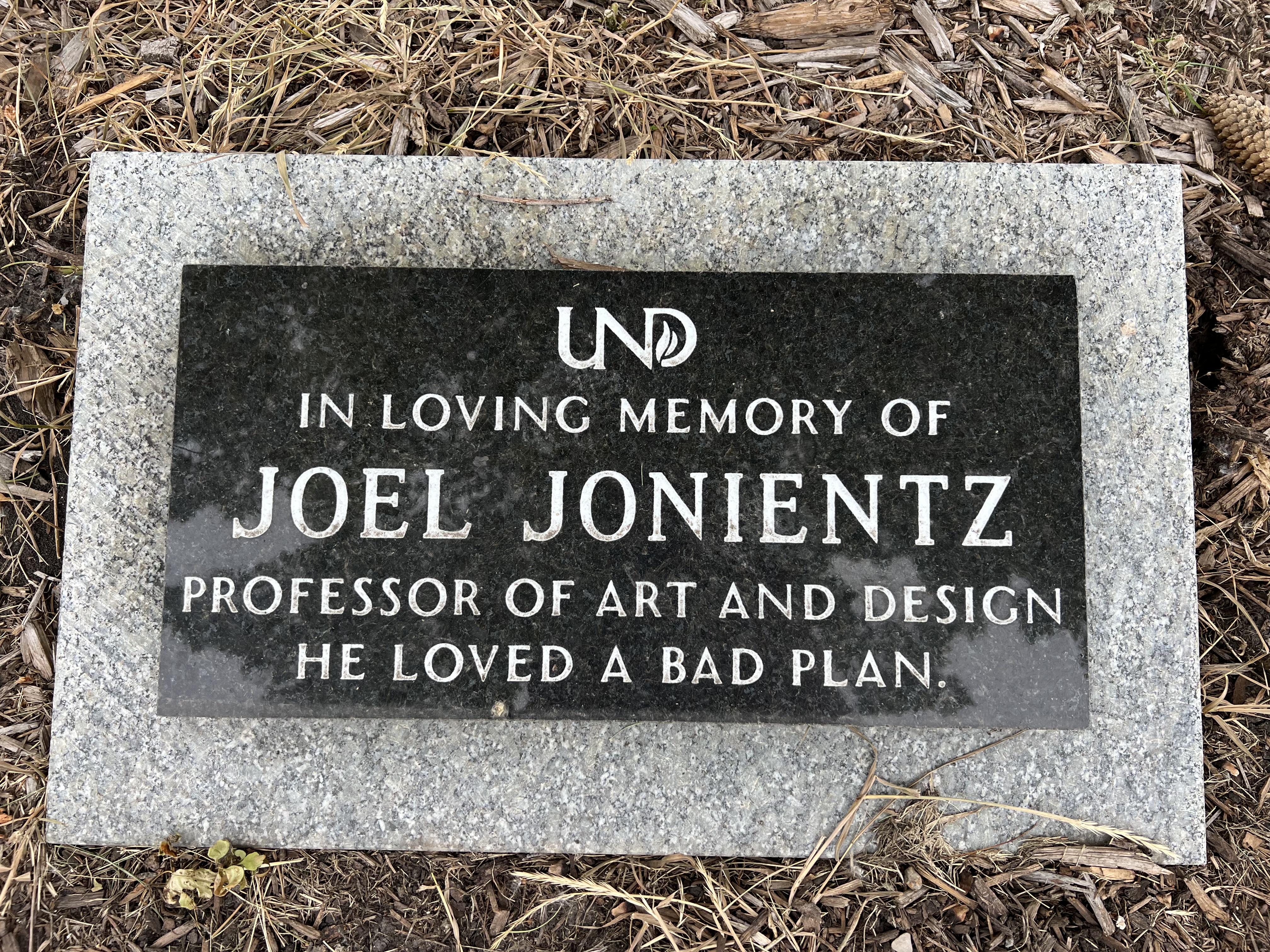
I’m on site at the University of North Dakota this week for professional work and research. While on site, walking across the campus mall, it was a pleasure to see the memorial tree of the late Joel Jonientz, professor of art and design who, in the inscription of his eternal self descriptor, always “loved a bad plan.” Other phrases that come to mind when recalling Joel (he and I interacted directly like 2-5 times in the course of us walking the earth at the same time): “You wanna know how you accomplish something?” This was a rhetorical line of questioning from Joel. He said this to me in like February of 2013 while we were at a high top table at the used-to-be HoDo, now the remodeled BlarneyStone in downtown Fargo. This as we were ramping up with collaborators to carry forward the first global Punk Archaeology Un-Conference at the historic and since bulldozed Sidestreet Tavern (one finds as the decades proceed, one is saying “the old one, not the new one” a lot more and more). He’d follow this by saying something to the effect of, “Ninety-eight percent of it is will power. That’s it.” Not all in one big shot will power. Like sustained will power. Willing power, making incremental gains, sometimes of the magnitude that could be similarly gauged by clipping a hang nail.

Anyhow, some description of the landscape architecture and my own mental point of entry where Joel’s memorial tree resides. The tree itself is a silver maple. I rant the tree image through the PictureThis app on the iPhone. Joel (and the ripple effect of his collaborators) liked detail. So here is some detail. The silver maple is also known as soft maple, water maple, river maple, white maple, creek maple. The latter name, the creek maple, is fitting, as his memorial and this tree is planted near English Coulee (aka creek; and aka “English” as in a departmental discipline) on UND’s campus. The Latin (“It’s a dead language!”) name is Acer saccharinum. It is one of the most common deciduous tress in the United States and southeast Canada. So hardiness zones of 5-9, sustaining Fahrenheit temps from -4 to 100 degrees. It can get vertical from 5-9 stories high. I looked up and snapped this photo of the canopy that arches out over the sweet granite memorial to Joel. It’s okay to lay in the grass and look up at tree canopies.

Also, there are several families of geese with their teenage geese offspring hanging out around the English creek. This just east of the Hughes Fine Arts Center (same Hughes namesake fellow of the Hughes Junior High I attended in the early 1990s in Bismarck — he invented or popularized some kind of electric stove for the world).


The Bunny and the Egg

It is Easter Sunday, which means over the last couple days I have been eating chocolate eggs and chatting with friends over the best ways and methods to prepare and eat PEEPs (some friends prefer the dry age PEEP, as it changes the resistance a bit). This afternoon friends and family will gather so we can grill (with cowboy charcoal) the t-bone steaks and chicken. Holidays are good and important that way: gives us all another reason to get together.

I caught this NPR piece on the etymology of Easter, the name. It comes from a northern European goddess, Eostra, who was an annual pathfinder for fertility and spring — life, as it is also called. The article mentions the Venerable Bede, and it has been a while since I read any Bede. About a decade to be precise. Bede was one of the many books in my graduate historiography (the history of history) seminar at the University of North Dakota-Grand Forks. We read Bede’s Ecclesiastical history of England, stories about the troubled world of Northumbria from the 5th to the 8th centuries. Those Vikings continued making inroads and eventual settlements in England. As our common narrative goes, it wasn’t until 1066 that the Norman Viking William the Conqueror finally brought the country together (it didn’t go well for Harold at the Battle of Hastings, an arrow in his eye and all).

Bede, though, also wrote The Reckoning of Time, and it is here (according to the NPR) where the bunnies and eggs start making an appearance. Again, not that I’m really going anywhere with this. But it is kind of fun conversation for the Easter grilling this afternoon.


Happy Mother’s Day

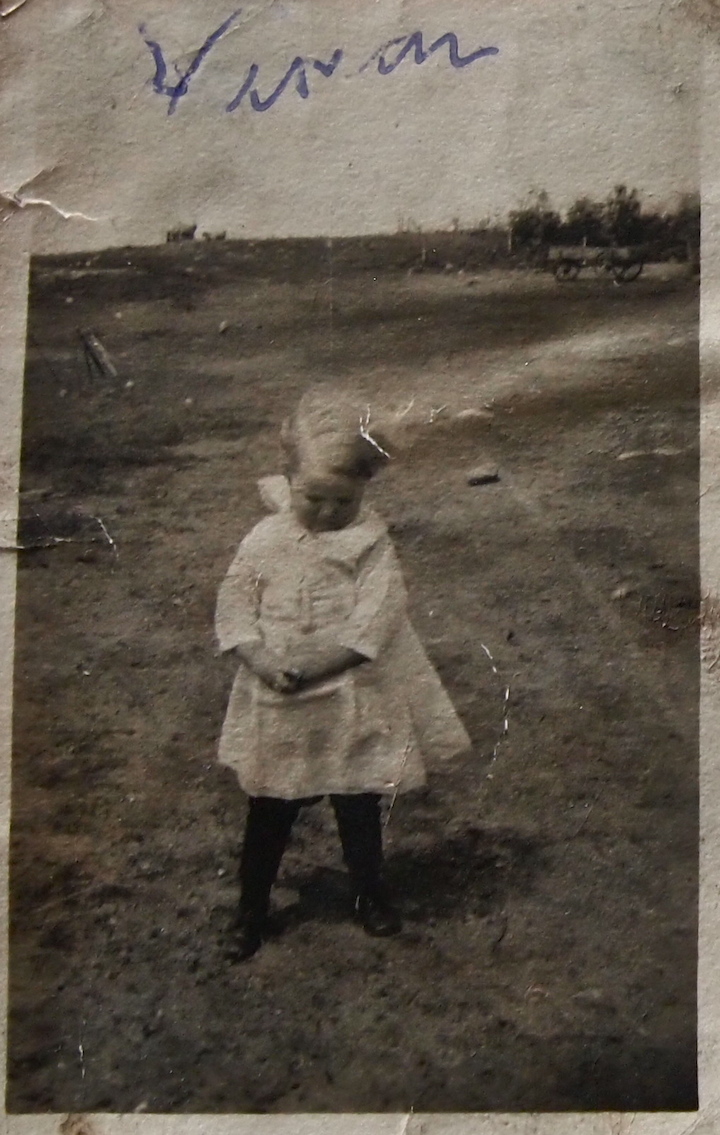
Vivian in the late-1910s on the Swedish-American farmstead just northeast of Bremen, Wells County, North Dakota.

Vivian in the late-1910s on the Swedish-American farmstead just northeast of Bremen, Wells County, North Dakota. That is Vivian’s handwriting at the top of the photo too.

It’s Mother’s Day (of course, every day is mother’s day). It is a holiday with origins in the post-Civil War (American) generation, championed by Anna Jarvis just after the turn of the 19th century. The idea was to get together all the moms who had sons die in the Civil War. Today we use it to recognized the heroine feats of motherhood.

Molly and I drove over to Bismarck, North Dakota, to spend Mother’s Day weekend with Julie and Paul (my parents). I also got flowers for Molly’s late mother a couple days ago, because mothers are all around us. Always. Last night, before bed, Molly and I (or Molly and Me, which has a nice ring to it) stumbled into a family archive in Julie and Paul’s basement. Numerous photos from my late grandmother, Vivian Marie (Larson) Barth, who passed away a year ago this month.

There are a lot of photos within the archive, and a personal project goal will be to digitize them, get family members digital copies, and then consider conversations with archivists at the State Historical Society of North Dakota or NDSU’s North Dakota Institute for Regional Studies or UND’s Special Collections for eventual curation. This is why we have state historical societies and regional archives: it captures what us global locals have been on about from one generation to the next. And it is better to digitize and then curate them with a sound archives than to keep them in a box in your basement (which can flood, or something like that).

But back to Grandma Barth, and a couple photos I digitized for uploading purpose here. To celebrate Mother’s Day. The photo at top is of Vivian, taken likely in 1918 or 1919, just northeast of Bremen, northeastern Wells County, North Dakota. The second photo is of Vivian in the mid- to late-1930s, likely when she moved off the farm to Bismarck, North Dakota. And the third photo was taken likely during or around the time Vivian was attending one of those late-1930s college programs to train as a secretary. She later held positions at the Bank and state capitol of North Dakota. She did this while tending to her three boys and husband (a total of four boys). She was loving (and still is), hard-working (I remember she gardened up until she was 91), and she babysat us grandkids countless times.

OLYMPUS DIGITAL CAMERA

Vivian in the late 1930s.


When I was real little, I remember being bummed out when my parents left for a couple weeks of vacation (I am blessed with great parents, so I tended to get bummed out in their absence). To set me at ease, before bed that night my grandma recounted a story of how her dad at the age of 13 boarded a boat in Sweden with his uncle, and set out for Ellis Island and America. She reminded me, “He was only 13.” Grandma had a way with bringing gravity and reason to any situation that was or seemed stressed. She also made extra ordinary chocolate chip cookies, Swedish meatballs, and, well, you name it. Here’s to you, Vivian. And Grandma Christy (for another blog, perhaps next Mother’s Day). And here’s to the memory of all mothers, and to making memories with our mothers today.

Vivian Marie (Larson) Barth, I'm thinking taken after she relocated from Bremen to Bismarck, North Dakota.

Vivian Marie (Larson) Barth, I’m thinking taken after she relocated from Bremen to Bismarck, North Dakota.


Digital Ed Ayers at the University of North Dakota

Bill Caraher (r) introduces a digital Ed Ayers, streamed live from the University of Richmond to give a talk at the University of North Dakota.

Bill Caraher (r) introduces a digital Ed Ayers (l), streamed live from the University of Richmond to give a talk to the University of North Dakota.

Yesterday in the late afternoon I found myself finished up with fieldwork in Grand Forks, so I thought I’d drop in and catch the digital Ed Ayers being beamed in from the University of Richmond to the University of North Dakota. To history nerds, Ayers is a big deal. Bill Caraher mostly if not entirely lined up the talk. Bill received his undergraduate training in Latin and Classics at the University of Richmond, and today Ayers is the president of said U of Richmond. They met on that common ground.

It was great to hear Ayers chat about his foundational website in digital history. At some point in 1993, The Valley of the Shadow went on-line. You can link to it here. And there is even a Wikipedia page to it here. Ayers noted that with digital projects, it is not only important that they be started, but also that they come to completion. So this, as he pointed out, is why we see 1993 and 2007 at the bottom of the web site. Ayers also noted that in the 1980s, historians thought they could revolutionize the discipline through qualitative analysis. Ayers said that qualitative idea “lasted three weeks.” History certainly requires data. But it is in large part about stories and narratives, and about figuring out ways to make the raw data accessible.

Through this, says Ayers, we are now witnessing what he calls generative scholarship. By this, it is meant that scholarship does not come to some sort of final conclusion. Instead, generative scholarship encourages anyone and everyone to engage with the historical data, or texts, and speak up and out about what they see. This, in turn, adds to the dialog, thus keeping it alive.

Life is a series of short and long term stories. This is how we make sense of it all, and also how we make sense of lives lived. This is what I thought about on my drive back from Grand Forks to Fargo.


Philip Deloria and Dakota Goodhouse

Yesterday Philip Deloria visited one of my alma maters, the campus of University of North Dakota (Grand Forks). I had a chance to ride up from Fargo with good friend Dakota Goodhouse (he was on his way up from Bismarck), and we met with Phil for a short while that morning.

Dakota Goodhouse and Philip Deloria catch up a bit in Grand Forks, North Dakota.

Dakota Goodhouse and Philip Deloria catch up a bit in Grand Forks, North Dakota.

One of Phil’s ongoing projects has to do with the artwork of Mary Sully (1896-1963). Mary was from the Standing Rock Nation in the Dakotas, and Phil is analyzing a large body of artwork she produced throughout the course of her life. Mary did not leave behind any narratives of her art, so Phil is piecing together what he can, and contextualizing a lot of her work with the periods in which it was produced. This reminded me a bit of that general rule of history, that all historical figures influence and are influenced by the times and places they occupy (context, context, context!).

Prior to his talk at noon, Dakota and I chatted with Phil over coffee. In every sense of the classic phrase, he is both a gentleman and a scholar. It was quite interesting to hear about how the grandfathers of Dakota and Phil kept up a correspondence throughout the course of their lifetimes, too. Today, Dakota and Philip continue that correspondence.

And another note: Phil is a great, great, great, great grandson of General Alfred Sully (I may have one too many or few “greats” in their). One year, Sully took a Native Dakota wife while on the northern Great Plains. Children resulted from that, and so did grandchildren. History has an infinite number of connections with the present, as it should: the reason we are here is because of yesteryear. Cool stuff. Also, check out Philip’s scholarship here and here and here. And definitely check out his late father’s scholarship, too, Vine Deloria, Jr., here, here, and here (this is just a cursory sampling of Vine’s body of work).

Phil Deloria and myself, after asking Dakota to snap this photo. Taken on September 18, 2013.

Phil Deloria and myself, after asking Dakota to snap this photo. Taken on September 18, 2013.


Human Puzzles: Peruvian-pan-North Dakota Art

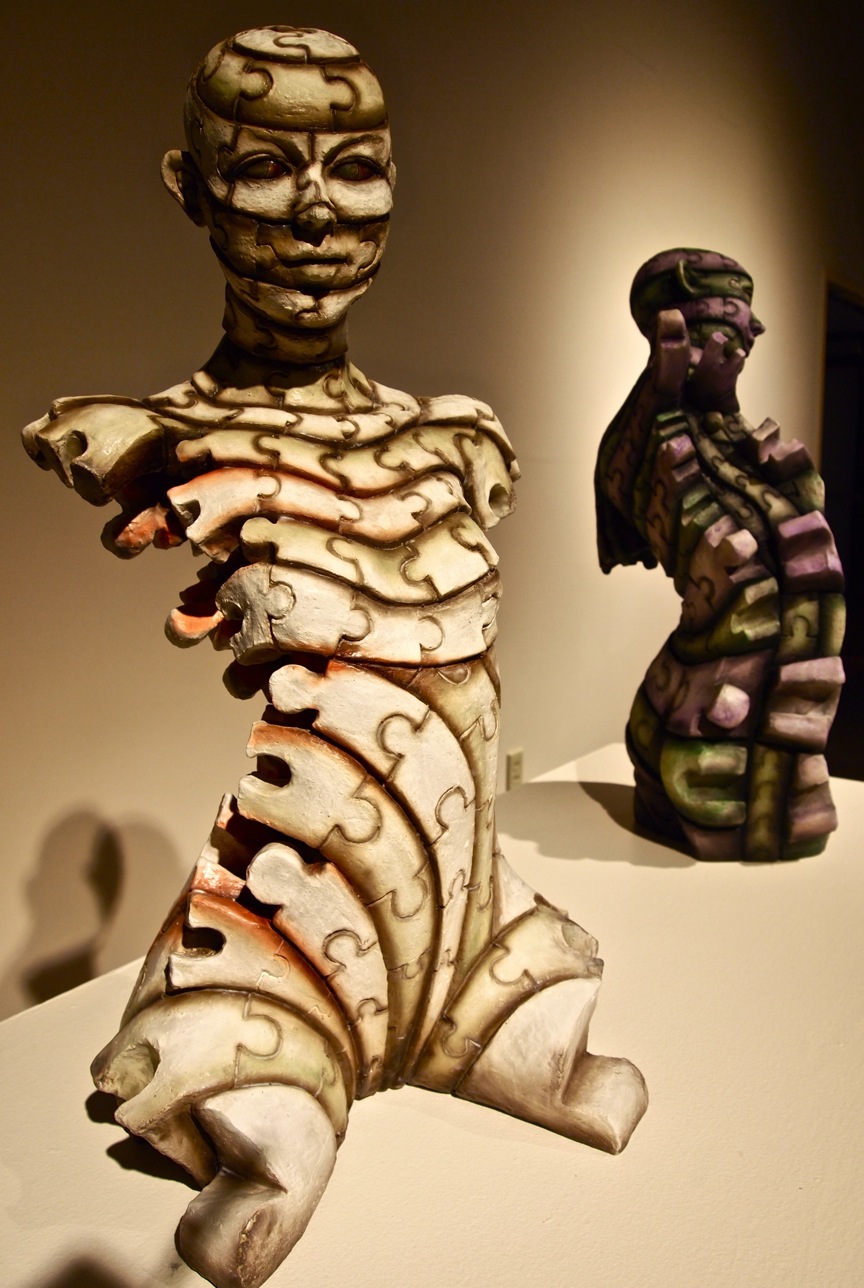
Sculptures by Guillermo Guardia.

Human puzzle sculpture by Guillermo Guardia. Note the sculpture in the backdrop as well.

I just snapped a bunch of photos of Guillermo Guardia’s (the Peruvian-North Dakotan artist, not the Costa Rican football striker) exhibit on display at The Arts Center in downtown Jamestown, North Dakota (the exhibit is sponsored by the North Dakota Art Gallery Association with support from the North Dakota Council on the Arts). Guardia hails from Perú, and did his MFA at the University of North Dakota. In 2009, he started working for the North Dakota Museum of Art as an Artist-in-residence. Guardia’s exhibit will be on display in Jamestown until July 6, 2013.

The pieces, specifically the puzzle-human pieces, got my mental gears cranking. Below is the narrative Guardia put together to accompany these pieces. As you enter the gallery, the narrative is just to your left.


Guillermo Guardia, “3 Truths / 3 Verdades: Puzzle Pieces”

When I began my Masters of Fine Art degree at the University of North Dakota, I knew I wanted to continue depicting the human figure and using it as my main subject and form of art. After building numerous figures in clay, I concluded I was failing at creating the figure I had envisioned. This was very frustrating. I was not pleased with any of my new works. It left me unsure of what direction to take my artwork. My frustration was compounded by the fact that it was my first time in the United States, and my first time out of Perú. At that time, everything was new for me. I had problems communicating with my peers, as it is different to learn English in a Spanish speaking country than practicing it in the United States. Some days I went home with painful headaches.

Two more human puzzles by Guillermo Guardia.

Two more human puzzles by Guillermo Guardia.

In 2003, I turned my attention to building clay figures that looked as if they were thinking (The Thinker by Rodin was a big influence). I quickly finished my first new figure. The new work looked good, but again, it didn’t match the image I had in mind. I sat in front of it, contemplated for a while, took a carving tool, and began to draw some lines over the surface. Eventually those lines crossed each other and became patterns. It made the figure look as if it was built of individual pieces, becoming the inspiration for my current puzzle piece series. The first figure in this series was filled with these puzzle pieces. This puzzle figure was holding a single piece in his hand as if pondering where it fit or where it came from. Perhaps the image of the puzzle piece came from a childhood memory as I remembered my sister always playing with puzzles, something that was beyond my abilities and patience.

Most of us have felt the sensation of something missing and not knowing what it is. We have felt that uncomfortable feeling of emptiness and are unable to describe it. I don’t believe life is a walk in the park anymore. It is difficult and complex. The puzzle pieces represent those little parts of everyone’s life and shape us as human beings. I never thought of myself as a real artist until 3 years ago. So many things have happened since I arrived in North Dakota making me what I am today.