Category Archives: Uncategorized

Happy Mother’s Day

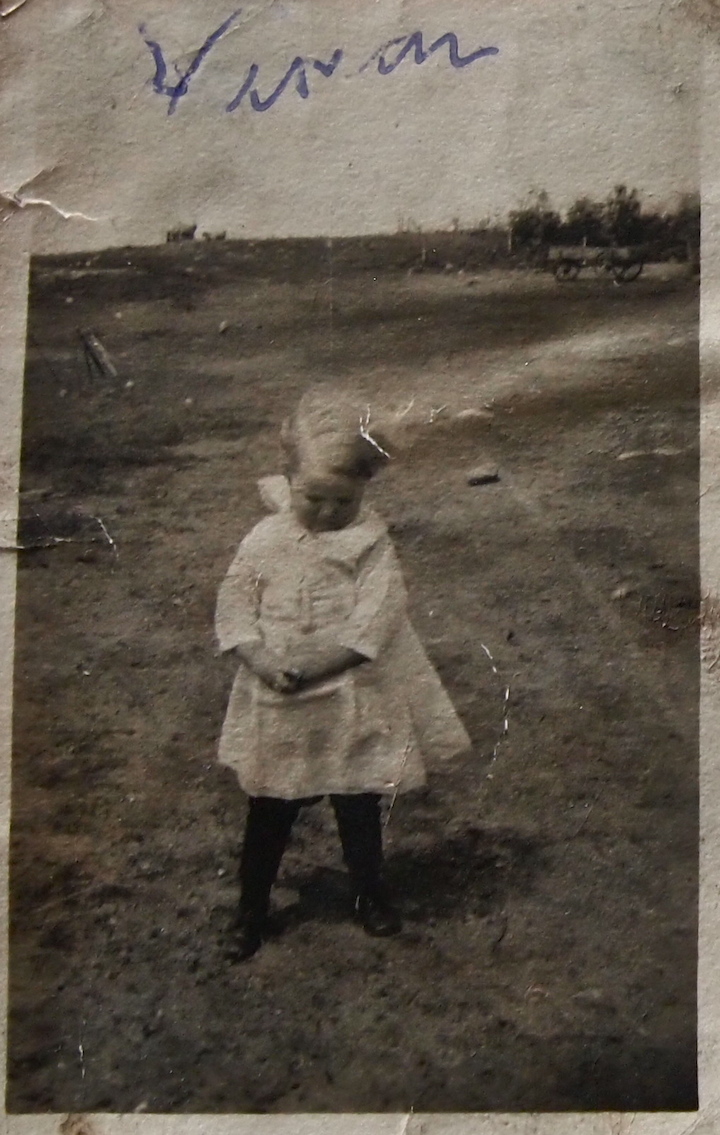
Vivian in the late-1910s on the Swedish-American farmstead just northeast of Bremen, Wells County, North Dakota.

Vivian in the late-1910s on the Swedish-American farmstead just northeast of Bremen, Wells County, North Dakota. That is Vivian’s handwriting at the top of the photo too.

It’s Mother’s Day (of course, every day is mother’s day). It is a holiday with origins in the post-Civil War (American) generation, championed by Anna Jarvis just after the turn of the 19th century. The idea was to get together all the moms who had sons die in the Civil War. Today we use it to recognized the heroine feats of motherhood.

Molly and I drove over to Bismarck, North Dakota, to spend Mother’s Day weekend with Julie and Paul (my parents). I also got flowers for Molly’s late mother a couple days ago, because mothers are all around us. Always. Last night, before bed, Molly and I (or Molly and Me, which has a nice ring to it) stumbled into a family archive in Julie and Paul’s basement. Numerous photos from my late grandmother, Vivian Marie (Larson) Barth, who passed away a year ago this month.

There are a lot of photos within the archive, and a personal project goal will be to digitize them, get family members digital copies, and then consider conversations with archivists at the State Historical Society of North Dakota or NDSU’s North Dakota Institute for Regional Studies or UND’s Special Collections for eventual curation. This is why we have state historical societies and regional archives: it captures what us global locals have been on about from one generation to the next. And it is better to digitize and then curate them with a sound archives than to keep them in a box in your basement (which can flood, or something like that).

But back to Grandma Barth, and a couple photos I digitized for uploading purpose here. To celebrate Mother’s Day. The photo at top is of Vivian, taken likely in 1918 or 1919, just northeast of Bremen, northeastern Wells County, North Dakota. The second photo is of Vivian in the mid- to late-1930s, likely when she moved off the farm to Bismarck, North Dakota. And the third photo was taken likely during or around the time Vivian was attending one of those late-1930s college programs to train as a secretary. She later held positions at the Bank and state capitol of North Dakota. She did this while tending to her three boys and husband (a total of four boys). She was loving (and still is), hard-working (I remember she gardened up until she was 91), and she babysat us grandkids countless times.

OLYMPUS DIGITAL CAMERA

Vivian in the late 1930s.


When I was real little, I remember being bummed out when my parents left for a couple weeks of vacation (I am blessed with great parents, so I tended to get bummed out in their absence). To set me at ease, before bed that night my grandma recounted a story of how her dad at the age of 13 boarded a boat in Sweden with his uncle, and set out for Ellis Island and America. She reminded me, “He was only 13.” Grandma had a way with bringing gravity and reason to any situation that was or seemed stressed. She also made extra ordinary chocolate chip cookies, Swedish meatballs, and, well, you name it. Here’s to you, Vivian. And Grandma Christy (for another blog, perhaps next Mother’s Day). And here’s to the memory of all mothers, and to making memories with our mothers today.

Vivian Marie (Larson) Barth, I'm thinking taken after she relocated from Bremen to Bismarck, North Dakota.

Vivian Marie (Larson) Barth, I’m thinking taken after she relocated from Bremen to Bismarck, North Dakota.

Historic Movie Theaters: Restoring the Walla Walla

The Roxy Movie Theater in Langdon, North Dakota. Photo from February 2014.

The Roxy Movie Theater in Langdon, North Dakota. Photo from February 2014.

Today in the Forum News Service, Ryan Bakken reported on the rehabilitated movie theater in Mayville, North Dakota. It got me thinking a bit about how we are witnessing numerous historic movie theaters get an updated restart in communities across the northern Great Plains (and elsewhere).

The movie theater is an important place, allowing a community of movie goers to engage, as we say, in a collective experience. This gives us points of reference in conversation — “Hey, you remember that line from ‘Walter Mitty’?” — and it also allows us to explore and ponder our own humanity. It is different, of course, from live theater, where there is always a direct interaction between actresses/actors and the audience. But the theater idea is the same: bringing together a group of people to take in a performance, or a spectacle. Life is a stage, after all.

Beyond Mayville, here are a couple more theaters in smaller North Dakota communities, to add to Bakken’s great write-up of Mayville. The Roxy theater is located in Langdon, North Dakota, just north-northwest of the long-since abandoned Nekoma ICBM missile defense concrete pyramid (it would be good to watch “Dr. Strangelove” at the Roxy some day). I snapped a photo of this Roxy in February 2014. It is up and running, having been brought back to life by the community in and around Langdon.

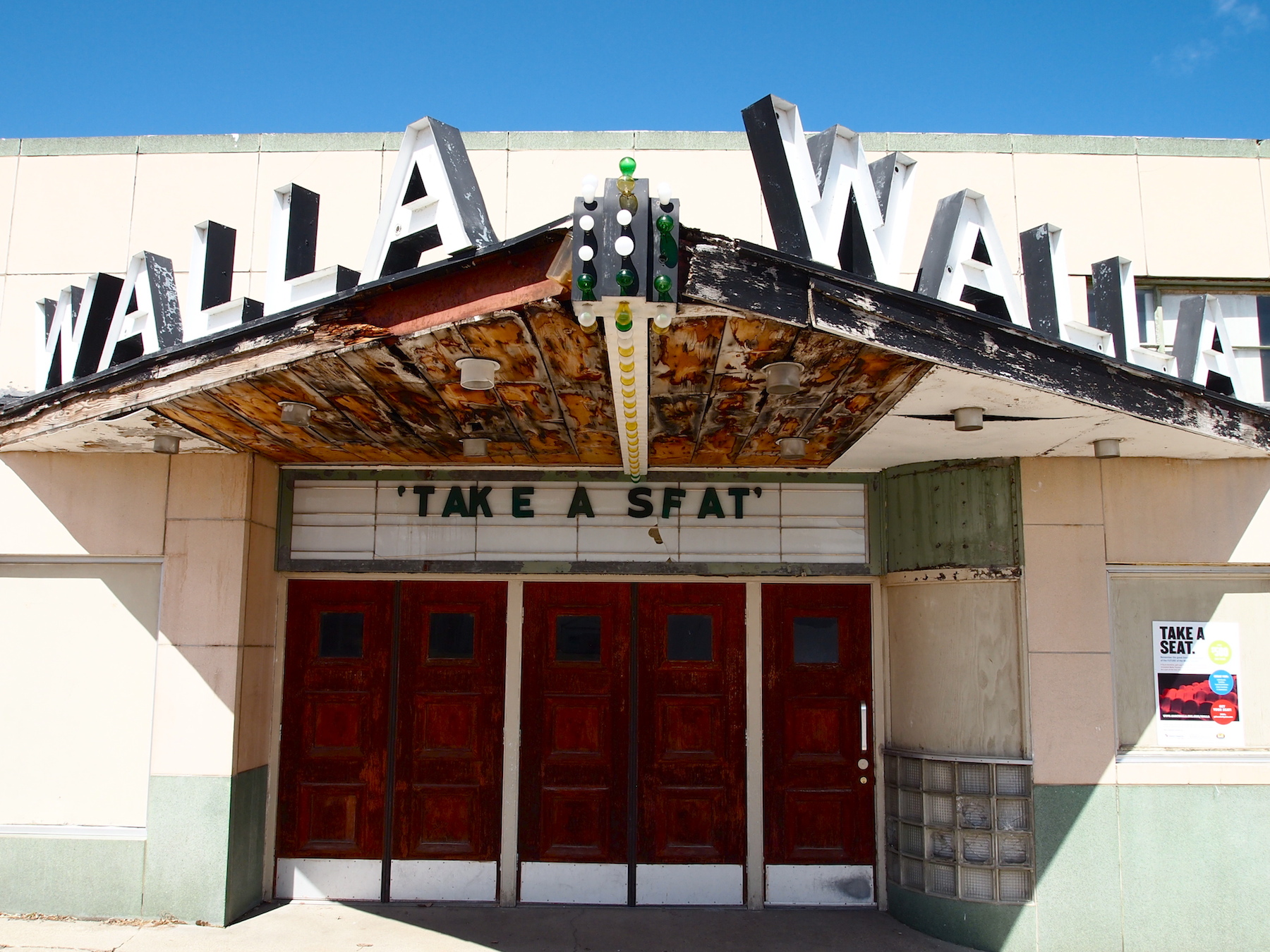
The historic 1949 Walla Walla Theater in Walhalla, North Dakota. It was placed on the National Register of Historic Places in 2010, and the regional arts community is crowd-sourcing funds for its 21st century rehabilitation.

The historic 1949 Walla Walla Theater in Walhalla, North Dakota. It was placed on the National Register of Historic Places in 2010, and the regional arts community is crowd-sourcing funds for its 21st century rehabilitation.

And here is the Walla Walla theater in Walhalla, North Dakota. Built shortly after the end of WWII in 1949, this theater was justly placed on the National Register of Historic Places in 2010. The Gorge Arts & Heritage Council (Facebook page here) is in the midst of crowd-sourcing funds to bring this theater back to life. This is a good idea. If you want to take pocket-book action, click on this link here for more information.

I was thinking today how much I enjoy these old time movie houses, and how the smaller the town, the more I enjoy them. I like the way that old time movie marquee stretches way out over the pedestrian sidewalk, acting as both a visual lure and a way to bring passersby under its influence. It is a much different feeling than when driving by more modern suburban theaters in our hermetically sealed automobiles. In addition to this, the old time theater is added value to any town, at least so the evening outing option isn’t always a default to the local tavern (not that there’s anything wrong with that, but you know what I mean). Yes, theater regularly plays out in local taverns. But it’s good to have the option to spend an evening in a defined theater proper.

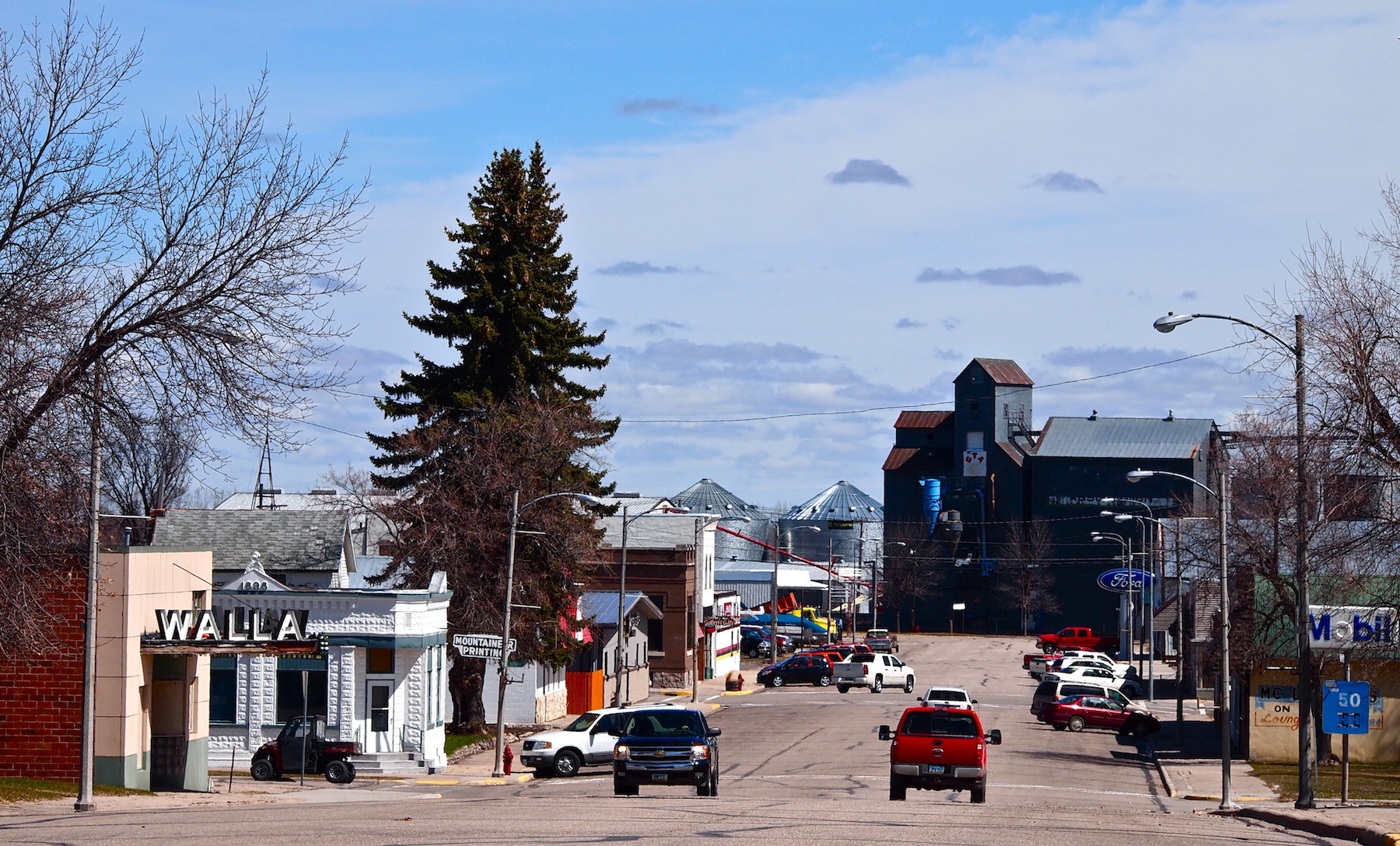
Downtown Walhalla, North Dakota, with the Walla Walla Theater to the left.

Downtown Walhalla, North Dakota, with the Walla Walla Theater to the left.


Following ET in New Mexico from North Dakota

OLYMPUS DIGITAL CAMERA

One of the only known Pizza Hut ET commemorative glasses in North Dakota’s Sheyenne River Valley.

Throughout last week I’ve been following the media trail of four friends — Andrew Reinhard, Richard Rothaus, Bill Caraher, and Bret Weber — who were mustered into a modern archaeological dig in New Mexico. The goal was to dig up a pile of ET Atari games that were buried after the craptacular game hit the shelves in 1983. When this game hit the shelves, it signaled the beginning of the end for Atari, as Atari lost (according to the Wikipedia page) over a half-billion dollars after buying the rights from Spielberg; over-producing a terrible game; and banking on the idea that customers would rip them from the shelves. They did, to a degree. But the video gamers returned them for a refund as well.

So I kept up with the social media and stories, noting to myself that the archaeology of ET Atari games was more popular than the actual 1983 game. I was also happy to read that Caraher made Rolling Stone. Check it out in the link here. CNN covered the story too. Daniel Politi of Slate.com also covered the story, as did Dominic Rushe of The Guardian, and NPR’s Morning Edition ran a story here. Eric Mack of Forbes covered Andrew Reinhard here (well, the picture is of Andrew). And The Onion covered it here.

The more local Fargo Forum ran a story on it here, too. And you can get direct, unadulterated coverage of the ET dig from Bill Caraher’s blog here. So while holding down the bunker in North Dakota, and while reading these stories, I would often take sips from the ET glass pictured here. The glass comes from my fiancée’s sister’s Valley City home. I think it was a thrift store find some time ago. I still have to set down and get an official oral history.


Remembering Joel Jonientz

Joel's art, the February 2013 Punk Archaeology un-conference poster, hangs in our front entryway.

Joel’s art, the February 2013 Punk Archaeology un-conference poster, hangs in the front entryway of our apartment.

Yesterday I learned that Joel Jonientz passed away. His great friend, Bill Caraher, has an excellent write up linked to here. Joel and I didn’t know each other beyond the 5 or 6 times we hung out, usually over some conversation and excellent beer. When we did hang out, Joel always asked the first person who tried departing to stay. I think this is one of the infinite reasons it was so terrible to hear of Joel’s passing.

Earlier this month I chatted a bit with Joel, and someone at our table (perhaps it was me) asked, “How do you go about starting a digital press at a university?” Joel responded with two words: “Will power.” And this is true with just about anything. You have to get up every morning knowing that this is what you want to and are going to do, and you will strategize in every way possible — directly or through chess maneuvers — to make it work. The goal is to keep pushing forward. At the table Joel explained this while smiling.

Thank you friend. You will be missed, but never forgotten.


Coffee Update

One of the only 2 known photos by Aaron Barth that have ever been taken before he consumed morning coffee.

The only known photo Aaron Barth has ever been taken before consuming morning coffee.

It’s Friday evening, and the pre-industrial (organic) chicken — prepared modified Greek-style with oregano-lemon-melted-butter-paprika-salt-pepper with slight dashes of crushed rosemary and thyme — is about an hour into roasting in the oven. I have three books to my left, including Michael Mann’s The Dark Side of Democracy: Explaining Ethnic Cleansing (Cambridge, 2005); Ben Kiernan, Blood and Soil: A World History of Genocide and Extermination from Sparta to Darfur (Yale, 2007); and Greg Smithers, Science, Sexuality, and Race in the United States and Australia, 1780s-1890s (Routledge, 2009). And I’m close to getting into those. But I’ve been meaning first to talk about coffee for almost a month now.

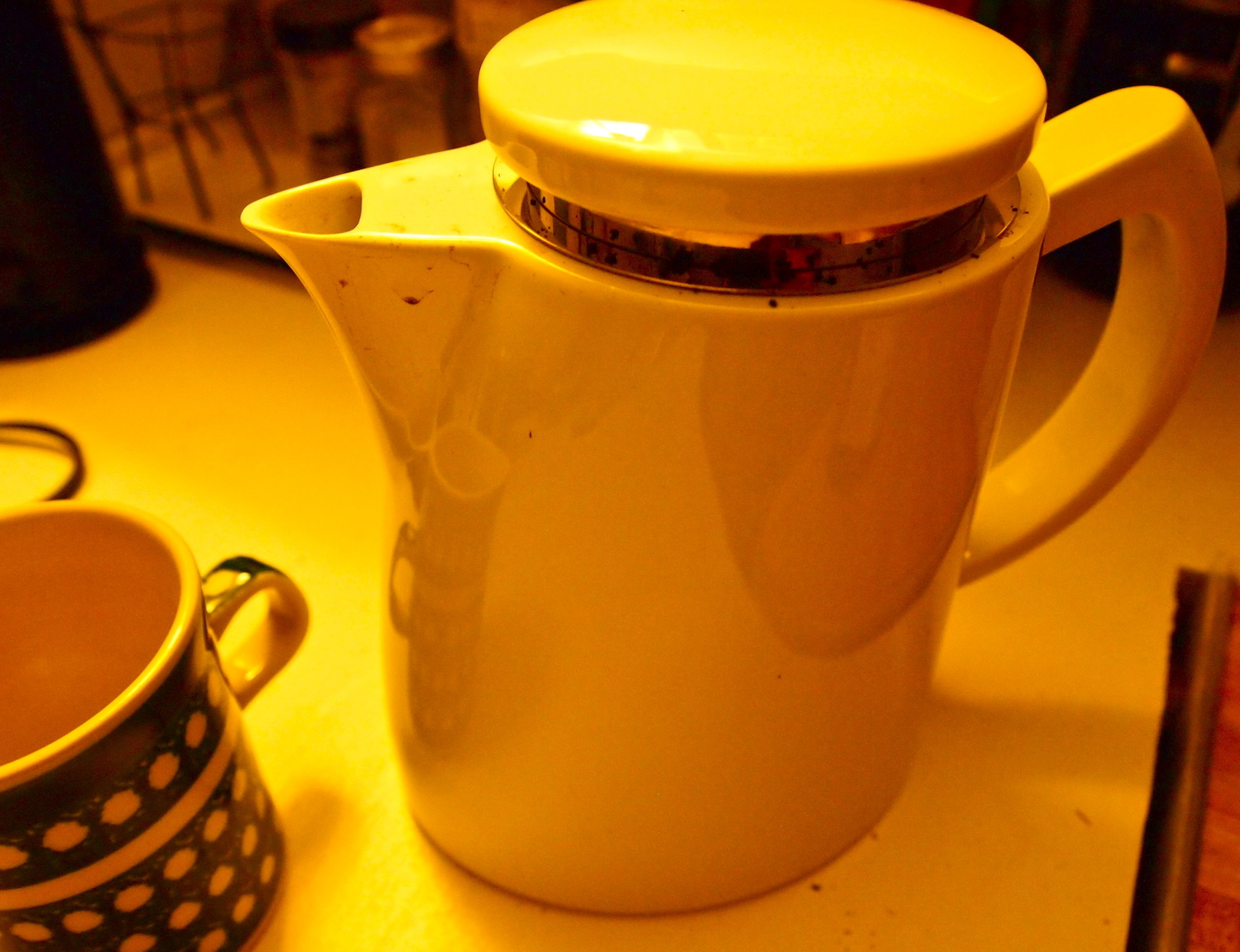
This last month of March, Molly gifted me a Sowden Softbrew coffee pot. It is outstanding. I first came across it in an Atlantic Monthly article linked here. Before Sowden (or BS, as we call it around the apartment), Molly and I had fixed our morning coffee with a ceramic funnel and paper filter. It worked well for two, but we discovered that when we had small gatherings at our place, we spent more time making individual coffees instead of hanging out and conversing with our guests. So it was fantastic to find the Sowden. In The Atlantic article, Corby Kummer notes that it has “the comforting sturdiness of an English teapot.”

A second photo was discovered.

A second photo was discovered.

Out here west of the Mississippi (or what we call the Great Plains and the American West), however, we notice different things. For example, I noticed that the Sowden produces a cup of coffee you’d expect from a fusion of the French press with the methods of making cowboy coffee. By this I mean the coffee grounds (after you grind them) are allowed to sit in a metal steeping cylinder laser-blasted through with a billion 21st-century microscopic holes. So the grounds just sit in this cylinder and steep, contained, so you don’t need a French coffee plunger. And you don’t need to be as careful pouring from the Sowden as you would pouring a cup of cowboy coffee: again, the grounds are contained. The coffee by the way is extra ordinary.

I’m going to go back to checking up on the Greek-style chicken, now, and I’ll get back to these books in the morning with a cup of coffee prepped in a Sowden that Molly gifted me. Huzzah.


Pre-gaming for FX’s “Fargo” Premiere at The Fargo Theater in Downtown Fargo

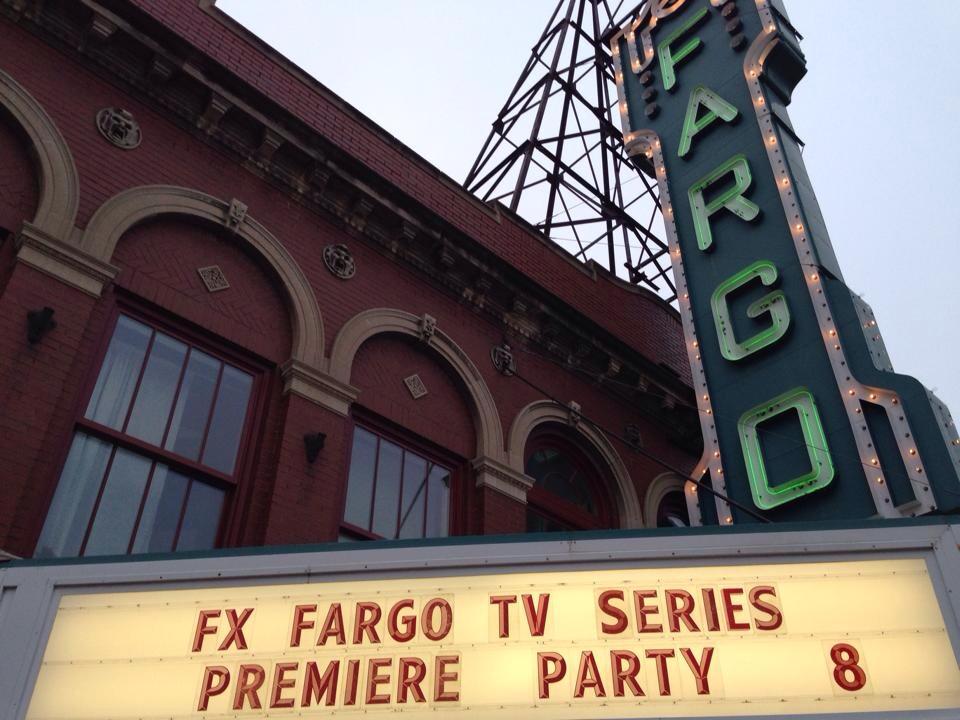
Photo by Holly Anderson Battocchi.

Photo by Holly Anderson Battocchi by Tricia Fossum.

As the title of this blog entry suggests, since Molly and I live in historic downtown Fargo, we (like many Fargoans) decided to host a pre-game get-together before the 9:00PM (CST) sharp showing of FX’s “Fargo” television series at The Fargo Theater in downtown Fargo, North Dakota. Yes, a kind of Fargo-Fargo-Fargo post-modernity, or something along those lines. My mind is still reeling about the implications, since every North Dakotan knows that the glorious Coen brothers film Fargo was almost entirely filmed in Minnesota. You betcha. But that is less and less transparent the further one is from Fargo. So I am convinced and know that some kind of global Fargo diaspora has developed, and is only reshaped and pushed in different directions with this television series. It’s kind of like when someone who is born in Chicago with Irish genealogy listens to modern Irish music and says, “I’m Irish.” Actually, it’s not anything like that. Nevermind. On to the Fargo evening, though.

Hot dish and jello salad photo by Molly McLain. Hot dish and jello salads provided by Fargoans.

Hot dish and jello salad photo by Molly McLain. Hot dish and jello salads provided by Fargoans.

Yesterday evening Molly picked me up after work and we made it back to our apartment in just enough time for two things to happen before company arrived: we decided that I would make this fancy hot dish recipe while Molly would straighten up the dining and living room. It worked dontchaknow. Guests started pouring in our door just after 7:00PM, and there was much back-slapping and guffawing. Since we were celebrating Fargo and midwestern and northern Great Plains culture, there was also large amounts of passive-aggressive acknowledgement, and commands phrased as questions punctuated with a “then” at the end; as in, “Do you want to pass the hot dish then?”

The conversation flowed, as did the hot dish and jello salads last night. So much that I didn’t get a chance to snap any photos of the event. But several friends did. I pulled a few of the photos from the social media this evening. That is why you get a picture of the hot-dish spread, taken by Molly. The other photos are from our highly trained professional photographer friend, Holly Anderson Battocchi (yes, her Italian-American husband Dante lives in Fargo too). At the end of our get-together, one large group left the pre game Fargo-Fargo-Fargo get-together to take in the FX “Fargo” premiere. A smaller group (that’s us) decided to stay behind at our apartment. We rationalized us not attending “Fargo” by saying we don’t need to see “Fargo” because we are and live and create Fargo, everyday. Aw, geez.


Digital Ed Ayers at the University of North Dakota

Bill Caraher (r) introduces a digital Ed Ayers, streamed live from the University of Richmond to give a talk at the University of North Dakota.

Bill Caraher (r) introduces a digital Ed Ayers (l), streamed live from the University of Richmond to give a talk to the University of North Dakota.

Yesterday in the late afternoon I found myself finished up with fieldwork in Grand Forks, so I thought I’d drop in and catch the digital Ed Ayers being beamed in from the University of Richmond to the University of North Dakota. To history nerds, Ayers is a big deal. Bill Caraher mostly if not entirely lined up the talk. Bill received his undergraduate training in Latin and Classics at the University of Richmond, and today Ayers is the president of said U of Richmond. They met on that common ground.

It was great to hear Ayers chat about his foundational website in digital history. At some point in 1993, The Valley of the Shadow went on-line. You can link to it here. And there is even a Wikipedia page to it here. Ayers noted that with digital projects, it is not only important that they be started, but also that they come to completion. So this, as he pointed out, is why we see 1993 and 2007 at the bottom of the web site. Ayers also noted that in the 1980s, historians thought they could revolutionize the discipline through qualitative analysis. Ayers said that qualitative idea “lasted three weeks.” History certainly requires data. But it is in large part about stories and narratives, and about figuring out ways to make the raw data accessible.

Through this, says Ayers, we are now witnessing what he calls generative scholarship. By this, it is meant that scholarship does not come to some sort of final conclusion. Instead, generative scholarship encourages anyone and everyone to engage with the historical data, or texts, and speak up and out about what they see. This, in turn, adds to the dialog, thus keeping it alive.

Life is a series of short and long term stories. This is how we make sense of it all, and also how we make sense of lives lived. This is what I thought about on my drive back from Grand Forks to Fargo.


Molly and Me: Facebook Engagement Update

We live in a world of social media, and when things happen in our personal and professional lives, we post them.  Yesterday, before Molly set off on some business in D.C., she updated what her and I have savored personally for some weeks now: we made our engagement to one-another Facebook public. Yes: a status update, so you know it’s official. I thought the update would garner quite a few likes, and it did: just over 600 in a 36-hour period. We felt blessed and fortunate, and a friend of mine, John Ward, predicted that the actual wedding will be huge. Molly and I are waiting to plan all that out in due course. Here’s to blessing Molly for blessing me, and to our family and friends for reciprocating the same.


Dungeness Crab and North Dakota Walleye

Sensibly priced Dungeness crab.

Sensibly priced Dungeness crab.

Over the weekend I located some Dungeness crab at the Costco in West Fargo, North Dakota. To clear it up for non-Fargoans and non-North Dakotans, yes, Fargo is large enough to have a West Fargo (perhaps an idea for a second Coen Brothers film entitled West Fargo, which Molly says is on the east coast of North Dakota). The crab was so sensibly priced that I couldn’t avoid it. A small contingent — Mira McLain and Ben Simonson — from Valley City, North Dakota, came as well, bringing fresh-caught North Dakota walleye and sauger. Aunt Chris McLain also joined us, as did Matthew Trefz and Karis Thompson.

North Dakota walleye and sauger fish fry.

North Dakota walleye and sauger fish fry.

While eating the crab, I noted a couple things: first, fresh crab eaten in the middle of North America almost confuses one’s sense of place. It’s something that tastes like the ocean but it is so far removed from that locale. So if you’re in Fargo, or Ohio, and if you locate delicious and sensibly priced Dungeness crab, go for it. You get to taste the ocean while on a sea of prairie.

The second thing the royal we noted was that eating whole crab is an event: it takes patience and effort, and plenty of melted butter. Up to this point in time, the lot of us were land-lubbers the most if not the majority of our lives. Sure, one or two of us had the occasional deep-sea fishing experience, but that was more exotic than frequent.

After the feast, even the Chihuahuas were exhausted.

After the feast, even the Chihuahuas were exhausted.

Like I said, Ben, who often squeezes 25 hours of ice fishing into his 24-hour vacation days, brought the North Dakota walleye and sauger. And the feast was just that, a combination of steamed crab from the Pacific Northwest and North Dakota freshwater fish, fried up on the spot to absolute perfection. Aunt Chris provided a homemade fudge and ice cream desert, something she learned from her mother. Heritage dinners are real, and they often involve statements such as, “My mother used to make this.” I thought about that, and how the Sunday evening meal created a memory we could someday look back on 20 years from now.

Note: Twenty-four hours later, a March 31-April 1 blizzard is going full tilt. I just wanted to document it all. Here’s a video short of Matt Trefz offering a balanced assessment of Dungeness crab.


Weekend in Montana

North Dakota sunset from March 20, 2014, near the Crystal Springs exit on I-94.

North Dakota sunset from March 20, 2014, near the Crystal Springs exit on I-94.

I’m currently blogging from downtown Bozeman, Montana, after Molly and I hit up Chico Hot Springs (click here for a history of Chico Hot Springs) last night and earlier today, visiting her uncle in Livingston, and a scattering of her family in Paradise Valley. While at Chico we relaxed, and reflected on how Molly’s late father, Harley, loved this place. Harley grew up in Livingston, and Molly explained how her dad used to love taking summer time dips in the Yellowstone River throughout his entire life.

Of that Yellowstone, yes: the mountain runoff feeds it direct. This water meets up with the upper Missouri River near the Montana-North Dakota border. For the long hydrology of it all, this water eventually empties into the Mississippi near St. Louis, and then it runs to the Gulf of Mexico. It’s nice to catch it fresh up here in the glorious Rockies, though.

A short walk along the Yellowstone River in Paradise Valley, just south of Livingston, Montana.

A short walk along the Yellowstone River in Paradise Valley, just south of Livingston, Montana.

Here are a couple photos from when we left Fargo up to Bozeman. The above photo is the evening sky from March 20, 2014, around the Crystal Springs exit on I-94 in North Dakota. What the photo didn’t catch (or what we just observed rather than photographing) was the sun reflecting off the aqua blue of the melting ponds (kind of like a light turquoise, and highly reflective from the couple inches of water on the surface of the ice). 

OLYMPUS DIGITAL CAMERA

Gil’s Goods in downtown Livingston, Montana.

The middle photo is the Yellowstone River from earlier this morning, and the final is from downtown Livingston, Montana. If you visit Livingston, go to Gil’s Goods for food. It is good at Gil’s. I think tonight we’ll try to track down one more hot springs dip, this at the Bozeman Hot Springs. Yes: make a vacation out of the hot springs scattered throughout our glorious American West. It is good for the muscles and spirit.