Author Archives: Aaron Barth

Notes from the WSSA Conference in Denver

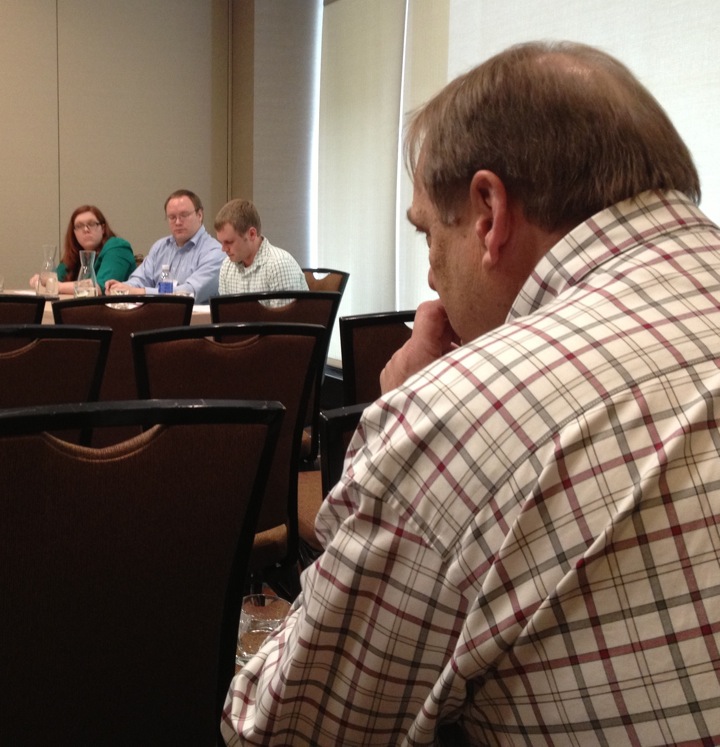
Tom Isern at right listens to his student of history, Aaron Gutman, deliver his paper on the microhistory of three Prussian soldiers mustered into the US Army in 1862 to help with the defenses at Fort Abercrombie, Dakota Territory.

Tom Isern at right listens to his student of history, Aaron Gutman, deliver his paper on the microhistory of three Prussian soldiers mustered into the US Army in 1862 to help with the defenses at Fort Abercrombie, Dakota Territory.

It is now Saturday evening and I am finishing up another robust Western Social Science Association conference, this time in the Queen City of the Great Plains that is Denver, Colorado: a cosmopolitan cattle town and gold mining stop at the edge of the Great Plains and the Rocky Mountains (it was in this location that in the second half of the 19th century, south-north moving cowpunchers and cattle trails intersected with the east-west moving overland settlers, miners and pioneers). This morning Aaron Gutman (North Dakota State University) delivered his paper, “The Siege of Fort Abercrombie D.T. 1862 and its Global Connections,” emphasizing the ethnic make-up of three German-Prussians commanding the cannon battery for the US Army during the siege at the fort in late-August and through September of 1862. Gutman was apt to point out that the Prussian immigrants mustered into Civil War service were experienced with street fighting, having come from the renegade and liberal streets of the German revolutions of 1848. I also had a great time listening to Alex Steenstra (Northern Arizona University) and Christine Cheyne (Massey University, Palmerston North, New Zealand) talk about the Mighty River Power struggle between the Maori and the New Zealand Crown, and the fracking going on today in New Zealand.

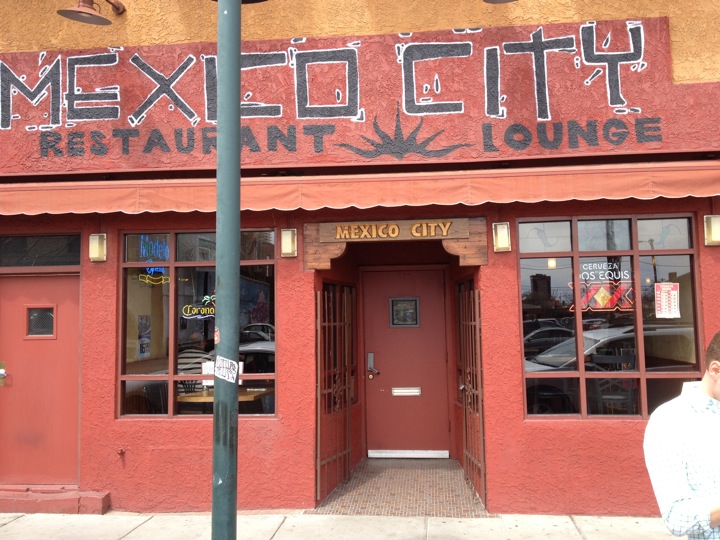
Mexico City in downtown Denver, Colorado.

Mexico City in downtown Denver, Colorado.

Yet as historians, archaeologists, humanities folk and social scientists considered what happened and what is happening in great detail at these conferences, we also take account of our contemporary surroundings. This includes food, music and drink. So a quick run-down of some of the dining establishments visited during this professional conference include the spectacular Biker Jim’s hot dog joint (I had the delicious duck-cilantro dog), and the restaurant Mexico City, both in one of Denver’s historic districts. There was some Thai place that we visited too (the name escapes me, but I have found inspiration with the lemon grass coconut soup, and will be bringing the general recipe idea back to the northern Great Plains). Of music, I got to see the Tejon Street Corner Thieves belt out some street-level blue grass, and I purchased one of their DIY CDs for the street-level market price of $5.00. Of drink, there is an infinite amount of barley pop varieties to try, and I have taken to the stuff in the can — an archaeologist friend of mine in Missoula calls these “canned goods.” But I better wrap this up because the 55th Annual Western Social Science Association conference reception begins in less than 20 minutes.


Revisiting Dee Taylor’s Archaeology of Roosevelt’s Elkhorn Ranch

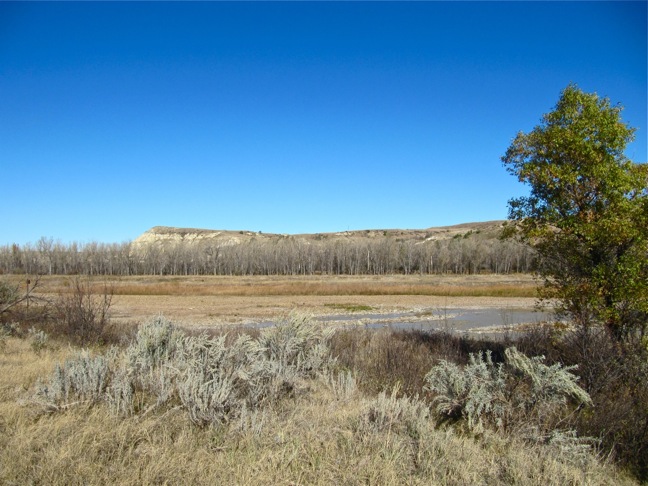
A view of the Elkhorn Ranch landscape from October 6, 2012.

A view of the Elkhorn Ranch landscape from October 6, 2012.

Some years ago, perhaps around 2008, friend and colleague Lou Hafermehl asked me to join up with him in research and a study that sought to look at the landscape history in and around Theodore Roosevelt’s 1883 Elkhorn Ranch in southwestern North Dakota. For a variety of reasons, our project came to a halt (the decision above our pay grade, as most if not all are), but prior to that, I had come across perhaps the best modern archaeological investigation of a “man camp” in western North Dakota: the Dee Taylor’s study of the Elkhorn Ranch. Arguments can be made back and forth as to whether the cattle ranching industry in the late-19th century was in fact an industry with man camp associations. I would argue yes, since it involved a clear boom-bust cycle, over-crowded and over-grazed grasslands, punishing winters, heavy speculation, and industrial railroads that attempted to bring the cattle to markets in Chicago and beyond. Actual cowboy open range cattle ranching was a short-lived event in American history, and perhaps this is why it is so heavily romanticized: it came and went like a flash in the pan (barb-wire fencing ultimately brought an end to those pesky open grazers).

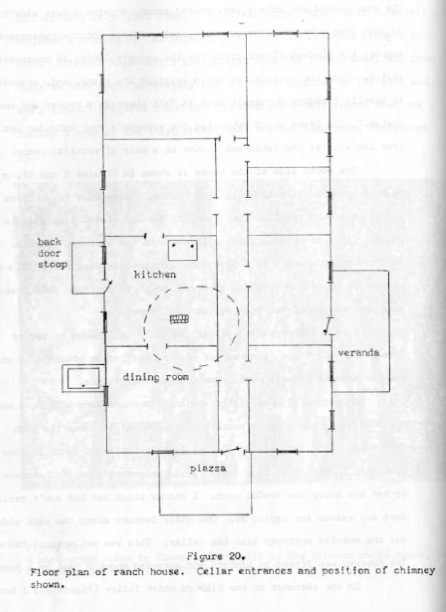
The layout of the Elkhorn Ranch home in Dee Taylor, "Archeological Investigations of the Elkhorn Ranch Site" (1959), 49.

The layout of the Elkhorn Ranch home in Dee Taylor, “Archeological Investigations of the Elkhorn Ranch Site” (1959), 49.

The 1959 archaeological investigation at the Elkhorn was conducted by Dee C. Taylor (Montana State University), and it is titled, Archeological Investigations of the Elkhorn Ranch Site. Without going over the 146-page report in detail (at least not here), I thought I’d mention at least one of the pieces of material culture that the archaeological crew recovered from the Elkhorn Ranch house. In reading through the domestic assemblage, my eyes focused on the label of one of the tins recovered that said, “OYSTERS.” The three individuals out at the Elkhorn (Theodore, but more so Bill Sewall and Wilmot Dow) were from or around New England (Sewall and Dow served as hunting guides for Roosevelt in Maine). One can imagine that they would get a bit lonesome for some culinary semblance of home, and tins of oysters might have filled that void. Or they could have simply been hungry for food, and a tin of oysters was what they had to eat.

In today’s man camps of western North Dakota, at least the multi-national corporate Type I camps, the kitchens openly advertise southern style cooking, likely to draw the attention of any number of oil laborers from the Gulf of Mexico region. So in thinking about this in a comparative studies kind of way, one can say that in the 1880s New England ranchers devoured oysters at the Elkhorn Ranch site along the Little Missouri River, and in 2013 oil laborers from the Gulf of Mexico area are now on the northern Great Plains, inhaling canteen-style southern cooking around Tioga, Alexander and beyond. This is archaeological food for thought before I head to Denver to present my paper at the Western Social Science Association on the modern archaeology of man camps in western North Dakota.

Note: in his introduction, Dee Taylor noted that he took two anthropology grad students along on his excavation crew, William G. Buckles and John J. Hoffman, and other crew members included Arvid Scott, Rodney Myers, and Vernon Goldsberry. Be very suspicious of any historian or archaeologist who does not mention anyone but themselves as researchers, writers, and idea-generators.


US-Dakota Wars, Then and Now: Ellendale, North Dakota, April 5, 2013

1862-and-2012Last night in Ellendale, North Dakota (not far from a September 1863 massacre site of memory and mourning that is Whitestone Hill), a panel discussion between Natives and non-Natives took place at the Ellendale Opera House. The discussion opened with introductory remarks by North Dakota State University’s Tom Isern, and then by philosopher of ethics, Professor Dennis Cooley (Dennis is co-founder of the Northern Plains Ethics Institute, linked to here). From there Richard Rothaus provided an overview of the US-Dakota Wars that started in the Minnesota River Valley, 1862, but did not end in Mankato with the largest execution in United States history. In the following years, the US engaged in a protracted punitive campaign against all Sioux, regardless of whether they participated in the US-Dakota Wars throughout the Minnesota River Valley in 1862 — the many were punished for the actions of a few.

I think one of the main reasons folks came to this — and they expressed it — was to listen to what Tamara St. John (Sisseton-Wahpeton Oyate, South Dakota) and Ladonna Brave Bull Allard (Standing Rock Tourism Director, North Dakota) had to say. Toward the end of the conversation, several of the Ellendale residents expressed immense thanks for the opportunity to listen, and one individual said they will use this panel discussion to navigate how to go about organizing the 150th year event at Whitestone Hill this September.

The US-Dakota War Panel Discussion from April 5, 2013, in Ellendale, North Dakota.

The US-Dakota War Panel Discussion from April 5, 2013, at the Opera House in Ellendale, North Dakota.

To solidify our imagined sense of geographic history, I thought that it might be helpful to circulate the following map above that situates Native America on the northern Great Plains circa 1862, and contrasts it with the 2013 Eisenhower Interstate system. Also, linked here is a audio recording of the panel discussion in Ellendale, North Dakota, from April 5, 2013, taken by Kenneth Smith. The entire event was sponsored by the North Dakota Humanities Council and the Center for Heritage Renewal.


Winter Driving in the Oil Patch of Western North Dakota

North Dakota Highway 85 on March 23, 2013.

North Dakota Highway 85 on March 23, 2013.

On March 23, 2013 (a Saturday), I drove west on I-94 from Bismarck, North Dakota to the Belfield exit, then turned north on Highway 85. My goal was to make it up to Watford City to take in a discussion on the Dakota Wars, post-150 years. The previous evening the discussion was held at Sitting Bull College, and I attended that one too. But after driving on Highway 85 that early afternoon, at least after 20 miles of it, I decided to turn around and head back to Bismarck. The wind carries wisps of snow over the road, and it barely melts, and then freezes. In the afternoon, the roads were a kind of icy-slush, and my plan was to attend the discussion that started at 7pm, and then head back to Bismarck around 9pm. The temps would drop, and the icy-slush would turn to straight-away ice. In both academic and lay-person parlance, driving at night on these roads is what we would have called a “really, really dumb idea and follow through.” So on the afternoon drive up, I eventually pulled over at a safe place, called ahead to Watford City to inform the group that I had a change of plans, and then turned around and headed back to Bismarck. Before turning around, though, I captured an audio-video short of what the roads were like, a kind of cross-section of what western North Dakotans and oil laborers (they are increasingly the same thing) are exposed to each and every day.

In the audio-video: to the right a pick up is driving in the ditch after having just slid off the road while in the left lane oil trucks whip by in the opposite direction. Stay safe out there folks, and don’t let yourself or crazed bosses or market forces hurry you any quicker than you need to be going. Remember this: the oil isn’t going anywhere, and it will be there tomorrow.

An aside: in driving from Sitting Bull College to Bismarck, and then in an attempt to make it up to Watford City, I couldn’t help but thinking about how certain North Dakotans will sometimes in a very judgmental tone say, “Look at all these people coming into our state!!… Do you think they will stay?” And then thinking after that how in the 1860s and on Native elders may have said the same thing about our arriving non-Native and Euro-American great-great grandparents and great grandparents. Then I start thinking about how population movements throughout world history have almost always been chaotic…


Aaron Beede on Women’s Rights in North Dakota Circa 1915

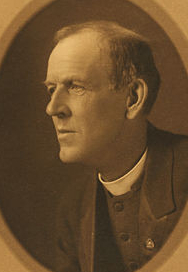
Aaron McGaffey Beede, Digital Horizons collection,  State Historical Society of North Dakota.

Aaron McGaffey Beede, Digital Horizons collection, State Historical Society of North Dakota.

In the last couple weeks I took a day to visit the special collections and manuscript room at the University of North Dakota, Grand Forks. While sifting through one box and folder after another, I came across a 1915 excerpt where the Episcopalian Reverend Aaron McGaffey Beede, PhD, opined on the way the North Dakota legislature treated women at the state capitol. Beede was disgusted with the legislature. The local story, as Beede set it down, is as follows in his February 19, 1915 journal entry:

…The House voted for ‘Equal Suffrage’ to get rid of the mob of women at the capitol… then when the women have gone and scattered from the city to their homes celebrating, the House recalled the bill, to get rid of the bill. I call that ‘double crossing.’ I am fully in favor of allowing all women to vote, not withstanding some heroic ‘suffragettes’…

Thank you Beede for calling out legislative double crossing. Women’s suffrage required individuals at all levels to make that kind of difference. And sometimes local state legislators were not with the times. In this case, a national amendment eventually brought them up to speed. (A pertinent John Stuart Mill 1869 link here.)


US-Dakota War Memory and History

This last Friday (03/22/2013), I attended one of the four US-Dakota War Panel Discussions, this one at Sitting Bull College, Fort Yates, Standing Rock Nation, North Dakota. The events are co-sponsored by the North Dakota Humanities Council and the Center for Heritage Renewal. The discussions are a give-and-take, where three Native and non-Native historians and discussants give introductory remarks and impressions of where we are “at” today, 150 years after engagements, battles and massacres — what today we call Total War — started in the Minnesota River Valley in 1862, and concluded albeit temporarily at Killdeer Mountains in 1864. (I say “albeit temporarily” because the Battle of Greasy Grass [aka, Little Big Horn] and Wounded Knee had yet to come).

Two of the many impressions I had at this particular event are as follows:

The US-Dakota Wars panel discussion at Sitting Bull College on March 22, 2013.

Photo from the US-Dakota Wars panel discussion at Sitting Bull College on March 22, 2013.

1) This public format remains one of the best ways to open a discussion that broadens the exchange not just with the “official” panel discussants, but with the audience members as well. The quasi-lecture and conversational format brings new voices into the fold, and this is important in that it allows researchers an opportunity to hear about historical particulars that simply do not exist in the archives or in “official” histories.

2) In this Sitting Bull College context, one audience participant noted how they, as a Native, felt a bit more comfortable opening up and chatting about the history and memory of the US-Dakota wars: depending on social contexts, individuals may or may not decide to talk about particular points of memory and history. This is an interesting intersection between our Sense of Place and Sense of History: the history we will talk about is largely dependent on where we are and who we are with. This also made me think about how it would be interesting to track how each one of these discussions played out. For example, in chatting with Richard Rothaus after the discussion happened on March 23, 2013 in Watford City, North Dakota, Rothaus noted how the audience contributed a completely different set of voices, and asked a completely different set of questions. This no doubt is due to the different range of cultural back-drops everyone comes from, and also how our vision and memories of the past are shaped by the different cultures we are born in to (for example, the first panel discussion was approximately 240 miles from the second panel discussion, both of which were in North Dakota: the first was at Sitting Bull College, Fort Yates, the second in Watford City, North Dakota).

This is the first of 4 discussions, and each discussion is happening (or happened) at a different location.  The third discussion will take place on Friday, April 5, 2013, at the Ellendale Opera House in Ellendale, North Dakota, and the fourth discussion will be at the Lake Region Heritage Center in Devils Lake, North Dakota on Saturday, April 6, 2013. More details at the following links here and here.


Revamping the North Dakota Industrial Commission

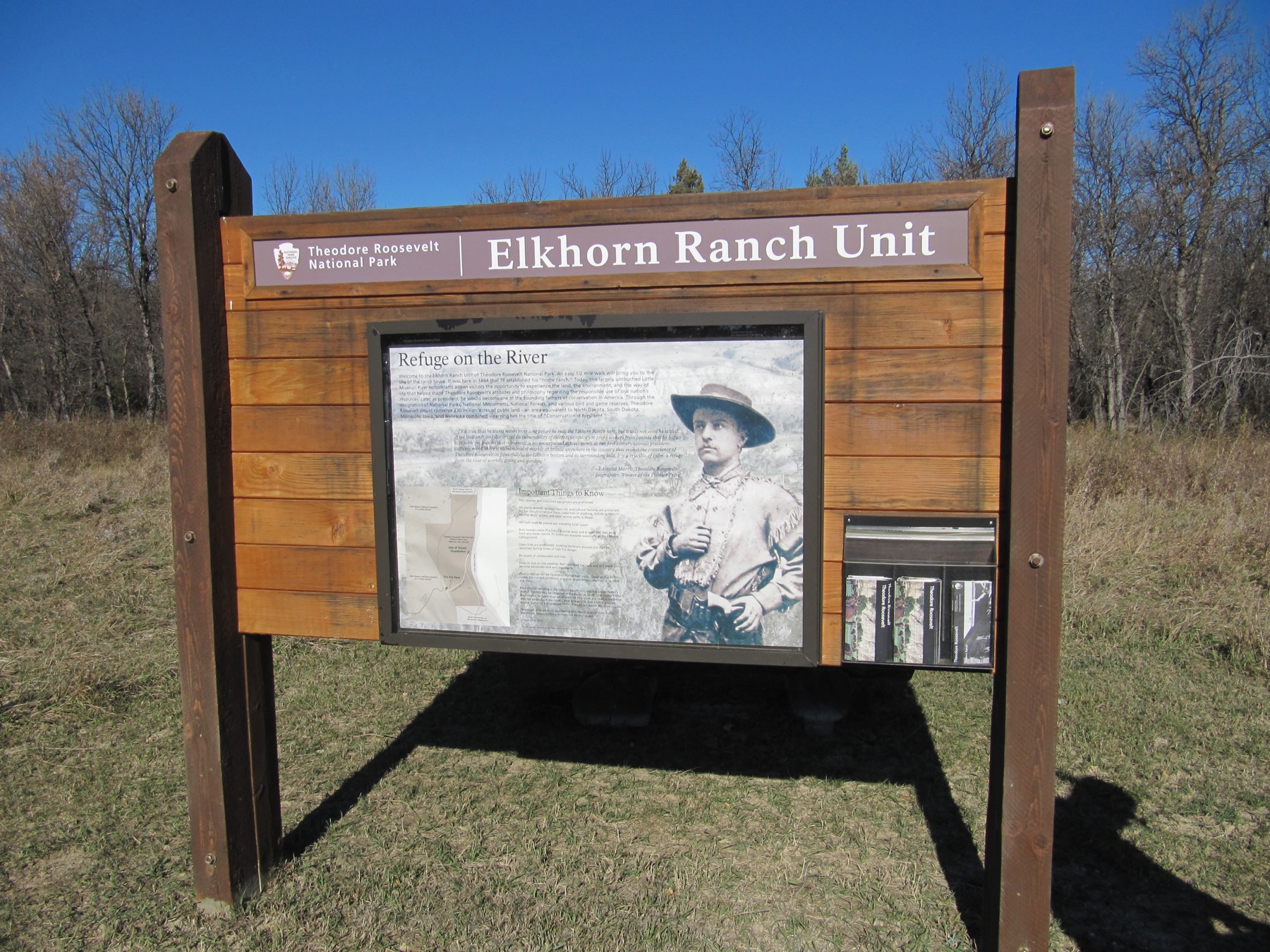
Signage at Roosevelt's Elkhorn Ranch. Photo from September 2012.

Signage at Roosevelt’s Elkhorn Ranch. Photo from September 2012.

Theodore Roosevelt passed the American Antiquities Act of 1906 after experiencing what unencumbered industrialization had done to the American West. Since 1906, this initial piece of legislation has been amended and updated to reflect the changing times. I was thinking about that when I read this morning’s story in The Dickinson Press, “Oil Company Stakes Out Area for Well Pads Steps Away from Roosevelt’s Elkhorn Ranch.” A subsidiary of ExxonMobil, XTO Energy has staked an area immediate to Roosevelt’s 1883 Elkhorn Ranch just along the Little Missouri River in the badlands of western North Dakota.

With the American bison nearly extinct (and who knows what other species), when Teddy was president he decided to draw some boundaries around sections of wilderness for preservation. He did this for both applied and philosophical reasons. By setting aside and declaring these spaces sacred, us Americans would be able to engage in recreation (when unpacked, the word means re-create), and we would also have a kind of common cultural datum that we could all associate with from one generation to the next. These cultural datums provide society with stability in that everyone has a common point of reference. “Hey, did you go to Elkhorn Ranch last weekend?” The response is, “Yeah,” and both individuals know they experienced and perceived the same looking landscape, the same space, but at different points in time. This is what David Glassberg was getting at in his 2001 work, Sense of History. After attending two meetings in Bismarck that concerned the Killdeer Mountains in January and February, 2013, I and others increasingly believe that this is fairly meaningless to the majority party bottom-liners in our state government. I’ve thought about this, and wondered if there was a better way to bring our State Industrial Commission up to speed.
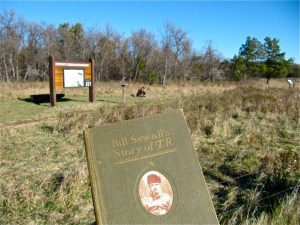
Sometimes folks go to the Elkhorn to read about the Elkhorn. Photo from September 2012.

Sometimes folks go to the Elkhorn to read about the Elkhorn. Photo from September 2012.

The State Industrial Commission was originally formed in 1919 with the idea that it would guide industrial development in the state. I am not against industry. In fact, I don’t know how someone could be “against” industry. It would be impossible. I recognize it as the substructure upon which the superstructure of our culture rests: if you like the arts and humanities, you gotta have an industrial foundation. In 1919, only 30 years after North Dakota had gotten its statehood start, a three-person industrial commission worked. Almost 100 years later, we are learning that an industrial commission with only 3 voices on it is not working for a state with a population of approximately 700,000 (and growing).

As of March 19, 2013, the only three voices on the commission are as follows: 1) Jack Dalrymple, who was born into family Bonanza farming in Casselton, and received a bachelors in American Studies from Yale (I think under Howard Lamar, who wrote a great piece of scholarship entitled, Dakota Territory 1861-1889: A Study in Frontier Politics [1956]); 2) Wayne Stenehjem, who has a juris doctorate from the University of North Dakota (Wayne’s father was a former president of our Bank of North Dakota; and 3) Doug Goehring, who operates a 2,000-acre farm near Menoken (note: at the end of this blog posting, I have cut and pasted the public Meet the Commissioner profiles to this blogspot).

These three are supposed to listen to Lynn Helms (who holds a bachelors of science in engineering from the South Dakota School of Mines), and Lynn is supposed to be an expert at informing the commission on approving drilling permits. At the last meeting I attended on Killdeer Mountains, Lynn attempted to explain the archaeology and history to the three commissioners, and this was unfair to him: Lynn’s training is in engineering and his professional life history has been in the oil business. He indeed is familiar with the workings of his profession. But when it comes to history and archaeology, he is tasked with learning about and briefing the public on two disciplines that professional historians and archaeologists think about incessantly, 24/7, 365 days/year, for their entire lives.

Public visitor sign-in list at Roosevelt's Elkhorn Ranch in western North Dakota. Photo from September 2012.

Public visitor sign-in list at Roosevelt’s Elkhorn Ranch in western North Dakota. Photo from September 2012.

The three of these commissioners reflect just a small cross section of North Dakota society, yet they are tasked with the job of making decisions for one and all. This isn’t 1919 anymore. It is 2013, and it is only fair to modify the industrial commission accordingly. Here is one idea: the industrial commission needs to be expanded to a board of 12-to-15 members. For example, in addition to the three members already on the commission, we need to add the following: 1) a medical doctor; 2) an economist; 3) a pastor, priest and two nuns; 4) a biologist; 5) a historian; 6) an archaeologist; 7) at least two Native elders; 8) a cattle rancher; 9) a banker; 10) an ASE-certified mechanic; 11) a philosopher of ethics; 12) an IT/Web-2.0 expert; 13) an English major; 14) a soldier-veteran; 15) and so on. To be quick and short, this would reflect a much greater cross-section of North Dakota society. It is just an idea, nonetheless. And it is unlikely to gain any traction in this legislative session (North Dakota’s 63rd). But perhaps in number 64 or 65.

As promised, here is a distillation of the public profiles of our industrial commission as of March 19, 2013:

Jack Dalrymple, Governor

Born October 16, 1948, Dalrymple grew up in Casselton on the family farm, established in 1875 by his great-grandfather. He graduated with honors from Yale University in 1970 with a bachelor’s degree in American Studies and then returned to North Dakota to manage the farming operations.

Dalrymple came to the North Dakota Legislature in 1985, representing a rural Cass County House district. He served eight terms, including six years as chairman of the House Appropriations Committee. In 2000, he was elected North Dakota’s 35th Lieutenant Governor with Governor John Hoeven and was re-elected in 2004 and 2008. He was elected to his first full term as Governor in 2012.

Dalrymple is a nationally recognized leader in value-added agriculture. He was the founding board chairman of Carrington-based Dakota Growers Pasta Company, the third-largest manufacturer and marketer of dry pasta products in North America. His work in helping to found the company earned him the 2007 Ernst and Young Midwest “Master Entrepreneur of the Year” Award. Dalrymple served as chairman of the North Dakota Trade Office and the Governor’s Commission on Education Improvement.

Wayne Stenehjem, Attorney General

Attorney General Wayne Stenehjem was born in Mohall, North Dakota.  He graduated from the University of North Dakota and received his law degree from the UND School of Law in 1977. 

Stenehjem was elected to the North Dakota House of Representatives in 1976, serving for two terms until his election to the ND Senate in 1980.  He served for twenty years in the Senate until his election to the Office of Attorney General. Stenehjem served on the Judiciary Committee throughout his tenure in the Legislature, and was Chairman of the Senate Judiciary Committee from 1995-2000. He was elected President Pro Tempore of the Senate for the 1999 Legislative Session. In January 2001, Stenehjem was sworn in as the State’s 29th Attorney General. He was reelected in 2004, 2006 and 2010.

Stenehjem is a member of numerous boards and commissions, including the Board of University and School Lands, Industrial Commission (which oversees all state-owned industries including the Bank of North Dakota and the State Mill and Elevator), Drug and Alcohol Commission (chair), Judicial Council and Pardon Advisory Board. 

He was named one of Ten Outstanding Legislators in the US by the Association of Government Employees, and is the recipient of “Champion of the People’s Right to Know” award; SBAND Legislative Service Award; “Friend of Psychology” award; the 2005 North Dakota Peace Officer’s Association’s Lone Eagle Award, was inducted into the Scandinavian American Hall of Fame in 2007, and was named the 2011 Bismarck State College Alumnus of the Year.

Doug Goehring, Agricultural Commissioner

Doug Goehring has been North Dakota Agriculture Commissioner since April 2009 and was elected to a full, four-year term in November 2010.

A third-generation farmer, Commissioner Goehring, along with his son, Dustin, operates a 2,000-acre, no-till farm near Menoken in south central North Dakota, where they raise corn, soybeans, spring wheat, winter wheat, sunflowers, and canola. In the past, the Goehrings have also produced durum, barley, mustard, millet, safflower, alfalfa, lentils and field peas, and have had a feeder cattle operation.

Commissioner Goehring is the former president and chairman of the board of Nodak Mutual Insurance Co. and a director of American Agricultural Insurance Co.

Long active in farm organizations, Commissioner Goehring has served as vice president of the North Dakota Farm Bureau and is a member of the North Dakota Stockmen’s Association, the North Dakota Grain Growers, the North Dakota Soybean Association, the North Dakota Corn Growers Association and the National Association of Corporate Directors. An early supporter of agriculture-based, renewable fuels, he is an investor in the Red Trail Energy Ethanol Plant at Richardton.

Commissioner Goehring is a former director of the United Soybean Board where he served as chairman of the sustainability committee, domestic research committee, industrial uses and international marketing committee. He was a former director of the North Dakota Soybean Council, a former secretary/treasurer of the North Dakota Grain Growers Association and a member of USDA’s Area 4 Research Farm Steering Committee. He is the former president of the Menoken School Board and past chairman of the Bismarck Mandan Chamber Agriculture Committee.

He chairs the Biotechnology Task Force of the National Association of State Departments of Agriculture, and is president of the Midwest Association of State Departments of Agriculture.

Commissioner Goehring attended Bismarck State College and is a licensed medical laboratory technician. He attends Evangel Assembly of God in Bismarck.

Lynn Helms, Director of the North Dakota Industrial Commission Oil and Gas Division

Helms earned his bachelor of science degree in engineering from the South Dakota School of Mines and Technology in 1978, but his oil field career began as a roughneck in 1976 working summers and holidays. After graduation Helms worked for two years as a production engineer for Texaco in all of the producing areas of Montana.

In 1980, Helms joined Amerada Hess in Williston, N.D. While in Williston he worked as a production engineer, reservoir engineer and asset team leader on projects in Abu Dhabi, Alaska, Arkansas, Louisiana, Mississippi, New Mexico, North Dakota, Texas and Wyoming.

Bloody Bull from the Northern Great Plains

A ceremonial bloody bull just 10" to my left.

A ceremonial bloody bull, a Smithwick’s northern Great Plains beer back, and a salty anchovy snack just 10″ to my left.

The following is a morally decent sacrament for St. Patrick’s Day this March 17, 2013. The drink combination is Irish and English in origin, but has northern Great Plains-inspiration. Some years ago I was made aware of the Bloody Bull, or what some folks call the Bull Shot (The New York Times has the former Ben Benson’s Steakhouse Bloody Bull recipe linked to here). For the bloody bull pictured: into the glass goes, approximately, 1.5 ounces of tomato juice, 1.5 ounces of vodka (Ed Phillips & Sons Prairie spirits from Benson, Minnesota), and about 2 ounces of beef broth. Then a dose or two of Lea and Perrins Worcestershire sauce, a couple dashes of Tabasco sauce, a couple lemon wedges, and some ground pepper. The linked to recipes I found insisted on “Campbell’s double-strength beef broth.” But Nash Brother’s Trading Company broth was on sale, so I added that. To substitute the Campbell’s sodium content, I added just a sprinkle or two of Himalayan Pink sea salt.

Also note the Smithwick’s Irish Ale. At least in Minnesota and North Dakota, we refer to this as a “beer back.” When someone puts a beer back in front of you, it is unnecessary to question it, or its origins. Were I writing from the Otto von Bismarck, North Dakota on St. Patrick’s Day, I would have purchased a growler of Laughing Sun’s Irish Red Lager, especially brewed for today. But we sometimes just have to grin and bear it, and take what we can get. Also pictured are King Oscar’s anchovies. These are a good salty snack, and when company is around, you rarely need to concern yourself about having to ever replenish the plate.

Anyhow, back to it on this end. And Happy St. Patrick’s Day from the northern Great Plains.


The North Dakota NAYS against the History and Archaeology of the Killdeer Mountains

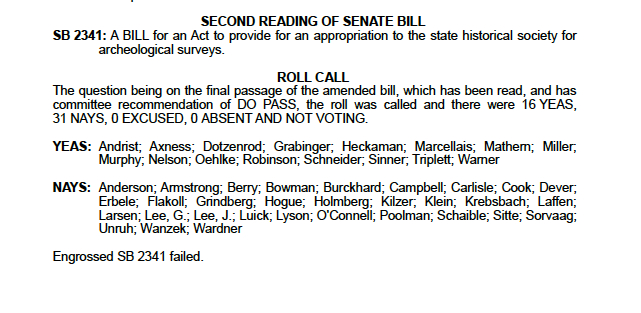
In the last couple months, Killdeer Mountain land owners, professional historians, archaeologists, anthropologists, tribal historians, Native elders and biologists spent a good deal of time at the capitol in North Dakota to inform the legislature on the importance of being a bit more deliberate than usual when it comes to drilling for oil on Killdeer Mountains in western North Dakota. Ultimately, SB 2341 was created but voted down with moderate rather than extreme impunity by North Dakota’s 63rd legislature. Sigh…

The YEAS and NAYS for SB 2341, a bill that would have appropriated moneys to fund an archaeological and historical study on Killdeer Mountains.

The YEAS and NAYS for SB 2341, a bill that would have appropriated moneys to fund an archaeological and historical study on the Killdeer Mountains in western ND.

Earlier this morning I started to wonder about who voted against the bill. The results are linked to here, and the image is a copy of who voted against SB 2341. I have yet to chat with all the individuals who voted “NAY” on this bill, at least to garner an understanding as to what motivated them to do what they did.

Had the bill passed, it would have allowed moneys for the State Historical Society of North Dakota and North Dakota State University students, and professors of history and archaeology, to conduct an archaeological survey of Killdeer Mountains. I’m thinking I didn’t do a good enough job communicating that message to fellow North Dakotans who happen to be senators. Maybe next time around.


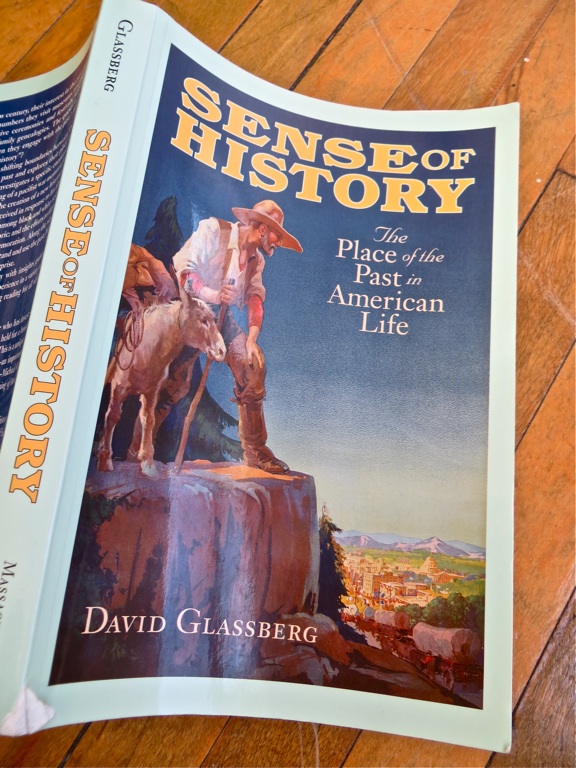
David Glassberg, “Sense of History: The Place of the Past in American Life” (2001)

In David Glassberg’s 2001 work, Sense of History, he says that to have a sense of history is to have a sense of the deep culture of a particular place. This historical sensibility is akin to having spatial and temporal sensibilities, or knowing what happened in particular locations at particular points in time. According to Glassberg, it is “not quit territoriality, as among other animals, but a sense of locatedness and belonging.” It is knowing and being conscious of kinship and ancestral bonds, and how these bonds are fixed to particular landscapes. For many, it is “at the core of who they are and the people and places they care about.” To have a sense of history is to know about previous generations that have traveled and inhabited the landscape. To have a sense of history is also to have a sense of Public History, a forum where ideas from the public and academics intersect, and how these groups bring infinite meanings to particular places in space and time. (Glassberg, 2001: 6-8)

The range of this sensibility is communicated through several case studies, from First World War memorials in Orange, Massachusetts to the thirteen-hour Civil War photomontage marathon organized by Ken Burns and financed by a variety of public and corporate sponsors. In his introduction, Glassberg references Wallace Stegner and Eric Hobsbawm. A Stegner quote fortifies Glassberg’s argument, as “No place is a place until the things that have happened in it are remembered in history, ballads, yarns, legends, or monuments.” (Glassberg, 2001: 19) In the case of the recently deceased Hobsbawm, Glassberg references his 1983 co-authored work, The Invention of Tradition. In short, this work explores how one generation after another envisioned themselves as having a kind of timeless connection with the customs of the past. Glassberg also aptly references William Faulkner, Toni Morison, and Louise Erdrich, individuals who through fiction and prose develop an identity by remembering land- and city-scapes from earlier years.

This developed identity means that when we think of, say, Erdrich, we immediately associate her with her descriptions of the Red River, or of Wahpeton, North Dakota, or with her sisters, or with her bookstore in Minneapolis, Minnesota. It is similar with Stegner, as he is inextricably bound to East End, Saskatchewan, and the same goes for Walter Webb, N. Scott Momaday, Ernest Staples Osgood, Paul Sharp, Gilbert Fite, Willa Cather, and Glenda Riley, all of whom worked toward creating a sense of Great Plains history and culture.

David Glassberg, "Sense of History: The Place of the Past in American Life" (University of Massachusetts Press, 2001).

David Glassberg, “Sense of History: The Place of the Past in American Life” (University of Massachusetts Press, 2001).

Individuals throughout time can associate with, reject, or fix their own particular stories to perceptions that authors and historians have had about certain landscapes. When a culture becomes familiar with a common set of stories, that culture is able to fixate on and relate to one another. And when an economic developer sans a sense of history takes the reigns and proposes a new project, Historic Preservationists are, at best, there to kindly remind the developer that to alter the land- and city-scape is to rub out a livable past. In Glassberg’s words:

We live in landscapes dense with both histories and memories, idealized images of the past that compete to become the standards we use to evaluate and shape our present environment. Personal recollections of past places stand against a flood of place images created for us, from guidebooks and maps published by local civic organizations that recognize some “historical” places in our community but not others, to the generic images of past American landscapes and smalltown life… History in all its varieties guides our sense of where we live, contributing to our perception of the traditions that make our place distinctive. (Glassberg, 2001: 126)

To think of Glassberg’s work in a world historical context requires that we think of each location in space and time as having its own sense of history. This indeed complicates our understanding of the past, but this complexity is nothing new. Historians, for example, that boasted the virtues and lessons of Western Civilization had one understanding of, say, Herodotus and his world, and this was much different than the understanding that Herodotus had of himself and his surroundings. This is also similar of a historian from China writing about the Mongolian hordes, or the Mongolians themselves writing about a conquest of the EurAsian steppe, from Beijing to Baghdad and to the edges of Poland and eastern Europe. In large part historians, or Public Historians, absorb methodologies set down by R.G. Collingwood in the 1930s and 1940s, at least before he collapsed and died from a brain aneurism (arguably due to his synapse firing on protracted overdrive for the duration of his life). Collingwood called on historians to first develop a philosophy toward history. That philosophy was defined as a professional ability to understand the way in which people understand or understood their world.