Author Archives: Aaron Barth

Vivian Marie (Larson) Barth

Pictured here is a photo of Vivian and David Barth, or who I know of as my Grandma and Grandpa Barth. Their three boys are sound asleep. This photo was taken not too long after the end of WWII.

Pictured here is a photo of Vivian and David Barth, or who I know of as my Grandma and Grandpa Barth. The three boys are sound asleep. This photo was taken not too long after the end of WWII.

This last Monday morning I received a call from my mom, and she informed me that my Grandmother, Vivian Marie (Larson) Barth, had passed away peacefully earlier in the morning. My grandma was 97 years old, and we got along real well. Without saying too much, I do know that I am grateful to have had such an extra ordinary grandmother, and also grateful to have lived within range of her and her influence. And although 97 is a long and full life (you really can’t ask for more), on the inside I still feel very sad, and kind of hollow about the region of the heart. But dying is a part of life. And for some reason I am reminded what Grandma Barth often said to us when she sensed we were distressed: “Everything will be okay.” This is true.

She was the reason we think of Swedes as stoic, and by no means was she void of emotion. She loved her family, her friends, her church, and her community. On occasion she would inject a sharp quip that would bring gravity to any lofty conversation. I once said to her, after reading in Engelhardt’s history of Fargo-Moorhead about J.A. Johnson, the first long-time Swedish mayor of Fargo, that he was mayor for 5 terms. Without missing a beat, Grandma Barth responded with, “Sounds like someone was in office for way too long.” This caused me to laugh out loud. While driving around with Grandma Barth, she once gave an indirect opinion of conspicuous consumption by simply saying, “You don’t need all that money to live and be happy.” Yes, we will miss you Grandma Barth, but your intellect and wisdom will continue echoing through the ages. You taught us well. A full obituary is linked here, and some reflections from Grandma Barth are linked to here and here.


Bringing American Public History to New Zealand

Just moments ago, from the northern Great Plains of North America, I submitted a short paper proposal to the other side of the planet, this to the New Zealand Historical Association (NZHA) in Dunedin, New Zealand. It is for the NZHA 2013 Biennial Conference (click the blue link to the left for direct details) on November 20-22, 2013. My paper concerns the contested public memory of Whitestone Hill, and concludes with some World Historical considerations. It builds off landscape memory and history, and research from 2009 to the present. The intent is to join two additional landscape historians, Dr. Thomas D. Isern and Dr. Suzzanne Kelley, to make a complete panel. Tom and Suzzanne are considering the public memory of local New Zealand history specific to the Lindis. I am bringing some public memory from the northern Great Plains to the mix. I thought I would share my paper title and abstract here.

Photo of Whitestone Hill from April 2012.

Photo of Whitestone Hill from April 2012.

Title: Aaron L. Barth, “A Contested Site of Memory from the American Civil War: Whitestone Hill 150 Years Later”

Abstract: In early September of 1863, as the American Civil War raged in the eastern half of the continental United States, General Alfred Sully led a military column on a punitive campaign against the Dakota (aka, Sioux) on the northern Great Plains. The military goal was to punish the Dakota majority, en masse, for the atrocities committed by a small Dakota minority the previous year in the Minnesota River Valley. Sully’s 1863 campaign culminated in an action at Whitestone Hill, this in present-day North Dakota. In his official words, Sully said he engaged Dakota “warriors… squaws, [and] children” in a “melée” and “murderous slaughter” of a “promiscuous nature.” His command killed 150 to 300 Dakota, and if he had another hour or two of light, he said, “I could have annihilated the enemy,” giving “one of the most severe punishments that the Indians have ever received.” For 150 years, the public memory of Whitestone Hill has been contested, called a “battlefield” by a United States Congressman, and called a “mistake” by Sully and Episcopalian Reverend Aaron McGaffey Beede. This paper tracks the public tension in the remembrance of Whitestone Hill, and concludes with samples of how sites of memory from this period are contested in World History.


Adventure Science and the North American Landscape

Reinhard and Rothaus set out on the first day of Adventure Science's fieldwork in western North Dakota.

Reinhard and Rothaus set out on the first day of Adventure Science’s fieldwork in western North Dakota.

This morning I’ve been listening to one of Adventure Science‘s raw audio press conferences and forums, this concerning the latest trek through the badlands of western North Dakota, and I couldn’t stop thinking about the divide between the hard and soft sciences and the humanities, and how it is so necessary for conversations to take place between them (another interview from Prairie Public can be found here). Throughout academia, this is often called “crossing disciplinary lines.” In non-academic jargon, this means that you walk down the hall or out the building and across the courtyard to someone else’s office, kitchen, machine shop or garage, and ask her or him why and how they are working on a problem, whether an abstract theorem or a carburetor.

In the case of this Adventure Science press conference (which everyone should listen to at least once), Simon Donato and Richard Rothaus explain at the outset that they undertook this project in a completely scientific and objective fashion, and by this they were not obligated to produce — ahem — results for one public or private group or another. This is true, to a point. Yet the cultures that we are born into also contributes to the way we see the world, and consciously or unconsciously we will speak to a variety of these groups whether we like it or not.

I was thinking about this in relation to an observation Simon, who hails from the culture of Alberta, Canada (this is important, just stay with me here), made about half way into the press conference or conversation (or press conference-sation). In the history of the British-Canadian West and the American West, Euro-American settlement above and below the 49th parallel played out in much different ways. Simon consciously or unconsciously hints at this. There is historical reason for this (something the late historian Paul Sharp researched at-length, and some comments on that here and here).

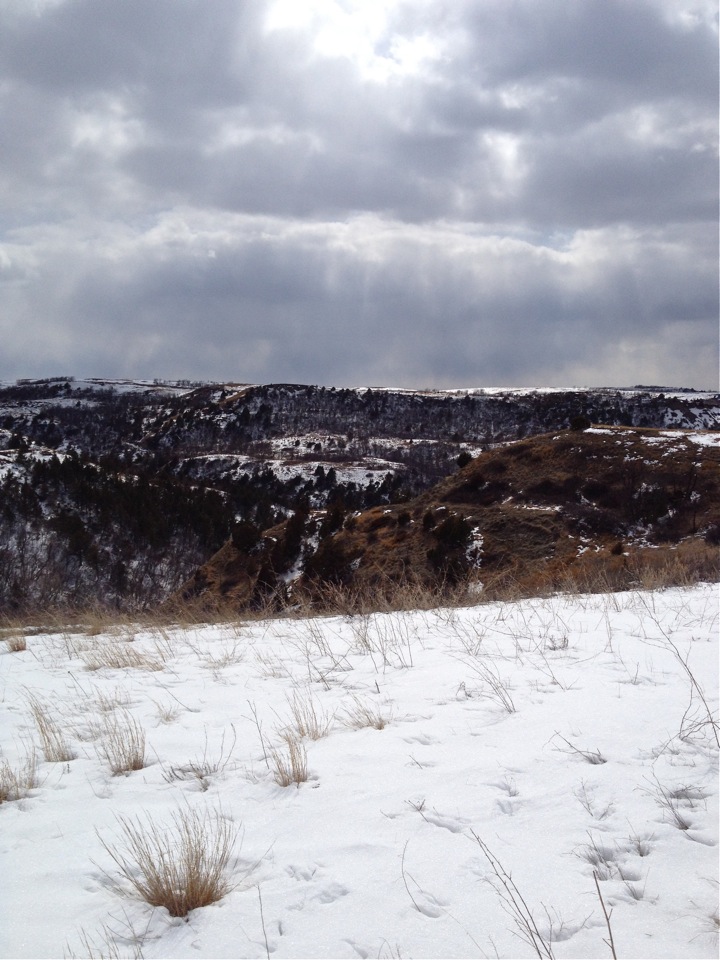
Some badlands beauty, on the abrupt cusp of the winter to spring transition.

Some badlands beauty, on the abrupt cusp of the winter to spring transition.

In the history of the Canadian West, Anglo- and Euro-American settlement was deliberate. This is often symbolized by the Royal Canadian Mounties, who would patrol and police the areas, ensuring that the Crown’s Law and Order would be maintained across all the land, and ideally across the global empire. Through this order, land would be settled in an orderly fashion, and be made “useful” and useful for the commonwealth and crown (see Thomas Hobbes for intellectual exegesis). If coming from that Canadian backdrop, either yesteryear and today, when you enter the American West, including western North Dakota, it still looks like a crazed free-for-all, even in the wilderness. At the Adventure Science forum, beginning at 35:20 in the audio, Simon said,

…As we got into some of the ranching areas where, again it’s vast, you know you feel like you’re kind of on the edge of a wilderness area, but there’s no houses… there’s fences, there’s obviously been cattle through there, but there’s no houses and no structures at all, and that was really surprising to me. Where I’m from in Alberta, if you got fences, there’s gonna be a farmhouse somewhere, there’s gonna be a barn somewhere. You get into these areas, and I was really surprised that I didn’t find these structures out there, I mean, not even hunting cabins.

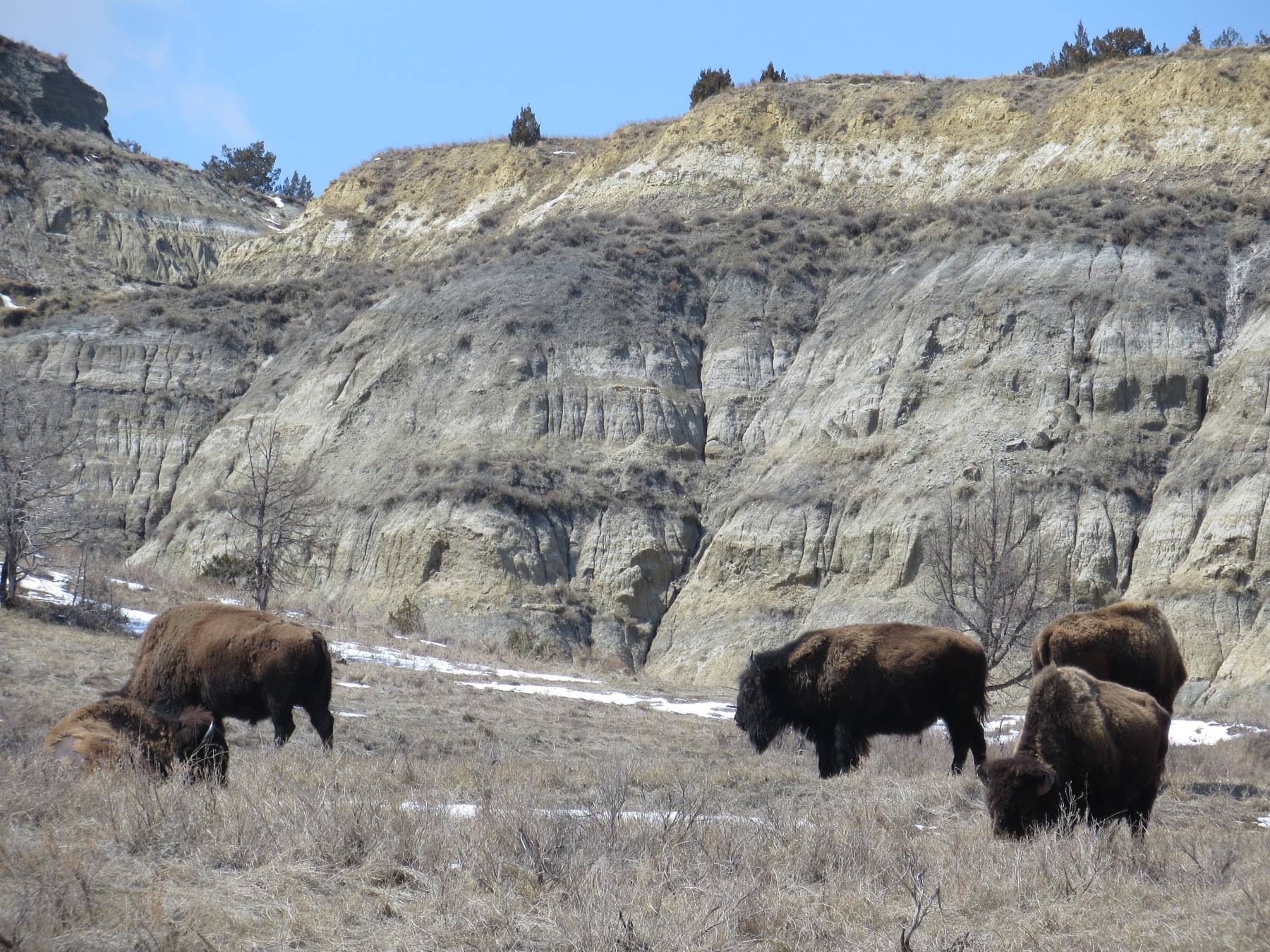
Bison in the badlands of western North Dakota.

Bison in the badlands of western North Dakota.

So I guess what Simon hints at and what I’m communicating here is that yes, science tries to be as objective as possible. But there is no amount of finality to that objective science, because as cultures evolve, so does science, and so do perceptions. What appears normal to one person will be abnormal to an outsider. This is why cross-cultural and cross-disciplinary studies and conversations absolutely have to take place, and this is why it is worth our while to conserve and preserve some of these places (one of the reasons Theodore Roosevelt set up the national parks).

Note: Native America/First Nations had occupied these badlands and North America for millenia, at least 12,000 to 13,000 years (and even this is contested by Native friends, as they have told me much longer), before non-Natives got to the area. Even the fact that we call a wilderness a “wilderness” today is a cultural bias worthy of consideration and contemplation.


The Archaeology of Gardening

Pottery SherdsThis evening, while bracing for full throttle summer and the planting that goes with it, I prepped one huge planter (it took on three of those huge bags of dirt) adjacent to the patio. Before dumping in the dirt, and for reasons that will never be made clear to me, the word “drainage” bounced through my brain. So instead of just dumping in the dirt (and dooming a plant to drown), I looked about and gathered up some small cobbles (way larger than what in the archaeology business we call a Size Grade 1). I dumped what small rocks I could find into the planter, but it was a smattering and did not seem enough. So I looked around, and found a — or, if you prefer, an — historic archaeological solution: smash up the already busted up pottery, some terra-cotta, and put the sherds into the huge planter as foundation for drainage. Last week, Molly and I salvaged these sherds while trolling up and down the streets, eyeing the curbsides during the annual, city-wide dispose-of-anything-and-everything day. As I was situating the sherds in the bottom of the huge pot, I also thought about excavating northern Great Plains, North American midden mounds and Hellenistic garbage piles in the eastern Mediterranean Levant.

BackfillAncient and prehistoric pottery is everywhere, and more often than not, ceramics and pottery uncovered by archaeologists today has, throughout the course of its own life, undergone a series of adaptive reuses: the artifacts we uncover today have been recycled for a long time, by disparate cultures and for different reasons. In using my archaeological imagination, I also couldn’t help but thinking how Ancient Romans and Hellenistic Cypriots, and Ancient Mandan-Hidatsa, would have used busted pottery for a variety of purposes, either as backfill, drainage for planters, and so on.

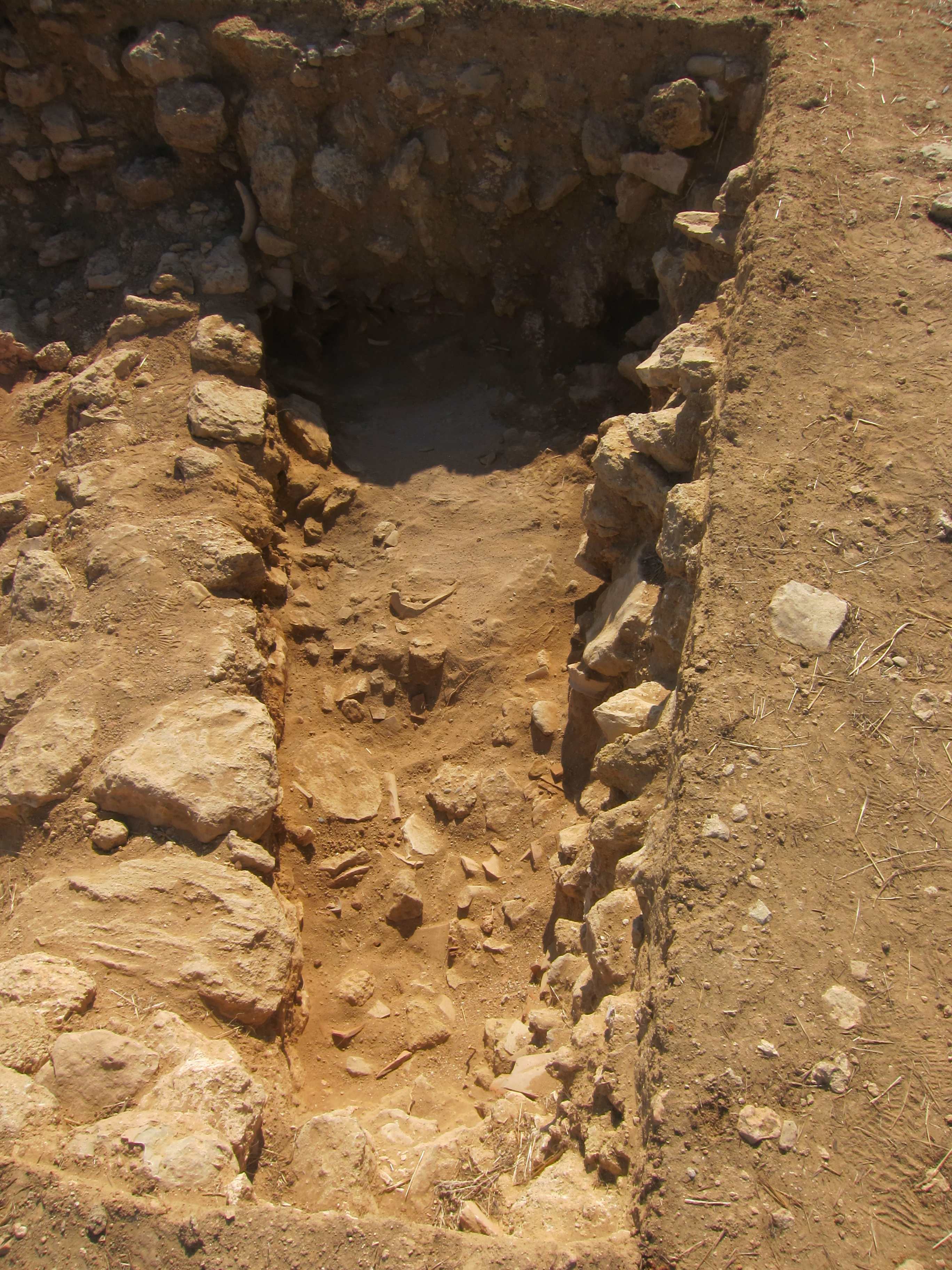
An aside: there is something soothing about the noise of used terra-cotta bases smashing against a brick wall. To the right is a photo of an excavation unit from the PKAP archaeological dig of May-June 2012 on Cyprus. At the bottom of the deepest strata, you can see the terra-cotta back fill emerging from a 3rd-century BC Hellenistic site.


Applied Archaeology Updates by and for the American West

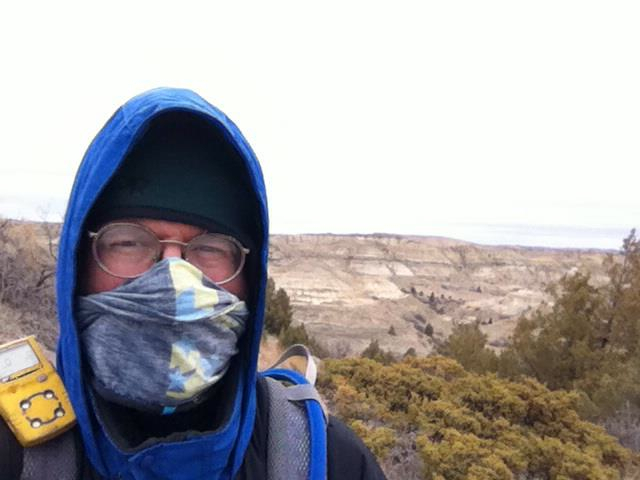
Andrew Reinhard (Princeton, New Jersey) gladly suffers for science in the Badlands of western North Dakota. He's pretty much a punk archaeological editor without borders. Photo by and for Reinhard.

Andrew Reinhard (Princeton, New Jersey) gladly suffers for science in the Badlands of western North Dakota. He’s pretty much a punk archaeological editor without borders. Photo by and for Reinhard.

The Bismarck Tribune reported today on Adventure Science‘s latest project in the Badlands of western North Dakota (the link to the article is here), a cross-disciplinary study that brought together a variety of hard and social scientists, humanities folk, and what I endearingly called Mutants — much in the sci-fi X-Men vein — the types that get a kick out of running through the Badlands in rain, sleet or snow in the day, and camping in mud at night. I had a chance to provide basecamp support for Adventure Science’s first week (some of that linked to here and here). This team was also recognized by The Explorers Club (New York City) for pushing the boundaries of human knowledge in otherwise unwelcoming environs. The team will gather today, this afternoon, Friday, May 3, 2013, at the Bismarck Public Library (in Bismarck, ND) for a press conference.

In other archaeological news, in the last week I received an update from the PaleoCultural Research Group. It is a great outfit (here is a link to some Fort Clark historic archaeology from last summer), and if you haven’t already, you should consider joining. If you’re interested in putting your archaeological volunteering skills to work throughout the American West this summer, below is a list of three projects Mark Mitchell is coordinating. Give him a shout if you’re interested. He’s great to work with, is perpetually optimistic (but not in an annoying or delusional way), and he has been known to wear a cowboy hat while excavating. Here is a link to one of his latest works that considers the political economic history of the Mandan-Hidatsa and the Heart River (which empties into the upper Missouri River just south of Bismarck-Mandan, North Dakota) out of University of Arizona Press. Below, the summer’s schedule.

PCRG Volunteer 2013


Real, Surreal, Romantic, and Wilderness

Last week while tooling around with and providing basecamp support for Richard Rothaus, Andrew Reinhard, and Adventure Science in the badlands and above the Bakken oil patch in western North Dakota, one of the evening camp sites we occupied was located in the National Grasslands. Starting on the evening of April 25, 2013, a Thursday, and ending on the morning of April 26, 2013, a Friday, I noticed that over the course of about 10 hours, depending on the direction one looked and at what time of day, the spot of our camp site was on a borderland between the city and the country, the petroleum industry and the grassland wilderness.

Reinhard ultimately found the place we would camp that night, this on one of the thousands of finger-ridge buttes that the badlands offers. On the butte of our campsite (about 15 to 20 miles west of Grassy Butte, North Dakota), short trees and shrubbery protected our spot from any potential winds that would come out of the west and north, and just a bit to the east. A larger butte to the south would provide additional wind break. A raised and ditched scoria/clinker road wrapped around this larger butte, and like most of these roads, it was made sturdy enough for semi tractor trailer traffic.

Below are photos arranged in chronological order, and this speaks to how the surreal and romantic, the wilderness and industry, all intersect at one particular location, and all in less than half a day.

Photo of evening campsite, looking north, tent at bottom-center.

Photo of evening campsite, looking north, tent at bottom-center.


Just as the sun dips down and sets in the west behind the badlands buttes.

Just as the sun dips down and sets in the west behind the badland buttes.

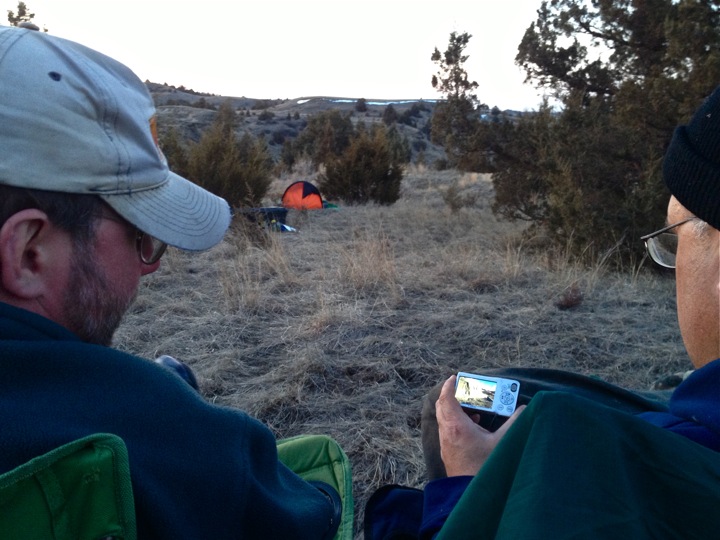
Andrew Reinhard at left has Richard Rothaus go over his photos from another 10+ mile leg of Adventure Science's 100 miles of North Dakota Wild.

Photo looking to the north. Andrew Reinhard at left has Richard Rothaus at right go over his photos from another 10+ mile leg of Adventure Science’s 100 miles of North Dakota Wild.

Not long after the sun set in the west, I looked to the east and saw this moon rising.

Not long after the sun set in the west, I looked to the east and saw this moon rising.

While the moon was low in the sky, it looked like this, with serious camera zoom.

While the moon was low in the sky, it looked like this, with serious camera zoom.

An hour or two later, when the moon got much higher in the sky, it looked like this.

An hour or two later, when the moon got much higher in the sky, it looked like this.

Just as the sun starts to rise, the petroleum industry returns.

Just as the sun starts to rise, the petroleum industry returns. This photo is from our National Grasslands campsite, early morning, facing south.

Eventually one embraces the industrial surreal and absurd, and begins to make morning coffee, while smiling.

Eventually one embraces the industrial surreal and absurd, and begins to make morning coffee while smiling. This photo is from the campsite, facing south toward the scoria/clinker road and taller butte.

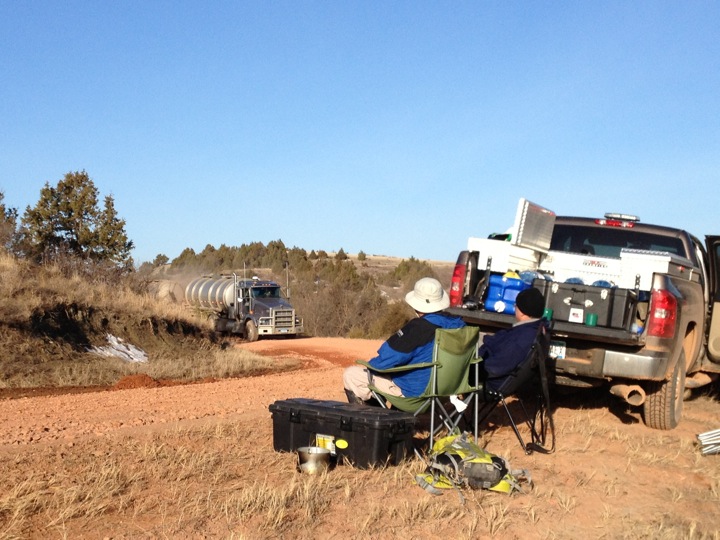
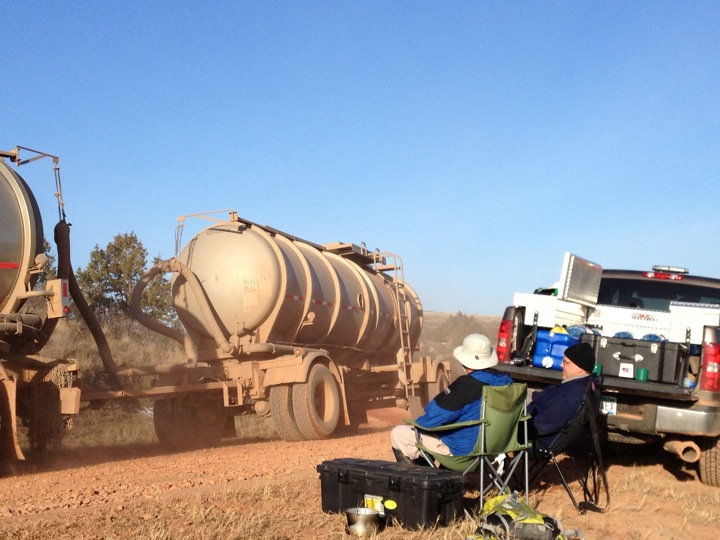
After the coffee is made, chairs were set up along the roadside to take in the industrial sounds of a morning in western North Dakota.

After the coffee was made, chairs were set up along the roadside to take in the industrial sounds of a morning in western North Dakota. This photo is from the campsite, facing west-southwest.

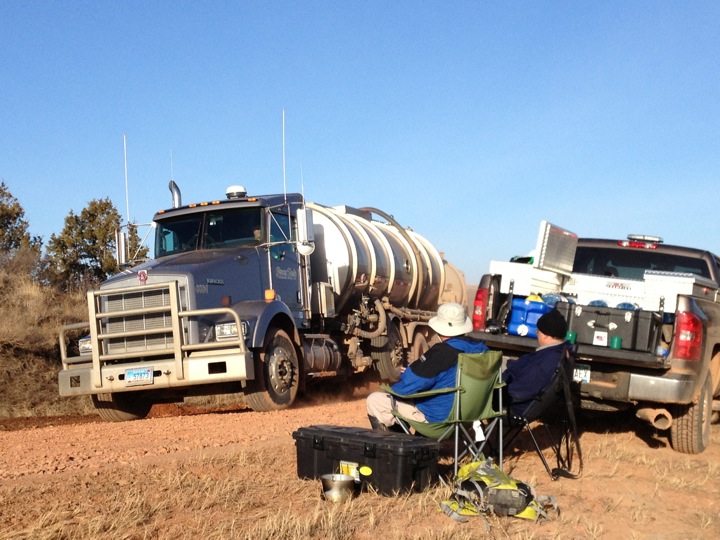
More industry, or Leo Marx's idea and reality of that machine in the garden. I like to think of it more as an industrial playground in our family livingroom.

More industry, or Leo Marx’s idea and reality of that machine in the garden. I like to think of it more as an industrial playground in our North Dakota livingroom.

It is 1.5 trailers of industrial semi.

1.5 trailers of industrial semi.


Notes from the Basecamp (04/23/2013)

Basecamp water wagon and supplies.

Basecamp water wagon and supplies.

On April 4, 2013, Richard Rothaus and I chatted via e-mail about some base camp logistics for Adventure Science’s 100 miles of North Dakota wild, a pedestrian overland trek through ephemeral drainages and butte plateaus in the nation’s #2-producing oil field that is western North Dakota. We came to the conclusion that I could 1) be useful and helpful in coordinating points of drop off and extraction, and evening details for Rothaus and Andrew Reinhard; and 2) in the interim, between dropping off the team and setting up camp, I could read for comprehensive exams (also known as “comps”). On the April 21, 2013 drive out to western North Dakota, I also thought it would be a good idea to capture some traffic samples that are part and parcel to the borderline anarchy of any blossoming petroleum industry throughout the planet.

After dropping off Rothaus and Reinhard yesterday (04/22/2013) morning, I drove the field vehicle around to where they would arrive that evening, and set to reading for comps (“comps” is one part of the intellectual bootcamp, or disciplinary training, when working on a doctor of philosophy, in my case with North Dakota State University and the University of North Dakota). Winter in North Dakota is holding on a bit more than usual, and it is getting the attention of folks in both the city and in the countryside. The late winter means a late spring, and so the snow has been gradually melting.

While reading for comps, and while temporally in late spring and spatially in western North Dakota, I revisited a short passage from the first chapter of Elwyn B. Robinson’s 1966 History of North Dakota (University of Nebraska Press), entitled, “The Grassland Setting.” In this, Robinson says,

For hundreds of millions of years the Williston Basin [of western ND] and the area surrounding it were intermittently covered by a salt sea stretching from the Gulf of Mexico to the Arctic. Sediment carried into the sea by flowing water was deposited on the bottom and slowly compacted into strata, or layers, of sedimentary rock made up of clay, shale, sandstone, and limestone. (Robinson, 1966: 2)

Basecamp 2 TrafficIf wandering around in the badlands today, the tops of all the buttes represent the bottom of that ancient and dried up sea floor. Erosion from glacial advances and retreats helped shape what we see and make up our landscape on the northern Great Plains, and also what Rothaus and Reinhard slogged through all day. I noticed the slipperiness of this clay and mud about mid-morning (04/22/2013): while sitting in the cab and reading, and while the mid-morning sun warmed the badlands, the snow and mud went from frozen to melt, and this caused the field vehicle to start sliding from a standstill. This feeling is at first a bit unsettling, at least before realizing what is happening. I fired up the vehicle and drove it to a less-remote location, namely a raised and ditched off-road of Highway 85, not too far north of Grassy Butte, North Dakota. That solved the vehicle sliding problem.

From here I collected some traffic samples, capturing the number of vehicles that passed by in two separate 15-minute windows. Below is a short clip of the traffic (arguably a way to humanize the social science).


Art Deco in North Dakota: Some Quick Thoughts

The talk on Art Deco in North Dakota at the Lutheran Social Services Legacy Living in Jamestown, North Dakota.

The talk on Art Deco in North Dakota at the Lutheran Social Services Legacy Living in Jamestown, North Dakota. Note the entrance, and the Art Deco ornamentation.

Earlier this evening, between 5:30 and 7:00pm (CST), I gladly obliged an invite to present a short talk on Art Deco in North Dakota at Legacy Living in Jamestown, North Dakota. It was a great crowd. The invite came from Lisa Richmond, a coordinator of housing for Lutheran Social Services in said North Dakota (note: thus far, Lutheran Social Services is the only contender when it comes to providing affordable housing in the #2-oil producing state that is the NASA-space visible Bakken of western North Dakota). So over the past couple days, or even week, I’ve been thinking about how to think about today’s vertical and horizontal strip mall culture. Fellow blogger and friend Bill Caraher had some great at-length thoughts the other day on the psychological a-spatial and a-temporal feeling one gets while in a modern airport and a man camp. It is safe to say that we, and laborers staying in these camps, totally know what he is talking about.

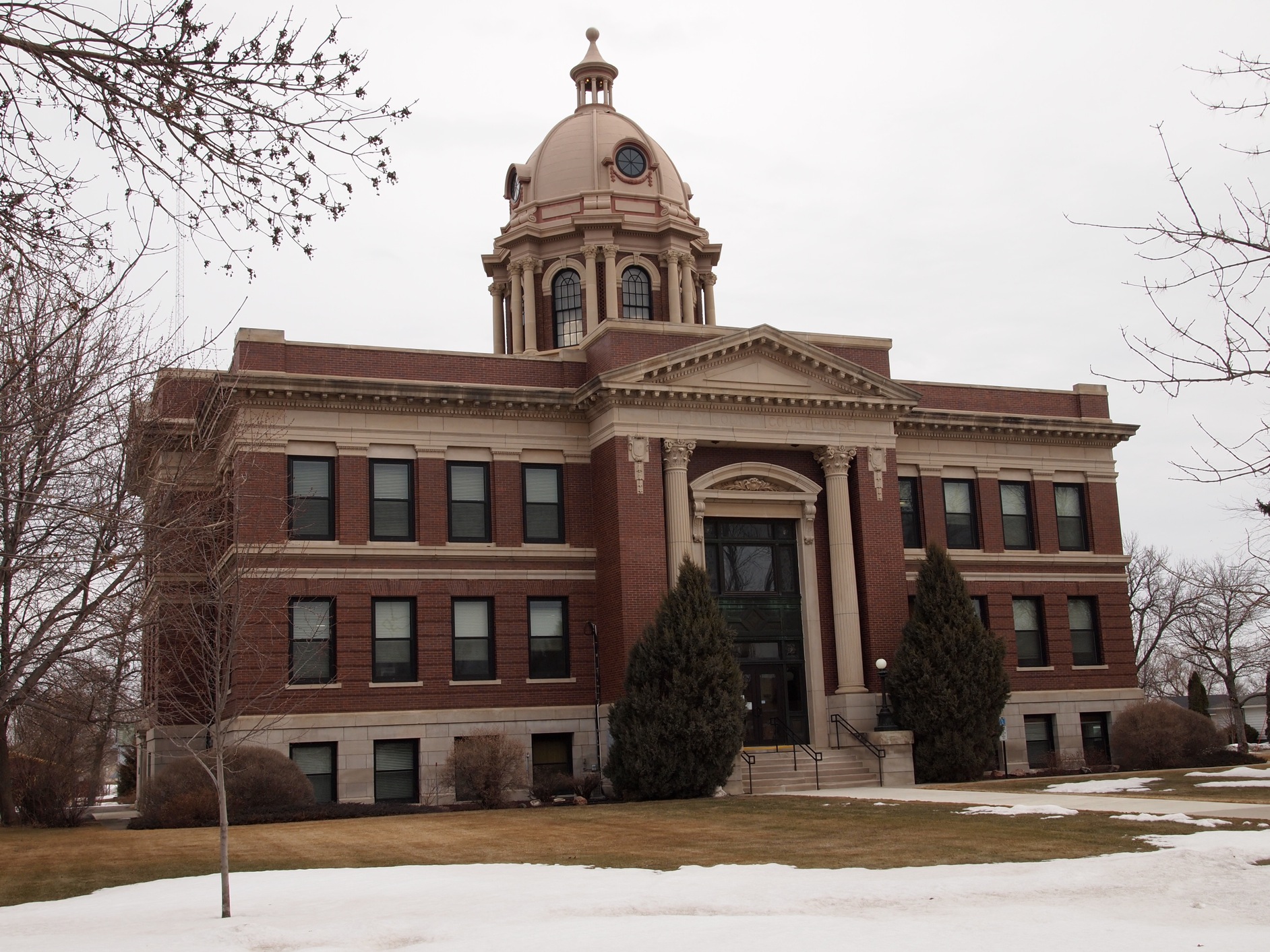
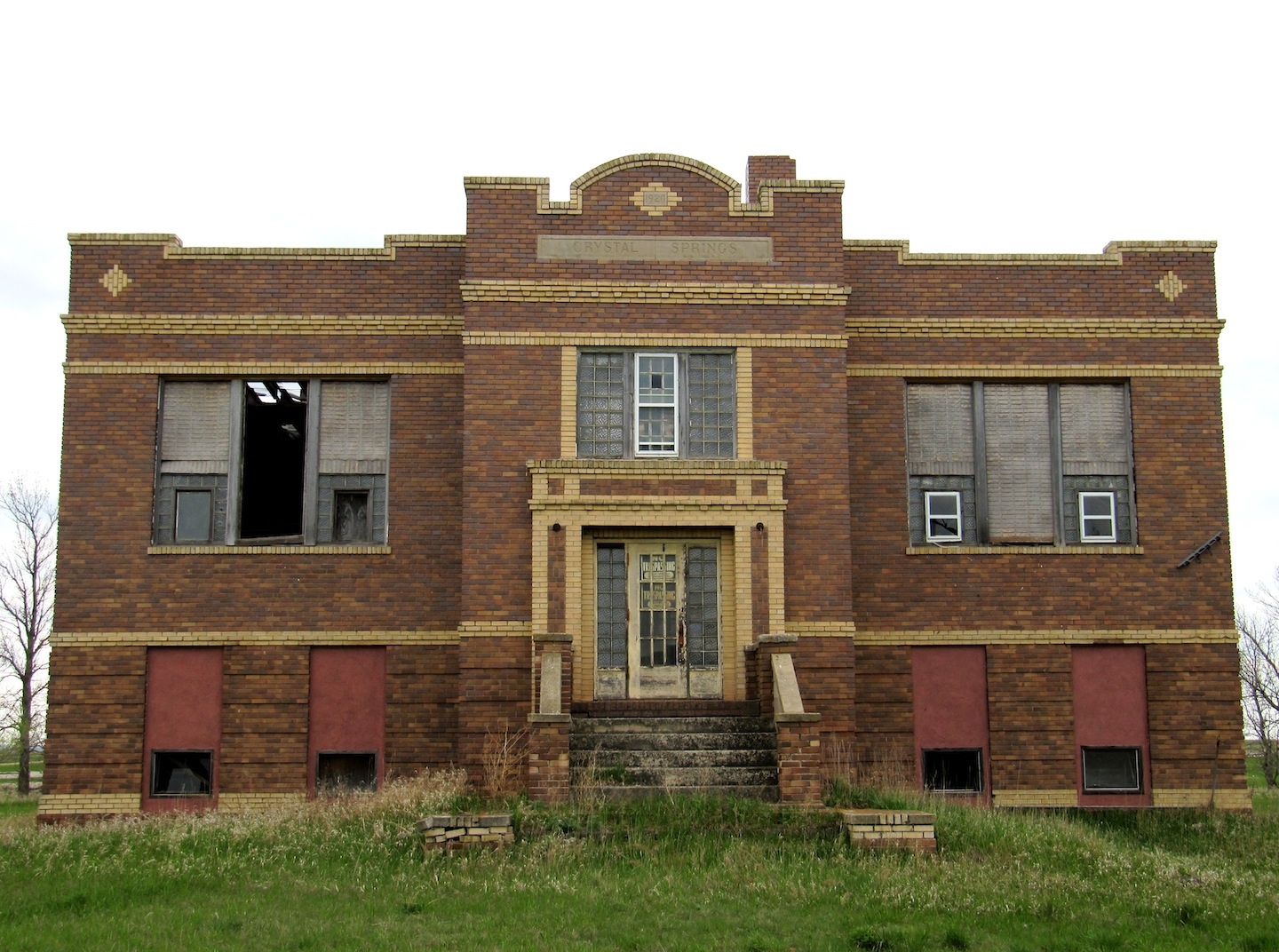
In any case, while looking at a small sample of architecture in North Dakota from 1912 to the mid-1930s, I noticed how yesterday’s architects and engineers started to increasingly do away with regional or national ornamentation. I sampled the exteriors of the Dickey County Courthouse, built from 1910-1912; the Crystal Springs (ND) Progressive Schoolhouse, built in 1920; and the Art Deco airport hangar built by the WPA/CCC in the mid-1930s at the Bismarck Airport, in Bismarck, ND. To give a visual of what I’m talking about, check out the three photos below, and note how with each passing decade, there is less and less ornamentation. So in 1912, the Dickey County Courthouse has cupola ornamentation, which by 1920 is done away with in the construction of the Crystal Spring Progressive School, and even moreso with the 1930s Art Deco of the hangar in Bismarck (and certainly the state capitol of North Dakota).

While Art Deco can have serious decoration and ornamentation (see the Chrysler Building, for example), there is plenty of Art Deco that shirks intense decoration (Deco does away with deco). My final thought was this: whether intentional or unintentional, a consequence of the longue durée of industrial democracy and industrial democratic consumerism resulted in the doing away with glorious ornamentation on public infrastructure. This aesthetic spilled into private infrastructure, too, and the emphasis turned away from exterior embellishments, and more toward organizing domestic notions of interior space (or something along those lines: see, for example, the notion of a Man Cave). It seems to work with the running a-spatial hypothesis about 21st century vertical and horizontal strip mall culture (“Where am I?”). But enough of all that. Here are the photos, in chronological order, below:

An April 2013 photo of the Dickey County Courthouse built from 1910-1912 in Ellendale, North Dakota.

1912: An April 2013 photo of the Dickey County Courthouse built from 1910-1912 in Ellendale, North Dakota.

Above is one of the 12 Buechner and Orth-style courthouses throughout North Dakota, designed by the German-Norwegian architect duo out of St. Paul, Minnesota (my running joke is that they first created the sauerkraut wrapped in lefse snack before creating the above). Now note below, the 1920 Progressive Schoolhouse (abandoned historic archaeology) in North Dakota, a style that trends more toward a Commercial brick aesthetic, and that has much more subtle neo-Classicism and done away with cupolas.

The west elevation of the 1920 Progressive School in Crystal Springs, North Dakota.

The west elevation of the 1920 Progressive School in Crystal Springs, North Dakota.

And from 1920, we turn toward the Art Deco of the 1930s, a style started in 1925, and one that could get away with non-ornamentation (especially in the global Depression of that decade).

The Art Deco Hangar built by the WPA/CCC in the 1930s at the Bismarck Airport.

The Art Deco Hangar built by the WPA/CCC in the 1930s at the Bismarck Airport.

The style of the 1930s WPA/CCC Art Deco hangar at the Bismarck Airport does away with those fancy cupolas, utilizing concrete and stucco, and emphasizing verticality (note the straight lines) and gigantic forms. Here is one more photo of what we might call North Dakota Art Deco (an Art Deco that did away with exterior ornamentation), that of the capitol in Bismarck, built in the first half of the 1930s:

The state capitol in Bismarck, North Dakota.

The state capitol in Bismarck, North Dakota, with two North Dakota citizens in the foreground.


The Longue Durée of Native American Sovereignty: Review of Frank and Goldberg, “Defying the Odds: The Tule River Tribe’s Struggle for Sovereignty in Three Centuries” (Yale University Press, 2010)

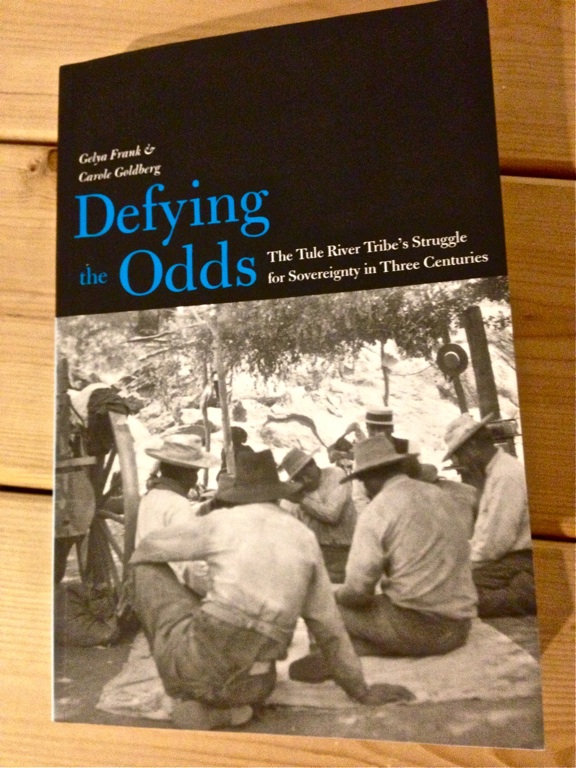
Tule River CoverWhen considering Native and non-Native relations in the United States, it is first necessary to remember that the history rests on the foundational principal of sovereignty, or the ability of Native America to exercise autonomy within a defined geopolitical border. To varying degrees and throughout time, Federal and State governments have contested the sovereignty of Native America, and this is a topic anthropologist Gelya Frank and legal scholar Carole Goldberg cover in Defying the Odds: The Tule River Tribe’s Struggle for Sovereignty in Three Centuries (Yale University Press, 2010). Near the beginning of chapter 3, Frank and Goldberg give a concise paragraph description of the Tule River Tribe in the mid-nineteenth century:

After a brief but devastating war started by settlers in 1856, the Tribe was settled on the first Tule River Reservation located on the site of the traditional Koyeti tribe village. The federal government failed to secure this land and twenty years later forcibly removed the Tule River Tribe to its present reservation in the mountains. In 1886, a tribal council ordered the execution of an Indian on the reservation to reassert order and authority after the death of the Tribe’s recognized leader. The United States government, which indicted the executioners for murder, could have chosen to respect this act of community protection and social control. Judge Erskine M. Ross had an available legal theory that could have allowed him to dismiss the charges and let the four Tule River defendants go free. Under a theory of the Tribe’s “concurrent jurisdiction,” Judge Ross could have found that the execution was not a criminal act, even though Congress had passed the Major Crimes Act. (Frank & Goldberg, 2010: 67)

Judge Ross could have, but he did not. Before embarking on the specifics of this three hundred year struggle that the Tule River Tribe — a First Nation of America and the Western Hemisphere — has had with European and Euro-American nation-states, it is worthwhile to lay out two elements of political philosophy. The first is what is traditionally meant by sovereignty, and the second is the specifics to the 2007 United Nations General Assembly’s Declaration on the Rights of Indigenous Peoples.

The Tule River Tribe's ancestors and map illustration. (Frank & Goldberg, 2010: 23)

The Tule River Tribe’s ancestors and map illustration. (Frank & Goldberg, 2010: 23)

In political philosophy, a broader definition of sovereignty ensures that the sovereign nation is not only defined, but that it is recognized by other sovereign nations. Within each individual nation, sovereign people are able to define and govern themselves, speak a desired language, rejuvenate the culture with its own forms of religion or spirituality, develop its own economic resources, and defend themselves from harmful outsiders and nonmembers. In the case of the Tule River Tribe, they have always had this internal sovereignty, but the Euro-American nation and state has not always recognized it. This is why the focus of Defying the Odds resides on uncovering the internal sovereignty of the Tule River Tribe, or agency, and focusing on how the tribe has, in the words of the authors, “relied on its inherent cultural sovereignty when its externally recognized political sovereignty has been weakened or compromised by the dominant federal and state governments.” (Frank & Goldberg, 2010: 5-6)

For those who are not a-historical, it is easy to understand that unrecognized or challenged sovereignty throughout history has resulted in war, genocide, ethnocide, and the dislocation of indigenous — and non-indigenous — groups throughout the world. This is why the United Nations in 2007 issued a Declaration on the Rights of Indigenous Peoples that made it illegal for indigenes to be subject to forced “action aimed at or affecting their integrity as distinct peoples, their cultural values and identities, including the dispossession of land, forced relocation, assimilation or integration, [and] the imposition of foreign lifestyles and propaganda.” This declaration does more to recognize the collective rather than individual human rights, but it does this so that the defined and defended collective can internally navigate the individual rights of the domestic populace. (Frank & Goldberg, 2010: 6-7)

Frank and Goldberg define sovereignty in a national and international context. In the history of the United States, the Federal and state governments have persistently asked Native America to not only articulate its sovereignty through a legal framework (through treaties and legalese), but also with a romanticized ideal of expected aesthetics. This simply means that non-Natives often want Natives to “look” Native, and if they do not achieve the expected aesthetic, they are somehow no longer authentically Native. Speaking to this, the Lakota scholar Philip S. Deloria noted how the United States holds Native America’s inherent sovereignty to a much different standard than non-Native America. Deloria says the United States does not audit “the demographic status of all the little countries in Europe that are frequently compared in size and population with Indian tribes,” and that “No one asks whether Monaco and Liechtenstein are sufficiently culturally distinct from neighboring countries to justify their continued existence.” The ethical and philosophical point of this remark is impossible to ignore. If representatives of the Monaco or Liechtenstein governments did not show up “looking” like they were from Monaco or Liechtenstein, the United States government would not use this to undermine the sovereignty of Monaco or Liechtenstein. This has not been the historical case throughout Native America and, particular to this study, the Tule River Tribe. (Frank & Goldberg, 2010: 13)

The history of the Tule River Tribe is divided into two segments, particularly what happened before and after the 1888 court case, United States v. Whaley. In the case, United States Judge E.M. Ross favored the U.S. Major Crimes Act of 1885 rather than established tribal sovereignty. In the events that lead up to the 1888 case, Tule River tribal members Salt Lake Pete, Bill Whaley, Pancho Francisco, and Juan Chino ordered the internal execution or capitol punishment of their shaman who was accused of killing the tribe’s Yaudanchi tiya, or chief, and 12 to 20 other tribal members. During the court hearing, though, U.S. Judge Ross favored the Major Crimes Act, a Federal law that prohibited one Native from killing another on a reservation — again, a Federal Act that attacked tribal sovereignty by undermining the sovereign tribe’s ability to take care of its own domestic issues. In essence, the Major Crimes Act criminalized tribal authority and sovereignty. Frank and Goldberg chart how the Tule River Tribe has remained culturally distinct from 1885 to the present, no easy task considering later policies aimed at forced assimilation and relocation.

The Tule River Tribe location in California.

The Tule River Tribe location in California.

This work of scholarship is important to Historians, Public Historians, World Historians and Legal Scholars for several reasons. The first is why it is necessary for scholars to understand the historical origins of political philosophy, specifically the notion or notions of sovereignty, and how the definition changed in a variety of ways within distinct cultures. In the Western world, absolutist monarchs developed some of the first notions of sovereignty. In subsequent centuries secular and Enlightenment colonists altered the definition but retained the word. By the late-nineteenth century, though, Euro-Americans, and particularly Anglo-Americans, developed increasingly strong notions of Social Darwinian or racist thoughts, and they obsessed over domestic and foreign nation-making. This nation-making favored a strong, sovereign arm of the Federal government that rallied around an imagined and common “race.”

This brings up a secondary interest in Frank and Goldberg that speaks to nineteenth century international law, specifically extraterritoriality, which exempted individuals from the jurisdiction of local law. Much in the same way that the Great Powers of the West — Great Britain, France, Germany, the United States — planted their own overlapping versions of jurisprudence in areas they colonized — throughout the Ottoman Empire in North Africa and the Levant, and in places such as Hong Kong, China — so too was the United States engaged in planting the strong arm of Federal jurisprudence in Native America. World Historians, Historians and Legal Scholars (I am capitalizing these professions for some reason) would benefit in understanding these 19th-century processes. In the case of the Tule River Tribe, Public Historians can increasingly consider how a cultural landscape, the Tule River, is linked to an ethnicity much in the same way that a Euro-American with, say, the surname Bergstrom, was at one point in time connected with a mountain stream (“Bergstrom” in many northern European languages is directly translated as Mountain Stream).

Where these considerations will lead is unknown, but the world’s population in the 21st century still carries cultural baggage that originated in and before the 19th century. As well, when a-historical politicians in the 21st century bemoan the “problems” on reservations, the onus is on the historians, anthropologists and legal scholars to point out how the Euro-American colonization of America waged genocide and ethnocide on Native America and disrupted indigenous sovereignty, the political and humanist philosophy that allows a people and culture the spirit and self-determination to breath and live.


Thinking About a History of Strip Mall Culture

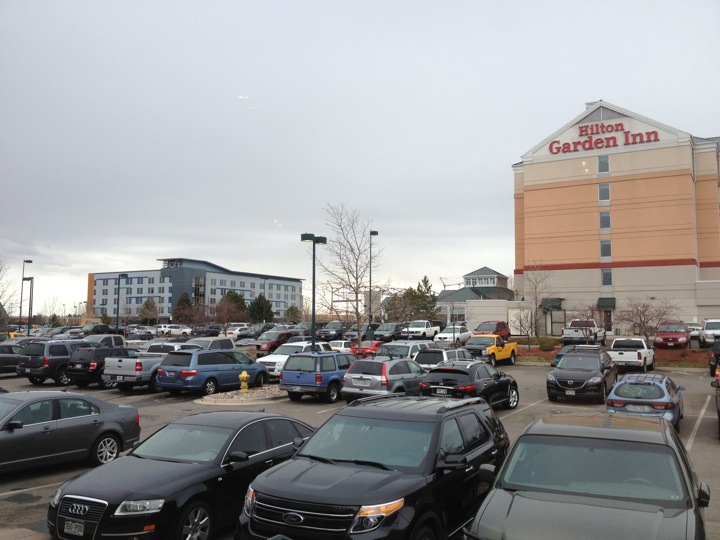
Strip Mall culture. Is this a sub-suburb of Denver, Colorado, Bismarck, North Dakota, Bloomington, Minnesota, or Las Vegas, Nevada?

Strip Mall culture. Where am I? Is this a sub-suburb of Denver, Colorado; Bismarck, North Dakota; Bloomington, Minnesota; or Las Vegas, Nevada?

I’m currently about to leave a sub-suburb of Denver, and while sitting in the strip mall complexes I couldn’t help but psychologically lapsing into thinking I was for a moment in north Bismarck or West Fargo, North Dakota, or a suburb of Minneapolis, Minnesota, or somewhere in Las Vegas, Nevada. Then I began openly wondering and considering how a scholarly history of Revit might help us, today, grapple with the homogeneous aesthetics that we wander and wonder around in. It no doubt is a reflection of the post-WWII industrial consumerism (and the democracy of stuff) that we were all born into. And this is why history is important, at least so friends, colleagues and family can help one another understand the deep backdrop of our horizontal and vertical strip mall culture.

I need to do further research on this, and chat with professors of engineering and architecture as well, but it seemed decent to get some thoughts together on this here blog. Also, it is not only the United States engaged in a Revit, strip-mall matrix, but the entire globe. For example, the video short below is of a small Hutong neighborhood in Beijing, China, the types that the government is increasingly sweeping away in the name of strip mall modernity. I think that frustration could be mitigated in 2013 if we at least had a body of historical scholarship that showed how horizontal and vertical strip malls came to be. Only when we know our past are we able to figure out what we need to react to, or what new directions to push in. But enough of all this. Here is downtown Beijing.