Tag Archives: North Dakota

The North Dakota NAYS against the History and Archaeology of the Killdeer Mountains

In the last couple months, Killdeer Mountain land owners, professional historians, archaeologists, anthropologists, tribal historians, Native elders and biologists spent a good deal of time at the capitol in North Dakota to inform the legislature on the importance of being a bit more deliberate than usual when it comes to drilling for oil on Killdeer Mountains in western North Dakota. Ultimately, SB 2341 was created but voted down with moderate rather than extreme impunity by North Dakota’s 63rd legislature. Sigh…

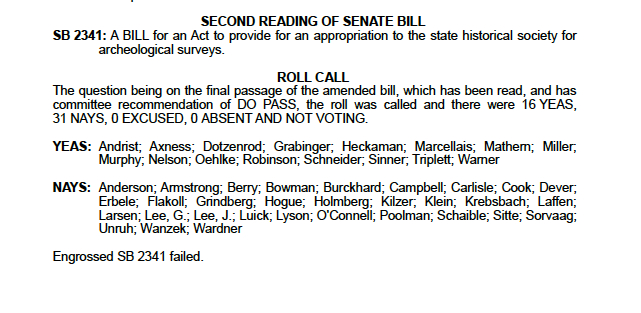
The YEAS and NAYS for SB 2341, a bill that would have appropriated moneys to fund an archaeological and historical study on Killdeer Mountains.

The YEAS and NAYS for SB 2341, a bill that would have appropriated moneys to fund an archaeological and historical study on the Killdeer Mountains in western ND.

Earlier this morning I started to wonder about who voted against the bill. The results are linked to here, and the image is a copy of who voted against SB 2341. I have yet to chat with all the individuals who voted “NAY” on this bill, at least to garner an understanding as to what motivated them to do what they did.

Had the bill passed, it would have allowed moneys for the State Historical Society of North Dakota and North Dakota State University students, and professors of history and archaeology, to conduct an archaeological survey of Killdeer Mountains. I’m thinking I didn’t do a good enough job communicating that message to fellow North Dakotans who happen to be senators. Maybe next time around.


The Great Hall in the Capitol of North Dakota

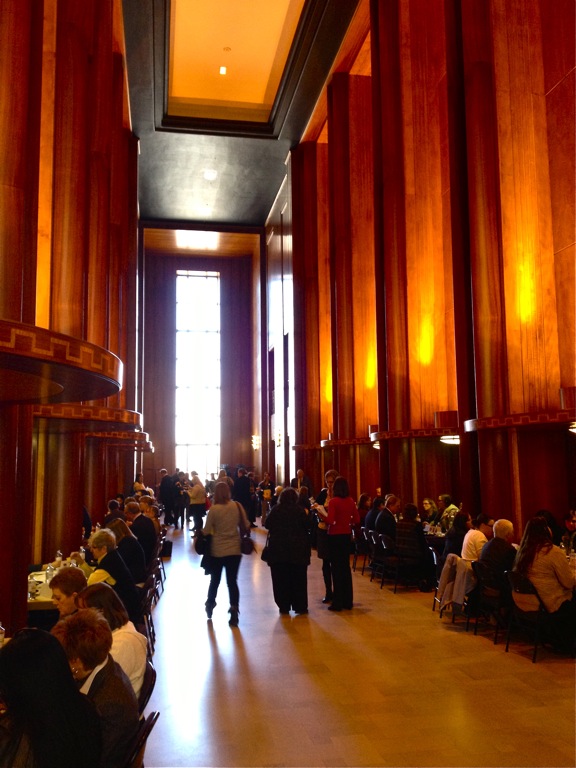
This last weekend I dropped into Bismarck to catch up with my folks, to do a bit of research, and to take in a bit of the WE Rise event with Molly McLain, Karis Thompson and others at the state capitol. The luncheon for the WE Rise gathering was also held in the Great Hall at the capitol. The Great Hall is, unsurprisingly, a really great room, with tremendous verticality. At least this is the perception I had, having grown up on the Great Plains which is more horizontal than vertical. The Art Deco aesthetics (from 1925 and on) also reminded me of the 21st century Steampunk movement. Below are a couple photos of the Great Hall from March 11, 2013.

The Great Hall of the North Dakota capitol in Bismarck. Photo looking west.

The Great Hall of the North Dakota capitol in Bismarck. Photo looking west.

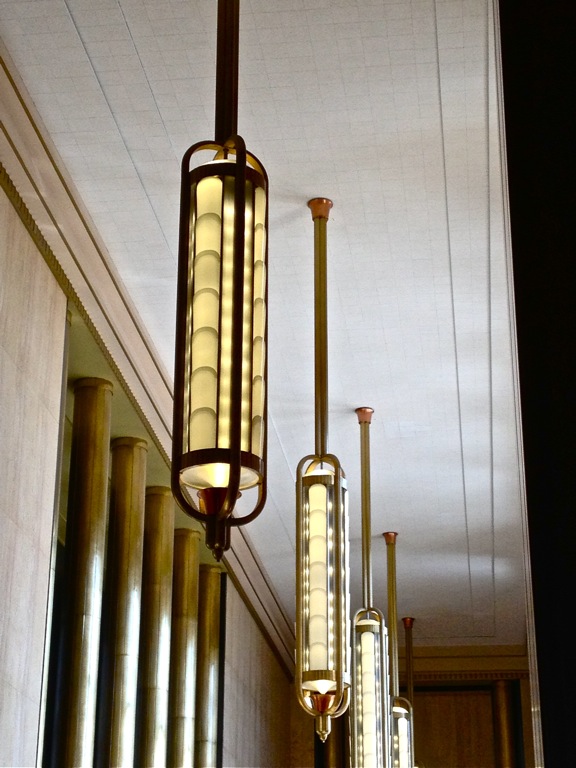
The Art Deco chandeliers in the Great Hall of the capitol in North Dakota. This is an aesthetic and style that has been appropriated by the 21st century Steam Punk movement.

The Art Deco chandeliers in the Great Hall of the capitol in North Dakota. This is an aesthetic and style that has been appropriated by the 21st century Steampunk movement.

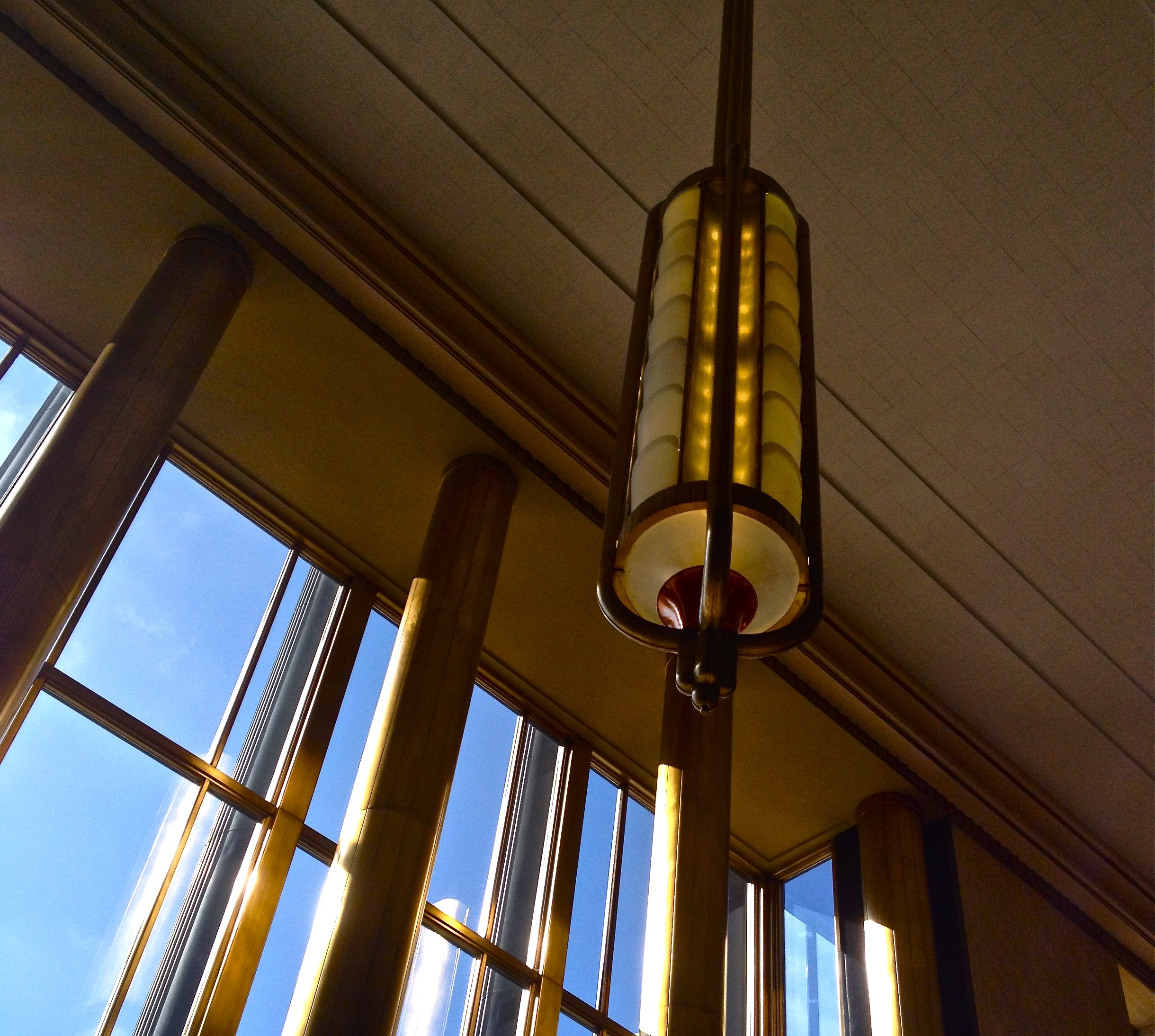
A chandelier close up in the Great Hall.

A chandelier close up in the Great Hall.


Hoarfrost at North Dakota State University

Hoarfrost at NDSUEvery now and then, a celebration of winter aesthetics is in order. Here is a photo taken on the afternoon of February 26, 2013, on the campus of North Dakota State University, Fargo.


Winter Hike on the Upper Missouri River Bottoms

I snapped some photos this last Saturday during a hike along the upper Missouri River bottoms. Here is a brief collection of some of the shots.

The Missouri River bottoms just below Mandan-Hidatsa Chief Looking Village in Bismarck, North Dakota.

The Missouri River bottoms just below Mandan-Hidatsa Chief Looking Village in Bismarck, North Dakota.

The second photo is the historic steel truss railroad bridge that spans Bismarck-Mandan, and it reminded me of the aesthetics that today are appropriated by steam-punk artists. If you want to know what steam punk might be, click here on this link.

A close up of the historic railroad bridge spanning Bismarck-Mandan.

A close up of the historic railroad bridge spanning Bismarck-Mandan.

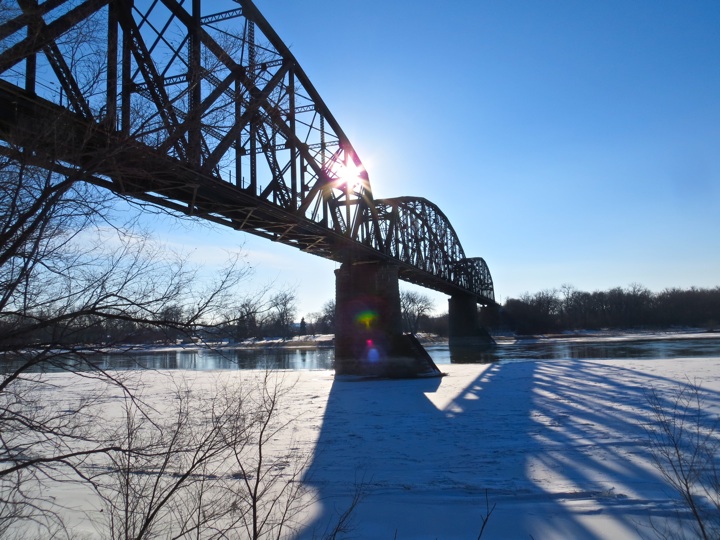
This next photo is an overview of the railroad bridge, with the winter sun setting in the late-afternoon.

Historic railroad bridge, looking west toward the winter sun getting ready to set.

Historic railroad bridge, looking west toward the winter sun getting ready to set.

And this final photo is of the icefishing that takes place on the Missouri River at the Grant Marsh boat landing. The I-94 Grant Marsh Bridge is also in the photo, but it does not look 1/64th as nice as the historic steel truss railroad bridge from three and four generations ago.

Ice Fishing


Sabir’s in Valley City, North Dakota

Sabir’s in Valley City, North Dakota, is owned and operated by a Kurdish family. It is an excellent place, just off I-94 (by the AmericInn motel exit). On occasions such as New Years Eve, Valentine’s Day, and Mother’s Day, a Kurdish-Levantine cuisine is rolled out, and the salads look like this:

Sabir's Salads

After finishing the main course (we had seafood-stuff shrimp and calgary-seasoned ribeye), a dessert cart is rolled around so a person can gorge on sweets that look like this:

Sabir's Desserts


Blizzard Orko: Downtown Fargo Snowfall as of February 11, 2013

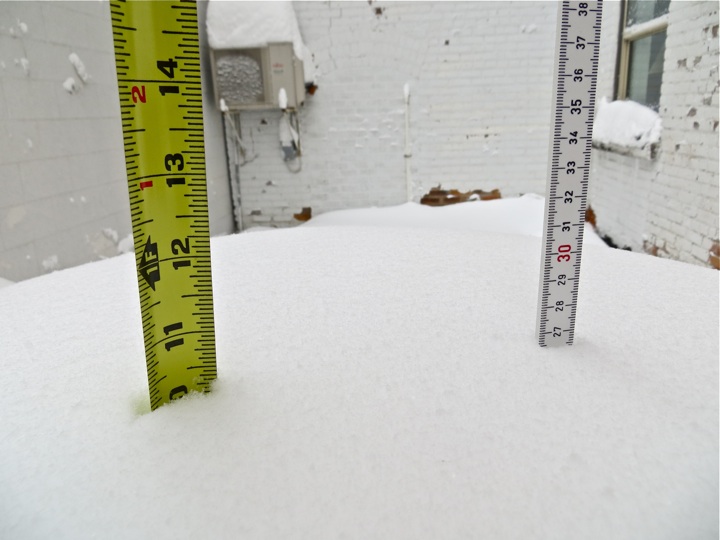
Readings of the snowfall at 8:30AM (CST) in downtown Fargo, North Dakota on February 11, 2013.

Readings of the snowfall at 8:30AM (CST) in downtown Fargo, North Dakota on February 11, 2013.

I’m not only talking about the weather just because it’s a safe topic of conversation. It is healthy for the mind and soul to discuss unsafe topics, and it is necessary to revive and invigorate culture. For example, it may be prudent to hold off on opening the conversation at Christmas Eve dinner with, “Hey, what do you all think about politics and religion, and can you pass me the gravy?”

But in any case, here is a very safe topic of morning conversation, a snap shot of the local patio readings from Blizzard Orko (the name ascribed to this blizzard, and not to be confused with Gandolf the White Blizzard, but certainly connected with Willa Cather’s thoughts on blizzards). These were taken at 8:30AM, CST, in downtown Fargo, North Dakota. Looks like just over 10″ in downtown Fargo as of this morning (centimeters are to the right).


Great Plains Blizzards Now and Then

Snow measurements from February 10, 2013, at 7:00PM (CST) in downtown Fargo, North Dakota.

Snow measurements from February 10, 2013, at 7:00PM (CST) in downtown Fargo, North Dakota.

Last week I revisited Walter P. Webb’s 1931 work, The Great Plains. In the coming days, I’ll blog a bit more on Webb’s work. For now, though, Blizzard Orko (as of 7:03PM [CST], February 10, 2013) induced several departments of transportation to close sections of Interstate 29 and Interstate 94 on the northern Great Plains: north-south from Grand Forks, North Dakota to Sioux Falls, South Dakota, and east-west from Jamestown, North Dakota in to Minnesota (the MNDOT’s road condition map I found is more general than decisive about exactly what sections are closed). These closures, or specifically this blizzard, reminded me a bit about Webb’s remarks on Great Plains blizzards, or what he pulled from Clement A. Lounsberry, the Civil War veteran who started The Bismarck Tribune in the 1870s. Of blizzards, Lounsberry  (via Webb) referenced that historically they were known as a

…mad, rushing combination of wind and snow which neither man nor beast could face. The snow found its way through every crack and crevice. Barns and stacks were literally covered by drifting snow, and, when the storm was over, cattle fed from the tops of stacks. Persons lost upon the prairie were almost certain to meet with death, unless familiar with the nature of these storms… I learned of many instances where persons were lost in trying to go from the house to the barn, and of other instances where cords were fastened to the house so that, if the barn should be missed, by holding onto the cord the house could be found again (Webb, 1931: 25)

With this in mind, this evening I took some measurements of snowfall in downtown Fargo. At least 7 1/4″ of snow has fallen (it is now 7PM, CST). Tomorrow winds are expected to intensify, as is snow removal and book reading.


Killdeer Mountain SB 2341 Post-Hearing Report

Rob Sand, a landowner local to Killdeer Mountains, testifies in support of SB 2341.

Rob Sand, a landowner immediate and local to the Killdeer Mountains, testifies in support of SB 2341.

A follow up to today’s hearing today at the capitol in Bismarck on Senate Bill 2341, spear-headed by North Dakota Senator Rich Wardner, and co-sponsored by a host of legislators. Individual archaeologists, Native historians, historians and local Killdeer Mountain land owners that testified in support of this bill included Tamara St. John, Dakota Goodhouse, Ladonna Brave Bull Allard, Waste Win Young, Tom Isern, Richard Rothaus, Kimball Banks, Rob Sand, Fern Swenson, Merl Paaverud, Tim Reed, and Mary Hoff (and I also testified, the synopsis of my testimony here). Private land owner issues mentioned in this article linked here are being addressed. Amy Dalrymple brings a more balanced angle to what happened here today linked here. Our conversation afterwards re-emphasized how private land owner rights are and continue to be protected throughout North Dakota, and our dutiful legislators said it may be a good idea to re-emphasize this in the bill. So there you have it. Props to all who came out today (there were many more in the crowd), and props to all of those that were there in spirit.


Killdeer Mountains 150 Years Later: Rescuing the Fallen and Forgotten Veterans from the Past

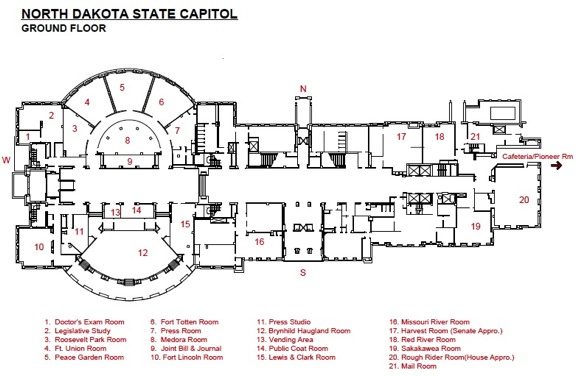
North Dakota State Capitol meeting room locations. Missouri River Room is #16, bottom-center of map.

North Dakota State Capitol meeting room locations. Missouri River Room is #16, bottom-center of map.

Tomorrow, Thursday, February 7, 2013, at 1400 hours (CST), North Dakota Senator Connie Triplett (District 18, Grand Forks) will collaboratively sponsor SB 2341, a bill that seeks to carry out an archaeological and historic-archaeological study on the Killdeer Mountains in Dunn County, western North Dakota. I’ll be attending this hearing (it will take place before the Senate Government & Veteran’s Affairs Committee in the Missouri River Room), and Triplett has circulated an e-mail asking historians, landowners, archaeologists, Natives and others for testimonies to support this bill. The Killdeer Mountains figure into our nation’s history and the US-Dakota Wars that spanned from 1862 in the Minnesota River Valley, and carried on through 1864 at Killdeer Mountains in western North Dakota.

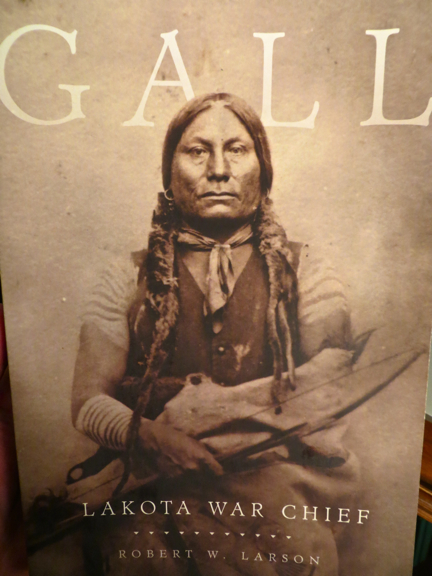
Taken from the cover of Robert W. Larson, "Gall: Lakota War Chief" (Norman: University of Oklahoma Press, 2007).

Taken from the cover of Robert W. Larson, “Gall: Lakota War Chief” (Norman: University of Oklahoma Press, 2007).

What we know right now about Killdeer from 1864 is limited (the State Historical Society of North Dakota has a nice and thoughtful write up of it here), and further archaeological and historical research is needed. It was an action between the Union Army and various Dakota nations, and some key players involved were Sitting Bull, Inkpaduta, Gall (among others), and General Alfred Sully and his Union soldiers. In many ways, just as this nation recognizes and respects fallen Union and Confederate combatants and non-combatants, this nation owes it to honor the Dakota soldiers and non-combatants killed in Dakota Territory during the Civil War. To extend this honor requires and necessitates a deliberate and culturally sensitive systematic archaeological and historical study like the one proposed in SB 2341. We understandably honor Americans that have fought and died in 21st century warfare, and we ought to also be honoring and rescuing those fallen and forgotten from the Killdeer Mountains from July 1864.

Note: according to Sioux County Veterans Service Officer Roster, today in 2013 Standing Rock has a veteran population of 357.


Drummer’s View of a Sound Check

A quick concluding note on the punk archaeology unconference from this weekend at Sidestreet Grille and Pub in downtown Fargo, North Dakota. Since history, archaeology and life require us to put ourselves in the shoes of others, I wondered if it would be interesting for non-drummers to have access to a drummer’s view during a sound check. So here is a still photo of the stage from the vantage of the Audio-Video team from the University of North Dakota.

View of the stage from the Audio-Video sound station.

View of the stage from the Audio-Video sound station.

And here it is from another angle, a drummer’s view of the sound check (this brings up the fact that there are always more than two sides to a story, or history):