Tag Archives: North Dakota State University

Dakota for Blizzard: Icamnatanka

Since it is snowing now and we’re bracing for a blizzard on the northern Steppes of North America, it seems appropriate to look at and unpack the Dakota word for these storm systems. Dakota, after all, was one of the original languages of the Dakotas and Minnesota.

Blizzard in Dakota is icamnatanka, prounced roughly as ih-cha-mnah-tan-ka. In the case of icamnatanka, the word is a combination of two slightly smaller Dakota words. The first is icamna, which means “to blow, bluster, storm, drive, as wind and snow.” Mna in the word icamna is related to yumna. The yu in yumna expresses causation in some way. Thus the entire word yumna denotes a causation that means to rip a seam with scissors, or to rip a seam in anyway by pulling.

The second word in icamnatanka might be a bit more familiar. The word tanka means large or great. It is easy by now to see how icamnatanka comes to denote blizzard. It is a large or great blowing, blustering storm driven by wind. And mna is a word also connected to ripping at the seams. If we use our historical imaginations, we can envision a Dakota, Lakota or Nakota on the northern Great Plains in what we know today as early December. When an icamnatanka would strike, this blizzard would indeed bluster and blow snow through or rip at any kind of seam, whether in a tipi, earth lodge or through the seam of a hide-garment.

I posted a short version of this to social media the other day and a good friend, Dakota Goodhouse, texted me and said, “The Lakota use ichamna for snow storm or blizzard too, but use Iwoblu for severe blizzard.” The variations in language are mind-blowing. In the paraphrased words of John K. Cox at North Dakota State University, to learn a second language means that one learns to grow the other half of their brain. This is true.

Anyhow, as I continue the joyous struggle to learn second languages, it has always seemed to make more sense to me when individual words are unpacked. And by “joyous struggle” I mean just that: learning languages, at least for myself, is difficult. But I’m up for the task. To understand another word and language is to begin to understand another culture. Language is so very connected to culture, and is the way a culture describes itself, immediate surroundings, and the world. When one opens a language they open up a new way of seeing yesteryear, today, and even tomorrow.

The unpacking of icamnatanka came by way of help from one of Clifford Canku‘s Dakota Language I worksheets, and A Dakota-English Dictionary by Stephen R. Riggs (Minnesota Historical Society Press, 1992). Riggs started developing the dictionary in the 1830s with Samuel W. and Gideon H. Pond, and Thomas S. Williamson. They worked directly with Michael Renville, David Grey Cloud, James Garvie, and Walking Elk, a Yankton tribal leader.

This blog entry has been cross-posted at North Dakota State University’s Center for Heritage Renewal here and here.


Memory and Remembrance in New Zealand

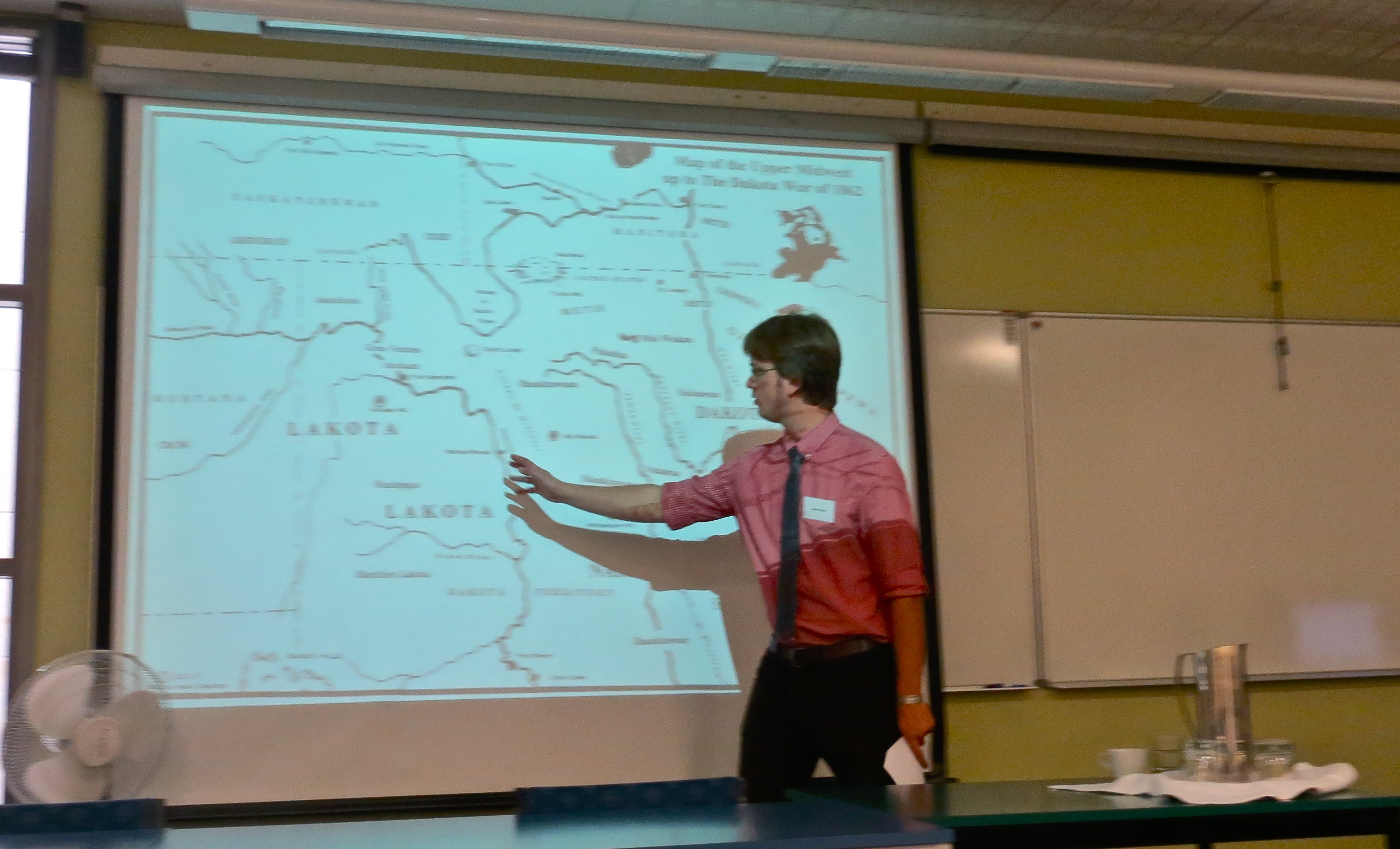
Explaining the various locations of the Dakota, Nakota and Lakota on the northern Great Plains, North America, to the Kiwi and Aussie attendees at the New Zealand Historical Association biennial conference on November 21, 2013, at University of Otago, Dunedin, south island New Zealand. A New Zealand scholar later said he was fascinated by this because he'd never seen such a map. This meant to me that another global knowledge-transfer had been achieved. This map comes from Mark Diedrich, "Mni Wakan Oyate (Spirit Lake Nation): A History of the Sisituwan, Wahpeton, Pabaska, and Other Dakota That Settled at Spirit Lake, North Dakota" (Fort Totten, North Dakota: Cankdeska Cikana College Publishing, 2007), 47.

Explaining the various locations of the Dakota, Nakota and Lakota on the northern Great Plains, North America at the New Zealand Historical Association biennial conference on November 21, 2013, at University of Otago, New Zealand.

Before I head off to another day of conference papers this morning, I thought I’d do a short recap of the session I attended and presented in yesterday afternoon, representing North Dakota State University and the Center for Heritage Renewal here at the University of Otago, the southern-most university in all the world.

Each presenter has 10-15 minutes to work with, and this is always the challenge of presenting: it’s how to communicate a rather complex idea to an audience — in this case on the other side of the world — using the allotted time parameters. My talk must have resonated with the other attendees and presenters, including George Davis and John Moremon (we chatted a bit after the talk).

I got what I came for, too: my goal was two-fold, the first to present a case-study history on one US-Dakota site of memory and mourning on the northern Great Plains (complete with the history of “official” and counter-official remembrance), and then ask Maori and Kiwi scholars to direct me to various sites of remembrance that resulted from the 19th century British-Maori wars. Of the latter, these conversations are continuing, so I’ll round out this blog post so I can get to those said conversations today.

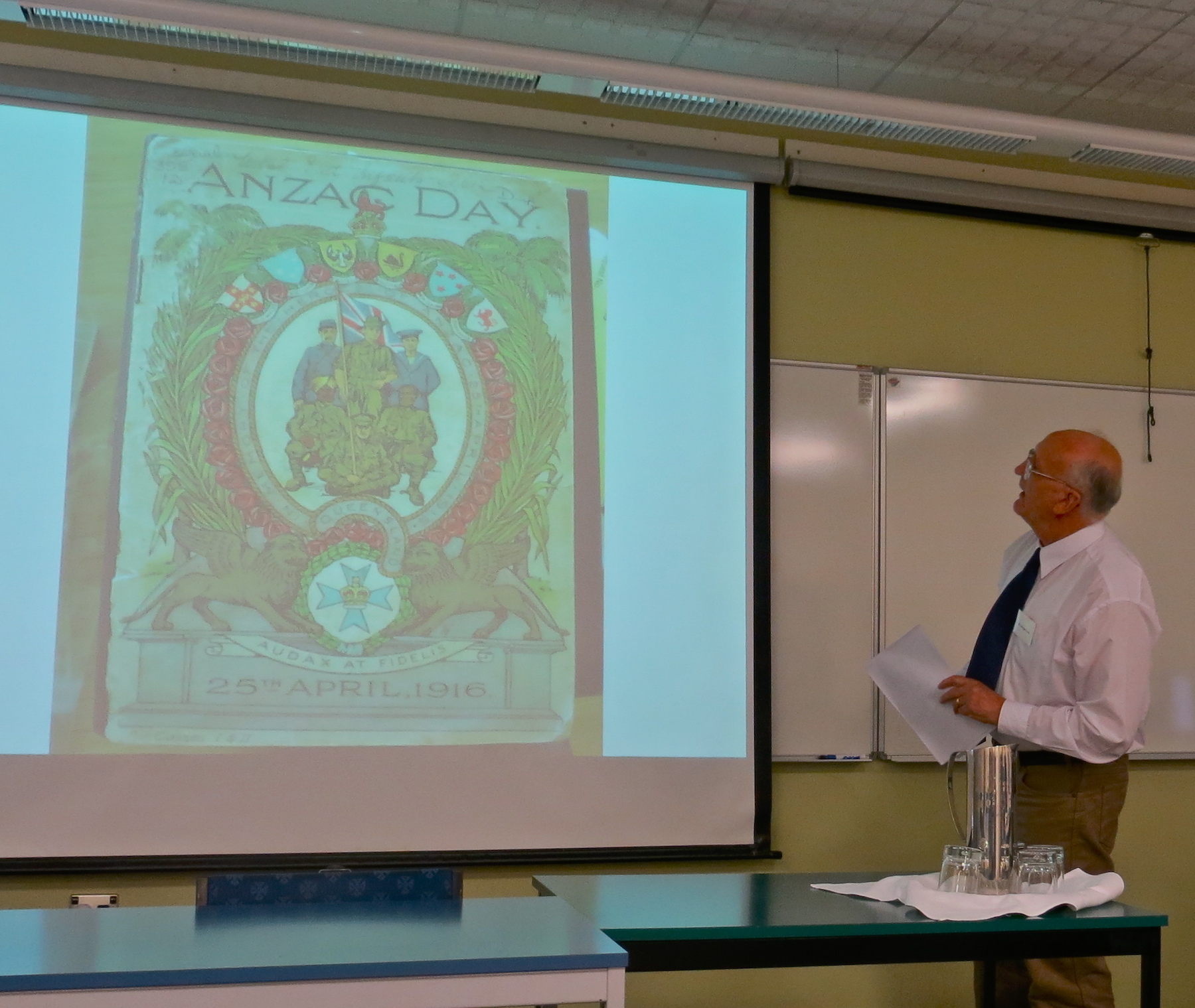
My presentation was followed by George Davis, who considered the remembrance of ANZAC Day memorials, or how memory groups conceive of the physical and mental landscapes, in this case relative to the First World War. And the final presenter came from Aussie John Moremon, who considered how the Aussie and New Zealand government helped (or didn’t help) WWII veteran Calvin Coghill’s relatives through the grieving processes after finding out that Calvin had been killed in action in the European Theatre. Geoff Watson chaired our panel discussion, dutifully keeping all of us within our time limits.

George Davis explains the symbolism of the memorial wreath of ANZAC day.

George Davis explains the symbolism of the memorial wreath of ANZAC day.


Waking Up in New Zealand

It’s the first morning in the Southern Hemisphere, this in Dunedin, New Zealand. One is quickly reoriented to the reality that November 18, 2013 is summer in this hemisphere, and this means the days are longer than the November 15 days on the northern Great Plains of North America. Obvious, right? But not so much until experienced.

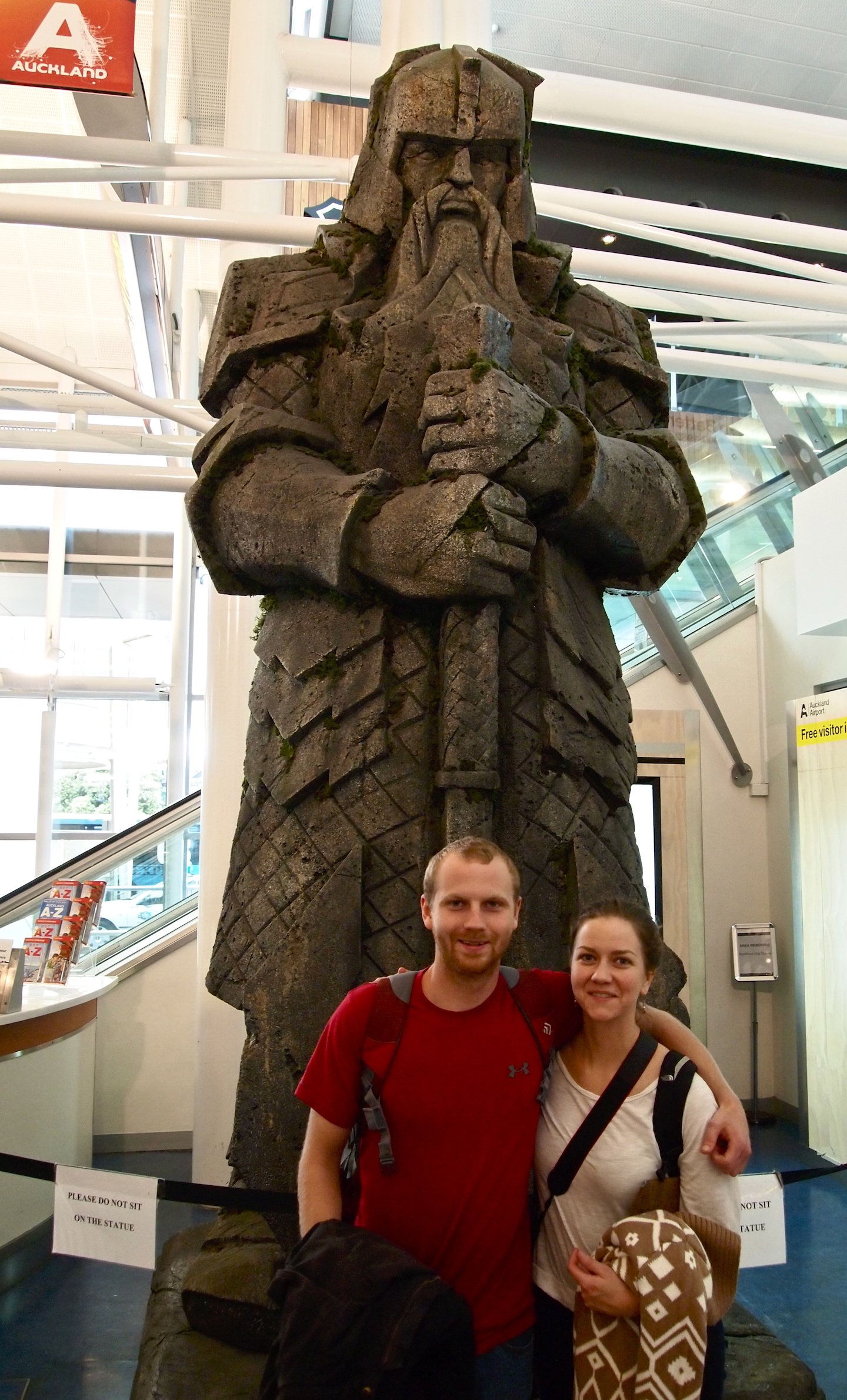
Matt and Molly stand below a modest Lord of the Rings statue at the airport in Auckland, New Zealand. The Lord of the Rings was filmed in New Zealand.

Matt and Molly stand below a modest Lord of the Rings statue at the airport in Auckland, New Zealand. The Lord of the Rings was filmed in New Zealand.

We are a group of 5 from North Dakota. This includes Tom Isern (North Dakota State University) and Suzzanne Kelley (New Rivers Press, Minnesota State University Moorhead), who will be attending and presenting at the New Zealand Historical Association‘s biennial conference (I’ll be presenting at this conference, representing North Dakota State University too; much more on that in the coming days). It’s also great to have Molly (my girl) and her brother, Matthew, along, as they are going to drop in on some of the conference activity but direct most of their energies to take in the New Zealand south island senses of place.

Our group originated from Fargo (Matthew got a ride from his sister, Mira, over from Valley City that morning). Our friend Jay Krabbenhoft took us to Fargo’s Hector airport, and we boarded a flight to Chicago; then to Los Angeles; and then to Auckland, this in the northwestern north island of New Zealand; then one last flight to Christchurch in the northeastern part of the south island. From there the flights stopped, and we took to automobile. At the airport, Tom and Suzzanne’s friends Kevin and Margaret O’Connor met us, and we grabbed lunch and chatted with our welcoming party. Tom and Kevin have known one another for over two decades, and they had deep conversational backdrop to draw from.

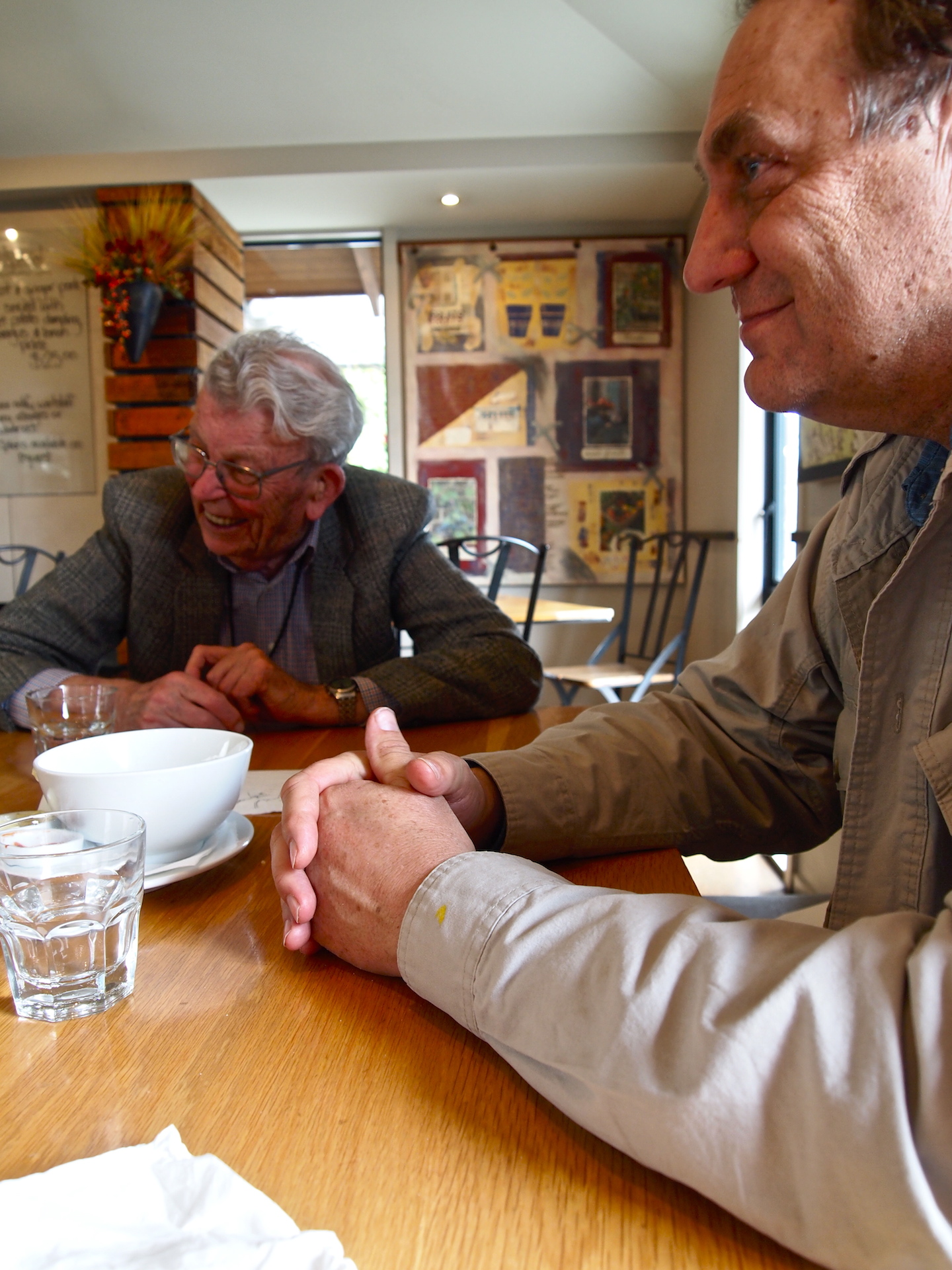
Old collegiate souls Kevin and Tom catch up at lunch in Christchurch, New Zealand.

Common collegial souls Kevin O’Connor (l) and Tom Isern (r) catch up at lunch in Christchurch, New Zealand.

After that it was a drive from Christchurch to Dunedin where the University of Otago is located (the southern-most university in all the world). We stopped a couple places along the way, including the port town of Oamaru. The city itself has done a fantastic job of rehabilitating and restoring the port warehouse district into a place of bike shops, breweries, taverns, pubs and eateries.

At the beach in Oamaru, we also saw a penguin refuge (it was the first time I got to view a beachside penguin refuge — totally off my radar up until this point). The penguins were nowhere to be seen, but it’s really hit or miss when they are there. (Note: New Zealand has a great variety of flightless birds, as the island lacks predators that find them tasty). So from Oamaru, we drove down to Dunedin, checked into our lodging, caught a bit of late dinner, and then let our heads hit the pillows.

Molly and I on the penguin refuge beach in Oamaru, New Zealand.

Molly and I on the penguin refuge beach in Oamaru, New Zealand.


Humanities Updates from the Northern Great Plains

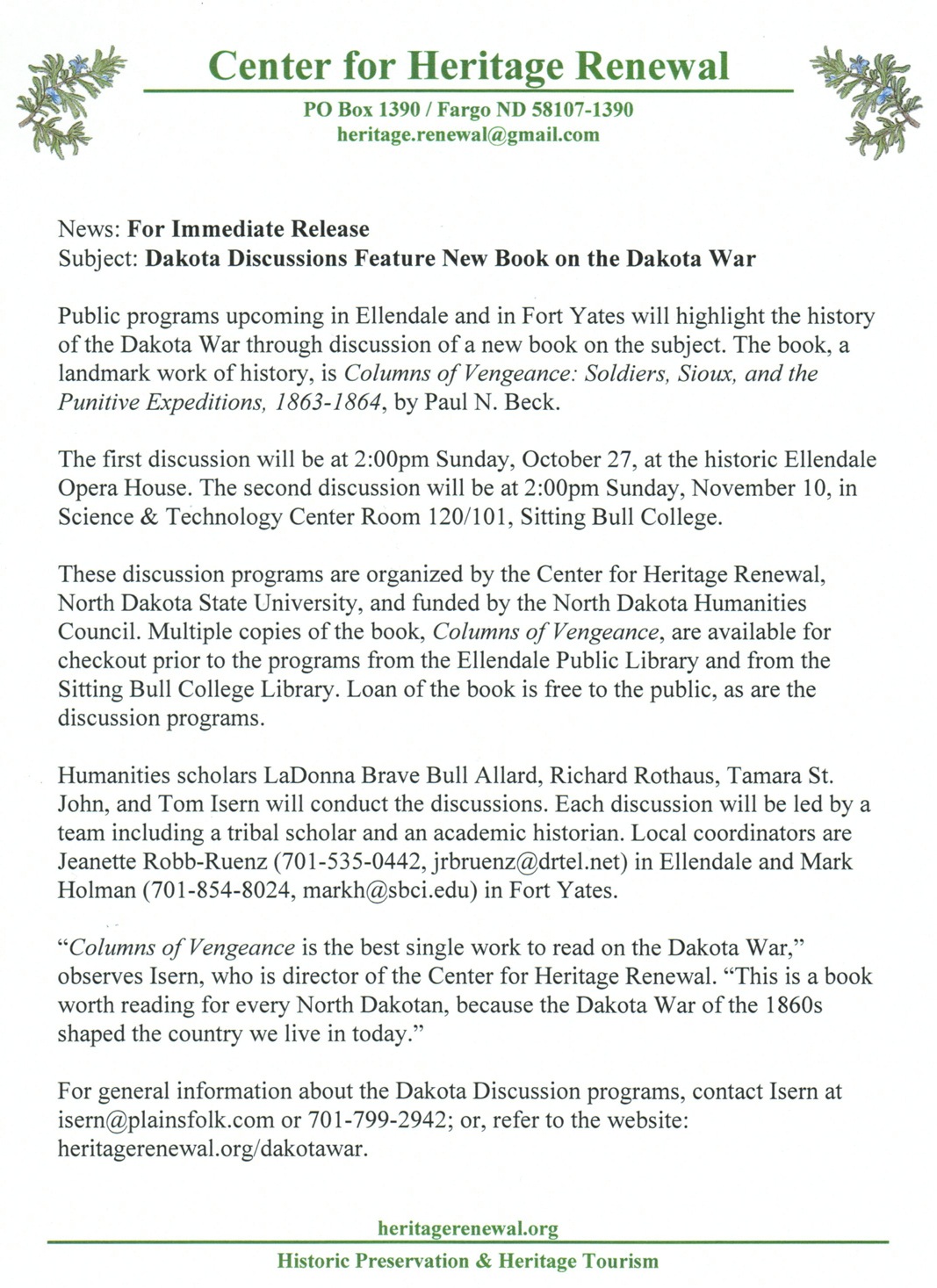
CHRBefore this morning gets away from me, I thought I’d provide two humanities updates taking place in the great state of North Dakota, central North America. The first is a link-reference to the progress of our Punk Archaeology manuscript; and the second concerns the official press release from NDSU’s Center for Heritage Renewal on our continued Dakota book discussions. Of this latter, the discussions bring together the public and scholars to consider the Dakota Conflict and the subsequent punitive campaigns from 1862-1864, and where we, Native and non-Native relations, are today.

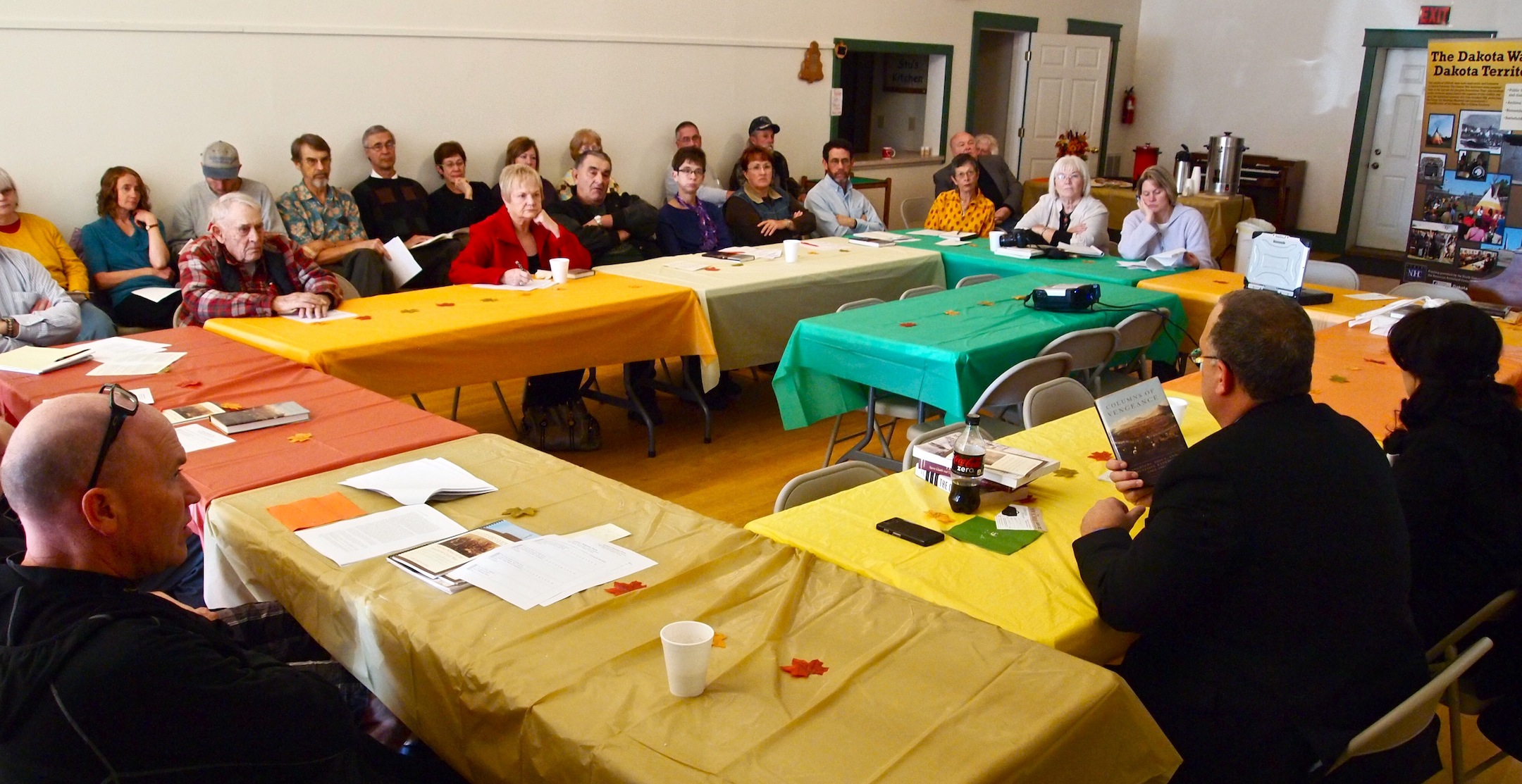
For more details, check out the uploaded hand-bill image to the left. Of this, the most recent discussion took place this Sunday past at the Opera House in Ellendale, Dickey County, North Dakota. This brought out a variety of topics, and the most attentive-grabbing and engaging at all of these events is that of Native historians and knowledge-keepers and scholars. After Tamara St. John, a Native historian and genealogist, spoke at this event, an attendee remarked on how (and I’m paraphrasing) they are starved for this kind of information.

For those of us up to our elbows in the history and historiography of the US-Dakota Conflict and Wars, we understand and often wrestle with accurate and precise and appropriate terminology, definitions, and so on. When we chat about this stuff with non-specialists, one of the most common remarks I have heard is this: “How come we weren’t taught any of this — attempted genocide, attempts at cultural destruction, attempts at forced assimilation — in our public education here in North Dakota, Minnesota and South Dakota?” I’m uncertain. But I do always insist on using attempts and attempted when talking about genocide, cultural destruction and assimilation. I do this because the Dakota, Lakota and Nakota, the Seven Council Fires, are alive and well today. We are pushing ahead as well with these discussions, and every time we have another conversation and chance to talk about this, legitimate history is happening. And if that is happening, so is that large, amorphous thing we call culture and the humanities.

When it comes to the public school systems, I’m sure there are plenty of politics behind all of the curriculum decisions from yesteryear and now. Perhaps that is something we in the future can consider, and perhaps in the future bring before various departments of public instruction in Minnesota, North Dakota and South Dakota. That would be at least one long-range goal to consider.

Nonetheless, the next discussion will be held at 2:00PM (CST) on November 10, 2013, at Sitting Bull College,  in the Science and Technology Center Room 120/101, Fort Yates, Standing Rock Reservation, North Dakota. And here is a photo from the discussion from last Sunday.

OLYMPUS DIGITAL CAMERA


Weekend Line Up

Before logging off and hitting the northern Great Plains segment of Eisenhower’s Interstate system this morning (a grand piece of Federal infrastructure reform from the late 50s and 60s), I thought I’d give a line up as to what is in store for this weekend. Molly and I will first be heading from Fargo up to Minot, North Dakota. We’ll stay with Jessica Christy (Molly’s good friend and my cousin), and I may even have a chance to get over to Walt Piehl’s cowboy poet bar, The Blue Rider. At least for a beer or two and some conversation with, perhaps, fellow Frenchman Todd Reisenauer. Both Christy and Piehl are professors of art at Minot State University, and both are artists from and for the northern Great Plains.

Molly and I will return to Fargo on Saturday, and then on Sunday it is back out on the road to Ellendale, North Dakota (west from Fargo to Jamestown, then south on Highway 281 for about an hour). We are heading to Ellendale to begin and continue another public conversation that considers what happened 150 years ago with the US-Dakota Wars, and where we want or ought to go with the conversations today. These events are sponsored by North Dakota State University’s Center for Heritage Renewal, and the North Dakota Humanities Council, and they bring together a variety of professionals, Native historians, and the public. Gotta run now, but a follow up at some point next week on all this.


Post-Talk Update from North Dakota State University

I had an excellent time in Kjersten Nelson’s Political Science class today speaking about the philosophical whys and technical hows of historical and archival research. After I finished, I asked students where they were in their archival research.

It was excellent to hear from one student who is taking on the hard topic of how returned soldiers deal with Post Traumatic Stress Disorder, and I was glad to recommend that they 1) chat with NDSU Philosopher Dennis R. Cooley about this, since it concerned how soldiers deal with suicide, and since Dennis has thought long and hard about this topic; and 2) that they look into David Silkenat’s Moments of Despair: Suicide, Divorce, and Debt in Civil War Era North Carolina for the historical backdrop of how American soldiers have dealt with these exceedingly difficult memories. The human costs that result from war are infinite, and it was great to hear how an NDSU undergrad (and soldier) is considering ways to push knowledge in new directions. She seriously wants to help. I’m looking forward to checking back in on that research.


Imagining Research and Teaching Tuesday

In a couple hours I’ll follow my established pedestrian transect to North Dakota State University (this is the fancy way of saying I’ll walk up to class) to provide a guest talk on archival research for Dr. Kjersten Nelson’s Political Science classes. Over the last couple days, I’ve thought off and on exactly what I could and should impart upon the class (she said there are approximately 17 students). Three thoughts came to mind, and here they are (note: a friend of mine, Don Paul, attended one of those Ford schools back in the day in Michigan. These were philanthropic schools Henry Ford set up for kids to attend — for free. Don said at those hands-on liberal arts vocational schools, the artisans and industrial manufacturing teachers would tell him to follow this rule when giving talks: start out by telling your audience the three things you’re going to tell them; then tell them the three things with explanation; and then conclude by telling them the three things you told them. This makes sense. Work in threes or fours if possible.):

1) Perhaps the best way to go about it is to initially do a bit of podium driving, explaining why research matters, and why professors at universities invest themselves in pushing knowledge in new directions. Just last Friday I chatted a bit with Bill Caraher in Bismarck, this after a invigorating ND Humanities Council board meeting, and in conversation he mentioned how he explains to his students exactly what he does with his time at the University of North Dakota. Students understandably want their professors to be attentive, and professors should definitely do this, both with class room lecture, discussion, and in office hours and over coffee. But the reverse of that is to make sure the students activate the auto-didactic — the self-taught learner — within themselves. The entire idea, I’ll tell the students today, is to do good on your archival research and paper skills because A) this may turn into a larger research project when you are off working on your own PhD in grad school; and/or B) this will give Dr. Nelson the ability to write you a glowing letter of recommendation that speaks to your abilities as a critical thinker, writer, and self-directed learner and problem solver; and C) your friends, colleagues, and current or future life-long partner will indeed dig these skills.

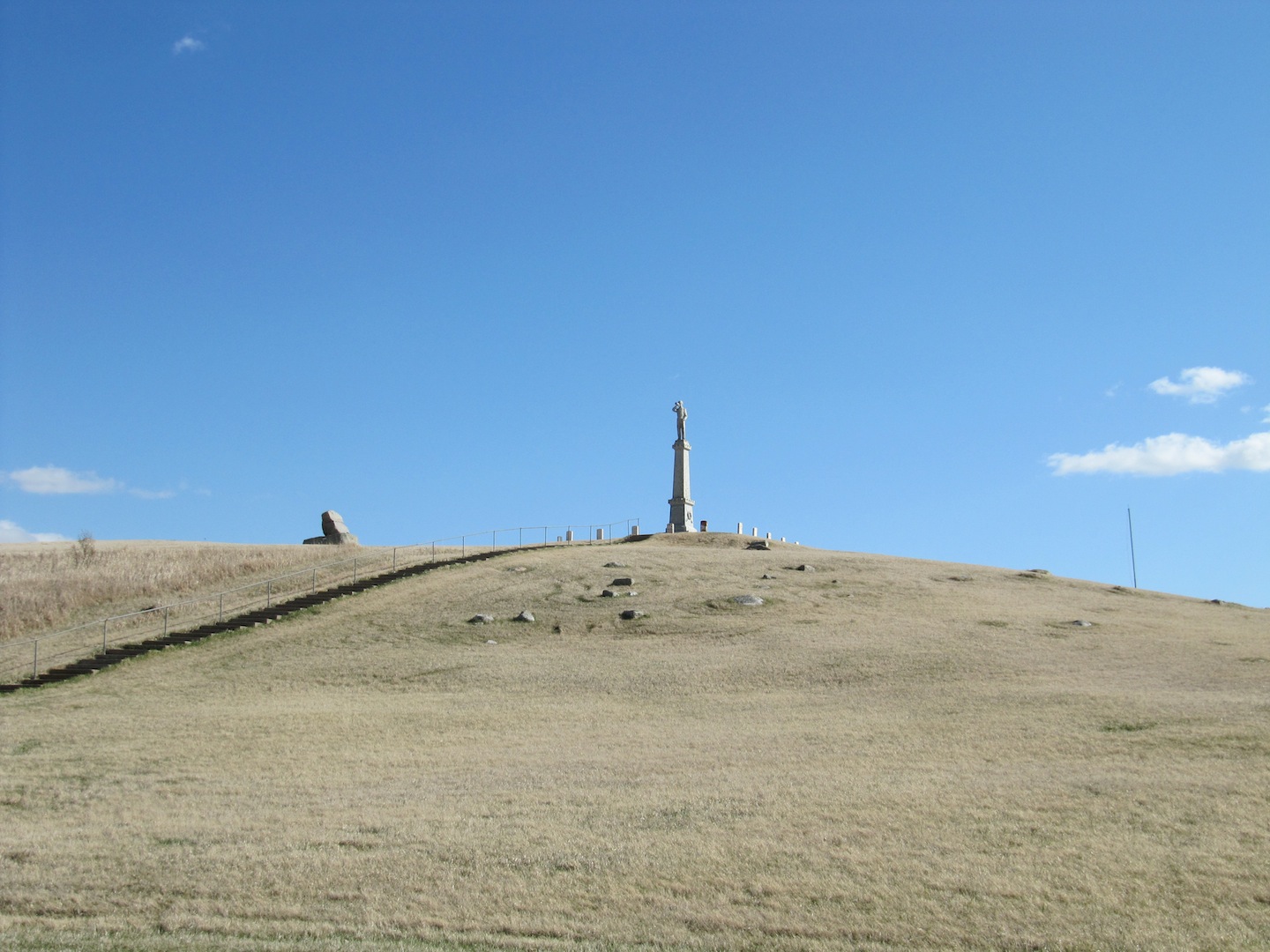
The granite bugler at Whitestone Hill in southeastern North Dakota.

The granite bugler at Whitestone Hill in southeastern North Dakota.

2) From there I’ll delve into the personal, at least how I managed to bring a topic I’ve cared about since 2008 to a manuscript form that was considered and eventually published by a top-flight academic journal. There are enjoyable struggles and processes of preparing such a manuscript, and one pours themselves into these things not knowing if a journal will consider them at all. That, of course, is why it takes the spirit within each person to be driven to figure out a problem in the social sciences or humanities that may, at the outset, induce confusion or frustration. Such was the case when I first heard about and then visited the Civil War monument at Whitestone Hill in southeastern North Dakota some years ago. I was initially confused by it — “Why did North Dakota install a granite Civil War bugler on top of the largest hill in the area?…” There’s a tendency to be confused or frustrated by what is not yet understood. And one doesn’t have to agree with something to understand it, but agreeing with something and understanding it are two disparate things.

3) And finally, this might be a direction that students and researchers think about as they continue to consider their topics: is there anything in the world of politics or political history that induces confusion or frustration? Research always begins with questions, and sometimes if you one feels frustrated about something, they should indeed start asking questions. “Why is that the way it is?” I’m interested in hearing how far along the students themselves are in their research processes. A large part of archival research deals with imagining where the sources might be. Once a paper trail starts to emerge, it can help with imagining where other sources might be. I’ll again default a bit to the Whitestone Hill case study, but broaden it out to envelop which directions the students are pushing.


Green Spaces at North Dakota State University

I’ve been in conversation with some friends and colleagues on the campus of North Dakota State University (NDSU) as to where the latest proposed STEM APE (Area of Potential Effect) should be located and, eventually, built. Thus far, NDSU administration is leaning toward putting the important STEM center just to the east of the Memorial Union, requiring the bulldozers to first knock out some historic trees (yes, such ecology exists) and the beautiful and quaint historic Nelson building on campus. So NDSU is now circulating a kind of after-the-proposed-planning-fact survey to gauge student interest.

This is how I answered a couple questions on page 2 of the survey, and I also provided them with all of my contact information.

1) In our broader culture where horizontal asphalt parking lots and strip malls are the norm, it seems not only important but paramount to ensure that North Dakota State University protects historically green, recreational spaces at the heart of our campus. Theodore Roosevelt carved out national green spaces throughout the American West so that the American population could re-create themselves by being in and connecting with the grasses, trees and shrubs. This is where we get the word recreation: our ability to return to natural or artificial landscapes to, as they say, get away from it all, if but momentarily. This is another reason why Island Park in downtown Fargo was created, as well as large green spaces on the eastern seaboard of the United States (take New York’s Central Park as a prime example).

2) The Elm trees within the proposed STEM APE are historical hybrids, a variety resistant to the Dutch Elm disease that nearly wiped out the entire American Elm species in North Dakota. The American Elm, by the way, is the state tree of North Dakota. There is a bit of irony at play every time North Dakota State University obliterates, or proposes to obliterate, a piece of its local ecological history. We as a state have so few trees to begin with. Why not just build the STEM building in a parking lot, or a place on campus where there aren’t any trees? By doing this, it would increase the verticality of the campus while simultaneously preserving green space.

I encouraged them to get a hold of me if they want a proper study of their proposed APE(s). This, in turn, would help guide decision making so that the best possible construction solution could be arrived at. Who knows what will come of this. It is their call. We hope they make the right decision.


Humanities Un-Conference: November 2-3, 2013, Fargo, North Dakota

Ideas are just that: ideas. They often start out with the thought of the results first, and this often bypasses the entire processes that went together to get an idea to that result, to give it actual traction. So the idea of getting ideas together in an informal setting is, well, a good idea. And bringing a confluence of idea-driven individuals across the state together and talking is also a good idea. Who knows where a conversation may lead?

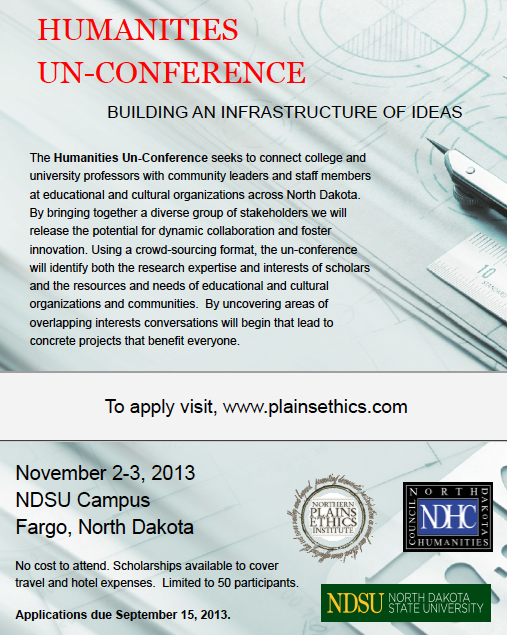
Within North Dakota, the Plains Ethics Institute, North Dakota State University, and the North Dakota Humanities Council have come together to give rise to an idea un-conference. Below is the full poster, with just a couple modifications here: the date for registration has been extended to October 1st, and a proposal is not required. Reimbursement is also available for those individuals thinking about coming from non-Fargo, North Dakota, but wondering how they are going to fund the mileage and lodging (Williston to Fargo, for example, is a 422 mile, 6-cups-of-coffee, 1-way drive). The official handbill is below.

Hum Un-Conf


The History of Ancient History at NDSU

I just got off the phone with my Uncle Jim (known to others as Jim Barth), as I was curious about an old North Dakota State University (NDSU) syllabus of his.  I’m interested in the history of syllabi, primarily because it’s always fascinating to track the history of education: information that was pumped into yesteryear’s generation in contrast to what we’re pumping into tomorrow’s leaders, today.

Jim chatted briefly about this course he took back in the late-1950s at North Dakota Agricultural College (today’s NDSU). He said the course location was at the Neuman Center (he was pretty sure), in a 1-story building across the street from University Street. I figured that so others can access a syllabi from the late-1950s, and perhaps compare it with today’s courses in Ancient Mediterranean History, I’d upload photos of it. They are below. The textbook used for the course was Vincent M. Seramuzza & Paul L. MacKendrick, The Ancient World (Holt, Rinehart & Winston, Inc., 1958). A sticker on the inside cover says it cost $8.95 at Varsity Mart (inflation is also a reality of the world).

Note how informal the syllabus looks from the late-1950s, this in contrast to the corporate-university legalese we see in syllabi today. Much has changed, yes. But that’s the way with the world, and life.

Ancient History I

Ancient History 2

Ancient History 3