Tag Archives: Aaron McGaffey Beede

More Notes on Clell Gannon: 1920s Census and Cultural History

Just pecking out some more notes to add to the texture of the Clell Gannon project, working on revisions with The Digital Press at the University of North Dakota (Grand Forks).

After revisiting Willa Cather’s 1923 (September 5) essay, “NEBRASKA: The End of the First Cycle” in The Nation (117: 236-238), and particularly after reading Cather’s demographic cross section slice of a day in the life of 1923 Nebraska: “On Sunday we could drive to a Norwegian church and listen to a sermon in that language, or a Danish or a Swedish church. We could go to the French Catholic settlement in the next county and hear a sermon in French, or into the Bohemian townschip and hear one in Czech, or we could go to church with the German Lutherans. There were, of course, American [meaning American English] congregations also… I have walked about the streets of Wilber, the county seat of Saline County, for a whole day without hearing a word of English spoken.” And, a couple sentences later, Cather notes that “Our lawmakers have a rooted conviction that a boy can be a better American if he speaks only one language than if he speaks two.”

North Dakota, in the year 1900, also had a diverse immigrant population with a greater percentage of foreign-born than any other state at that time in the Union. I don’t have the percentage number right in front of me. But from memory it is something like 78% foreign born. Prairie Mosaic is the reference I’ll double check to confirm that number, as this provides ethnohistoric ground-truthing, research that took place from the 1960s through the decades following said 1960s.

U.S. Census 1920 bulletin on North Dakota. Page 1.

This returns to Clell, and thinking about the context in which he wrote his Songs of the Bunch Grass Acres, and the reading audience who had want or access to his 1924 Western Americana poems. In 1920, Orin G. Libby’s article, “The Arikara Narrative of the Campaign Against the Hostile Dakotas — June, 1876” ran in North Dakota Historical Collections (Bismarck, North Dakota, Volume 6). Aaron McGaffey Beede collaborated with Libby on this. Beede was the interpretive and translation conduit between the Arikara scouts and Libby. Libby’s approach was one that would speak to Custer-philes, with an angle that may appeal to Custer-philes who may have had a broad brush stroke (see racist) outlook on all of Native America. With Libby popularizing how Arikara fought alongside the U.S. Military in 1876, he was making a pitch (fortified with numerous data points) that demonstrated their patriotism. In 1918, two years before Libby published his Arikara narratives, the Great War ceasefire (armistice) happened. Up to 12,000 Native American soldiers participated in World War I, this at a time when Native Americans still didn’t have the right to vote. The Indian Citizenship Act of 1924 would change all of this, allowing tribal citizens the Federal status of voting. However, the U.S. Constitution still left it up to individual states to decide who had the right to vote. So Libby’s narrative that set down the Arikara memories of the 1876 Battle of Little Bighorn/Greasy Grass would also have spoken to that political activist line of thinking.

So what does all this mean of and for Clell Gannon’s 1924 Songs of the Bunch Grass Acres? I don’t have much more to say beyond the above, other than this is some of the context in which Clell wrote. A multitude of ethnic languages from the immigrant populations could be encountered in the urban and rural of the Great Plains and American West. Tribal citizens were granted another incremental federal right to vote. Libby lobbied on the Arikara behalf through historical memory and narrative. And Clell continued his relationship with the major shapers of the early State Historical Society of North Dakota, making his poetic contribution to the love of northern plains place through said poems.


Second Wave Established – 1920s Great Plains

Yesterday (03/07/2024) on the social media platform Facebook, the Herodotus of the Great Plains, Professor Tom Isern, posted a note of and a link to Willa Cather’s 1923 essay in The Nation called, “NEBRASKA: The End of the First Cycle” (The Nation, 117, September 5, 1923: 236-238). Recapturing Isern’s post here, he said,

“Cather’s 1923 essay is a redefinition of the Great Plains historical identity. Writers such as Owen Wister despised immigrants. Walter Prescott Webb set them no place at the table. Great Plains history was being written by Anglo-Americans, and they owned it. Well, Cather flipped that scenario. She gave immigrants not just a place, but the place of honor. They are the best of us, Cather argues. This she says based on her personal experience and acquaintances; the immigrant presence infuses her Nebraska novels. Literature matters. Cather’s 1923 essay is required reading in my NDSU course on the Great Plains.”

Some more notes on that are below from Isern’s prompt above:

This 1923 essay got me thinking about the larger regionalist movements during this period that are sometimes book-ended (handily) by the two big ones in the first half of the 20th century (WWI and WWII). It seems like if you’re alive, reading this or anything today, props to your ancestors for figuring out how to survive the first half of the twentieth century. And that’s after their ancestors figured out how to navigate the long nineteenth century prior.

Of the 1923 essay, Cather’s following statement smacks thematically of Clell Gannon who, also in the 1920s, asserted his own version of northern plains historical identity into the soil. This phrase by Cather, here:

“When I stop at one of the graveyards in my own county, and see on the headstones the names of fine old men I used to know: ‘Eric Ericson, born Bergen, Norway . . . died Nebraska,’ ‘Anton Pucelik, born Prague, Bohemia . . . died Nebraska,’ I have always the hope that something went into the ground with those pioneers that will one day come out again. Something that will come out not only in sturdy traits of character, but in elasticity of mind, in an honest attitude toward the realities of life, in certain qualities of feeling and imagination.”

Willa Cather, The Nation, 1923

Clell Gannon was doing this sort of literature, art, and history place-making (I have heard the phrase “place esteem,” too) just a couple chess moves north on the northern plains. Either by way of his boat ride with George Will and Russell Reid down the Little Missouri River then the Missouri River (from Medora to Bismarck) in 1925. Or by way of his interior mural paintings in the Art Deco Burleigh County Courthouse in Bismarck, North Dakota. And other such elements.

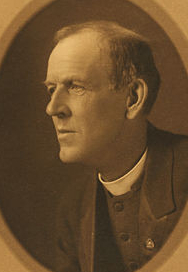
Another thought from this 1923 essay by Cather is this: we (historians and those consumers of history) are in need of much more research and narrative building with how tribal citizens used their own agency to navigate these decades from the 1910s, 1920s, 1930s and 1940s — really the tinder and prologue to the needed American Indian Movement of the 1960s. Today, Phil Deloria is carving out published research and narrative from this era. In the 1910s and 1920s, Anglo-American historians often overlooked or didn’t include (all but with a sentence or a subordinate clause) Native America in its infinite dynamism during this period. If you get closer to the regions where the regionalists operate, though, Anglo Americans such as Aaron McGaffey Beede start emerging from the research.

In broad brush strokes, Beede advocated for his Anglo-American readership to 1) stop talking (what a concept) and; 2) start listening to and learning the Lakota language. I don’t have the verbatim quote in front of me, but from memory Beede says things to the effect of this: if you want to witness the divine amongst the Lakota, then stop and deliberately learn their language. Once you learn the language, you will hear the creator within that language.


Updates on Aaron Beede and UND’s Digital Press

One of the only known 6:23AM screen shots from the NDDOT road conditions website on January 21, 2015.

One of the only known 6:23AM screen shots from the NDDOT road conditions website on January 21, 2015.

It’s about 6:20AM (at least as I sit down to type), and the snow is letting up. I’m sitting in a hotel room in Minot, Ward County, North Dakota, on the eastern edge of the Bakken. I have a short field-research trip to the west, but I’m temporarily yielding to the ND Department of Transportation’s road conditions map. Which appears like this, at left. I’m updating this blog post with a couple items on my brain.

The first is another public history sighting of Reverend Aaron McGaffey Beede, PhD. Beede figures seriously in the history of North Dakota, and only a handful of scholars have sifted through his papers. Last week, during a lunch meeting in the Peacock Alley, in historic downtown Bismarck, I sat at a table and looked over the picture to my left. In addition to offering delicious food (I ordered the half-prime rib lunch special with chips), the owners of the historic Peacock Alley have reproduced numerous local historical photos to hang on the walls. This was one of them. There is a gentleman addressing the legislature, with cigar in left hand. I accidentally cut out of the photo the ash tray at the foot of the podium. Believe me: it was there. Those were different times.

Beede

Note the ND legislator from the ’20s or ’30s, with cigar in left hand, and the nameplates on the desks behind him. “Beede, Grand Sioux” is behind him.

Behind that, behind the name Saumur of Grand Forks, is “Beede, Grand Sioux” agency or county. It was great to see the photo, and that is about all I have on it right now. I’ll do some more tracking on this. Beede figures into a chapter of my ongoing dissertation which, roughly, figures into how and why the US-Dakota Wars were remembered on the northern Great Plains. Beede was formative in shaping and pushing that memory in one direction, arguing just after the turn of the 19th century that Natives need to be listened to and allowed to tell their version of history. It was serious push-back against the Social Darwinian and Manifest Destiny crowd (some of which is still around today).

And finally, the third item is a hot-off-the-digital presses book, the second title from University of North Dakota’s The Digital Press, Visions of Substance: 3D Imagining in Mediterranean Archaeology (edited by Bill Caraher and Brandon Olson). The work is an anthology of blog posts Caraher charged guest writers with publishing at his blogspot linked to here. Susan Caraher edited the blog posts to comb out any of the craziness that is inherent in on-the-spot blogs. Caraher and Olson told the guest writers to respond to the following questions in each post. The questions include:

  1. How do we understand the current crop of 3D modeling technologies in the context of the history of archaeological imaging? Are the most optimistic readings of this technology a mere echo of earlier enthusiasm for photography in an archaeological context or is this somehow qualitatively different?
  2. Is there an emerging consensus on best practices of 3D imaging of archaeological sites? What are the current limits to this kind of technology and how does this influence the way in which data is collected in the field?
  3. How do we understand archival considerations for 3D models and their dependent data? For example, what happens when we begin to prepare archaeological illustrations from 3D models collected in the field and processed using proprietary software? How do we manage the web of interrelated data so that future archaeologists can understand our decision making?
  4. What is the future of 3D modeling in archaeology? At present, the 3D image is useful for illustrating artifacts and — in some cases — presenting archaeological and architectural relationships, but it has yet to prove itself as an essential basis for analysis or as a viable medium for communicating robust archaeological description. Will 3D visualization become more than just another method for providing illustrations for archaeological arguments?

Without going further into this (it’s about 6:50AM, and I need to move forward with the morning), you can read the entire collection of academically produced and academically edited and academically published essays, for free, at this link here. Thanks Bill and Brandon and Susan for compiling this. I know there will be many more.


Bringing American Public History to New Zealand

Just moments ago, from the northern Great Plains of North America, I submitted a short paper proposal to the other side of the planet, this to the New Zealand Historical Association (NZHA) in Dunedin, New Zealand. It is for the NZHA 2013 Biennial Conference (click the blue link to the left for direct details) on November 20-22, 2013. My paper concerns the contested public memory of Whitestone Hill, and concludes with some World Historical considerations. It builds off landscape memory and history, and research from 2009 to the present. The intent is to join two additional landscape historians, Dr. Thomas D. Isern and Dr. Suzzanne Kelley, to make a complete panel. Tom and Suzzanne are considering the public memory of local New Zealand history specific to the Lindis. I am bringing some public memory from the northern Great Plains to the mix. I thought I would share my paper title and abstract here.

Photo of Whitestone Hill from April 2012.

Photo of Whitestone Hill from April 2012.

Title: Aaron L. Barth, “A Contested Site of Memory from the American Civil War: Whitestone Hill 150 Years Later”

Abstract: In early September of 1863, as the American Civil War raged in the eastern half of the continental United States, General Alfred Sully led a military column on a punitive campaign against the Dakota (aka, Sioux) on the northern Great Plains. The military goal was to punish the Dakota majority, en masse, for the atrocities committed by a small Dakota minority the previous year in the Minnesota River Valley. Sully’s 1863 campaign culminated in an action at Whitestone Hill, this in present-day North Dakota. In his official words, Sully said he engaged Dakota “warriors… squaws, [and] children” in a “melée” and “murderous slaughter” of a “promiscuous nature.” His command killed 150 to 300 Dakota, and if he had another hour or two of light, he said, “I could have annihilated the enemy,” giving “one of the most severe punishments that the Indians have ever received.” For 150 years, the public memory of Whitestone Hill has been contested, called a “battlefield” by a United States Congressman, and called a “mistake” by Sully and Episcopalian Reverend Aaron McGaffey Beede. This paper tracks the public tension in the remembrance of Whitestone Hill, and concludes with samples of how sites of memory from this period are contested in World History.


Aaron Beede on Women’s Rights in North Dakota Circa 1915

Aaron McGaffey Beede, Digital Horizons collection,  State Historical Society of North Dakota.

Aaron McGaffey Beede, Digital Horizons collection, State Historical Society of North Dakota.

In the last couple weeks I took a day to visit the special collections and manuscript room at the University of North Dakota, Grand Forks. While sifting through one box and folder after another, I came across a 1915 excerpt where the Episcopalian Reverend Aaron McGaffey Beede, PhD, opined on the way the North Dakota legislature treated women at the state capitol. Beede was disgusted with the legislature. The local story, as Beede set it down, is as follows in his February 19, 1915 journal entry:

…The House voted for ‘Equal Suffrage’ to get rid of the mob of women at the capitol… then when the women have gone and scattered from the city to their homes celebrating, the House recalled the bill, to get rid of the bill. I call that ‘double crossing.’ I am fully in favor of allowing all women to vote, not withstanding some heroic ‘suffragettes’…

Thank you Beede for calling out legislative double crossing. Women’s suffrage required individuals at all levels to make that kind of difference. And sometimes local state legislators were not with the times. In this case, a national amendment eventually brought them up to speed. (A pertinent John Stuart Mill 1869 link here.)