Punk Archaeology Handbills

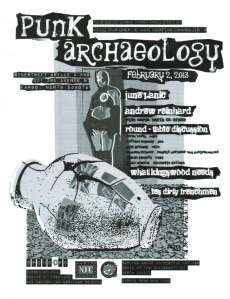
Around the Fargo-Moorhead area, here is a glimpse of some of the first Punk Archaeology handbills to go up. This one is secured to the entrance of the Rhombus Guys Pizza joint on Main Avenue in downtown Fargo in Cass County, North Dakota. For more details, click here. On February 2, 2013 (a Saturday) at Sidestreet Grille and Bar in downtown Fargo, ND, music will kick off around 7:17pm, and the panel discussion just a bit later. And like any quality un-conference time, it may start just a little before, or a little after. Swing on down if you’re in town. It is happening. And it will be awesome.

Various handbills in the entrance of Rhombus Guys in downtown Fargo, North Dakota. Punk Archaeology handbill lower right.

Various handbills in the entrance of Rhombus Guys in downtown Fargo, North Dakota. Punk Archaeology handbill lower right.


Gandolf the White Blizzard

It is the evening of January 11, 2013, and I am on the second floor of The Arts Center in downtown Jamestown, North Dakota. In the past couple days the Weather Channel and regional meteorologists have been psychologically preparing the public for the first intense blizzard of the year. The Weather Channel has subsequently named this blizzard Gandolf — yes, I’m serious. Originally I intended on making the Eisenhower Interstate 94 drive from Fargo to Jamestown after an NDSU departmental meeting concluded in the late afternoon, but eureka rattled through my brain earlier in the morning and I thought it would be better to make the drive then and there. My hope was to beat the thermometer from Fargo to Jamestown, knowing that the light rain would turn to ice as the temps dropped below 32 F. And if I didn’t make it to Jamestown, how would I be able to attend the art gallery reception for Walter Piehl on Saturday evening with Molly at The Arts Center? Yes, I needed to act.

Ice forming on the windshield and radio antenna during the early stages of Gandolf the White Blizzard.

Ice forming on the windshield and radio antenna during the early stages of Gandolf the White Blizzard.

The drive turned into a white-knuckled affair, a ’93 Chevrolet S-10 rear-wheel drive pickup providing joyous stress. I found that by keeping the speedometer at no more than 40mph, the rear wheels would stay secure to the pavement. During the drive, I also thought about how author Chuck Klosterman killed off several main characters (spoiler alert!) with a blizzard in Downtown Owl, this piece of fiction set in a small town in rural North Dakota in 1984. Then I thought about the book, Children’s Blizzard. Then I tried to stop thinking such thoughts, and I continued driving.

Note: when driving in winter rainstorms that are turning to ice, there are two opposing thoughts that bash at each other in the brain. It goes something like this: after a driver is 30 miles into a 90 mile drive, and just after the rear wheels slip a little at 50mph (the pick up will jerk a bit), the driver considers two options: turn around and endure another 30 mile drive back, or press on and gain another 30 miles. In the long term, if the driver retreats and makes it back home, they will have logged 60 miles, which, essentially means one could have been 2/3s the way to the destination. So I pushed on. Would I end up sliding off the road and into the ditch? Stop thinking about these thoughts. I did, and I made it to my destination. My advice: don’t do this. Ever. Anyhow, the photo pictured above is what the windshield looked like in the early stages of Gandolf the Grey, this between 8:30AM-to-12PM in Cass, Barnes and Stutsman counties, North Dakota.

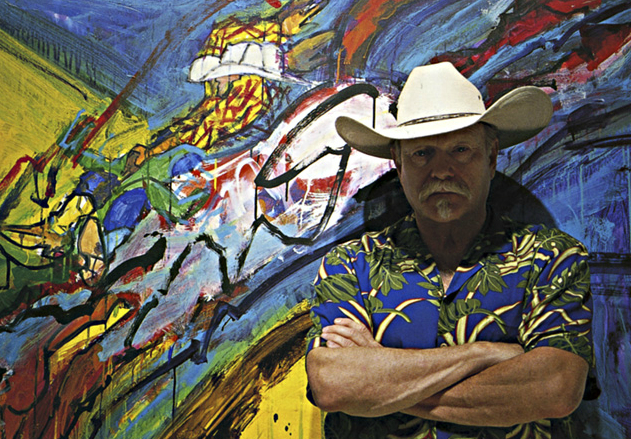
Walter Piehl and his art.

Walter Piehl and his art.

The below short video clip is an intensified Gandolf, when a winter rain storm receives more training to ultimately become Gandolf the White Blizzard. As I re-visit the video over and over from a historic building in downtown Jamestown, North Dakota, I can’t help but thinking how 100 years ago an individual in the building would have heard similar sounds from this very vantage. Note, for example, the subtle chug-chug-chug in the audio, this coming from a train just a block north. The large grain elevator (not visible) is located along the tracks. Yup, 100 years ago it was possible during a winter blizzard to hear the same blasts of shivering whispers blow through the small cracks in commercial brick construction, and also hear the thump-thump-thump of the iron horse on the Northern Pacific Railroad.  Historically, it is important to respect White Blizzards — lest they teach us mortality instead of just humility.


Two Artistic Notes

About a week ago a group of us dropped in on the Emerson Center for the Arts & Culture at 111 South Grand Avenue in downtown Bozeman, Montana. The center has been re-adapted from its original progressive school function. Today, or as of January 2013, there are a variety of art pieces and galleries within, and two pieces of material culture caught my eye. They are machines that dispense art.

The first was a former pull-handle cigarette machine that had been converted into an art, music, writings and idea dispensing machine. Go to this website here for more details. This is what the former cig machine looked like.

Art Dispenser

The second was a paper towel dispenser that now serves as a poetry dispenser. This is what the poetry dispenser looks like:

Poetry Dispenser

I pulled a sheet of poetry from that dispenser, and here is the poem in full.

Bloodied and Humbled, by Alexis W.

Life will leave you,

If you’re lucky,

Bloodied and humbled

Now bloodied washes off

The wounds from which it came will

Mend over, scars will fade

A commentary on

The unimportance of the physical

But the humbled will stick

A commentary on

The strength of the mind

And if, for some reason, it doesn’t

If you’re lucky

Life will come to leave you

Bloodied and humbled

Again


Some Notes On Chico Hot Springs, Montana

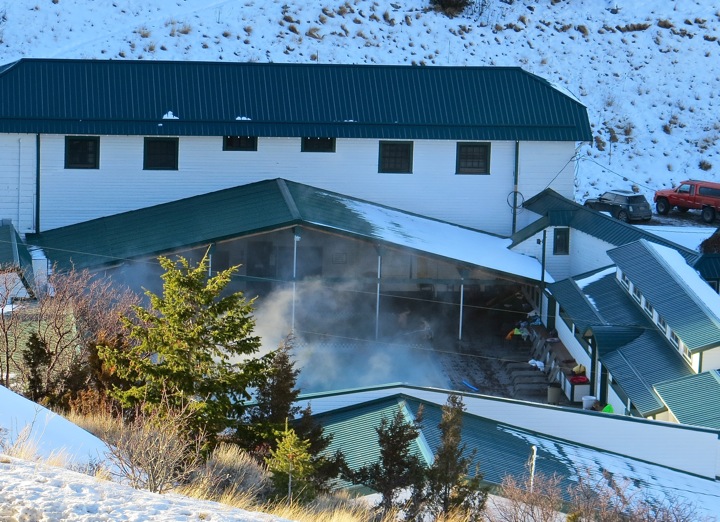
Steam rises out of the outdoor pool at Chico Hot Springs, Montana.

Steam rises out of the outdoor pool at Chico Hot Springs, Montana.

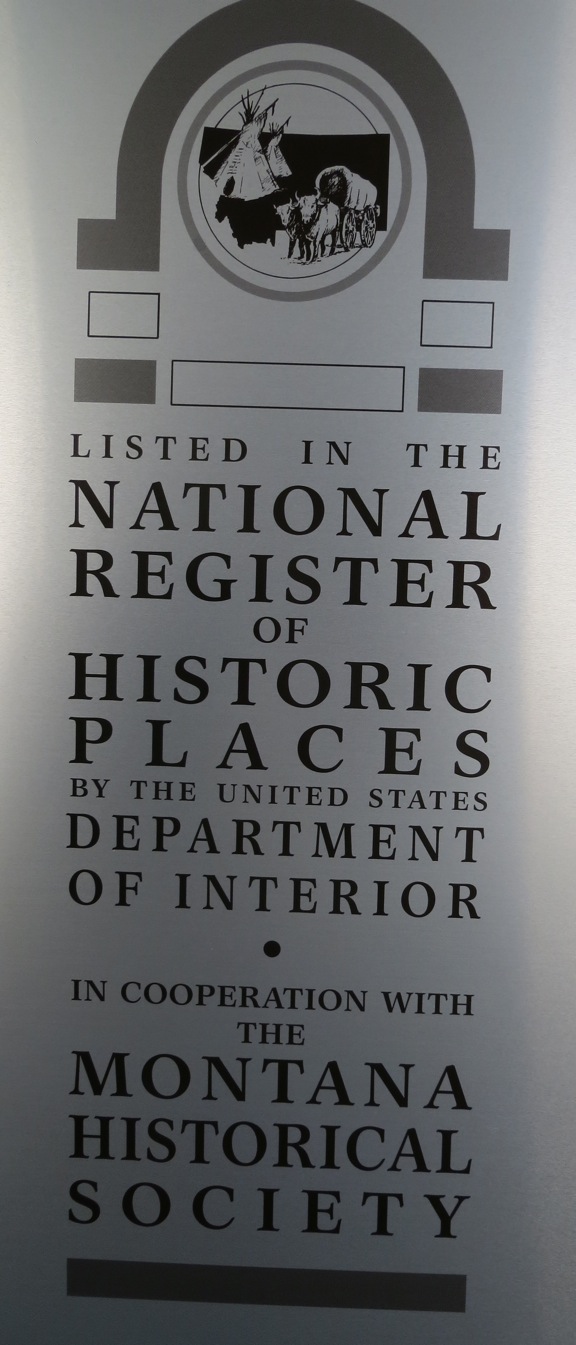
This last weekend I had the opportunity to be absorbed by a delegation from North Dakota and gladly pulled into the gravity of Chico Hot Springs, Montana. Once there, and while sauntering around the complex, I finally paid attention to a shiny placard (just next to the entrance I had been through multiple times) that noted Chico’s National Register of Historic Places status. So that compelled me to track down the registration nomination, and this is what we have.

The hot springs at Chico exist because of geology.  Water is heated sub-terra, and this eventually makes its way to the surface, flowing into places within and beyond the borders of Yellowstone National Park. At Chico, it arrives to the surface at around 112 °F. Water was first tapped and channeled at these springs as early as 1866 (10 years before Custer was shown mortality at the Battle of Greasy Grass — aka, the Battle of Little Big Horn). In 1900, a complex was built at Chico.

The historic buildings at Chico include the main hotel (1900) in the Georgian Revival style, an auto garage (1916), a smoke house (1915), a boiler house (1910) and horse barn (1916), pools, shower house and pool building (1917). Teddy Roosevelt visited the hotel in 1902 (he seems to be everywhere throughout the American West).

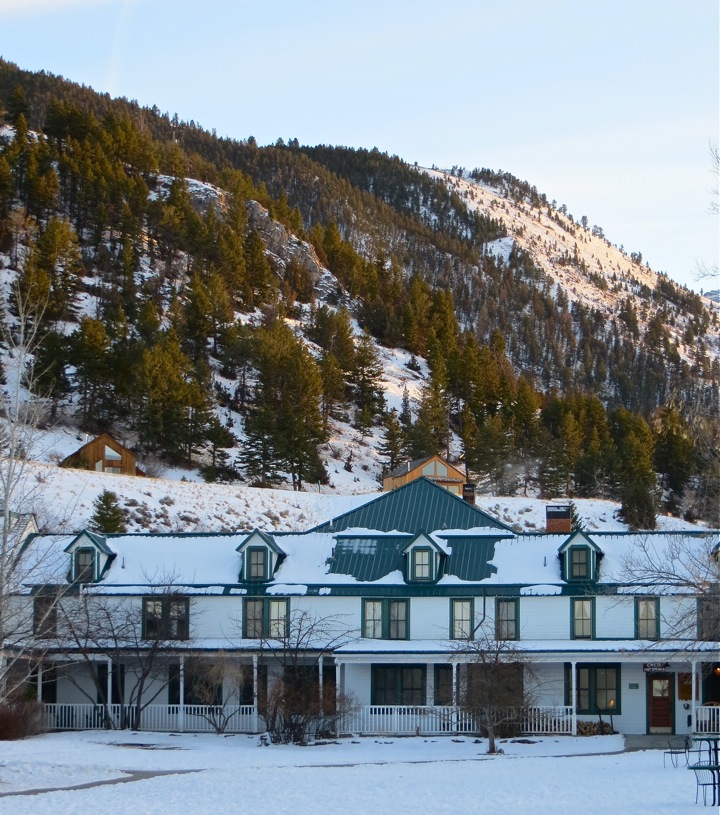
A 2013 photo of the historic 1900 Chico hotel, and mountain backdrop.

A 2013 photo of the historic 1900 Chico hotel, and mountain backdrop.

By 1969 a concrete-lined channel was added to divert hot spring overflow and regulate water temperature. Between 1900 and 2013, the owners of Chico added several structures to accommodate demand and growth. Before the Euro-American arrival on the scene, though, hot springs had been utilized extensively by Native America. The following is the description of how local Native America used the hot springs in and around Chico, this description from the National Register nomination for Chico:

…Springs, and in particular hot springs, were revered and often visited as places of spiritual cleansing and renewal. Water as a basis of life was important to Indian spirituality, as the Crow sang: bire daxua kok (water is your life).

Considering the experience had at Chico Hot Springs in 2013, it’s appropriate to say that this cleansing and renewal continues. The public placard next to the hotel lobby entrance at Chico reads as follows:

Generous verandas, period furnishings and healing waters invite the visitor to experience turn-of-the-century hospitality under the shadow of Emigrant Peak. The hot springs, long appreciated by native peoples, got their commercial start during the territorial period when miners stopped by to bathe and “wash their duds.” In 1876, an inventive settler tapped into the 112 degree water, piping it under his greenhouse to grow vegetables for local residents. A hotel was planned in the 1880s, but in 1892, there were still no facilities and families camped nearby to enjoy the springs. Percie and Bill Knowles inherited the property in 1894. They ran a boardinghouse for miners and in 1900, built the long-awaited hot springs hotel. Under Knowles’ active promotion, uniformed drivers ferried such guests as Teddy Roosevelt and artist Charlie Russell from the Emigrant depot to the springs. When Bill Chico NRHPKnowles died in 1910, Percie and her son Radbourne transformed the luxurious hotel into a respected medical facility. Dr. George A. Townshend joined the staff in 1912 and under his direction, the hospital and healing waters gained renown throughout the northwest. After the 1940s, new owners and new directions included gambling and dude ranching. In 1976, Mike and Eve Art began recapturing the once-famous hotel’s turn-of-the-century ambiance. Chico Hot SPrings, with its Georgian-inspired architecture and warm Craftsman style interiors, is one of Montana’s best preserved examples of an early twentieth century hot springs hotel and health resort.

I can only add that one ought to go to a hot spring within the continental interior of North America. It is worth your while.


Closer to Paul Sharp

At first read Paul F. Sharp’s 1955 work might look like an extension of Frederick Turner’s frontier hypothesis. Yet the intellectual turn Sharp laid out in 1955 reacted to Walter Webb’s 1931 idea about man and nature. According to Webb, man entered the environment of the American West, and then reacted accordingly. In this way environment rather than man dictated the coarse of action. Yet Sharp tested this hypothesis by considering how man entered the North American west north and south of the 49th parallel. If Webb’s earlier ideas held true, then British Canadian culture and American culture (or Anglo-American culture) would have played out quite similarly on both sides of the geo-political border. The fact remains that they did not, though, since American culture and British Canadian culture were structured in two different ways. In the American West, chaotic and localized development ruled the day. North of the 49th parallel, though, a structured British-Canadian will set the course of its western development.


My first review from December 5, 2012 was analogous to how a Canadian might have regarded Sharp — here is just another Turnerian, Frederick’s same whiskey in a different cask. Yet the closer to an object, including Sharp’s 1955 work, the more amplified the details and subtleties become. I suppose this is an excuse for anyone to reread and revisit a good novel or piece of scholarship (or a novel piece of scholarship), Sharp’s work included.


Mankato, Minnesota: 150 Years Later

Today, December 26, 2012, marks the 150th year since the largest mass execution in United States history took place in Mankato, Minnesota. This execution has been remembered and suppressed for a variety of reasons, but it seemed reasonable to post and pass on at least two pieces of public history. The first is a story put together by This American Life, entitled, “Little War on the Prairie.” Here is a link to the transcript, and another link to the recorded radio program here. It aired on November 23, 2012, and I first heard it while driving back to Fargo from having Thanksgiving in Bismarck and Valley City.

Photo by David Joles of the Associated Press.

Photo by David Joles of the Associated Press.

What is often missing from stories such as these is a kind of non-discussion about what followed this hanging. For example, it wasn’t just as though the hanging happened, and Governor Ramsey clapped his hands together and said, “Well, that’s taken care of…” Instead, it marked the beginning of annual punitive campaigns that the United States Government launched against the Sioux — against every combatant and non-combatant, or every man, woman, elder and child — throughout Dakota Territory. When we look back on it, the 19th century kind of looks like a racist primer for the industrial genocide that characterized much of the 20th century, at least the first half. The world eventually had a post-WWII convention to consider all of this. It’s sobering to think about.

In the 1860s, Total War campaigns against the Sioux were organized by General John Pope, and he in turn charged generals Henry Sibley and Alfred Sully with carrying them out. Today there are namesakes of “Sibley” and “Sully” scattered all throughout North Dakota. These names were ascribed to the landscape, and they resulted from that earlier US-Dakota War that roared up and down the Minnesota River Valley in August-September of 1862. Below is another piece of public history called “Dakota 38 [+2].” It is excellent, and the documentary was put together in 2008.

This year’s riders are just getting to Mankato, as they do every year. Here is another piece on this from the Mankato Free Press.


Red River Punk Archaeology and a Global Punk Rock Warlord

Punk Archaeology handbill produced by Joel R. Jonientz, Grand Forks, North Dakota.

Punk Archaeology handbill produced by Joel R. Jonientz, Grand Forks, North Dakota.

Ten years ago today, on December 22, 2002, Joe Strummer passed away. Joe was formative as a song writer and lead for The Clash and, later, the Mescaleros. Tom Vitale of National Public Radio did a story on Joe a couple days ago, the story linked to here. Local to North Dakota, Bill Caraher, professor of history at University of North Dakota, remarked on Joe here. And on social media, Kelly Hagen remarked on his reaction ten years ago when he first heard of Joe’s passing. He was in Fargo at the time (I think Kelly studied journalism — or, what today they call Mass Communications — at Minnesota State University Moorhead, but I better check with him first… yup, that’s what he said). Here’s what Hagen said a couple days ago on his social medias about the passing of Joe Strummer:

“I can’t believe it’s been 10 years. I remember getting home from work at Wendy’s in Fargo that evening, grabbing my stuff to get on the road to Bismarck, home for the holidays, and hearing about this on my way out the door. And how it ruined everything, because there’d been rumors that the Clash were going to reunite, and I was super psyched about that. Still bummed. Blast some Clash for Joe, from here through Armageddon. No better soundtrack to finishing off your worldly commitments.”

This is true.

On February 2, 2013 in downtown Fargo, North Dakota, at Sidestreet (301 3rd Avenue North), the first global Punk Archaeology conference will consider stuff like this, bringing together an interdisciplinary team of Mediterranean, North American and global archaeologists and historians. The conference has 4 punk bands lined up (check out the poster above — Andrew Reinhard, with Barth on drums; June PanicWhat Kingswood Needs; and Les Dirty Frenchmen), and a round-table of discussants. Sponsors of Punk Archaeology range from the North Dakota Humanities Council to Laughing Sun Brewing to North Dakota State University’s Center for Heritage Renewal, to the University of North Dakota’s Working Group in Digital and New Media, to the Cyprus Research Fund.

Kris Groberg, professor of Art History at NDSU, is bringing a local punk archaeology perspective to the conference as well, since punk continues to grow increasingly deep roots up and down the fertile Red River Valley of the north. This, I have been told, is a point of excitement for non-local academics, researchers and scholars (from Franklin and Marshall College in Pennsylvania, to Mediterranean archaeologists from Princeton, New Jersey, to Stanford University in California): from coast to coast and beyond, scholars will be descending on Fargo, and one point of consideration is that they get to hear about grass roots Red River Valley culture.

J. Earl Miller, former associate of Ralph’s Corner Bar and current photographer for The High Plains Reader, has considered putting together a parallel campaign the day of Punk Archaeology, and this would bring together t-shirt, record and poster collectors for a day of material punk culture and history swapping.

Now I’m going to play some Joe Strummer real loud like. Here is an official North Dakota Humanities Council link to Punk Archaeology. And below is a documentary of Joe Strummer. He was known to say that the future is unwritten. Punk Archaeologists agree with that, and would only add that much of the archaeological and historic past is unwritten, too.


The Archaeology of Kindness

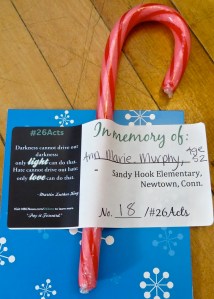
No. 18/#26Acts I found this afternoon on my windshield in Jamestown, North Dakota.

No. 18/#26Acts I found this afternoon on my windshield in Jamestown, North Dakota.

About 20 minutes ago I finished up some grocery shopping (getting the crucial jultid ingredients for Swedish meatballs and gravlax) at the Coborn’s in Jamestown, North Dakota. After loading the pickup box with the staples for the weekend, I got into the cab, looked up and noticed that someone had put something between my windshield wiper and windshield. I got back out, grabbed it and inspected it. Someone, inspired by NBC News and the Twitter hashtag, #26Acts, gave me an act of charity and kindness to honor and remember Anne Marie Murphy, age 52, Sandy Hook Elementary, Newtown, Connecticut. On the front of the small envelope is a quote from Martin Luther King, Jr. It reads:

“Darkness cannot drive out darkness: only light can do that. Hate cannot drive out hate: only love can do that.”

This is true. There was a candy cane strapped to the envelope, and within was a Farmers Union Oil gas card for $5.00. Wow. That’s what I thought. A little backdrop on Anne Marie Murphy: she died while using herself as a human shield to cover 6-year-old Dylan Hockley (Dylan was also killed). Anne is a saint, and her final act on this planet is being recognized as such (as are many from Sandy Hook Elementary). And an anonymous person in Jamestown, North Dakota wanted to randomly share this 18 of 26 Acts with someone.

The note also says, “Pay it Forward,” so that charges me with sharing this information on the blogs to keep it in the pipeline. I’m inspired. I suppose if we’re feeling a little overwhelmed by the holiday season, it’s okay to pause for a moment, look at the person next to you, and imagine what life would be like without them. Go ahead and hug them. It’s okay to do that. Happy Christmas and merry holidays to all from the northern Great Plains.


Cultural Landscapes on the Northern Great Plains: From 1862 to 2012

This evening while toying around with Google Earth’s image overlay feature, I thought it would be interesting to see what a 2012 map would look like in contrast to the map of the 1860s in Mark Diedrich’s, Mni Wakan Oyate (Spirit Lake Nation): A History of Sisituwan, Wahpeton, Pabaksa, and Other Dakota That Settled at Spirit Lake, North Dakota (Fort Totten, North Dakota: Cankdeska Cikana Community College Publishing, 2007). I was keeping in mind how we — the Royal We — are all born into particular sets of cultural values that we consciously or unconsciously bring to bear on everything we process, do, and see. So in 2012, it’s a given that we can hop Eisenhower’s Interstate 94, lean heavy on the gas peddle, and within 1 to a dozen hours find ourselves anywhere between Minneapolis, Minnesota, Billings, Montana, Omaha, Nebraska, or Winnipeg, Manitoba. In 1862, the reality would have required weeks worth of time to cover that amount of space. One hundred fifty years is quite the temporal gap. But Google Earth reconnects us with the spatial, or what we might consider as that sense of place.

Here, for example, is the Diedrich map imported into Google Earth with an approximate transparency of 20-40%. This is laid on top of a 2012 map (some specifics don’t quite line up, but considering that this took 3 minutes to put together, it’s not bad, and the general idea is conveyed).

1862 sans 2012 Geopolitic

Note the non-existence of the 2012 place names. We get the large type of Dakota in the east, Nakota in central Dakota Territory, and the Lakota primarily west of the Missouri River. Imbedded within that are several sub-national sets, including the Ihanktuwana, Sisituwan, Pabaksa, Assiniboin, Mandan (“Gros Ventre”), Arikara, and Blackfeet Lakota. It might be worthwhile to filter our 2012 mindsets through an 1862 landscape in the same way that we would consider today’s landscape in Central Asia, western Europe, or eastern Asia. To an outsider, “it all looks the same.” But try telling someone who hails from Hong Kong that Bangkok and Ulaanbaatar are just the same. Or try telling someone from Tashkent that they’ve experienced something similar because they once saw a picture of Moscow, they talked to a guy who visited Kabul, or they heard about the cultural mecca of St. Petersburg. Or try telling a Parisian that Germany is just like Italy. Or try… yes, the idea is conveyed. And this doesn’t even begin to touch on the dynamics of Africa, Australia and so on.

In 1862, North Dakota was northern Dakota Territory to Abraham Lincoln, Minnesota Governor Alexander Ramsey, and any immigrant Euro-American back east (many of our great- or great-great grandparents included). The names of Bismarck, Williston, Dickinson, Jamestown, Fargo, Casselton, Valley City, Grand Forks, Watford City, New Town, Devils Lake, Minot, Ellendale and so on wouldn’t have been on anyone’s cultural radar. Between the 1860s and today, though, several generations have come and gone. And through this amount of time, our perception of the landscape has altered as well. This Google Earth gadget is amazing in that regard. Here is Diedrich’s map with Eisenhower’s Interstate System and the industrial Geopolitics imposed on the landscape:

1862 and 2012

Above, the 49th parallel is quite pronounced, as is our national (or international) system of highways and byways. Today’s 2012 I-94 blasts east-west through former Native America. You can travel from Minneapolis through the 1860s Dakota (Red River Valley now), Nakota, Mandan, Hidatsa, Arikara (upper Missouri River) and Lakota country (now the Bakken Oil Fields) to Billings in about 20 hours (I cannot recommend any more efficient time). In North Dakota, we can sail past these 1862 landscapes at no less than 75 miles an hour, thermostat pumped full tilt, iPods routed through the speakers. This is the push and the pull between culture and landscape throughout time. I think that’s all I have for now.


Getting Students to Like School

In Daniel T. Willingham, Why Don’t Students Like School?: A Cognitive Scientist Answers Questions About How the Mind Works and What It Means for the Classroom (Wiley, 2009), a reader is at once subjected to a subtitle with 19th-century length (for example, click here to check out the length of 19th century titles). More importantly, though, the reader is reminded how reading and studies shape and reconfigure the mind, that “three-pound mass of cells, approximately the consistency of oatmeal, that reside in the skull of each of us” (Willingham’s opening words). In the fourth paragraph of the conclusion, Willingham says, “Reading is a mental act that literally changes the thought process of the reader.” (Willingham, 2009: 207)

Get this book. It is good.

Get this book. It is good.

When I read this I thought, “Of course!” immediately re-remembering the way reading alters our way about the world (my mind was changed to remember how the mind changes when reading). This, in turn, caused my brain to recall conversations years ago from the University of Minnesota-Twin Cities, chatting with fellow undergrads and agreeing with the statement, “Whenever I read something, it often changes my mind.” At its best this is the power of a classical liberal education, or a liberal education, an ability to allow students to wander around in the infinite of ideas and build arguments and perspectives about the world. It is up to the teacher, though, to consider how they might best teach this to students. This requires historians to embrace the methodological ethos of thinking about thinking, or thinking about the way another person might understand the world, including students. And this in turn leads to pedagogical considerations about how to teach, which in turn leads to how to engage students with narratives and stories (aka, histories).

Willingham brings about one approach, a broad 4-part outline used by good and great screen-writers in Hollywood. It is building a narrative around the four Cs: causality, conflict, complications, and character. In Willingham’s book, he uses the example of Star Wars as a narrative to explain to the reader how important narratives are to telling a story worth remembering, and how this model can be used to teach memorable science, math and history (come to think of it, as an adolescent in school, mathematics became amazingly interesting when it was humanized with the founding thinkers of particular theorems and formulas. At once it was not just a Cartesian grid, but instead a grid work developed by this insanely intelligent Renaissance thinker, René Descartes… this information was crucial, at least to break up the 50-minute monotone lectures presented on overhead projectors in junior high and high school).

With the Star Wars example, Willingham answers the title of Chapter 3, a question laid out as, “Why Do Students Remember Everything That’s on Television and Forget Everything I Say?” To answer this with “Because you’re boring” would be true but incredibly unhelpful. The reason students remember Star Wars is because screenwriters have modeled the story or narrative around the 4 Cs (and also because Star Wars has permeated every facet of global culture, and also because of Star Wars dorkdom which propels some kind cult of Star Wars, but that’s another tangent for another time).  In Star Wars, there is a strong character development that is Luke Skywalker and Princess Leia. The overarching cause or causality is hinted at in the opening: find the plans for the Death Star so the rebels can blow it up. Throughout the story, though, Luke, Leia and others face a variety of complications, including a show-down with Darth Vader, this played by the voice of James Earl Jones, and learning from Obi-Wan Kenobi, Yoda, and so on. Still, the overarching theme remains: find a way to destroy that bloody Death Star. What Willingham is telling teachers is to be sure to put time into organizing lesson plans to develop those overarching themes. Conflict and character development will push and pull a listener or student through the narrative, and the end-goal will not change. Students will appreciate these well-organized narratives and lesson plans. And if they appreciate that, the teacher will have their attention.