
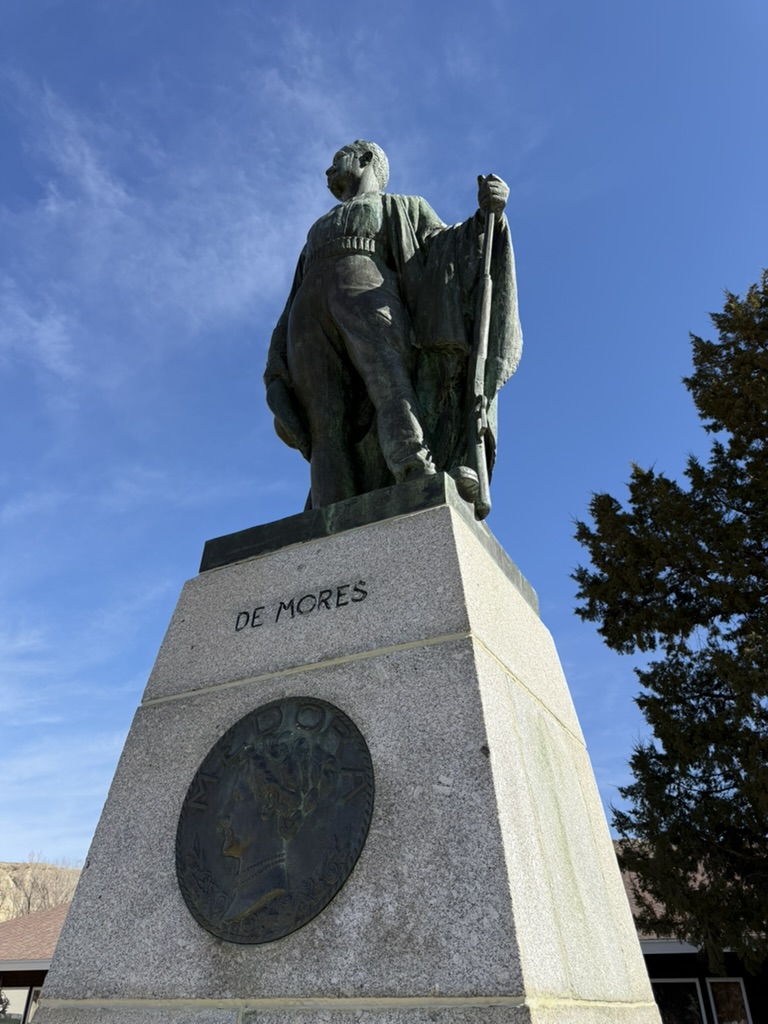
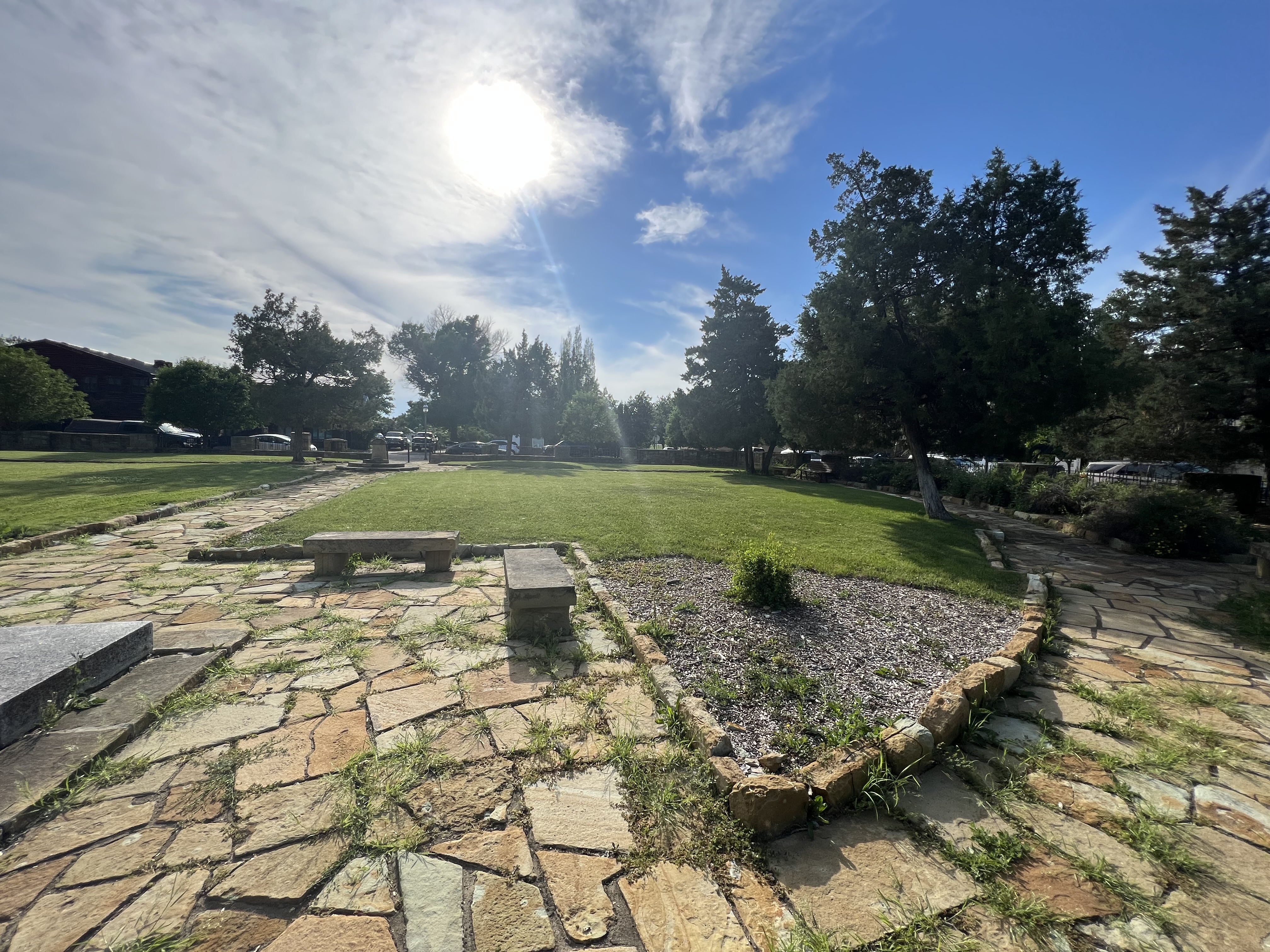
In the last couple weeks I found myself along with a small group of colleagues in Medora, western North Dakota. The four of us had a bunch of really good professional reasons for being in Medora, and as I needed to step away from the larger group to take a digital meeting phone call (complete with airpods), I decided to listen in on the digital meeting from the historic Marquis de Morès garden that the CCC built up in historic Medora, North Dakota. Just some general technical notes during the site visit.
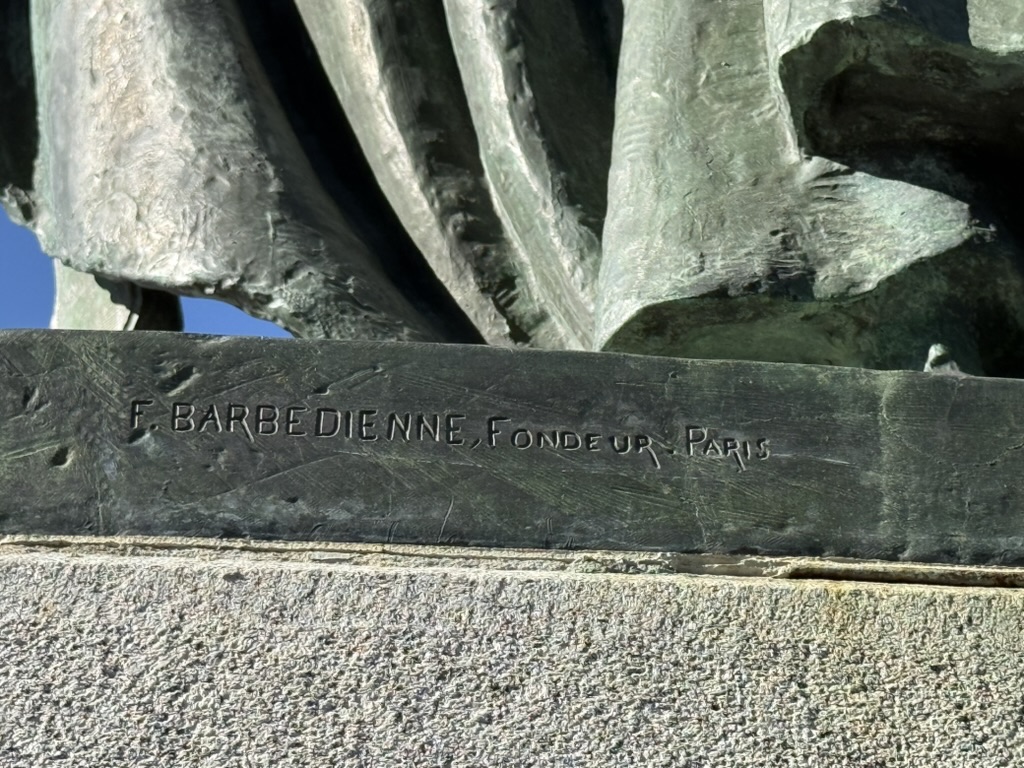
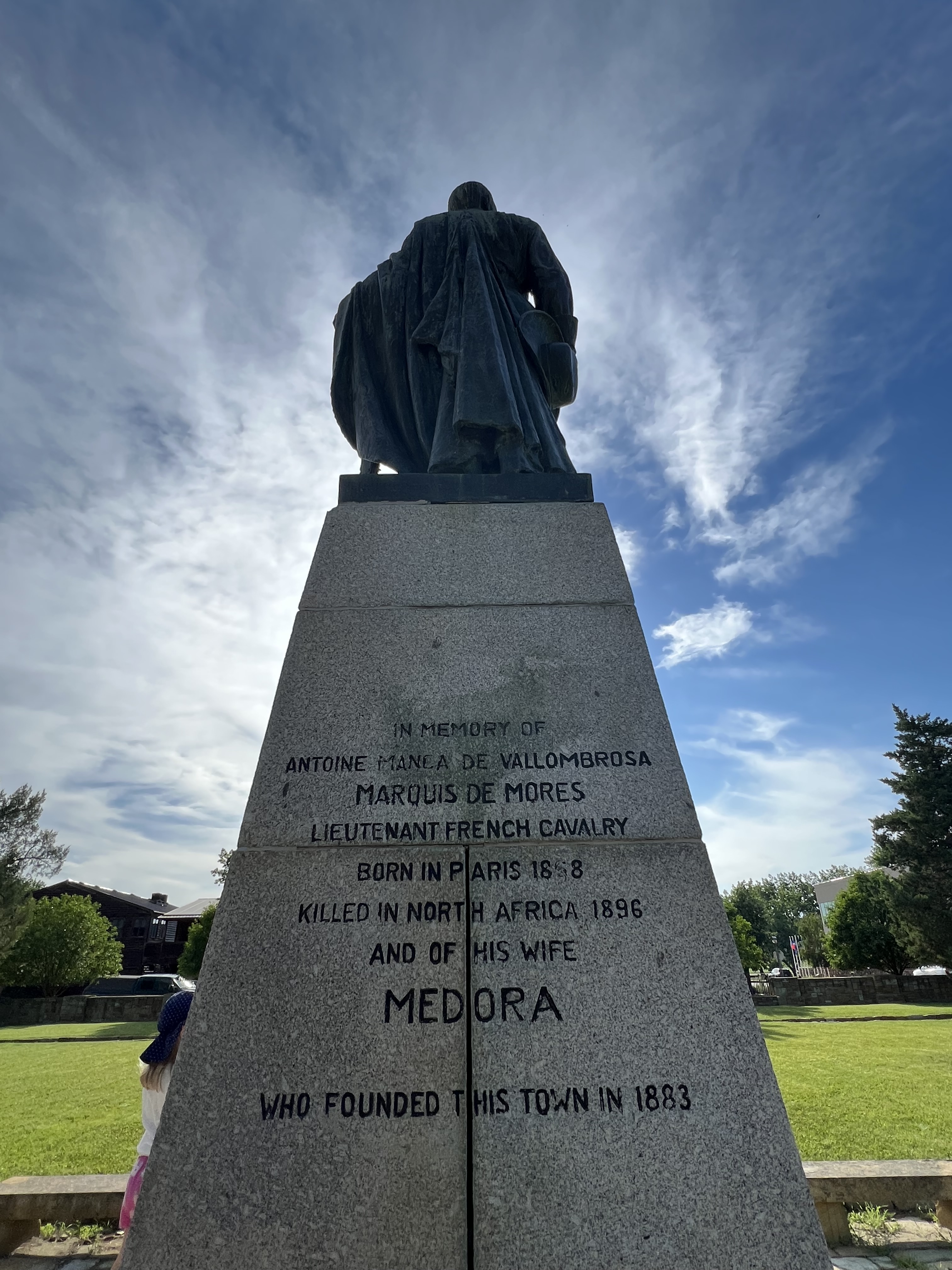
During heritage and history nerd training with Tom Isern at North Dakota State University, one thing Isern keyed his students in on was to look for inscribed names at the bases of memorials, statues, and sculptures. Names. Years. Anything. This seemingly simple technique was used when reviewing the Marquis de Morès’ pedestal statue. On the statue east elevation, at the base of the bronze, is the first initial, surname, title, and city, that appears in this order: F. Barbedienne, Foundeur. Paris. It’s a reference to this chap who has a body of work still floating around the globe that industrial capitalists continue to help make more valuable through some sort of emotional structural demand (aka, “market forces.”).
The years that Barbedienne lived, 1810-1892, and the years that this statue would or could have come about placed in Medora, did not match: the Marquis was only in the western northern Dakota Territory badlands in the 1880s, and he got himself killed in the 1890s. Barbedienne isn’t mentioned in the index of Sergio Luzzatto’s 2026 The First Fascist (Harvard University Press), but I’ll have to see if he appears in the index of the late D. Jerome Tweton‘s previous biography of the Marquis. If you read about the character and nature of the Marquis in Luzzatto’s work, and Tweton’s work, you could imagine the Marquis creating a bronze of himself to place IN the hamlet named after his wife, daughter of the 19th century New York banking powerhouse Hoffmann. The Marquis was big on ideas and funding them with other peoples’ money. It was, as Grandpa Simpson often said, the style of the times.
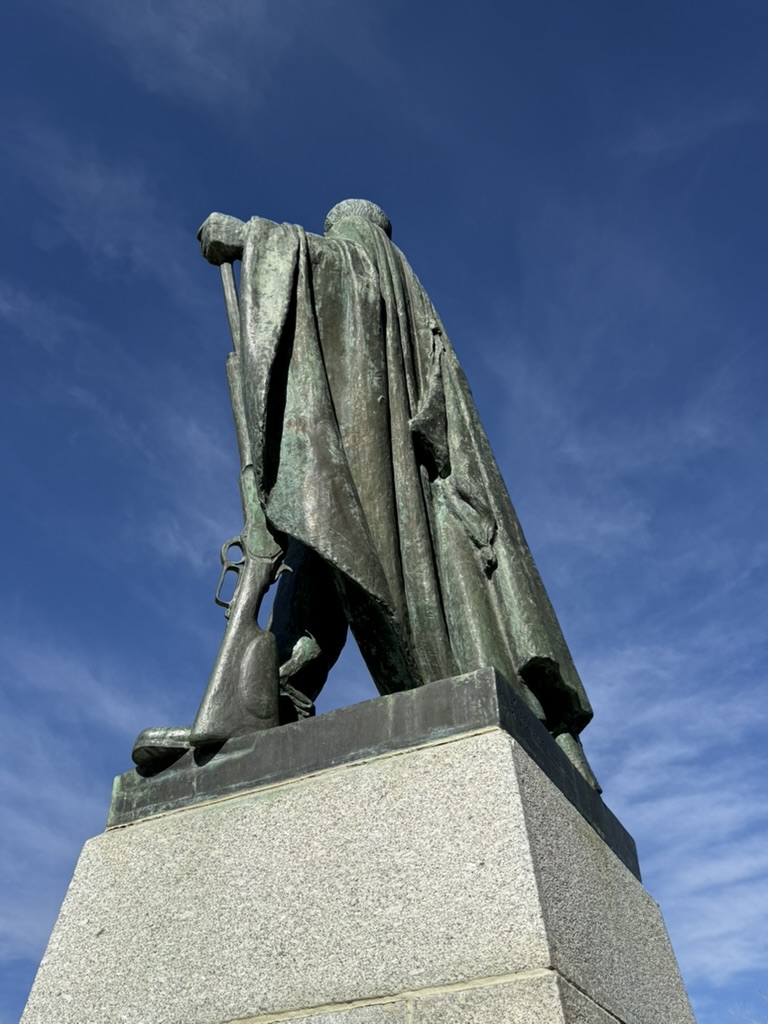
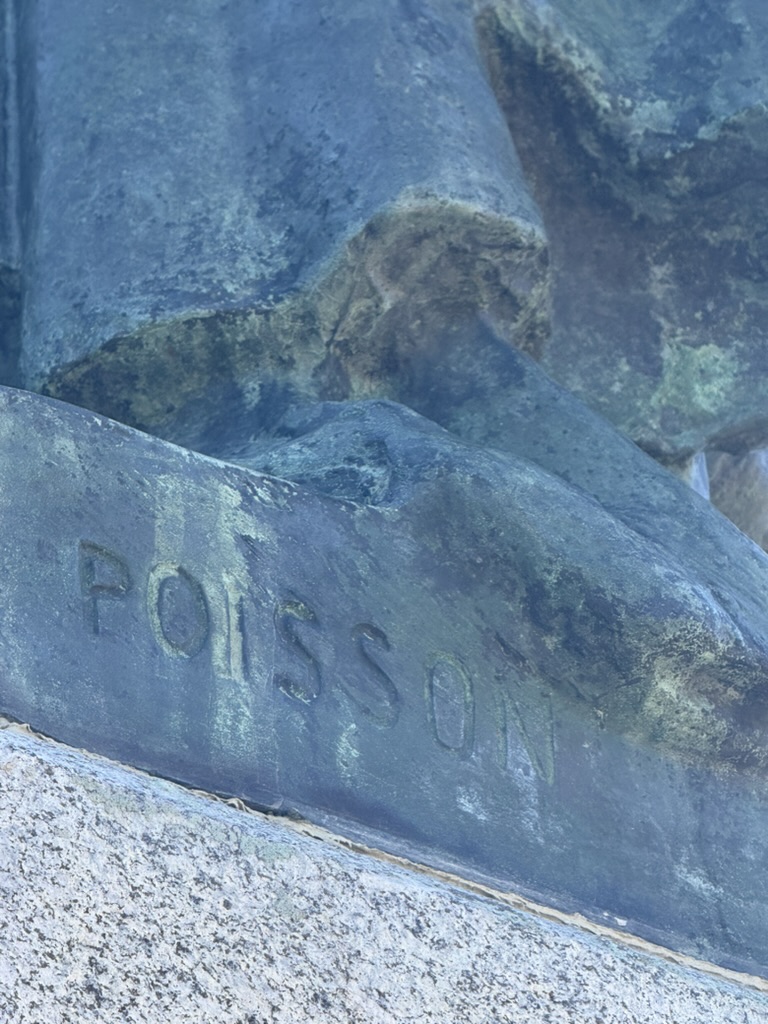
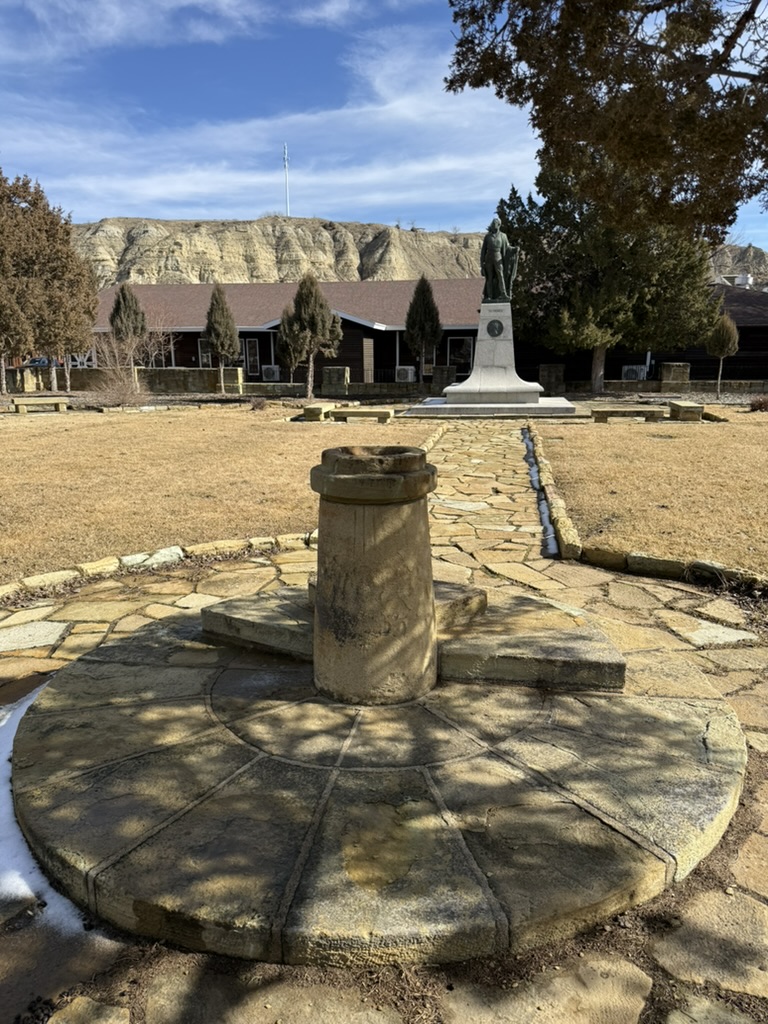
Anyhow, for inscriptions: one has to migrate to the north elevation of the statue, the base, where you’ll see this inscription: POISSON. That’s Pierre-Marie Poisson (1876-1953). You can research him digitally on the French Ministry of Culture website database. So one might imagine a research question (sometimes one doesn’t have the sort of travel budget of a Marquis) that thinks about whether or not Barbedienne created some scale version of this Marquis statue while the Marquis was alive. Then this Poisson chap finds that bronze, or statue (doesn’t exactly need to be bronze), and scales it to the size we see today, and casts it. Then it sits out here in Medora. Then in the 1930s, the CCC comes along and the CCC administrator looks at this and says, “we should do a larger garden of some sort around this.” The CCC also included a drinking fountain (which is out of commission as of my site visit). But this would indeed have been a welcome hydration reprieve. Could be cool to see the fountain restored. Some day. Sounds like a project that has some work ahead of it.
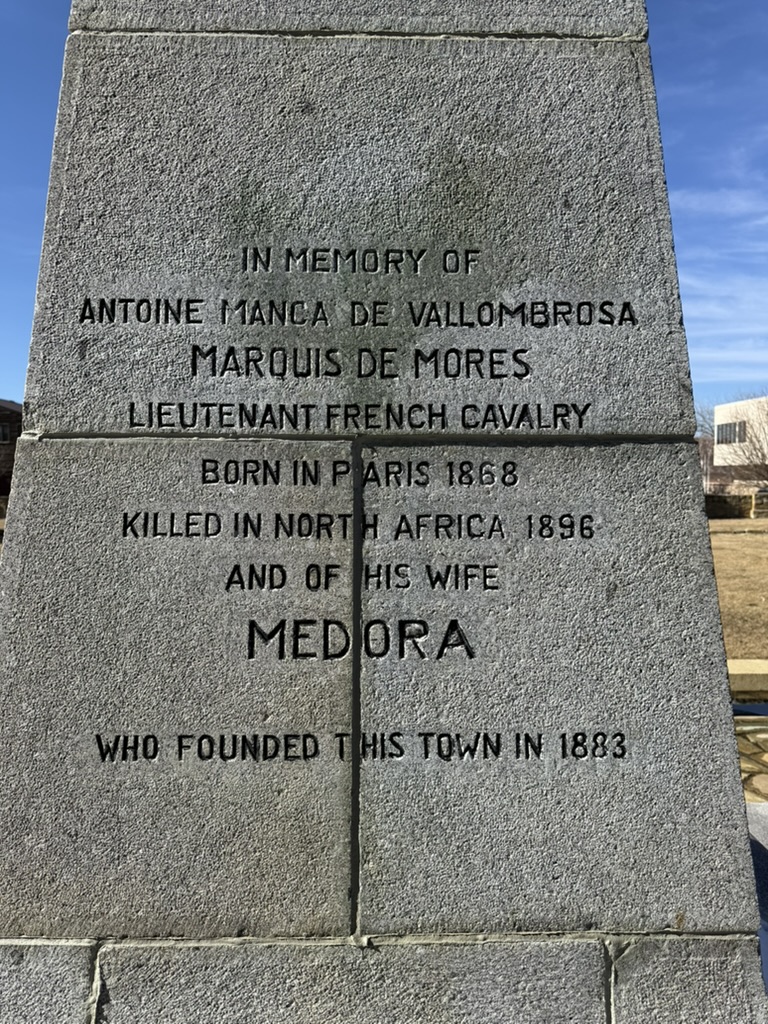
Some photos of that site visit of mine of the bronze and inscribed names. At the end is an image of the drinking fountain.

 The Edge of the Village