Tag Archives: Great Plains History

Gilbert C. Fite, “The Farmers’ Frontier, 1865-1900” (1966)

In the final pages of Gilbert C. Fite, The Farmers’ Frontier, 1865-1900 (Holt, Rinehart and Winston, 1966), Fite used Walter Prescott Webb’s environmental determinism from The Great Plains (1931) as a point of departure. While Webb said a cultural breakdown came from the flat, treeless and semiarid Great Plains, Fite countered this and said it “was a symptom of the basic problem and not the problem itself.” (Fite, 1966: 222-223) With the absence of wood, settlers to the Great Plains used sod, traded the hand pump for a windmill, and used barbwire instead of wood picket and stone fences. According to Fite, any study of the Great Plains ought to oblige environment but amplify culture and the individuals as the key determinants who acted and reacted to one situation after another. Individual farmers managed labor and resources on farmsteads and “fit conditions on the Great Plains.” (Fite, 1966: 223)

From 1865 to 1900, the Great Plains underwent several Euro-American changes. The frontiersman eventually gave way to the miner, and mining communities created demands for beef that cattlemen and cowboys could supply. Before the arrival of the farmers, though, the Euro-American miner brought this singular industry to the American West. For example, in 1860, the United States Census reported that Colorado had a miner population of 22,086, a saloonkeeper demographic of 175, and a total of 195 farmers. (Fite, 1966: 11) This did not result from a culture of ideology, though. Rather, it resulted from the chaotic settlement and mechanization of the Great Plains, and a change of the Great Plains as the “Great American Desert” to a great American farming oasis. Following the American Civil War, farmers increasingly established themselves in the mining areas of Fort Benton and Bozeman, and in the Bitterroot, Beaverhead, Prickley Pear and Gallatan valleys of Montana, in Walla Walla, Washington, the Snake River, Idaho, the Rio Grande, New Mexico, and the Salt Lake Basin in Utah. (Fite, 1966: 11-12)

Amenia, North Dakota in the 1880s. (Fite, 1966: 77)

Amenia, North Dakota in the 1880s. (Fite, 1966: 77)

Individual farmers and corporate managers also took up small and large-scale farming operations on the northern Great Plains. In Dakota Territory in 1860, 123 farms were recorded. Ten years later, Dakota Territory had a total of 1,720 farms. (Fite, 1966: 11 & 36) By the 1870s, railroads had allowed for the advanced Euro-American colonization and settlement of the Great Plains, and this caught the attention of bonanza financiers and corporate managers. Agrarian mechanization took off in the Red River Valley in this period, and in 1875, Oliver Dalrymple purchased several thousand acres just west of Fargo. He eventually formed the Cass-Cheney-Dalrymple bonanza farms, “a compact body about 6 miles long and 4 miles wide, extending on both sides of the railroad,” or a total of 24 square miles. (Fite, 1966: 80)

By 1879, the Dalrymple family had swallowed up more than 10,000 acres in northern Dakota Territory, and Fite explains how this was managed. The land was divided into 1,280, 1,600, 2,000 and 5,000 -acre subdivisions. A foreman’s house was built on each subdivision, as were lodging quarters for the seasonal migrant laborers. Fite said bonanza farming was large-scale, corporate, had absentee ownership, a professional management staff, was highly mechanized, and they dealt in specialized production. To a degree this crowded out smaller-scale farmers, but they also learned about the effectiveness of mechanization, and how to apply it to their own farmsteads.

Threshing on the Dalrymple mechanized bonanza farm, Cass County, Dakota Territory, 1877. Photo with the ND Institute for Regional Studies, 2029.11.1.

Threshing on the Dalrymple mechanized bonanza farm, Cass County, Dakota Territory, 1877. Photo with the ND Institute for Regional Studies, 2029.11.1.

News of the Dalrymple bonanza farm would reach the media, and eventually generate a moneymaking perception for one and all. This perception increased settlement to these areas, and northern Dakota Territory experienced a “boom” up through 1883. To a large degree, it did matter that reporters got the news correct. What mattered even more, though, was that “reports of quick and large profits, even if exaggerated… excited the imagination of thousands of restless settlers and stimulated the rapid westward movement of the 1880s.” (Fite, 1966: 93) Corporate bonanza farms created the perception that any small-scale farmer could make a living and even get rich in northern Dakota Territory. In some cases that perception was realized, and in other cases it was not.

In 1917, a year before Willa Cather published My Ántonia, Fite’s mother filed a homestead claim in northwestern South Dakota, in what Fite referred to as “the very end of the farmers’ frontier in the United States.” (Fite, 1966: ix) By 1966, Fite had five decades from when his mother filed a homestead claim to consider what this localized story meant in the broader, national context. In his piece of scholarship, Fite is not so much concerned with socio-political problems, but rather with what contributed to the rapid farm settlement, processes of labor, and how dirt farmers responded to the particulars of the Great Plains environment. (Fite, 1966: x) The processes were complex, and through this Fite explained how perceptions of the American West shifted, and individuals and corporate managers brought about the beginning and the end of the farmers’ frontier from 1865 to 1900.


Walter Prescott Webb, “The Great Plains” (1931)

WebbIn 1931, Walter Prescott Webb published The Great Plains, attributing the ideas in the book to two earlier works: Emerson Hough’s, The Way of the West, (1922) and Webb’s own piece, “The American Revolver and the West,” published in Scribner’s Magazine (1927). Webb tweaked or discounted some of Hough’s ideas about the west, or the Great Plains, and instead focused on three attributes. The definition of the Great Plains, according to Webb, necessitates 1) level land; 2) an area barren of timber, and; 3) a semi-arid place — somewhere in that proverbial rain-shadow just east of the Rocky Mountains. So long as two of these three elements remained, Webb said the region would have its “cultural character.” (Webb, 1931: 4)

Here in this early statement Webb makes a case to the reader that environment shapes culture. It is a little heavy-handed, though. Of course environment influences culture, but Webb is fairly aggressive in that he said environment determines culture. This determinism, or determinism light, is an outlook that denies historical actors any type of choice, or that individual cause-and-effect. This also denies historical actors a humanist reality: while environment nudges individuals one way and another, individuals are faced with an infinite number of choices, and they still make one localized decision after another based off an infinite number of variables.

Continuing along this deterministic trajectory, Webb focused on a particular ethnicity, and said that “the Great Plains have bent and molded Anglo-American life, have destroyed traditions, and have influenced institutions in a most singular manner.” Again, Webb would do better to have said that the Great Plains induced historical actors to cobble together a variety of solutions if something did not work the first time around. Willa Cather indirectly points this out in infinite ways in My Ántonia (1918), and Ernest Staples Osgood showed how cattlemen formed stockmen’s associations to bring order to ranching in Wyoming, Montana and the Dakotas. Cultures are not destroyed, nor to they “rise” or “fall.” Humans tweak culture, and that culture slowly evolves over time, and turns into hybridized versions and variations.

In any case, Webb alluded to Cather twice in his 525 page study, referring to her novels as “farm literature” full of “ugliness,” “drudgery,” and “tragedy.” (Webb, 1931: 478) In this, Webb reveals his nostalgic and romantic outlook toward the Anglo-American gun-slinging cowboy (who was not a famer), and this is what he is really concerned with: the rise and fall of cowboy culture. He said cattle kingdom literature is filled with “nothing of protest,” nothing of “destructive criticism,” and nothing of “dissatisfaction” — Webb provided basic amplification to the later delusions intrinsic to Spaghetti Westerns in American cinema.

All of this is not said in a way that suggests Webb was conspiring to hide his fondness for the cowboy within his work. This simply means that when reading Webb, remember that he was a typical Texan of his times. His nostalgia for the past ought not to be taken any more or less seriously than anyone else’s nostalgia for the past.[i] One can understand his ideas without having to agree with them. Understanding how scholarship was framed throughout universities and publishing houses in the 1920s and 1930s might bring 21st century scholars to pause and contemplate what cultural baggage we bring to the evidence in otherwise “objective” studies of the past.


[i] For an exegesis on the typical Texan, see Joseph Leach, The Typical Texan: Biography of an American Myth (Dallas, Texas: Southern Methodist University Press, 1952).


Great Plains Blizzards Now and Then

Snow measurements from February 10, 2013, at 7:00PM (CST) in downtown Fargo, North Dakota.

Snow measurements from February 10, 2013, at 7:00PM (CST) in downtown Fargo, North Dakota.

Last week I revisited Walter P. Webb’s 1931 work, The Great Plains. In the coming days, I’ll blog a bit more on Webb’s work. For now, though, Blizzard Orko (as of 7:03PM [CST], February 10, 2013) induced several departments of transportation to close sections of Interstate 29 and Interstate 94 on the northern Great Plains: north-south from Grand Forks, North Dakota to Sioux Falls, South Dakota, and east-west from Jamestown, North Dakota in to Minnesota (the MNDOT’s road condition map I found is more general than decisive about exactly what sections are closed). These closures, or specifically this blizzard, reminded me a bit about Webb’s remarks on Great Plains blizzards, or what he pulled from Clement A. Lounsberry, the Civil War veteran who started The Bismarck Tribune in the 1870s. Of blizzards, Lounsberry  (via Webb) referenced that historically they were known as a

…mad, rushing combination of wind and snow which neither man nor beast could face. The snow found its way through every crack and crevice. Barns and stacks were literally covered by drifting snow, and, when the storm was over, cattle fed from the tops of stacks. Persons lost upon the prairie were almost certain to meet with death, unless familiar with the nature of these storms… I learned of many instances where persons were lost in trying to go from the house to the barn, and of other instances where cords were fastened to the house so that, if the barn should be missed, by holding onto the cord the house could be found again (Webb, 1931: 25)

With this in mind, this evening I took some measurements of snowfall in downtown Fargo. At least 7 1/4″ of snow has fallen (it is now 7PM, CST). Tomorrow winds are expected to intensify, as is snow removal and book reading.


Willa Cather, “My Antonia” (1918)

In 1918, Willa Cather published My Ántonia. It is a novel loaded with Euro-American homesteading experiences from the Great Plains, and it demonstrates how a seemingly isolated place can in fact have international scope. Without saying it so directly, Cather gives the reader a sense of how the Atlantic World brought itself to the Great Plains, and how these individual immigrants faced an endless amount of new frontiers. After developing the characters in the countryside, Cather moves the cosmopolitans in the country from the landscape of the Burden Homestead to a neighborhood in the town of Black Hawk, Nebraska. In this way it is also a novel that considers the contrasts between the country and the town.

Because Cather was a sharp author, it is fairly easy for a reader to reconstruct the landscape of the Burden Homestead. The landscape was inundated with international settlements, with the Russian neighbors of Peter and Pavel to the north, the Bohemian Shimerda family to the west, and the German neighbors to the south. Six miles east of the Burden homestead was the post office, a vestige of an Anglo-American institution that continuously crept further and further out onto the Great Plains and Euro-American frontier. The Burden Homestead itself was a white frame house on a hilltop, and the terrain gradually sloped westward to where the barn, corncribs, and pond were located. (Cather, 1918: 12-13, 15, 20-21) While reading this work, I reconstructed the Burden Homestead landscape from the text, and sketched it out on paper with pen.

Burden Homestead My Antonia 01.30.2013 Reduced SizeOn page 42, Cather also makes brief reference to the material cultural remnants left by Plains Indians, or what may have been a potential Sun Dance. The Euro-Americans are all in disagreement over what it could represent, and this is how Cather explained it. “Beyond the pond,” west of the Burden home, Cather said Jim Burden noticed that,

…there was, faintly marked in the grass, a great circle where the Indians used to ride. Jake and Otto [two hired hands, the latter from Austria] were sure that when they galloped round that ring the Indians tortured prisoners, bound to a stake in the centre; but grandfather [Burden] thought they merely ran races or trained horses there. Whenever one looked at this slope against the setting sun, the circle showed like a pattern in the grass; and this morning, when the first light spray of snow lay over it, it came out with wonderful distinctness, like strokes of Chinese white on canvas. The old figure stirred me as it had never done before and seemed a good omen for the winter.

In this singular paragraph passage, Cather’s piece of fictional prose exposes the reader to several different Euro-American perceptions and theses. There is the stereotypical perception of the “brutal” or “savage” Indian, the wise grandfatherly ballast that considered the plains Indians and their horses, and the mystic and romantic foreshadowing that Jim Burden felt when he viewed the circle in the landscape. In this way Cather’s statement inadvertently touched on several questions raised by humanities scholars and social scientists (historians, anthropologists and archaeologists).

Novels are fantastic in that they help a reader explore the infinite range of human emotion in a way that scholarship often cannot, and this is why My Ántonia is a central piece of fiction in Great Plains and world literature. There is much more to say about this work, and it certainly compliments Ernest Staples Osgood’s 1929 scholarship, The Day of the Cattleman, and Gilbert C. Fite, The Farmers’ Fronter, 1865-1900 (1966).


The Weekend the Music Died

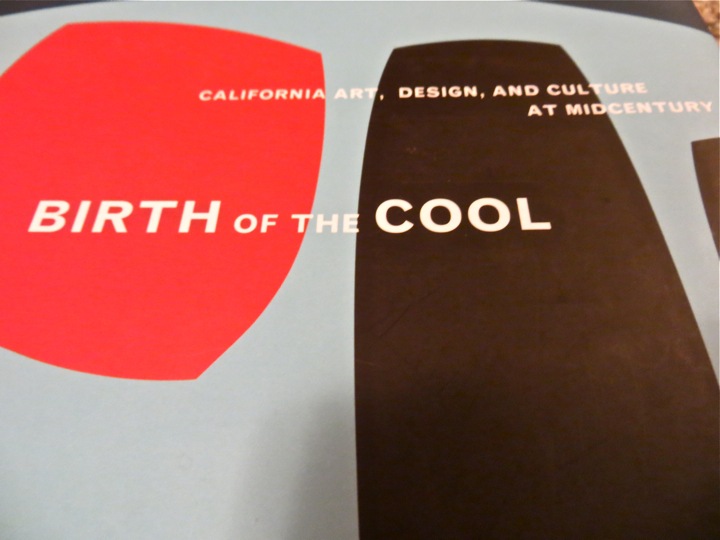
"Birth of the Cool: California Art, Design, and Culture at Midcentury" (Orange County Museum of Art: Prestel Publishing, 2008).

“Birth of the Cool: California Art, Design, and Culture at Midcentury” (Orange County Museum of Art: Prestel Publishing, 2008).

This weekend marks the day the music died. I’ve been reading Birth of the Cool: California Art, Design, And Culture at Midcentury, edited by Elizabeth Armstrong and issued by the Orange County Museum of Art (Prestel Publishing) in 2008. It is a kind of work that explores the genesis (or amplification) of “cool” from southern California, and this raises a chicken or the egg question: in the post-WWII world, did southern California create “cool,” or did southern California appropriate cool, embrace it, and then turn it up to — in the words of Spinal Tap — eleven?

Armstrong says that southern California in 2008 is renowned for nice weather, a laid-back attitude, a “propensity for fantasy indulgences,” an attachment to cars, hillsides covered with suburban tract houses, sunny beaches and blondes — those seemingly perfect suburban conditions that provide a launching off point for punk rock.

It’s not cool to talk about cool, and that is a primary working definition of cool from the post-WWII world (captured in many ways by Anatole Broyard’s 1948 essay, “Portrait of the Hipster”). In Armstrong’s words, cool is “an attitude that eludes those who try too hard to achieve it.” (Armstrong, 2008: 1) In the essay “Cold War Cool” by Thomas Hine (also in this work), he says “Those who speak and write most about it — including most of those quoted in this essay — don’t have it. Truly cool people know enough to keep their mouths shut. (Nevertheless, I shall proceed.)” (Hine, 2008: 194) So shall I.

Buddy Holly in the 1950s.

Buddy Holly in the 1950s.

Anyhow, and to not get too far off the topic of Buddy Holly, here is a photo of Buddy used in Birth of the Cool. The caption beside Buddy Holly notes his influence on The Beatles and Rolling Stones, among others (including Jonathan Richman). So in thinking about all this, it’s appropriate to say that my S-10 Chevy is snowed in an alley parking spot just 2.5 blocks from the levy, and this Friday evening I’m going downtown Fargo for a bit of whiskey rye. And to think a bit about the weekend day that the music died. The world sure missed out on a lot of great tunes because of that plane crash in Iowa on February 3, 1959. They were trying to get to a show in Fargo-Moorhead. At least Buddy continues to echo throughout the rock and roll ages, whether we know it or not, aesthetics and rhythm and all. Thanks Buddy.


Winter Memories

Speaking of winter in My Ántonia (1918), Willa Cather noted that “man’s strongest antagonist is the cold.” As I type (on 01/31/2013, just before noon), the dry temp in Fargo, North Dakota registers right around -9 F, around -9 in Grand Forks, -17 in Jamestown and Dickinson, -18 in Towner, -13 in Valley City and Bismarck, -20 in Williston,  and, for international scope, -11 in Irkutsk, Russia (a Siberian city with a population of over 1/2 million).

On the walk to work today I was thinking back to some of my elementary school days in the context of cold winter weather. The phrase “blizzard warning” often triggered the following thought — with an anxious question mark at the end — of “school closings due to severe winter weather?” in my earlier elementary school mind. When superintendents and sometimes governors yielded to the winter and Boreas, and they finally decided to shut institutions (sometimes the entire state) down for a day or two, the next thought that went through my elementary school mind was, “With school canceled, now I’ll have time to try and convince my mom that it’s still not bad enough for us to get outside to go sledding, work on that winter fort…” and so on.

Winter driving on Interstate 94 in North Dakota, February 2013.

Winter driving on Interstate 94 in North Dakota, February 2013.

In a big way, winter is dealt with by getting out in it (bundle up, of course).

The large snow piles heaped in the middle or on the edge of parking lots also reminded me of first grade “King of the Hill” matches on playgrounds. For whatever reason, students who partook in these matches had recess privelidges revoked (at least for that recess), and they got a stern talking to. What never made sense to me, though, was how an elementary school student was supposed to look at a giant heap of snow piled high in the middle of the playground and not feel hard-wired to climb it. I don’t know how today’s elementary schools deal with snow removal and snow piles. But looking back at it, I suppose those early piles of snow taught me some rudimentary basics of Darwin, and the blowback of cultural and institutional regulations imposed by those watchful recess supervisors.


Ernest Staples Osgood, “The Day of the Cattleman” (1929)

Central to Ernest Staples Osgood’s 1929 scholarship is how cattlemen in Wyoming and Montana ignored previous perceptions of the Great Plains as an uninhabitable desert, and instead recalibrated their perspective to make a life on the North American steppe. Once the cowboy got to the Great Plains, Osgood said,

The solitude of the desert passed, and men began to realize that this, our last frontier, was not a barrier between the river settlements and the mining communities in the mountains but an area valuable in itself, where men might live and prosper. (Osgood, 1929: 9)

The chapters that follow elaborate on how the nineteenth-century Euro-American pushed west of the Mississippi River to initially make their way across the Great Plains and into the Rocky Mountains and the Pacific Coast. By the time enough overland wagon trains arrived to the mountain basin, though, frontier fur traders and trappers had come down out of the Rockies to form encampments, and these settlements became stopping points and places of trade. The fur trader and trapper sold supplies to the wagon trains, swapping out locally-grazed cattle with emaciated wagon train cattle, the latter worn out from walking the hundreds of miles west. Once traded, the emaciated livestock revived themselves on the lush grasslands of the Great Plains, and they would fatten themselves up to be traded, sold or slaughtered.

Osgood LivestockThe increased arrival of the railroad supplanted the need for overland wagon trains, but the railroad itself brought laborers hungry for beef and protein. By this time, rumors about frontiersmen J.R. (Jim Bridger), Captain Richard Grant, and the firm Russell, Majors and Wadell making $15,000-to-$75,000 as cattlemen had landed in the ears of investors back east. (Osgood, 1929: 12-16) The response was profound in the post-Civil War world of the Great Plains. Texas ranchers utilized the warmer climes of the southern Great Plains as a place to breed cattle. After growing the herd, they then drove the cattle north to the lush grasslands of Wyoming, Montana and the Dakotas. After fattening up the cattle, the cowboy would drive them to railroad loading points and ship the livestock to markets in Chicago and beyond. Osgood explains a local Wyoming example of this, as in 1873 approximately 286 railcars of cattle were shipped from Wyoming to eastern markets. By 1877, only four years later, the number of rail cars shipping cattle east had increased to 1,649. (Osgood, 1929: 51)

Between 1879 and 1885, the Federal government did not care to impose legislation to manage the chaos intrinsic to the ranching industry on the Great Plains. This gave rise to local cattle and stockmen associations that sought, at least in ideal, to preserve an individual’s ownership of the herd, protect the herd, and regulate public grazing to prevent overcrowding. (Osgood, 1929: 114-115) In this vein, Osgood’s scholarship sets a stage for later works that might consider what the industrialization of the Great Plains meant for a growing world population, and this also speaks to World and Public historians. Today, non-American restaurants can be seen advertising “American” beef, and ruins of yesterday’s mining towns — Bannack, Montana included — still dot the landscape.

The ruins of the mining town of Bannack, Montana. Photo by archaeological comrade Brian Herbel of Missoula, Montana.

The ruins of the mining town of Bannack, Montana. Photo by archaeological comrade Brian Herbel of Missoula, Montana.

The big idea in Osgood’s book is that the large-scale Euro-American perception of the Great Plains had altered, once thought of in the first decade of the nineteenth century as a desert and by mid-century as an oasis for cattle and cowboy. Published in 1929, this book also reflects the language of the times, as Chapter 4 is titled “The Indian Barrier.” Whether the Euro-American understood it or not, they appropriated the positive perception of the Great Plains that the Native American already had. This is something Osgood could have drawn out quite a bit more in his work, but 1929 is far enough removed from 2013 that it makes a bit more sense to understand this piece of scholarship as history as much as it is understood as central to Great Plains historiography.


Closer to Paul Sharp

At first read Paul F. Sharp’s 1955 work might look like an extension of Frederick Turner’s frontier hypothesis. Yet the intellectual turn Sharp laid out in 1955 reacted to Walter Webb’s 1931 idea about man and nature. According to Webb, man entered the environment of the American West, and then reacted accordingly. In this way environment rather than man dictated the coarse of action. Yet Sharp tested this hypothesis by considering how man entered the North American west north and south of the 49th parallel. If Webb’s earlier ideas held true, then British Canadian culture and American culture (or Anglo-American culture) would have played out quite similarly on both sides of the geo-political border. The fact remains that they did not, though, since American culture and British Canadian culture were structured in two different ways. In the American West, chaotic and localized development ruled the day. North of the 49th parallel, though, a structured British-Canadian will set the course of its western development.


My first review from December 5, 2012 was analogous to how a Canadian might have regarded Sharp — here is just another Turnerian, Frederick’s same whiskey in a different cask. Yet the closer to an object, including Sharp’s 1955 work, the more amplified the details and subtleties become. I suppose this is an excuse for anyone to reread and revisit a good novel or piece of scholarship (or a novel piece of scholarship), Sharp’s work included.


Cultural Landscapes on the Northern Great Plains: From 1862 to 2012

This evening while toying around with Google Earth’s image overlay feature, I thought it would be interesting to see what a 2012 map would look like in contrast to the map of the 1860s in Mark Diedrich’s, Mni Wakan Oyate (Spirit Lake Nation): A History of Sisituwan, Wahpeton, Pabaksa, and Other Dakota That Settled at Spirit Lake, North Dakota (Fort Totten, North Dakota: Cankdeska Cikana Community College Publishing, 2007). I was keeping in mind how we — the Royal We — are all born into particular sets of cultural values that we consciously or unconsciously bring to bear on everything we process, do, and see. So in 2012, it’s a given that we can hop Eisenhower’s Interstate 94, lean heavy on the gas peddle, and within 1 to a dozen hours find ourselves anywhere between Minneapolis, Minnesota, Billings, Montana, Omaha, Nebraska, or Winnipeg, Manitoba. In 1862, the reality would have required weeks worth of time to cover that amount of space. One hundred fifty years is quite the temporal gap. But Google Earth reconnects us with the spatial, or what we might consider as that sense of place.

Here, for example, is the Diedrich map imported into Google Earth with an approximate transparency of 20-40%. This is laid on top of a 2012 map (some specifics don’t quite line up, but considering that this took 3 minutes to put together, it’s not bad, and the general idea is conveyed).

1862 sans 2012 Geopolitic

Note the non-existence of the 2012 place names. We get the large type of Dakota in the east, Nakota in central Dakota Territory, and the Lakota primarily west of the Missouri River. Imbedded within that are several sub-national sets, including the Ihanktuwana, Sisituwan, Pabaksa, Assiniboin, Mandan (“Gros Ventre”), Arikara, and Blackfeet Lakota. It might be worthwhile to filter our 2012 mindsets through an 1862 landscape in the same way that we would consider today’s landscape in Central Asia, western Europe, or eastern Asia. To an outsider, “it all looks the same.” But try telling someone who hails from Hong Kong that Bangkok and Ulaanbaatar are just the same. Or try telling someone from Tashkent that they’ve experienced something similar because they once saw a picture of Moscow, they talked to a guy who visited Kabul, or they heard about the cultural mecca of St. Petersburg. Or try telling a Parisian that Germany is just like Italy. Or try… yes, the idea is conveyed. And this doesn’t even begin to touch on the dynamics of Africa, Australia and so on.

In 1862, North Dakota was northern Dakota Territory to Abraham Lincoln, Minnesota Governor Alexander Ramsey, and any immigrant Euro-American back east (many of our great- or great-great grandparents included). The names of Bismarck, Williston, Dickinson, Jamestown, Fargo, Casselton, Valley City, Grand Forks, Watford City, New Town, Devils Lake, Minot, Ellendale and so on wouldn’t have been on anyone’s cultural radar. Between the 1860s and today, though, several generations have come and gone. And through this amount of time, our perception of the landscape has altered as well. This Google Earth gadget is amazing in that regard. Here is Diedrich’s map with Eisenhower’s Interstate System and the industrial Geopolitics imposed on the landscape:

1862 and 2012

Above, the 49th parallel is quite pronounced, as is our national (or international) system of highways and byways. Today’s 2012 I-94 blasts east-west through former Native America. You can travel from Minneapolis through the 1860s Dakota (Red River Valley now), Nakota, Mandan, Hidatsa, Arikara (upper Missouri River) and Lakota country (now the Bakken Oil Fields) to Billings in about 20 hours (I cannot recommend any more efficient time). In North Dakota, we can sail past these 1862 landscapes at no less than 75 miles an hour, thermostat pumped full tilt, iPods routed through the speakers. This is the push and the pull between culture and landscape throughout time. I think that’s all I have for now.


Sharp’s “Whoop-Up Country” (1955) in Great Plains Historiography

Whoop-Up Country: The Canadian-American West, 1865-1885. By Paul F. Sharp. (Norman: University of Minnesota Press, 1955. 347 pages.)

Review by Aaron L. Barth

In 1955, Paul F. Sharp pushed the Turnerian model north across the 49th parallel with his Whoop-Up Country: The Canadian-American West, 1865-1885. In doing this Sharp turned Turner’s national model into an international one, describing the two-decade history of the trail that linked Fort Benton in west-central Montana with Fort McLeod in western Canada. In Sharp’s words, “Here on the northern plains, the two great streams of Anglo-Saxon pioneering that had pushed across the continent finally reached their last west in the same environment.” (Sharp, 1955: 8) A shortcoming of Sharp’s use of “whoop-up” is that he never defines its origins (for example, why would Euro-Americans use this phrase?). Grasslands united the United States and Canada, the matching physiographic and semi-arid plain transcending the geopolitical borders, yet culture carried on in its own respective way. Merchants arrived to these grasslands, acting on behalf of “their London masters — Peter Pond, Alexander Mackenzie, Henry Kelsey, David Thompson, Peter Skene Ogden, and scores of others.” (Sharp, 1955: 33) Castor Canadensis, or beaver (and the Euro-American fetish for top hats), compelled these trappers to move into this area, and with them arrived vestiges of Anglo-American culture.

"Whoop-Up" country map (Sharp, 1955: 6).

“Whoop-Up” country map (Sharp, 1955: 6).

The way in which Sharp breaks with earlier Anglo-Americentric histories is in his portrayal of the May 1873 massacre (rather than a battle) at Cypress Hills. In the nineteenth century American mind, when Custer and his Seventh Cavalry died at Bighorn, it remained a “massacre.” Yet when the Union army fell upon Native American villages with rifle, cannon and sabre, it remained a “battle.” According to Sharp, neither interpretation did the historical record any justice, or benefit, as they did no “credit to the objectivity or scholarship of those who, by reason of inadequate research or national bias, have perpetuated legend as history or myth as truth.” (Sharp, 1955: 55) Bringing up the topics of legend and history, or myth and truth, is where Sharp slips into a Positivistic, 1950s frame of mind. Three decades later, in 1986, William McNeill would cover this topic with more rigor and tenacity in Mythistory.

In other ways Sharp’s scholarship is dated, at least in his victimization of the Indian as a “drunk,” this inebriation described as the malefactor of the Cyprus Hills massacre. In Sharp’s words, “Whisky was the real culprit and this fight was another of its fearful effects upon the western Indians,” since this was a “frontier society which tolerated the sale of whiskey to the Indians and encouraged violence against them when disagreements arose.” (Sharp, 1955: 77) While Sharp’s scholarship broke from earlier Anglo-American histories, he continued to use paternalistic condescension toward Native America in his interpretation. When it came to interpreting the behavior of whites, however, he aptly allowed for individual agency and explained the differences in how it played on each side of the 49th parallel.

Four years before the massacre of Cyprus Hills, the Hudson’s Bay Company “transferred to the government of Canada its title to the vast preserve granted in its charter of 1670 and known as Rupert’s Land.” Sharp says it was approximately 2,300,000 square miles (italics mine) of land, this unit of measurement a subtle and slight reminder that Sharp’s readership still obliged American rather than Canadian interests. The establishment of a police force (“Law in Scarlet Tunics”) in the Northwest Territories on April 28, 1873 arguably denied the Canadian west a type of “lawlessness” and chaos so typical of the American West. Sharp addressed this, saying that if “every westerner lived by the myth and defended his honor with Colt’s ‘Great Equalizer’ at the slightest provocation, only one honorable man would have survived in each community” (Sharp, 1955: 107) Yet violence still held true, since the decentralized authority in the American West invariably could not stand up against large, roving gangs (unofficial social institutions in their own right). “Decentralization of authority in local governments was the heart of the matter, for through them law enforcement and judicial administration functioned.” (Sharp, 1955: 108) Local and regional laws guided the development of the American West, until they gave way to organized State and Federal systems that replaced the territories. Under the British-Canadian system, though, the myth or reality of disorder compelled London and Ottawa to bring the Empire immediately to bear on their western wilderness. Thus, in the western United States, chaos theory, regionalism, might-is-likely-right, and individual wits reigned. In the British-Canadian west, imperial order for god and country carried the day.

It is important to keep in mind that this history, when launched onto the scene in 1955, was nudging the interpretation of the Indian as “barrier” (as Walter Webb did in his Great Plains, 1933) to the Indian as understandable victim of United States and Canadian policy. A decade later, Vine Victor Deloria, Jr. and M. Scott Momaday (among others) would further this, an intellectual contribution that coincided with advances made by the American Indian Movement. Today, at least in the first two decades of the twenty-first century, scholarship has again shifted. Note, for example, Pekka Hämäläinen’s The Comanche Empire (Yale University Press, 2008), or Elizabeth Fenn’s forthcoming work on the Mandan, Encounters at the Heart of the World: A History of the Mandan People. This scholarship demonstrates how Native American cultures acted rather than reacted to Euro-American encroachment. It is up to Native and non-Natives scholars today to push these interpretive boundaries, and help reshape the understanding of the past, and even the present.