Tag Archives: Clell Gannon

More Notes on Clell Gannon: 1920s Census and Cultural History

Just pecking out some more notes to add to the texture of the Clell Gannon project, working on revisions with The Digital Press at the University of North Dakota (Grand Forks).

After revisiting Willa Cather’s 1923 (September 5) essay, “NEBRASKA: The End of the First Cycle” in The Nation (117: 236-238), and particularly after reading Cather’s demographic cross section slice of a day in the life of 1923 Nebraska: “On Sunday we could drive to a Norwegian church and listen to a sermon in that language, or a Danish or a Swedish church. We could go to the French Catholic settlement in the next county and hear a sermon in French, or into the Bohemian townschip and hear one in Czech, or we could go to church with the German Lutherans. There were, of course, American [meaning American English] congregations also… I have walked about the streets of Wilber, the county seat of Saline County, for a whole day without hearing a word of English spoken.” And, a couple sentences later, Cather notes that “Our lawmakers have a rooted conviction that a boy can be a better American if he speaks only one language than if he speaks two.”

North Dakota, in the year 1900, also had a diverse immigrant population with a greater percentage of foreign-born than any other state at that time in the Union. I don’t have the percentage number right in front of me. But from memory it is something like 78% foreign born. Prairie Mosaic is the reference I’ll double check to confirm that number, as this provides ethnohistoric ground-truthing, research that took place from the 1960s through the decades following said 1960s.

U.S. Census 1920 bulletin on North Dakota. Page 1.

This returns to Clell, and thinking about the context in which he wrote his Songs of the Bunch Grass Acres, and the reading audience who had want or access to his 1924 Western Americana poems. In 1920, Orin G. Libby’s article, “The Arikara Narrative of the Campaign Against the Hostile Dakotas — June, 1876” ran in North Dakota Historical Collections (Bismarck, North Dakota, Volume 6). Aaron McGaffey Beede collaborated with Libby on this. Beede was the interpretive and translation conduit between the Arikara scouts and Libby. Libby’s approach was one that would speak to Custer-philes, with an angle that may appeal to Custer-philes who may have had a broad brush stroke (see racist) outlook on all of Native America. With Libby popularizing how Arikara fought alongside the U.S. Military in 1876, he was making a pitch (fortified with numerous data points) that demonstrated their patriotism. In 1918, two years before Libby published his Arikara narratives, the Great War ceasefire (armistice) happened. Up to 12,000 Native American soldiers participated in World War I, this at a time when Native Americans still didn’t have the right to vote. The Indian Citizenship Act of 1924 would change all of this, allowing tribal citizens the Federal status of voting. However, the U.S. Constitution still left it up to individual states to decide who had the right to vote. So Libby’s narrative that set down the Arikara memories of the 1876 Battle of Little Bighorn/Greasy Grass would also have spoken to that political activist line of thinking.

So what does all this mean of and for Clell Gannon’s 1924 Songs of the Bunch Grass Acres? I don’t have much more to say beyond the above, other than this is some of the context in which Clell wrote. A multitude of ethnic languages from the immigrant populations could be encountered in the urban and rural of the Great Plains and American West. Tribal citizens were granted another incremental federal right to vote. Libby lobbied on the Arikara behalf through historical memory and narrative. And Clell continued his relationship with the major shapers of the early State Historical Society of North Dakota, making his poetic contribution to the love of northern plains place through said poems.


Clellification for Halloween, 2024

I’m currently working on a project with Bill Caraher who is the pilot of The Digital Press at University of North Dakota. For a year, or beyond a year now, Caraher and I have been thinking about Clell Gannon, and Gannon’s 1924 publication, Songs of the Bunch Grass Acres (SoBGA). I’m working on revisions from a first draft submitted to The Digital Press, and after letting editorial comments sit with me for a while, I have decided to recalibrate a bit of the original narrative. Like it is the case with many texts, the more you read, revisit, and think about SoBGA, the more the text starts speaking to the reader in different ways. The recalibration of the first draft will look something like this:

  1. Clell Gannon intellectually situates (indirectly and directly) his 1924 SoBGA into the current of Romanticism. And not the romanticism that you’re thinking about. Like he’s not poeming (poem is now a verb) the reader to go pick flowers and let your feelings rather than your brain dictate your moment to moment actions. Rather, in the original intellectual vein of Romanticism (which was a counter balance to the, ahem, Enlightenment), he’s saying (I’m paraphrasing here), Hey, this northern plains and Great Plains and Western Americana place we all live in: this place is completely worth living in. And not only is it worth living it, it deserves our contemplation, and this place is deserving of a sustained relationship with us.
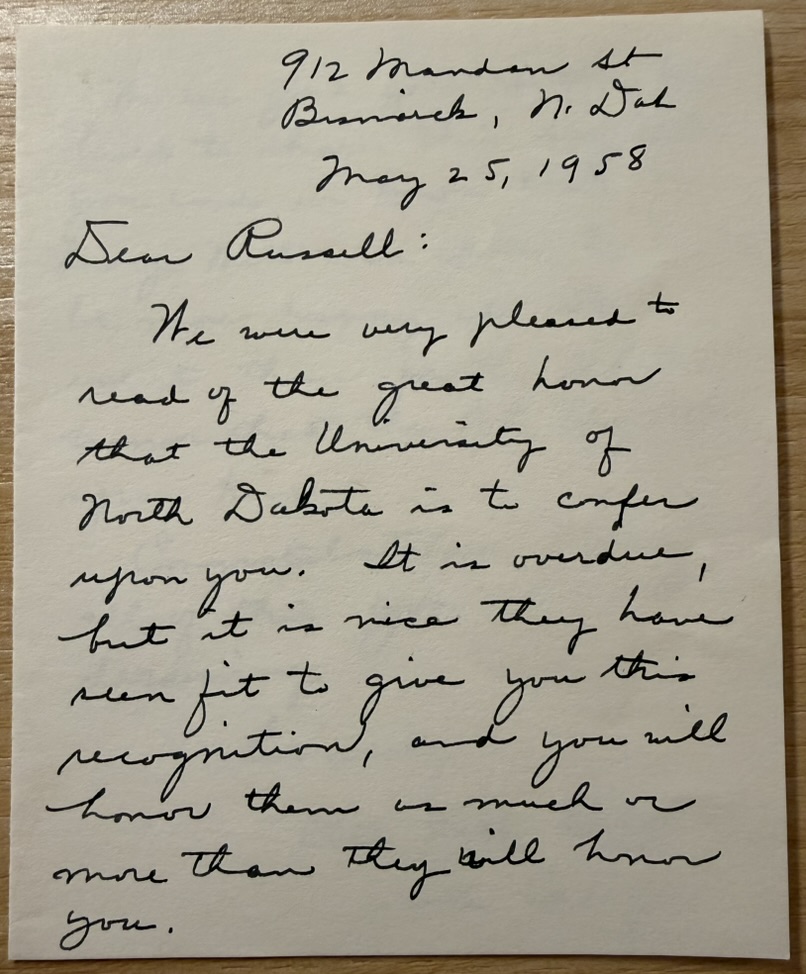
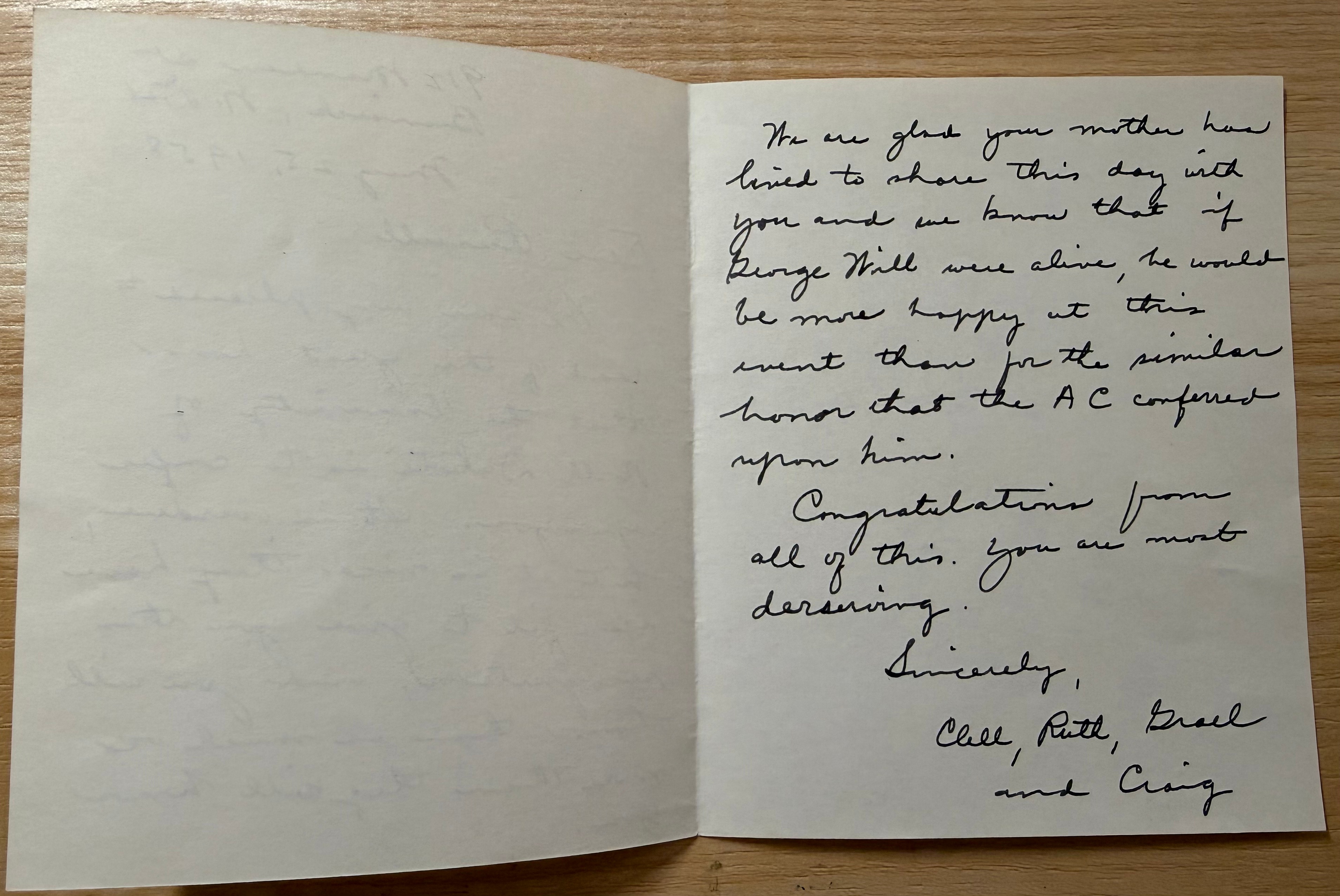
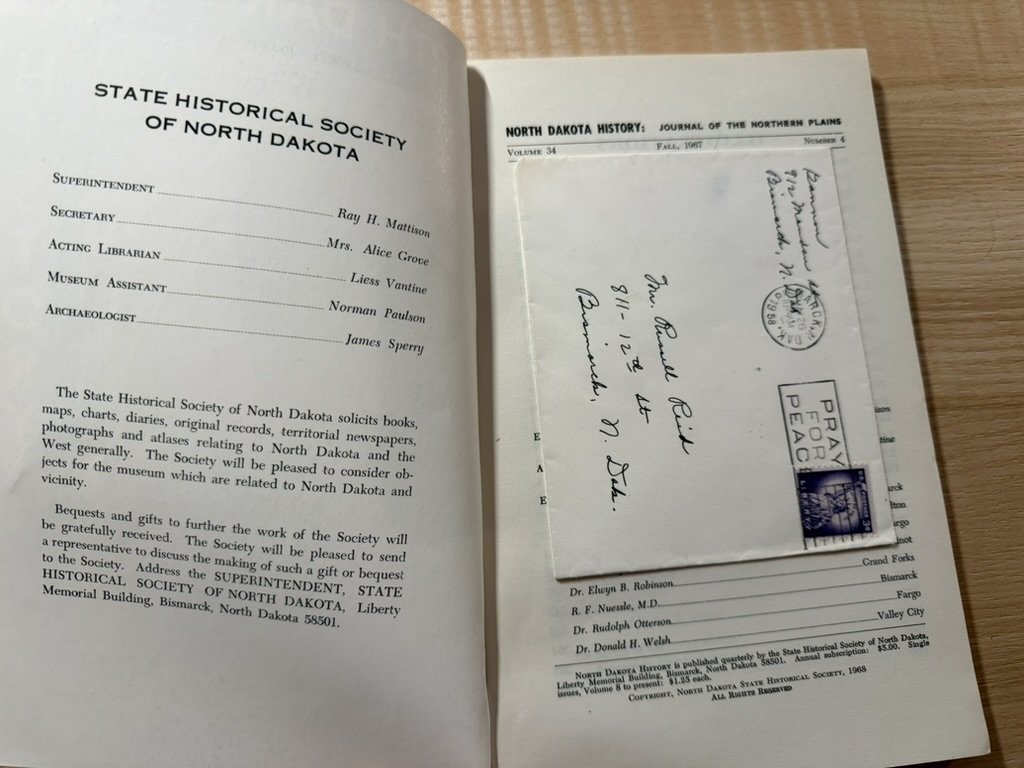
  2. Who else did Clell Gannon roll with at this time? He was a mover and shaker. Also one who was a joy to be around. Thoughtful. And nothing that is in his writings, or others who have written about him, suggests he was a chest thumper. He was friends with Russell Reid and George Will (son of Oscar Will and his vegetable seed empire). The same Russell Reid who acted as secretary of the State Historical Society of North Dakota for decades: when it evolved from the basement of one of the buildings on the State Capitol Grounds eventually to the building that today houses the State Library. Clell would likely lose his mind (in a good way) if he saw the geothermal-heated footprint of today’s State Historical Society of North Dakota, and in-motion expansion of the Military Wing.
    • Clell was unable to physically make the requirements to be mustered into World War I. I do wonder what contributions he might suggest for interpretive exhibits in the 21st military wing following the Great War of the 20th century? Might they have read something along the lines of what Willa Cather spoke of in 1922? “…the world broke in two in 1922 or thereabouts…” In 1922, Cather had seen veterans return from the Great War, and as returned veterans, they were told (not even really told) to navigate the ascent of the industrial capitalistic roaring 20s.
  3. In conversations with Shadd Piehl (ahem, recognized poet of the American West, cowboy poet, teacher, listener, encourager of the written and spoken word, and former bronc rider, etc), Piehl noted that Clell reminded him of the poem American Names that Stephen Vincent Benét set down in 1927, or 3 years after publication of SoBGA. So the revisions of this draft will take into greater account a couple other datum points, including Willa Cather and Stephen Vincent Benét.
  4. Clell Gannon’s introduction (very short) of SoBGA is good.
    • In the first paragraph he sets out his flag of love of regional place. Not nationalistic love. But of the regions within this nation: northern plains. Great Plains. American West.
    • The second paragraph is on about poetic structure, meter to be exact, and with a sampling of how a west of the Mississippi River person pronounces “coyote”: say ki’ot, Clell instructs, as two syllables. Don’t get all sophisticated and say “ki’ot’eee.” Don’t do that. Nobody would ever do that. Use two syllables to say coyote, and the meter of the poems will flow.
    • The third paragraph calls out Florence Harriet Davis, librarian in 1924 of what would have been the beautiful Carnegie Library in Bismarck (it was completely razed in the 1970s or 1960s for progress. Poetically, a parking ramp is located there today.). Who is Florence? In a word search in the Library of Congress searchable newspaper database, she surfaces here and there in Bismarck Tribune articles.
    • Clell’s final poem in SoBGA is to Hazel Dell Gannon, who at 17 years old passed away in what Clell describes as Grand Valley, South Dakota. Maybe she was preparing to attend teachers college? Or something? I Google’d Grand Valley, and the closest thing that surfaces is place names in Lincoln County, southeastern South Dakota.
    • Clell signs off on his short introduction with “Bismarck-by-the-river, North Dakota.” Today, in 2024, this is another great reminder to readers to recenter their view of North Dakota’s capital city as one that is a river city as well. Clell understood the importance of the Missouri River to the early history of the region and, eventually, to the state.

Okay, that’s all the Clell-ification I have for the moment. Gotta get after the other items for this Thörsdag, October 31, 2024, Halloween Day (the pumpkins were carved last night).


Second Wave Established – 1920s Great Plains

Yesterday (03/07/2024) on the social media platform Facebook, the Herodotus of the Great Plains, Professor Tom Isern, posted a note of and a link to Willa Cather’s 1923 essay in The Nation called, “NEBRASKA: The End of the First Cycle” (The Nation, 117, September 5, 1923: 236-238). Recapturing Isern’s post here, he said,

“Cather’s 1923 essay is a redefinition of the Great Plains historical identity. Writers such as Owen Wister despised immigrants. Walter Prescott Webb set them no place at the table. Great Plains history was being written by Anglo-Americans, and they owned it. Well, Cather flipped that scenario. She gave immigrants not just a place, but the place of honor. They are the best of us, Cather argues. This she says based on her personal experience and acquaintances; the immigrant presence infuses her Nebraska novels. Literature matters. Cather’s 1923 essay is required reading in my NDSU course on the Great Plains.”

Some more notes on that are below from Isern’s prompt above:

This 1923 essay got me thinking about the larger regionalist movements during this period that are sometimes book-ended (handily) by the two big ones in the first half of the 20th century (WWI and WWII). It seems like if you’re alive, reading this or anything today, props to your ancestors for figuring out how to survive the first half of the twentieth century. And that’s after their ancestors figured out how to navigate the long nineteenth century prior.

Of the 1923 essay, Cather’s following statement smacks thematically of Clell Gannon who, also in the 1920s, asserted his own version of northern plains historical identity into the soil. This phrase by Cather, here:

“When I stop at one of the graveyards in my own county, and see on the headstones the names of fine old men I used to know: ‘Eric Ericson, born Bergen, Norway . . . died Nebraska,’ ‘Anton Pucelik, born Prague, Bohemia . . . died Nebraska,’ I have always the hope that something went into the ground with those pioneers that will one day come out again. Something that will come out not only in sturdy traits of character, but in elasticity of mind, in an honest attitude toward the realities of life, in certain qualities of feeling and imagination.”

Willa Cather, The Nation, 1923

Clell Gannon was doing this sort of literature, art, and history place-making (I have heard the phrase “place esteem,” too) just a couple chess moves north on the northern plains. Either by way of his boat ride with George Will and Russell Reid down the Little Missouri River then the Missouri River (from Medora to Bismarck) in 1925. Or by way of his interior mural paintings in the Art Deco Burleigh County Courthouse in Bismarck, North Dakota. And other such elements.

Another thought from this 1923 essay by Cather is this: we (historians and those consumers of history) are in need of much more research and narrative building with how tribal citizens used their own agency to navigate these decades from the 1910s, 1920s, 1930s and 1940s — really the tinder and prologue to the needed American Indian Movement of the 1960s. Today, Phil Deloria is carving out published research and narrative from this era. In the 1910s and 1920s, Anglo-American historians often overlooked or didn’t include (all but with a sentence or a subordinate clause) Native America in its infinite dynamism during this period. If you get closer to the regions where the regionalists operate, though, Anglo Americans such as Aaron McGaffey Beede start emerging from the research.

In broad brush strokes, Beede advocated for his Anglo-American readership to 1) stop talking (what a concept) and; 2) start listening to and learning the Lakota language. I don’t have the verbatim quote in front of me, but from memory Beede says things to the effect of this: if you want to witness the divine amongst the Lakota, then stop and deliberately learn their language. Once you learn the language, you will hear the creator within that language.