Author Archives: Aaron Barth

Adventure Science Raw Text Message Exchanges: Reinhard, Rothaus and Barth from April 22, 2013

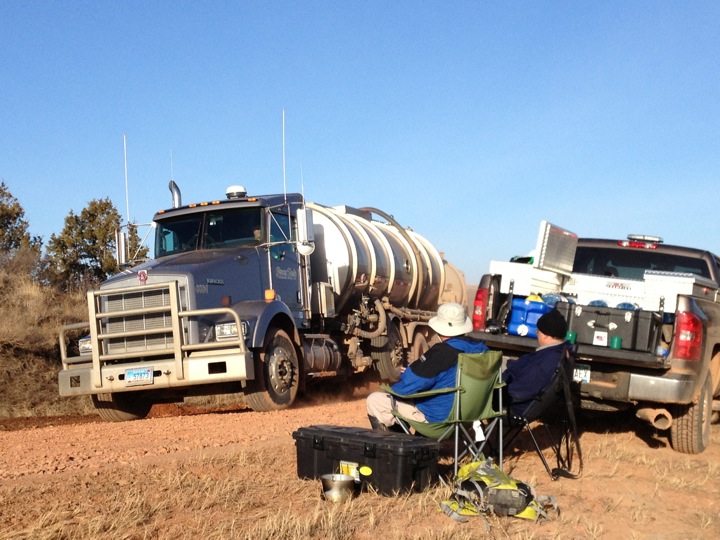
Right now, as I type, Richard Rothaus is delivering a presentation at the annual Preservation North Dakota meeting. This is taking place at Richardton Abbey just off of I-94 in western North Dakota. Rothaus is speaking about the Adventure Science operation that took place in western North Dakota in late-April 2013. A couple weeks before he and Andrew Reinhard headed out, Rothaus texted and asked if I wanted to provide a kind of mobile base camp support. Because at the time I was bogged down with readings and technical reports I said “Yes, of course.” It turns out that providing mobile base camp support for an Adventure Science project on the death highway (85) in the industrial petroleum play land of western North Dakota also allows a person to get a good back-logged chunk of reading in.

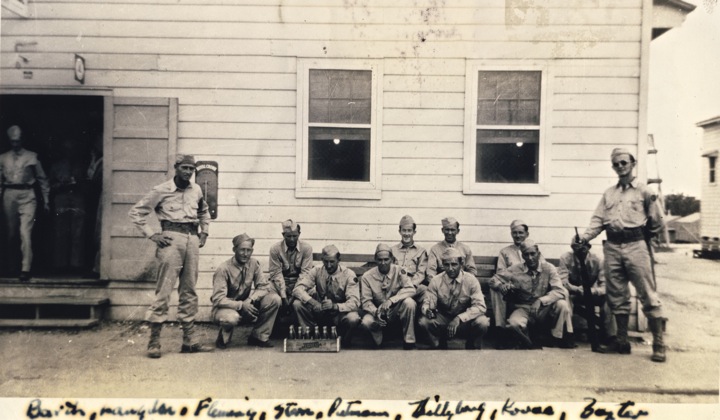
Andrew Reinhard on the morning of April 22, 2013.

Andrew Reinhard on the morning of April 22, 2013.

Anyhow, it was later decided by Reinhard, Rothaus and I that after the first day of the Adventure Science outing, perhaps the best understanding of how things almost went to hell was captured by the exchange of text messages between the three of us. Some quick context: spring was increasingly realized, although by late April 2013, winter still held the evenings, nights and mornings. This meant that everything would freeze at night (the ground included), giving overland trekking crews a solid footing in the morning. By mid-morning the sun would warm the ground enough to thaw everything, enough so I had to move the truck off a dirt two track on to solid asphalt because it started sliding from a stationary position due to the melt. This proved to be highly educational to Rothaus and Reinhard who were completing the first leg of the project: they slid down from the finger-ridge buttes, and found it nearly impossible to climb up the slippery slopes. They restructured the way they would approach the routes.

But back to the text exchange between the three of us. As evening gave way to the setting sun and night, I started becoming really concerned. Reinhard and Rothaus had wet clothes from the day’s hike, and to overnight in below-freezing temps would be a certain dance with hypothermia. That would be bad. So I started sending off text-messages to them. On April 22, 2013, just off Highway 85 north of Grassy Butte, North Dakota, the text-exchange went something like this:
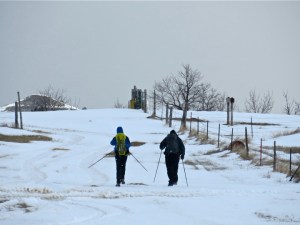
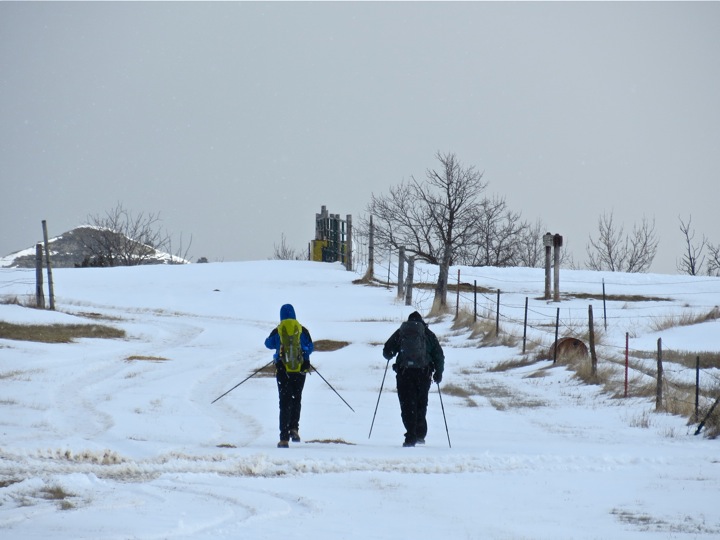
Reinhard and Richard Rothaus start the overland Adventure Science trek on the morning of April 22, 2013 in western North Dakota.

Reinhard and Richard Rothaus start the overland Adventure Science trek on the morning of April 22, 2013 in western North Dakota.

4:08PM, Rothaus to Barth: “We are in mud hell. This will take awhile. Hang tight. Could take till 7 or 8.”

Barth to Rothaus: “Okay. I’ll sit tight.” I somewhat jokingly added, “Let me know when I should call the National Guard.”

6:38PM, Rothaus to Barth: “We are up on a plateau heading toward 85. Will come out south of you. HAng tight. We are beat but good.”

Barth to Rothaus: “Okay. Good to hear. Can you see 85 from your locale?”

Rothaus to Barth: “No. But we are getting there. Andrew [Reinhard] is solid. I am short on oxygen. So no serious worries.”

6:50PM, Rothaus to Barth and Reinhard: “We will come out about a mile south. We are probably 2 it less to road. Still could be mud.”

Barth to Rothaus and Reinhard: “Okay. Tell me when you get to road. I will come pick you up. Would it be wise to hotel it for one more night? I’m fine either way. If yea, let me know and I will book rooms. 16 [F] tonight. 18 [F] tomorrow night.”

Reinhard to Rothaus and Barth: “I defer to richard. Almost at the rim. See you at 8:00.”

Barth to Reinhard and Rothaus: “Okay.”

7:36PM, Reinhard to Barth: “Barth: we can see 85 but it will take at least 2 more hours. Can you book 2 hotel rooms? This is crazy country.”

Barth to Reinhard: “Yup.”

8:05PM, Barth to Reinhard and Rothaus: “We’re back at the Quality Inn tonight!”

8:47PM, Barth to Reinhard and Rothaus: “Are you two walking together? Or is it going to be more like midnight when you get to the road?”

9:02PM, Reinhard to Barth and Rothaus: “We are together. Now on a ranch road so 1/2 mile easy walk. I think i see your truck. Move it forward ten feet so I can confirm. Tonight you drink all the beers… Saw you!!! We will come out there.”

Barth to Reinhard and Rothaus: “You south or north of me? Okay.”

Reinhard to Barth: “(I think)”

Barth to Reinhard and Rothaus: “It’s not as though I was looking up the number for the sheriff or anything.” You south or north of the truck?”

9:18PM, Barth to Reinhard and Rothaus: “The sun sets in teh west, so north is to your right, and south to your left.”

9:32PM, Reinhard to Barth: “South now I think. Maybe 1/4 mile? I am 100 feet og the road in the grass. I lost the ranch road. And Richard. He should head W to the road.”

Barth to Reinhard: “Can you both see me? WTF?”
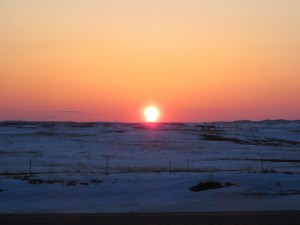
The April 22, 2013 sunset in western North Dakota. Taken on Highway 85, just north of Grassy Butte.

The April 22, 2013 sunset in western North Dakota. Taken on Highway 85, just north of Grassy Butte.

Reinhard to Barth: “I will try to find a road sign. I am by a yellow road sign that is on southbound side indicating road turns to left. I will walk north to where i think i saw your truck until i see a mile marker”

Barth to Reinhard: “Okay. I turned on the roof light. Just get to 85 first.”

Reinhard to Barth: “Kk richard is headlampinf so i can meet him, i will look for your light too”

Barth to Reinhard: “Okay.”

Reinhard to Barth: “I see richard”

Barth to Reinhard: “Okay good. You guys see traffic on 85?”

9:45PM, Reinhard to Barth: “Line of 6 vehicles just passed northbnd.”

Barth to Reinhard: “Did a solo semi just pass? I’m gonna go back and forth on this road a couple times till you see me. Top light is on.”

Reinhard: “Yeah. Waiting on richard. Maybe 1,000 ft to go for him. Orange? I see yoy. I am .200 ft n of uou. Stop. We will come to you”

Barth to Reinhard: “Sounds good.”

Within a minute Rothaus and Reinhard were back at the truck. Temps were below freezing by this point, and they were exhausted. We drove back to Dickinson that night, and had a late-late dinner at Perkins.

One more note, and some unsolicited advice for policy planners, upper and lower level politicians, and so on: if you do not physically live and work in the Bakken and plan on visiting, and if you want a true cross section of it, don’t do it in an airplane. Take the same roads that the rest of us take. Go in the winter. And then do it again in the summer. Stay for at least a week, and spend a couple nights in a crew camp, and a couple nights in a hotel. Even grab a cup of coffee and watch semi-tractor trailer activity, too. You’re not going to be able to understand what goes on out in the Bakken unless you do this. A person is able to experience and understand a lot more with boots-on-the-ground than they are at 5,000 or 10,000 feet.

Remembering Whitestone Hill 150 Years Later: August 24, 2013

On August 24, 2013 (a week from tomorrow), the State Historical Society of North Dakota is hosting the 150th year of observances at Whitestone Hill in southeastern North Dakota. You can drive to the site, and there is an official Facebook page which you can link to here. I also thought I’d just copy and paste the August 24, 2013 line up below. Here it is, verbatim, and I’ve also provided links with the particular names (just click on them to learn more):

Whitestone Hill 150th Commemoration event, Saturday, August 24, 2013
Schedule – August 2013
9 a.m. – 4 p.m.
Demonstration stations: all day
Dakota Lifeways, Dakota food demo, military life re-enactors, settler life re-enactors, Dakota drum and dance, Dakota War information, interpretive signs –either a prototype or actual sign that will be installed on site by SHSND
Speakers:
9 a.m. Kevin Locke – opening prayer 
9:15 0r 9:30 a.m. Ladonna Allard – Life in the James River Valley 
11 a.m. Richard M. Rothaus – “The Military Context of Whitestone Hill–Tactics, Artillery, and Non-Combatants.” 
11:45 a.m. Aaron Barth – “Remembering Whitestone Hill” 
1 p.m. speaker to be announced – Identity and Story of the Native People of Whitestone Hill
3 p.m. Speaker Panel – Preservation of Whitestone Hill – Past, Present and Future. Alden Flakoll, Board member of the Whitestone Hill Battlefield Historical Society, Dakota Goodhouse, Program Director for North Dakota Humanities Council, Ladonna Allard, Tourism Director for Standing Rock Reservation, Tamara St. John, Tribal Historian for Sisseton Wahpeton Tribal Historic Preservation Office, Diane Rogness, Historic Sites Manager for the State Historical Society of North Dakota.
4 p.m. Kevin Locke – dance
5:30 p.m. Buffalo supper, RSVP required


Directions to Whitestone Hill, North Dakota

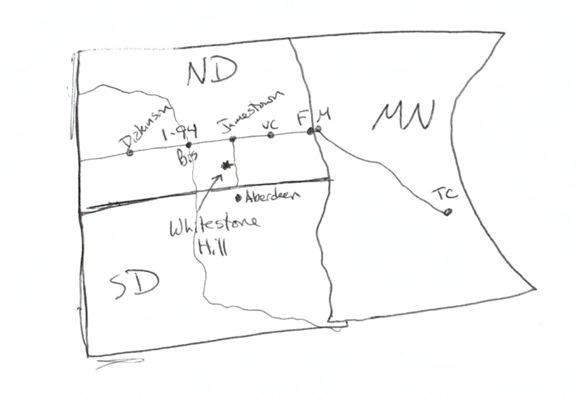
The approximate location of Whitestone Hill.

The approximate location of Whitestone Hill.

I’ve decided that very few people know the location of Whitestone Hill in southeastern North Dakota. This decision came to me after hearing the “Where is that?” response to my remark, “Whitestone Hill…” It is now 2013. This location, Whitestone Hill, is important since it is a site where the U.S. Army brought total war to a domestic encampment of northern Great Plains indigenes in early September of 1863. We are almost upon the 150th year of remembrance. So we need to make ourselves more aware of these sites, primarily because our history — whether we know or like it or not — informs us about how things are today. It is also the stuff that disparate groups identify with. This is why we sometimes hear things like, “History is about identity.” This is true. If we don’t know about Whitestone Hill, then we don’t know why things are the way they are today.

So people can more readily find Whitestone Hill, over the lunch hour I decided to scribble out a map, and also scan a DeLorme topo map of the location specifics. I’m blogging about it now, and I figure that if folks ask me, “Where is that?” instead of me gesturing in the air about the relative location of Whitestone Hill to Jamestown, Aberdeen, Edgeley or Ellendale, I can just send them this link. Above is a rough sketch of the approximate location of Whitestone Hill that I prepared while eating squash and cauliflower curry soup over the lunch hour.

A DeLorme map of the Whitestone Hill location.

A DeLorme map of the Whitestone Hill location.

If you’re on Eisenhower’s Interstate 94, just head south from Jamestown, North Dakota on Highway 281. If you’re in Aberdeen, South Dakota, head north on Highway 281.

If coming from Jamestown, drive about 40 or 50 minutes south until you hit Edgeley, North Dakota. From Edgeley, head west on ND Highway 13, and this eventually turns into south-bound Highway 56. Travel south of Kulm about 10 or 11 miles to 88th Street SE. Travel east on 88th Street SE for four miles, and then turn north (by this point you’ll see “Whitestone Hill” signage to direct you to the site).

If coming from Aberdeen, South Dakota, drive north to Ellendale, North Dakota, and head west on ND Highway 11. Travel west on Hwy 11 for about 20 miles, and turn north onto ND Highway 56. Drive 10 miles north on Highway 56, and turn east on to 88th Street SE. Drive the four miles east, and turn north at the Whitestone Hill signage.

Note: even though the signage on the DeLorme map reads “Battlefield,” and even though during your approach you will start seeing “Whitestone Hill Battlefield” signage, do not be tempted to call it that unless you are ready to define what is meant by that. Even then, it is not a good idea.


Stop and Smell the Russian Sage

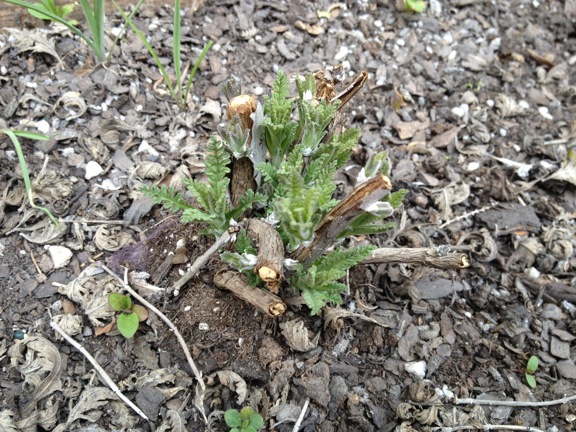
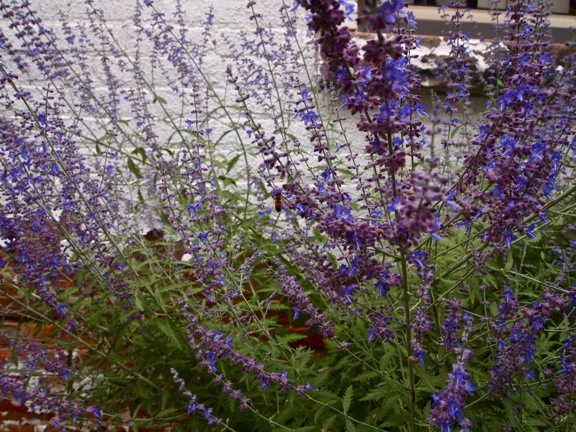
When it was mid-Spring, just before the weather stopped dropping below 32 F at night, the sturdy Russian sage pushed up out of the soil. This is what it looked like at some point in April-May.

Russian sage in the spring on the North American steppe.

Russian sage in the spring on the North American steppe.

Earlier this morning I scrolled past this image while looking for some photos of the ongoing public humanities discussions we’ve been having concerning the Dakota Wars circa 1862-64.

Then I looked at what the Russian sage looked like yesterday evening (August 2013). The honey bees stay busy with all the blooms. Sometimes we gotta stop and smell the Russian sage — it appears the Europeans are better at it than the Americans. That is also what I thought.

Russian sage in August 2013.

Russian sage in August 2013.


Historic Baseball Ticket Stub: Metropolitan Stadium, August 25, 1961

Side 1Yesterday I was cleaning off my desk and I came across a raincheck stub from an August 25, 1961 Minnesota Twins ball game at the old Metropolitan Stadium (a plaque in the Mall of America marks the location of the original home plate). This got me thinking about how sports have increasingly been looked at as windows into the past, even popularized lately by the movie 42: The Jackie Robinson Story(Jules Tygiel has an exhaustive history cranked out by Oxford University Press here.)

This old Metropolitan Stadium ticket also got me thinking about how the “Met” was built south of the Twin Cities in Bloomington, in a farmer’s field, in the 1950s. This, in a broad sense, represented the increased urban flight from the city proper to the suburbs (something Adam Rome goes on at length in The Bulldozer in the Countryside — environmentalism was a reaction to the hyper development of the suburbs in post-WWII America). The Eisenhower Interstate system also allowed for Americans to bypass the central downtowns, and its gravity reshaped a variety of cities throughout the nation.

Side 2And this 1961 ticket could also — through various connections — reflect the prologue to the American Indian Movement that started in Minneapolis. This ticket is a piece of material culture that represents the white flight from the city to the suburbs. The Federal government, in turn, relocated — or attempted to — Native America (the original Americans) from the reservation to these downtown urban areas.

This leap from a 1961 rain check baseball ticket needs quite a bit more data to give more strength to the AIM connection, but when blogging in the morning, the mind tends to wonder and wander aloud with questions (this, of course, is where scholarship and history begins…).


Gadgets In Edgeley, North Dakota: Visiting Dawn and Theresa Paul

This morning, while reading about Caraher’s physical concerns as a field archaeologist, I took the third slug of coffee from the first home roasted coffee batch. To home roast the coffee, I used a corn/maize air popper, and learned how to do this just over a week ago when Molly and I visited Dawn and Theresa Paul who reside in Edgeley, south-central North Dakota. It works great, and there appears to be a huge body of DIY internet information on this (which, like numerous things, I only now am discovering). Here is what the roasting looked like this morning.

Roasted coffee from this morning. Green coffee beans just above that.

Roasted coffee from this morning. Green coffee beans just above that.

Anyhow, I thought I’d give you some quick backdrop on Dawn and Theresa and then share another project they finished in Edgeley. Dawn and Theresa used to live on St. Croix. When they first said this, I responded with, “You’re talking about the Virgin Islands and not Minnesota, correct?” (When someone says they are from Oslo, I always do the same thing and ask, “Norway and not Minnesota, right?”) Yes, they were talking about the Caribbean. They both lived on the island for quite a time, developing a house and setting themselves into a variety of projects. Eventually, though, they wanted to relocate to the northern Great Plains (I think this in part had to do with Theresa’s family connections to the area). They claim to be “retired,” but after visiting with Dawn for over an hour I balked at this assertion, or at least modified it. I said, “You’re retired, but busy as ever.” He agreed.

Below are photos of a rehabilitated and restored circus conversion van. Dawn and Theresa can give you the details way better than I can, but the short and skinny of it is this: they discovered this vehicle years back, the vehicle having been abandoned or nearly abandoned. It is a motor home that early 20th-century circus people would use while traveling the circus circuit. This particular van was owned by “The Great Arturo” of the Ringling Brothers and Barnum & Bailey circus shows. The Great Arturo, I learned, was center ring.

Circus people would often winter down in Florida, and then return to the circus life when things warmed back up. Dawn and Theresa decided to do a complete restore on the vehicle, and you’ll occasionally see them traveling the minor and major roads on the northern Great Plains. Here are some photos:

The cockpit of the sweet circus ride.

The cockpit of the sweet circus ride.

Don entering the sweet ride.

Dawn entering the sweet ride.

The front 1/3 of the sweet circus ride.

The front 1/3 of the sweet circus ride.

An interior shot of the sweet circus ride. Note the stove range to the right; sink to the lower left; toilet further back; and bed at the way back.

An interior shot of the sweet circus ride. Note the stove range to the right; dresser just behind that; sink to the lower left; toilet further back; and bed at the way back.


Jessica Christy’s Art This Saturday in Fargo, North Dakota

Jessica ChristyThis Saturday, Jessica Christy (an artist who also happens to be one of my cousins) will be showing her work at DK Gallery in downtown Fargo, North Dakota.

This is a copy of the official handbill she is circulating. I figured since she is doing these spectacular Warhol-Factory-esque prints of the USDA’s finest canned beef w/ juices, then it would be okay for me to copy the handbill and post it on my blog.

According to the USDA description, canned beef with juices (USDA item #110),

…consists of coarse ground beef cooked in its own juices for use in a variety of applications, including barbecue beef, pizza, soups, stews, spaghetti sauce, vegetable stir-fry, casseroles, and similar items.

That does sound juicy.

One might make the argument that we, as an increasingly hybridized digital corporate-nation, are becoming a bit disconnected from where our stuff comes from, food included. This in turn is problematic because a government is, as laid down by our founders, a nation by the people, for the people, whereas a corporation is beholden to do one thing and one thing only: make money for the shareholders. I of course would not make this argument, and I would advise against bringing up the idea in polite company. But if someone else wanted to, they certainly could.

Never mind all of that, though. We need to move product here, folks, so let’s get to it. See you Saturday! Don’t forget to bring your Andrew Jacksons!


Prairie Turnips

A prairie turnip.

A cluster of prairie turnips.

Where some see a prairie-scape of oblivion, others see a culinary buffet. Just last night I was cruising around in some old digital photos on the desktop, and I came across a couple shots of prairie turnips. I photographed them a couple years ago in the kitchen of a downtown Bismarck apartment I used to live in (the historic Mason Building), I think around 2008 or 2009.

During those summers, Tim Mentz, Jr., of Standing Rock, showed me on the northern Great Plains how to identify the prairie turnip. You can read the landscape for prairie turnips in July. This is when the vegetation sprouts above ground, making them visible. They also grow in certain areas on a hill (it may or may not have something to do with the ph levels of the soil — I’m in the humanities, folks). This, of course, leads to the idea that if you have two different people look at the same landscape, they will see it in a variety of different ways. I like listening to what others have to say about the landscape. Tim Mentz, Jr. always had my ear. We would often joke, too — when a bull was once staring at us and uprooting the topsoil with his front hoof, I asked Tim, “What does that mean?” Tim responded with, “That means we give him distance.”

It is customary to braid the turnips by the root ends, and then hang them to dry. Just like mushrooms (and other dried goods), they will reconstitute in liquid or water. I made turnip soup out of this batch.

With the husk pulled back, this is what the edible flesh of a prairie turnip looks like.

With the husk pulled back, this is what the edible flesh of a prairie turnip looks like.


Archaeological Mosquito Ramblings

One of the only known photos to survive the pedestrian survey from southeastern Montana, summer 2008.

One of the only known photos to survive the pedestrian survey from southeastern Montana, summer 2008.

Pedestrian archaeological surveys necessitate long-distance hiking (hence the name, pedestrian survey). This evening I was trying to remember the first time I started thinking about how the work of archaeologists is to re-assemble or attempt to reconstruct how people worked in the past. In this blog entry, I’ll assert that I started thinking about this during a pedestrian survey in Carter County, southeastern Montana, summer 2008. I remember two archaeological comrades on that project, Mark Luther and Chandler Herson.

I also remember the fantastic mosquito swarms, and this in turn led me to recall a segment from John Finerty’s War Path & Bivouac (1890), a chronicle assembled by the Hibernian-American correspondent with the Chicago Times. And this is what happens when the humanities intersects with the social science of archaeology. When it came to contending with mosquitoes during pedestrian surveys in eastern Montana in the summer of 2008, I also thought about how Finerty interfaced with them while attached as an imbedded reporter with General Crook’s frontier column. While traversing the snowy range, Finerty said mosquitoes “bothered us terribly while the sun continued visible.” In another instance, Finerty said mosquito repellant was created by burning “damp sage brush and weeds,” this raising “a tremendous pungent smoke,” working “wonders with the intolerable pests.”

In eastern Montana, a grey silt has built up from millennia of the eastward-flowing Rocky Mountain run-off. This is incredible mud with incredibly terrible drainage, and it holds rain-water well. Thus, millions of these mud pockets hold rain water after said rain, and they create brilliant breeding grounds for the mosquitoes. On August 21, 1879, Finerty, reporting from eastern Montana, said, “The gigantic mosquitoes nearly ate us alive that night. They and the rains make life very uncomfortable in northern Montana.” Even at full gallop on a horse, Finerty said mosquitoes took to drafting in the breeze: “We went at a gallop [on horse] most of the time, but even the breeze created by rapid motion did not free us from the winged tyrants.” I, as well as Chandler and Mark, can testify that these mosquitoes operated in full-force during the summer of 2008. The mosquitoes, no doubt, made sure that our hearts were in it for the archaeology, and the historical sense of place.


A Panoramic of the James River Coteau

Panoramic

I’ve been fiddling with the “Panoramic” feature on the iPhone 4s. I realize that everyone but me knew about this. But I thought I’d upload at least one photo snapped yesterday approximately 5 miles east and 2 miles south of Kulm, North Dakota. The photo is looking to the northeast and east, just on the ridge of the coteau that drops into the James River Valley proper. To my immediate east, the water goes into the James River. To my immediate west, the water ultimately finds its way to the Missouri River. Both water streams merge around Yankton, South Dakota, and ultimately empty into the Mississippi, then the Gulf of Mexico. Hydrology kind of connects us to the land that way.

To get to your “Panoramic” setting, at least on an iPhone 4s, turn on the camera, tap the “Options” button top-center of the screen, and then tap “Panorama.” Then start experimenting.