Author Archives: Aaron Barth

Reading Joseph M. Marshall III’s Hundred in the Hand

Some weeks or months ago, while in conversation, Dakota Goodhouse mentioned the name of the late Joseph M. Marshall III. I scribbled it down and got to searching on the webs. Turns out he went to the other side in April 2025, but before that he set down a magnificent body of history, cultural history, and novels in the original sense of the word: new ideas.

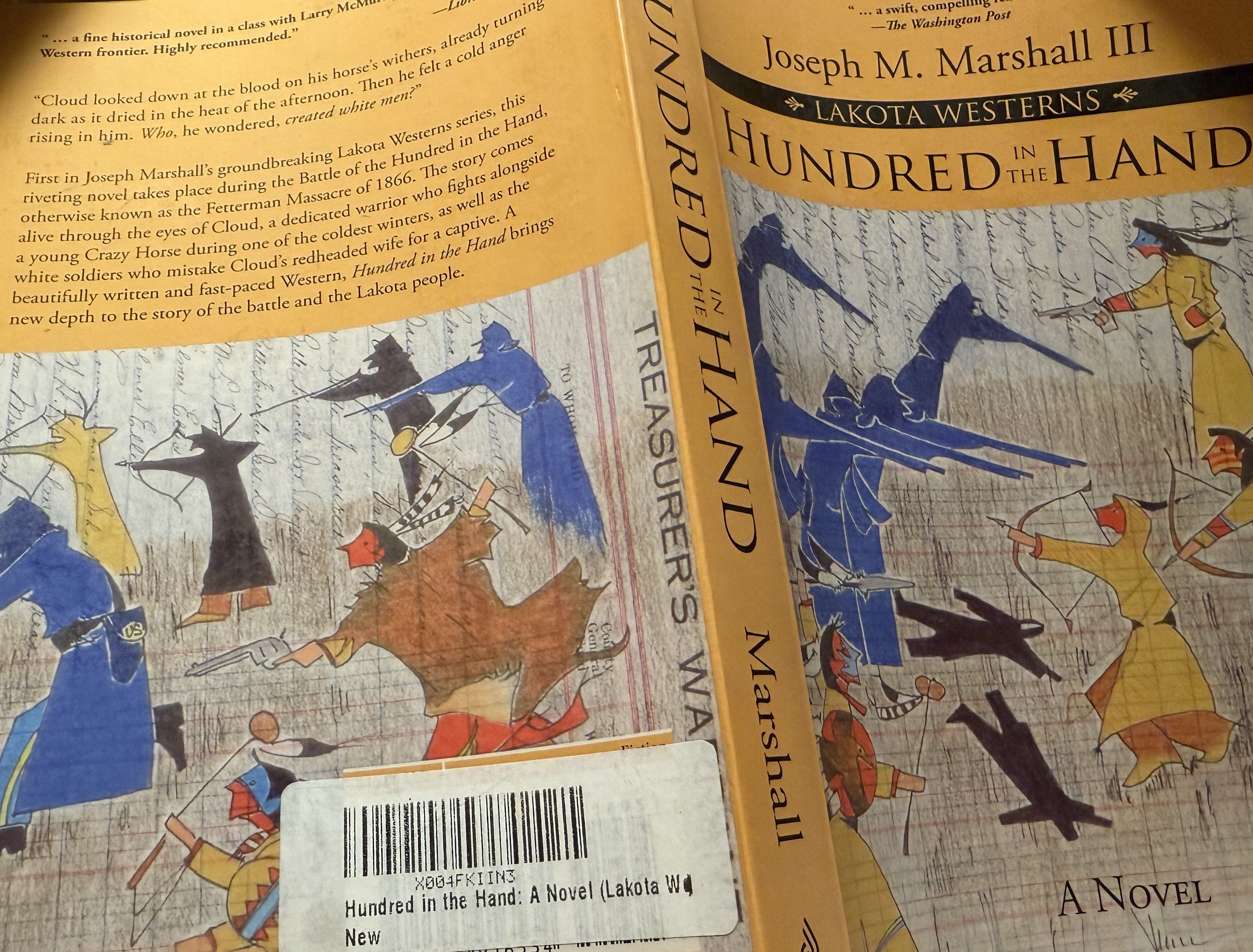
Last night, and in between first and second sleeps, I continued cruising through Marshall’s Hundred in the Hand (Golden, Colorado: Fulcrum Publishing, 2007), described on the coverpage, appropriately, as Lakota Westerns (it’s good to read the plural, as it suggests there is, or will be, more than one).

Reading Marshall III got me thinking about analogies: finding out about Marshall III was similar to finding out about the late Peter La Farge’s work of folk songs, and how Johnny Cash took up numerous songs of La Farge and popularized them. The analogy my brain was running is like this: it seems I’m only now finding out about this amazing historian, artist, folk singer, novelist. It is good stuff.

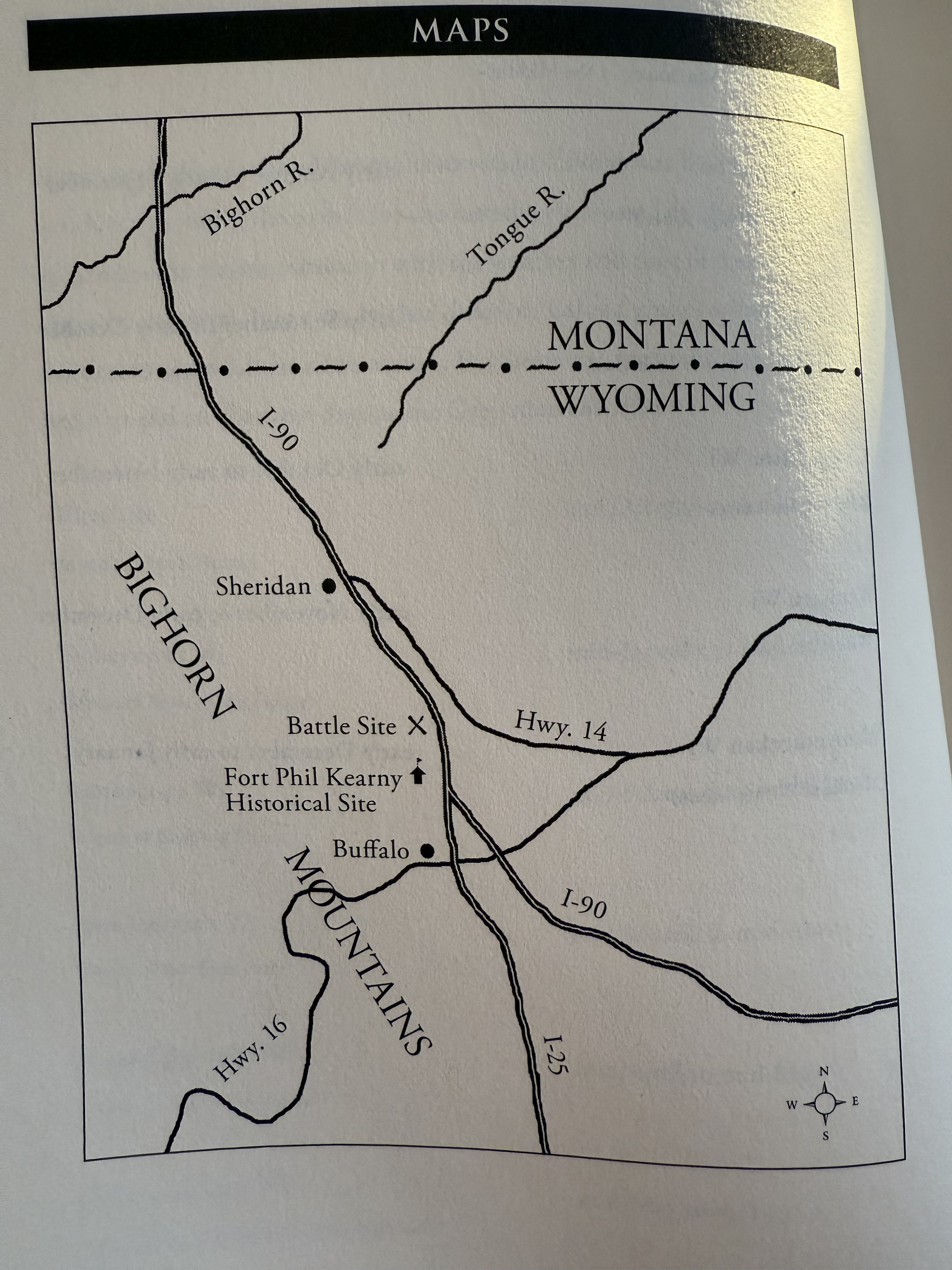
As to Marshall III’s Hundred in the Hand: this morning I texted Goodhouse, “It paints Lakota culture across the 1860s northern plains landscape. Daily lives. It’s good.” The novel takes a reader into a post-American Civil War landscape where the Great Plains mingles with the eastern elevation of Rocky Mountains in today’s Dakotas, Wyoming, Montana, and Nebraska with the characters involved with the specifics of the Bozeman Trail, or what Marshall III notes was called the Powder River Road or, as described in the introductory Lakota to Euro-American glossary, Makablu Wakpa Canku. Marshall III also dictionaries (now a verb) several other landscape names: He Wiyakpa or He Ska (Shining Mountains or White Mountains) = Bighorn Mountains; Canku Wakan Ske Kin (The Road Said to be Holy or Holy Road) = Oregon Trail; Hehaka Wakpa (Elk River) = Yellowstone River; and several others.

The geological river and creek valleys and buttes filled in with the small islands of cottonwoods, amidst a sea of scrub grasses, sage, and cacti. Layered into and upon this is the day to day lives of Lakota, circa 1866, who are understandably frustrated with watching increasing waves of Euro-American gold-seekers migrate through and post up in their country. Without going too much further into it all (save that for reading it yourself), I’d recommend reading Marshall III’s Hundred in the Hand. It adds a greater layer of texture to the region it describes. Needed layers. Historical works often narrate the historical events informed by historical documents (those primary sources) that are created by and for historic bureaucracies: the structures of nation states. Marshall III’s novel allows a reader into the cultural window of a regional northern plains landscape. The smells. The feel of summer heat. The cool of summer night. The tastes of elk stew in the surround of a hide tipi.

The takeaways from this novel thus far? I’ll work in groups of three. The first is that 1866, and Red Cloud’s defense of his people’s country that culminated in the Fetterman Fight, was one of several prologues to the Battle of Greasy Grass/Little Bighorn a decade later. Lakota who fought in 1866 would remember this as one of many as the spring of 1876 approached. Why is this important? As we approach America 250, it will forever coincide with the centennial observance of the June 25, 1876 Battle of Greasy Grass/Little Bighorn, and the various conversations had in the Anglo-American Sphere when news hit the newspapers just after the Bismarck Tribune wired narratives to the New York Herald on July 5, 1876, and the subsequent days after. A second reason take away is the perceptive shift the novel takes the reader on: it reminded me a bit of what Patrick Byrne would like, or would have liked to read, the author of Soldiers of the Plains, a 1926 publication that brought a native perspective to an Anglo-American readership fifty years after the Battle of Little Bighorn. Byrne, who emigrated from Ireland as an orphan, and eventually arrived to Bismarck, Dakota Territory, would understand what Anglosphere Colonization looked like, having seen and heard the recent memories of the potato famines in Ireland, and the Anglosphere’s complete inability to respond in a humanitarian way.

Where are we at with the 3rd takeaway? Regionalism. Unique things have happened, and continue to happen, in the various regions of the world. It’s not that one region is better than another. It’s that things happen in regions. People live out lives in these regions. They are worth considering and thinking about. This, as it goes, leads to an appreciation of regions, and it gives those regions infinite cultural depth in the face of standardized horizontal and vertical strip mall culture (which has its own value of standardized consistency, don’t get me wrong).


Reading About These American States, 1920s and 1990s

We have just passed the autumn equinox of 2025, and are just 3 months away from 2026, which has been identified nationally as the quarter millennium of America’s origins — this ongoing experiment in republican democracy. As historians go down research rabbit holes (one thing just constantly leads to another), the rabbit hole I’ve tunneled has arrived, this week, to a couple different collections of essays. Starting from the present, the first collection is John Leonard’s edited volume of These United States: Original Essays by Leading American Writers on Their State Within the Union (New York: Thunder’s Mouth Press, 2003) and, what I’ve been enjoying all the more, is what editor Daniel H. Borus scooped together with the collection of These United States: Portraits of America from the 1920s (Ithaca, New. York: Cornell University Press, 1992).

The essays are just that, what is within the subtitle of the two works: a writer was found or identified of each state in the Union. And they were asked and/or commissioned to produce a work on their state of the state. In the 1920s, 49 essays were collected (no Alaska and Hawaii yet in the nation, but they provided the State of New York with two essayists). I found this larger collection of essays through the earlier location of Willa Cather’s 1923 essay “Nebraska: The End of the First Cycle” (which resonates today). Rolling north to south on the Great Plains, and then the north to south western states, the 10 writers and essays go like this:

  1. Robert George Paterson “North Dakota: A Twentieth-Century Valley Forge”
  2. Hayden Carruth “South Dakota: State without End”
  3. Willa Sibert Cather, “Nebraska: The End of the First Cycle”
  4. William Allen White, “Kansas: A Puritan Survival”
  5. Burton Rascoe, “Oklahoma: Low Jacks and the Crooked Game”
  6. George Clifton Edwards, “Texas: The Big Southwestern Specimen”
  7. Arthur Fisher, “Montana: Land of the Copper Collar”
  8. Walter C. Hawes, “Wyoming: A Maverick Citizenry”
  9. Easley S. Jones, “Colorado: Two Generations”
  10. Elizabeth Shepley Sergeant, “New Mexico: A Relic of Ancient America”

Rather than trying to punch out any more blog analytics here, I’m going to take the rest of this morning to pick up at the 4th listed essay above, as I’ve been digesting them in the order listed above. More to report on a bit later.


Clell Gannon “SoBGA” Re-Release

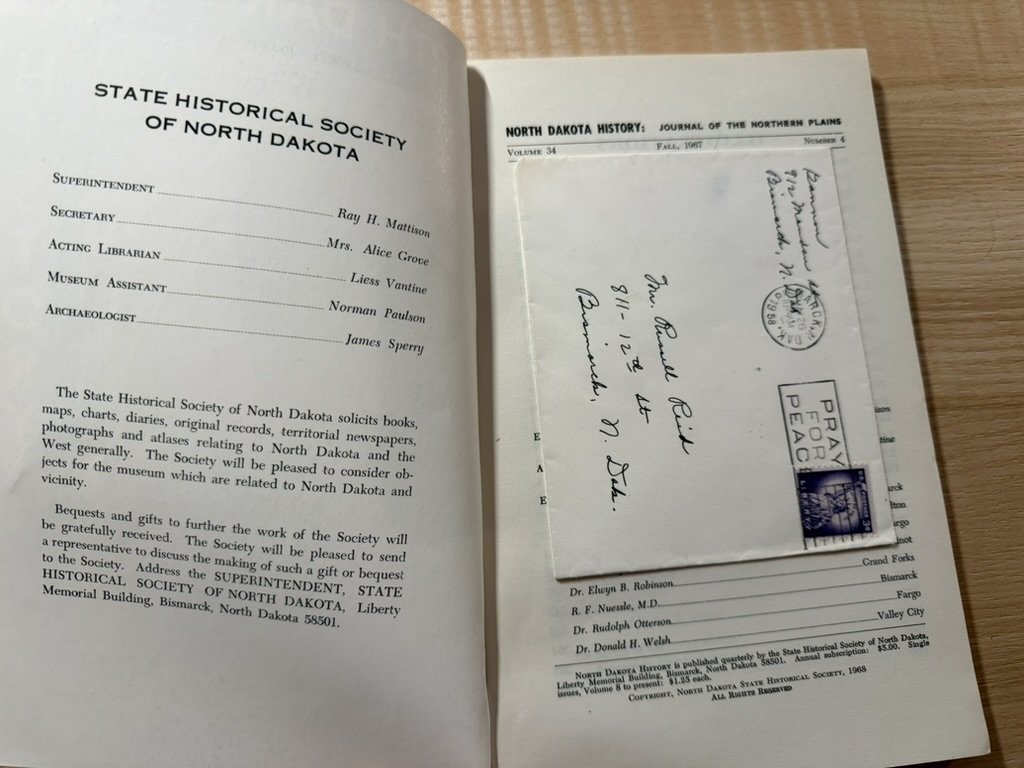
I thought I’d prep some mental notes, or quotes, in this blog post as it regards what I’ll send up to Bill Caraher at The Digital Press at University of North Dakota. Caraher prompted me to think of some quotes to include in the release, or re-release (1924 to 2025), of Clell Gannon, Songs of the Bunch Grass Acres and “A Short Account of a Rowboat Journey from Medora to Bismarck” (Grand Forks: The Digital Press at U of North Dakota, 2025). Below are potential quotes.

  1. “If you love the Northern Plains, and are in any of these arts, crafts, or trades, you will want to make time to read Clell Gannon, as his life and poetry intersected with them all: farmer, star gazer, kayaker, rancher (cowgirl and cowboy), canoe-er, lawyer, cow-boy or -girl poet, architect, Boy Scout troop leader, tourism coordinator/planner/guide, landscape architect, administrator (private or public), underwriter (banking or insurance), artist (digital or graphic, folk, traditional commercial, print-maker, muralist), elected policy maker (county), Great Plains-ist, historical interpreter, judge (appointed or elected), architectural historian, conservationist (hunting and fishing), park supervisor (city, county, state, federal), Theodore Roosevelt-iophile, historian, horticulturalist, archaeologist, or anthropologist. This list is not exhaustive.”
    • The above narrative touches on a lot of correct points. But it’s way too long. Brevity is needed. Perhaps with a question prompt to the reader.
  2. “Ever float a kayak or canoe from Medora to Bismarck, down the Little Missouri River and Missouri River? Clell Gannon, George Will, and Russell Reid did. In the 1920s. And Gannon explained a lot of historical and cultural sites along the way.”
    • The above is better for brevity. It hits a certain demographic, too. Not everyone imagines or physically floats down inland continental waterways. I mean everyone should. But they don’t.
  3. “Clell Gannon is a window into how we all shape the landscape we live in, and how that same landscape shapes us. Gannon explains this in philosophy, manifesto and his art of life by and for the Northern Plains.”
    • This is getting closer. Below I try to craft another one using the lexicon from modern politics.
  4. “Anyone who doesn’t read this book is a loser, plain and simple. Not a winner. A total loser. And why would anyone want to be a loser? There’s no reason. Buy this book from The Digital Press. It’s so wonderful. Probably one of the best if not thee best book out there on the Northern Plains. Easily. No contest.”
    • I won’t go with the above. But it was joyously absurd to craft. It’s important to wrap one’s arms around absurdity. Own it. Otherwise it’ll own you.

Era Bell Thompson Local and Global: Windshield Reconnoiter in Driscoll, Burleigh County, North Dakota

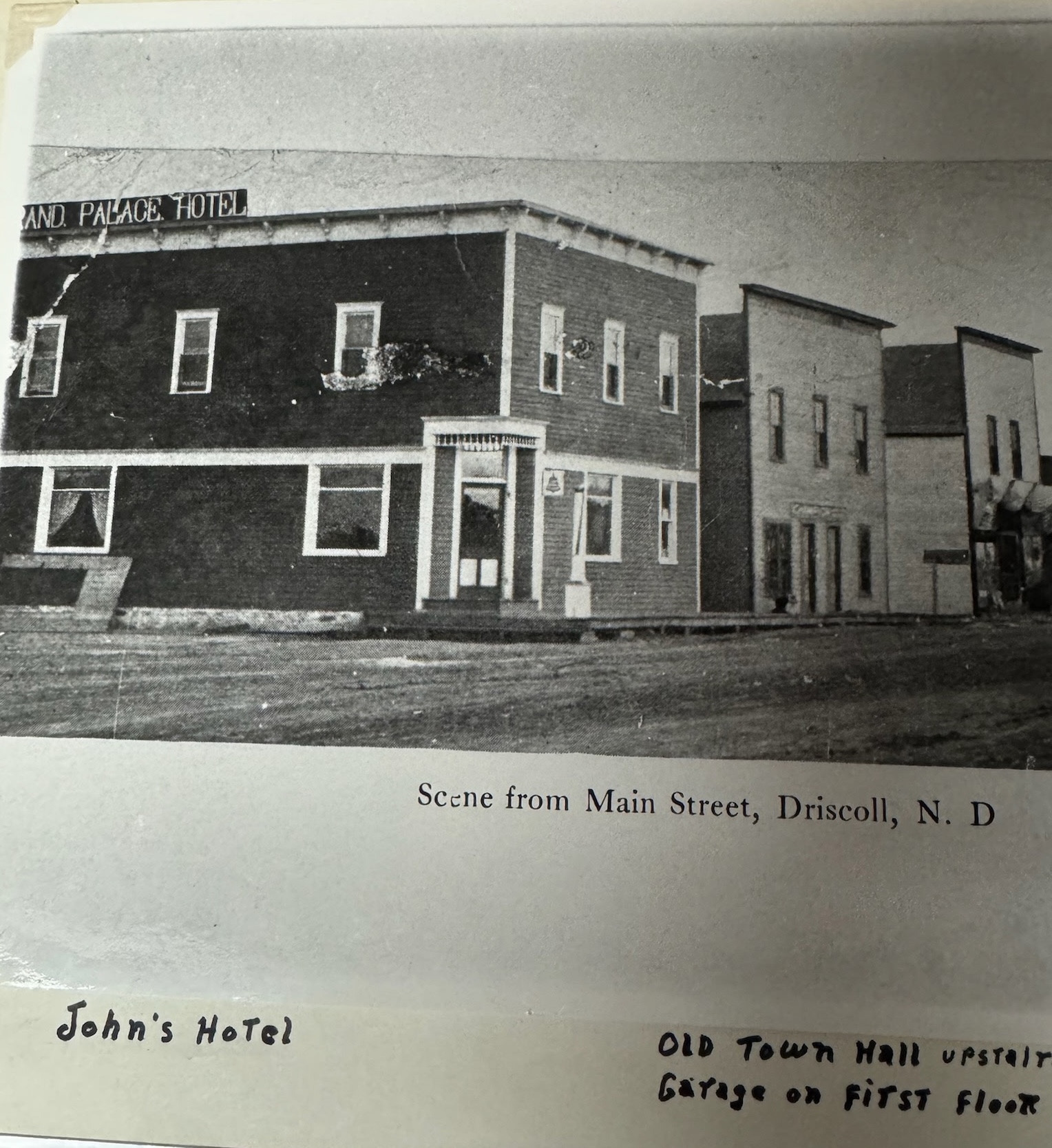
A week or so ago (August 3, 2025), I pulled off a section of Interstate 94 in North Dakota, I-94 Exit 190, in eastern Burleigh County. I’ve been reading the two published works by Era Bell Thompson, American Daughter (Chicago: University of Chicago Press, 1946), and Africa: Land of My Fathers (Garden City, New York: Doubleday & Company, Inc.: 1954).

Published in Post-WWII America, in a span of 8 years, these works take the reader from the Iowa to the Northern Plains to Chicago, and across the Atlantic Ocean to Thompson’s attempts at ancestral genesis locus. While reading the latter, last night Thompson was navigating 1950 (or thereabouts) Dar es Salaam, Tanzania, and layers upon layers of colonization that arrived to the present.

At page 201, Thompson republished verbatim the slip of paper that prevented her from being able to freely see this section of East Africa:

“NOTICE TO PROHIBITED IMMIGRANT

…Take notice that I have decided that you are a prohibited immigrant on the grounds that your entry in Zanzibar is undesirable. You are hereby ordered to remain on board and to leave Zanzibar by the aircraft in which you arrived at Zanzibar.” 

Thompson says it was signed by an agent of the Principal Immigration Officer of Zanzibar. Reading this felt like similar wine, but different bottle. History resonates that way.

It also got me thinking about how, as the time barge continues pulling us into new iterations of the present, how historians might think of ways to communicate the past to present and future generations. And provide theoretical models in which to understand those infinite pasts. How does one, for example, teach the long nineteenth century to, say, a 4th or 8th grader? It can, at that last sentence, initially feel just completely overwhelming. I mean, so much happened: empires (British, French, Spanish, Portuguese, Netherlands) duking it out. Locals and globals on the ground, perhaps carrying the flag of their dwindling empire, or hoisting a new flag of this or that nation or nation state. And all this, trying to navigate the rubric of global capitalism, locals with traditional barter trade systems that remained relevant for generations upon generations, these same barter systems now swimming in similar waters as industrial global capitalism. 

But getting back to it: this is where sense of place really matters. A person should pick up Era Bell Thompson’s books. Read them. And then consider relocating themselves, in the present, as approximately close as they can safely and legally get to her global and local footprints. I’ll keep on that course. 

View to the west, at Driscoll, along a section of the historic Northern Pacific Railroad, the historic linear corridor that would have been used by passenger rail car and brought Era Bell Thompson’s family to this area of Driscoll, Burleigh County, North Dakota, in the 1910s.

Northern Plains, Urbs in Horto, Era Bell Thompson

Three days ago it was my intent to blog some analog (lots of hand writing) notes I’ve been taking while digesting Era Bell Thompson’s 1946 memoir, American Daughter (University of Chicago Press). In 2025, doing anything analog is radical, aka, returning to the roots. So I picked it back up this late afternoon, June 22, 2025. The June 20, 2025 Summer Solstice derecho that ripped across central and eastern Northern Plains dropped 13 documented tornados (this one just east of Jamestown, near Spiritwood, video here) had everyone occupied with setting up temporary sleeping quarters in basements, and, later, trimming downed trees, along with checking in with loved ones from beginning to end from Bismarck to Jamestown to Valley City to Fargo to Grand Forks. Tragically and sadly the derecho’s violence took three to the other side.

Back to Era Bell Thompson. Two themes (non -exhaustive or -definitive) emerge from American Daughter:

Thompson narrates Northern Plains landscape beauty which, unless you as a reader don’t know this already, is part of the Great Plains literary canon. I imagine her narrative could apply to all grasslands ecosystems throughout the planet. But, specifically of eastern Burleigh County, North Dakota, in the vicinity of Driscoll, circa 1910s, have a look at this passage:

    “It was a strange and beautiful country my father had come to, so big and boundless he could look for miles and miles out over the golden prairies and follow the unbroken horizon where the midday blue met the bare peaks of the distant hills.

    No tree or bush to break the view, miles and miles of prairie hay-lands, acre after acre of waving grain, and, up above, God and that fiery chariot which beat remorsely down upon the parching earth.

    The evenings, bringing relief, brought also a greater, lonelier beauty. A crimson blur in the west marked the waning of the sun, the purple haze of the hills crept down to pursue the retreating glow, and the whole new world was hushed in peace.

    Now and then the silence was broken by the clear notes of a meadow lark on a near-by fence or the weird honk of wild geese far, far above, winging their solitary way south.

    This was God’s country. There was something in the vast stillness that spoke to the man’s soul, and he loved it.

    But not the first day.”

    Which leads to a second non-chronological theme: while on the farm in Driscoll, everyone but a few seemed to be in debt. The land was rented. Dwellings were rented. Money was borrowed to purchase equipment. Yet, while banker notes lingered over the heads of everyone, all farmers were still free. In her narrative leading up to page 49, Thompson lays the foundation for the lead up to farming working class revolution that swept the 1910s Northern Plains. Thompson speaks to her father’s perception of the 1916 rise of the Nonpartisan League on pages 50-51, teasing out the tension between the urban and rural:

    “In 1915 a growing rebellion against ‘big business’ and the ‘city fellers’ resulted in the formation of the Nonpartisan League, a political organization composed entirely of farmers. The League swept the country like a prairie fire… My father was cheered by this odd turn of events. When he left politics back in Des Moines, [Iowa] a rock-bound farm in the middle of North Dakota was the last place in the world he expected to find it again; but there it was, all about him, on the tongues of everyone, for the farmers were up in arms, drunk with their sudden strength and powers… That Saturday Pop went to Steele with Gus and Oscar Olson and August Nordland for a political rally at the Farmer’s Union hall. Something about Townley, the dynamic little organizer, inspired Pop, set him to thinking. Two weeks later, when Lynn J. Frazier, the League’s gubernatorial candidate, came through Driscoll campaigning, Pop was the first to shake his hand.”

    I’ll continue to analog my way through American Daughter. On chapter 4, now. I got to texting a bit about Era Bell Thompson with Bernard Turner with Bronzeville-Black Metropolis National Heritage Area (BBMNHA). It turns out Thompson’s papers are with the Chicago Public Library, linked here. Bernard and I are optimistic about developing a BBMNHA and Northern Plains NHA talk. Thompson was a part of both the urban and rural in Great Plains and Midwest history, and all the comparisons and contrasts and tensions that entailed. My next scheduled stop will be to get on the ground in and around Driscoll, to revisit the Era Bell Thompson sense of place. Be like Herodotus: also plan visits to go where the history was made, urban or rural. More to come on that.


    The Mining of Our Raw Attention Ore

    Conversational and literature intersections as of late: the Attention Economy, and how and why social media algorithms are structured to attract and absorb as much attention as possible. Attention has long since been digitally commodified, or turned into a raw material resource. A person could really think back to when this all started. And like any thread in history, it’s just one thing after another. Does it start with MySpace, the flashpan social media platform overtaken by Facebook? Or does it start with the rise of the public internet, the routers that plugged into land line phones, where one would announce — using an outside voice — throughout the household, “I AM GETTING ON THE INTERNET! PLEASE STAY OFF THE PHONE!”

    Back to the Attention Economy: Jonathan Haidt has touched a book selling nerve in this capacity with his The Anxious Generation: How the Great Rewiring of Childhood is Causing an Epidemic of Mental Illness (Penguin Press, 2024). A good read that, like all works, should also be critically evaluated (promoters on the back of the book refer to Jon as a “prophet” — prophets can be great because you can just follow them without thinking anymore). Haidt has either been able to motivate or has been motivated by public policy (North Dakota’s example here) where states have been legislating a required detachment from smartphones when the school bell rings in the morning to when it rings in the late afternoon. I’ve also been revisiting Michaeleen Doucleff, Hunt, Gather, Parent: What Ancient Cultures Can Teach Us About the Lost Art of Raising Happy, Helpful Little Humans (Avid Reader Press/Simon and Schuster, 2021).

    I kind of wish I could find the bibliography I put together for Bill Caraher in like 2012 or 2013, for a Digital History graduate seminar he invited me to co-lead. Building that bibliography of peer-reviewed monographs was another important butte/mesa I was able to summit, as it gave a window into the digital architects who were on the backend of the rising social media platforms. The digital architects were considering and figuring out ways to capture more and more of the raw Iron (Attention) Ore (hereafter Attention Ore) of each individual desk- and lap- top and, increasingly, smart phone user.

    And it turns out in the Attention Ore mining economy, the social media algorithms feed rage. Because when someone is enraged, they tend to pay laser focused attention on what is enraging them (or what the perceived source of rage is). In an evolutionary anthropology sense, we know rage and anger is what evolved us out of being able to momentarily escape the saber tooth tiger. The drawback (one of several) of anger and rage is that while we laser focus on one specific attention, there is a lot of our surroundings (both in space and time) that we do not attend to. Which, I think one can see, is or can become, quickly, a large problem. So where is all this going? I think it’s moreso me thinking about the way I think about interacting with social media platforms. And whether or not to act or interact with them. Scrolling through the social medias? See an article you like? Click on it? That click is logged on the back end of your user profile. Now the algorithm is learning from you. Have audible conversations around your smart phone? Then within moments start seeing similarities of stuff scrolling by on your smart phone that was thematically similar to the audible conversation you just had? Yup. It’s all tracking. And I’m not tracking down the path of absolutes, as in giving up the social medias. Or abandoning smart phones (Besides, as Obi Won Kenobi reminds, only Sith Lords deal in absolutes). But being conscious of the digital architecture, or the digital or structural aquariums that we are all swimming through is important. It allows us to mentally maintain and gauge. An ability to better choose when we see something whether we want to become outraged. Or whether we want to maintain degrees of cerebral composure.


    December Notes: Focusing on the Immediate

    It’s amazing when a person is so tired around bedtime that the brain can start cycling up and encouraging all sorts of imagined roadmaps that thwart sleep. I’ve taken to reading at night, or at least before bed. Usually a couple pages of this or that just after everyone else has entered into slumber. 

    Last night I revisited Ryan Holiday, The Obstacle is the Way: The Timeless Art of Turning Trials into Triumph (Portfolio/Penguin, 2014). Holiday touched a global current with his popularization of stoicism through a modern lens. So many titles. He has done well.

    I can’t say whether he bumpers his modern versions of stoicism with original ancient texts. Sometimes I text snippets of his thoughts to colleagues who hold PhDs in the ancient Mediterranean world to get their thoughts on it. But the greater purpose he has is to bring readers into mental calm in this ever increasing industrialized planet: everything it would appear tugging at our attention spans (we live in an attention economy), the digital screens being the biggest culprit. 

    This passage resonated a bit. At least last night. So passing along in the case that it helps others:

    “It doesn’t matter if this is the worst time to be alive or the best, whether you’re in a good job market or a bad one, or that the obstacle you face is intimidating or burdensome. What matters is that right now is right now. The implications of your obstacle are theoretical — they exist in the past and the future. We live in the moment. And the more we embrace that, the easier the obstacle will be to face and move.” p. 47.


    More Notes on Clell Gannon: 1920s Census and Cultural History

    Just pecking out some more notes to add to the texture of the Clell Gannon project, working on revisions with The Digital Press at the University of North Dakota (Grand Forks).

    After revisiting Willa Cather’s 1923 (September 5) essay, “NEBRASKA: The End of the First Cycle” in The Nation (117: 236-238), and particularly after reading Cather’s demographic cross section slice of a day in the life of 1923 Nebraska: “On Sunday we could drive to a Norwegian church and listen to a sermon in that language, or a Danish or a Swedish church. We could go to the French Catholic settlement in the next county and hear a sermon in French, or into the Bohemian townschip and hear one in Czech, or we could go to church with the German Lutherans. There were, of course, American [meaning American English] congregations also… I have walked about the streets of Wilber, the county seat of Saline County, for a whole day without hearing a word of English spoken.” And, a couple sentences later, Cather notes that “Our lawmakers have a rooted conviction that a boy can be a better American if he speaks only one language than if he speaks two.”

    North Dakota, in the year 1900, also had a diverse immigrant population with a greater percentage of foreign-born than any other state at that time in the Union. I don’t have the percentage number right in front of me. But from memory it is something like 78% foreign born. Prairie Mosaic is the reference I’ll double check to confirm that number, as this provides ethnohistoric ground-truthing, research that took place from the 1960s through the decades following said 1960s.

    U.S. Census 1920 bulletin on North Dakota. Page 1.

    This returns to Clell, and thinking about the context in which he wrote his Songs of the Bunch Grass Acres, and the reading audience who had want or access to his 1924 Western Americana poems. In 1920, Orin G. Libby’s article, “The Arikara Narrative of the Campaign Against the Hostile Dakotas — June, 1876” ran in North Dakota Historical Collections (Bismarck, North Dakota, Volume 6). Aaron McGaffey Beede collaborated with Libby on this. Beede was the interpretive and translation conduit between the Arikara scouts and Libby. Libby’s approach was one that would speak to Custer-philes, with an angle that may appeal to Custer-philes who may have had a broad brush stroke (see racist) outlook on all of Native America. With Libby popularizing how Arikara fought alongside the U.S. Military in 1876, he was making a pitch (fortified with numerous data points) that demonstrated their patriotism. In 1918, two years before Libby published his Arikara narratives, the Great War ceasefire (armistice) happened. Up to 12,000 Native American soldiers participated in World War I, this at a time when Native Americans still didn’t have the right to vote. The Indian Citizenship Act of 1924 would change all of this, allowing tribal citizens the Federal status of voting. However, the U.S. Constitution still left it up to individual states to decide who had the right to vote. So Libby’s narrative that set down the Arikara memories of the 1876 Battle of Little Bighorn/Greasy Grass would also have spoken to that political activist line of thinking.

    So what does all this mean of and for Clell Gannon’s 1924 Songs of the Bunch Grass Acres? I don’t have much more to say beyond the above, other than this is some of the context in which Clell wrote. A multitude of ethnic languages from the immigrant populations could be encountered in the urban and rural of the Great Plains and American West. Tribal citizens were granted another incremental federal right to vote. Libby lobbied on the Arikara behalf through historical memory and narrative. And Clell continued his relationship with the major shapers of the early State Historical Society of North Dakota, making his poetic contribution to the love of northern plains place through said poems.


    Armistice Day 2024

    Over the course of the last 100 years, Armistice Day evolved (things evolve, it’s okay) into the November 11 day that is called Veterans Day. I really do enjoy re-centering Veterans Day by returning to the sort of pieces of the past that pulls from its origins as Armistice Day. Earlier today, I texted this to a friend:

    …the 11th hour of the 11th day of the 11th month, the machine guns fell silent and the cease fire was put into place. The geopolitical axes would continue to grind against the sharpening wheel, as the ‘surrender’ terms were too intense and could never have been accepted by the German-speaking people. The Austro-Hungarian Empire had imploded. In its wake, all sorts of nations emerged, and with that ethnicities that started asserting themselves as having the “birthright” origins of those nations. “No, my people were here first. Here’s a history that proves it.” All kinds of insanity like that. This also gave rise to internal political infighting, creating a power vacuum that allowed for the rise of insane political groups.

    The above is where my mind drifts on the 11th hour of the 11th day of the 11th month. It was the Great War (there wasn’t supposed to be a second Great War, just the First).

    Of the First World War, one rather particularly good monograph (and recent) that I’ve gotten into the first couple introductory pages is John Connelly, From Peoples Into Nations: A History of Eastern Europe (Princeton University Press, 2020).

    An excerpt below:

    “War broke out in Europe in 1914 because of a deed carried out in the name of a people no one had previously heard of. That June, after years of internecine turmoil and armed conflict in southeastern Europe, a Bosnian Serb named Gavrilo Princip shot and killed Franz Ferdinand, heir to the Habsburg throne, in Sarajevo. The assassin said he was acting to defend the interests of the Yugoslavs, or South Slavs, who were seeking independence from the Austro-Hungarian monarchy.”

    Connelly pulls the reader paragraph after paragraph through the decades following 1914:

    “When the war ended in 1918, statesmen and revolutionary activists made a new Europe, drawing on the impulse that had taken hold of Gavrilo Princip and his friends: that peoples should govern themselves. Clothed in the words of national self-determination, this impulse was raised as a high political standard by both Bolshevik leader Vladimir I. Lenin and US President Woodrow Wilson, denoting socialism for the first, liberal democracy for the second.”

    Ideological lines, whether they existed in reality or not, were drawn in the geopolitical sand. Here’s another zinger from Connelly:

    “…nationalists are no more resistant to understanding than any other actors in history. They are guided by motives that are open to reconstruction and analysis. What seemed rational to one side of the nationality dispute usually seemed irrational to the other, and in fact their deeds confound any attempt to divide reason from unreason. Take Gavrilo Princip. On one hand, his act is easy to understand. When Austrian authorities apprehended him, he said he knew ‘what was happening in the villages.’ Thanks to education provided by the Austrian regime, which had ruled Bosnia since 1878, he knew that Austria had done little to alter traditional patterns in the countryside according to which poor Christian sharecroppers — like his parents — worked on properties owned by Muslims and were condemned to second-class lives. He was one of nine children, but five of his siblings had died in infancy. His father worked several jobs, one of which was lugging heavy bundles of mail up and down mountains, even at an advanced age.”

    It just goes on and on like this, unpacking the late 1910s until he pulls us up into the 1970s. Get Connelly’s book on your shelf. Or in your local library shelf. Each reader gets to kind of tease out how to bring it from the 1970s into the 2020s.

    During Armistice Day, my brain also (invariably) wanders toward The Pogues rendition of “Waltzing Matilda.” It poetically unpacks the global scope of the Great War. Lyrics of it all below:

    “When I was a young man I carried my pack
    And I lived the free life of a rover
    From the murrays green basin to the dusty outback
    I waltzed my matilda all over
    Then in nineteen fifteen my country said son
    It’s time to stop rambling ’cause there’s work to be
    Done
    So they gave me a tin hat and they gave me a gun
    And they sent me away to the war
    And the band played Waltzing Matilda
    As we sailed away from the quay
    And amidst all the tears and the shouts and the
    Cheers
    We sailed off to Gallipoli…”


    Clellification for Halloween, 2024

    I’m currently working on a project with Bill Caraher who is the pilot of The Digital Press at University of North Dakota. For a year, or beyond a year now, Caraher and I have been thinking about Clell Gannon, and Gannon’s 1924 publication, Songs of the Bunch Grass Acres (SoBGA). I’m working on revisions from a first draft submitted to The Digital Press, and after letting editorial comments sit with me for a while, I have decided to recalibrate a bit of the original narrative. Like it is the case with many texts, the more you read, revisit, and think about SoBGA, the more the text starts speaking to the reader in different ways. The recalibration of the first draft will look something like this:

    1. Clell Gannon intellectually situates (indirectly and directly) his 1924 SoBGA into the current of Romanticism. And not the romanticism that you’re thinking about. Like he’s not poeming (poem is now a verb) the reader to go pick flowers and let your feelings rather than your brain dictate your moment to moment actions. Rather, in the original intellectual vein of Romanticism (which was a counter balance to the, ahem, Enlightenment), he’s saying (I’m paraphrasing here), Hey, this northern plains and Great Plains and Western Americana place we all live in: this place is completely worth living in. And not only is it worth living it, it deserves our contemplation, and this place is deserving of a sustained relationship with us.
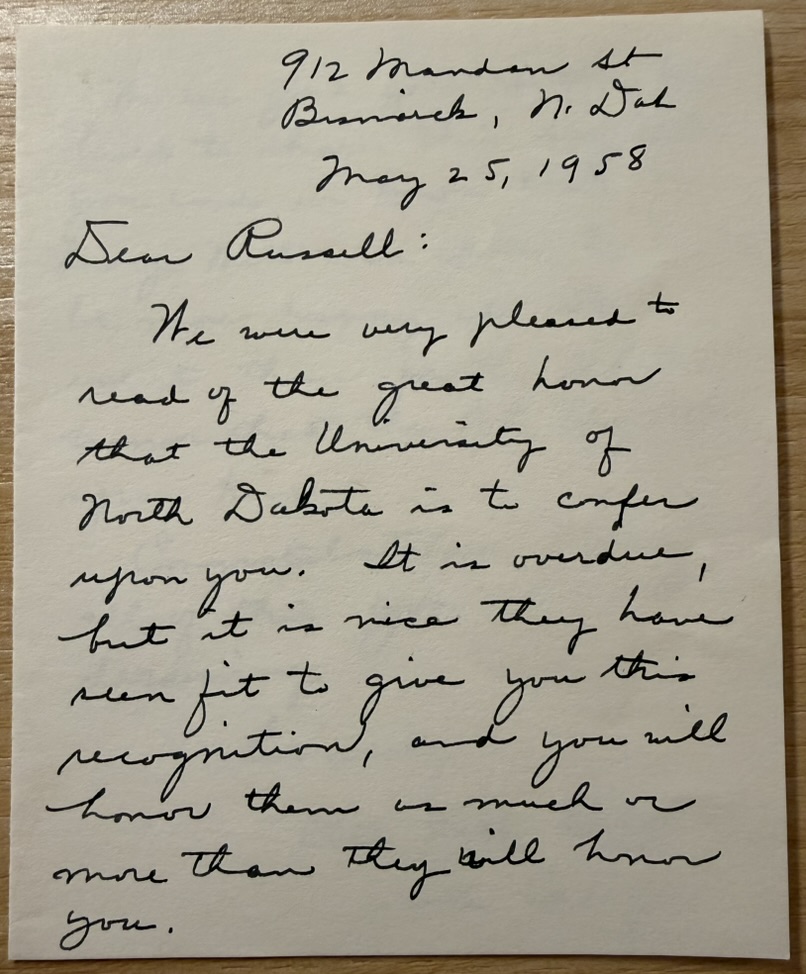
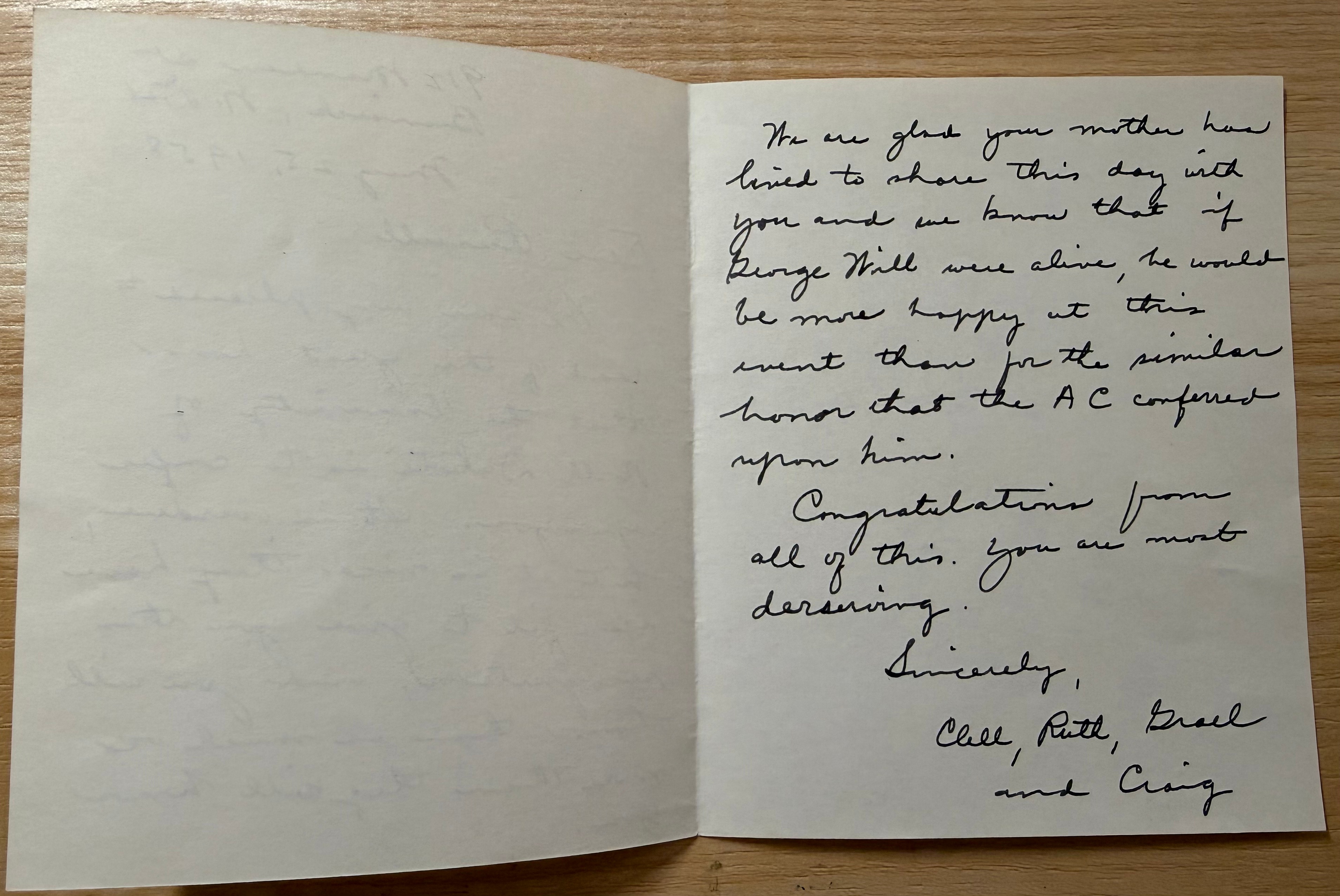
    2. Who else did Clell Gannon roll with at this time? He was a mover and shaker. Also one who was a joy to be around. Thoughtful. And nothing that is in his writings, or others who have written about him, suggests he was a chest thumper. He was friends with Russell Reid and George Will (son of Oscar Will and his vegetable seed empire). The same Russell Reid who acted as secretary of the State Historical Society of North Dakota for decades: when it evolved from the basement of one of the buildings on the State Capitol Grounds eventually to the building that today houses the State Library. Clell would likely lose his mind (in a good way) if he saw the geothermal-heated footprint of today’s State Historical Society of North Dakota, and in-motion expansion of the Military Wing.
      • Clell was unable to physically make the requirements to be mustered into World War I. I do wonder what contributions he might suggest for interpretive exhibits in the 21st military wing following the Great War of the 20th century? Might they have read something along the lines of what Willa Cather spoke of in 1922? “…the world broke in two in 1922 or thereabouts…” In 1922, Cather had seen veterans return from the Great War, and as returned veterans, they were told (not even really told) to navigate the ascent of the industrial capitalistic roaring 20s.
    3. In conversations with Shadd Piehl (ahem, recognized poet of the American West, cowboy poet, teacher, listener, encourager of the written and spoken word, and former bronc rider, etc), Piehl noted that Clell reminded him of the poem American Names that Stephen Vincent Benét set down in 1927, or 3 years after publication of SoBGA. So the revisions of this draft will take into greater account a couple other datum points, including Willa Cather and Stephen Vincent Benét.
    4. Clell Gannon’s introduction (very short) of SoBGA is good.
      • In the first paragraph he sets out his flag of love of regional place. Not nationalistic love. But of the regions within this nation: northern plains. Great Plains. American West.
      • The second paragraph is on about poetic structure, meter to be exact, and with a sampling of how a west of the Mississippi River person pronounces “coyote”: say ki’ot, Clell instructs, as two syllables. Don’t get all sophisticated and say “ki’ot’eee.” Don’t do that. Nobody would ever do that. Use two syllables to say coyote, and the meter of the poems will flow.
      • The third paragraph calls out Florence Harriet Davis, librarian in 1924 of what would have been the beautiful Carnegie Library in Bismarck (it was completely razed in the 1970s or 1960s for progress. Poetically, a parking ramp is located there today.). Who is Florence? In a word search in the Library of Congress searchable newspaper database, she surfaces here and there in Bismarck Tribune articles.
      • Clell’s final poem in SoBGA is to Hazel Dell Gannon, who at 17 years old passed away in what Clell describes as Grand Valley, South Dakota. Maybe she was preparing to attend teachers college? Or something? I Google’d Grand Valley, and the closest thing that surfaces is place names in Lincoln County, southeastern South Dakota.
      • Clell signs off on his short introduction with “Bismarck-by-the-river, North Dakota.” Today, in 2024, this is another great reminder to readers to recenter their view of North Dakota’s capital city as one that is a river city as well. Clell understood the importance of the Missouri River to the early history of the region and, eventually, to the state.

    Okay, that’s all the Clell-ification I have for the moment. Gotta get after the other items for this Thörsdag, October 31, 2024, Halloween Day (the pumpkins were carved last night).