Monthly Archives: February 2026

Medora and Cannes: Heritage Tourism, of the Garden Variety Sort

I’m currently waiting for my family to rise for the morning, and reading Sergio Luzzatto, The First Fascist: The Sensational Life and Dark Legacy of the Marquis de Mores (Cambridge, Massachusetts: Harvard University Press, 2026), and came across a contextual description of the historic landscape architecture in Cannes, southern France, where the Marquis (aka, Tony, or Antoine de Vallombrosa — names get really altered and complex when one is born into the invented tradition of the aristocracy) romped around as a child. Luzzatto does good in providing this 1870s-ish description of the social climate of this garden. I’ll just quote Luzzatto below here in this paragraph from page 30:

Already in the late 1860s, tourist guides were calling the garden of Villa Vallombrosa one of the major attractions of Cannes, praising the generosity of the owners for allowing tourists to visit “the magnificent garden.” It was an “authentic Eden,” insisted the accounts of the early 1870s. With the efforts of the skilled horticulturists the duchess hired to manage the garden, it was soon celebrated far beyond the limits of Provence. The crowds of visitors became so large that the duke decided to establish at the entrance a system for collecting donations to benefit the local hospice. As for the duchess, despite her health problems, her reputation as the driving force behind the elegant, salon-like, charitable society gathered on the Riviera ended up earning her — in the very guide that coined the name “Côte d’ Azur” — the posthumous title “Queen of Cannes.”

So this got me remembering an on the ground visit in the western North Dakota city of Medora the 1930s Civilian Conservation Corps heritage landscape architecture that is a garden dedicated to Tony, aka, Antoine de Vallombrosa, aka, the Marquis de Mores (one can extend their pinky finger while going through this name sequence if one wants). Have a look at the photos of mine below from a couple summers ago. Was the 1930s landscape architect who guided this CCC construction in Medora imagining a sort of symbolic nod to the 1860-70s fancy garden in Cannes, France that Tony spent his childhood running in? I don’t know. But all research begins with questions.
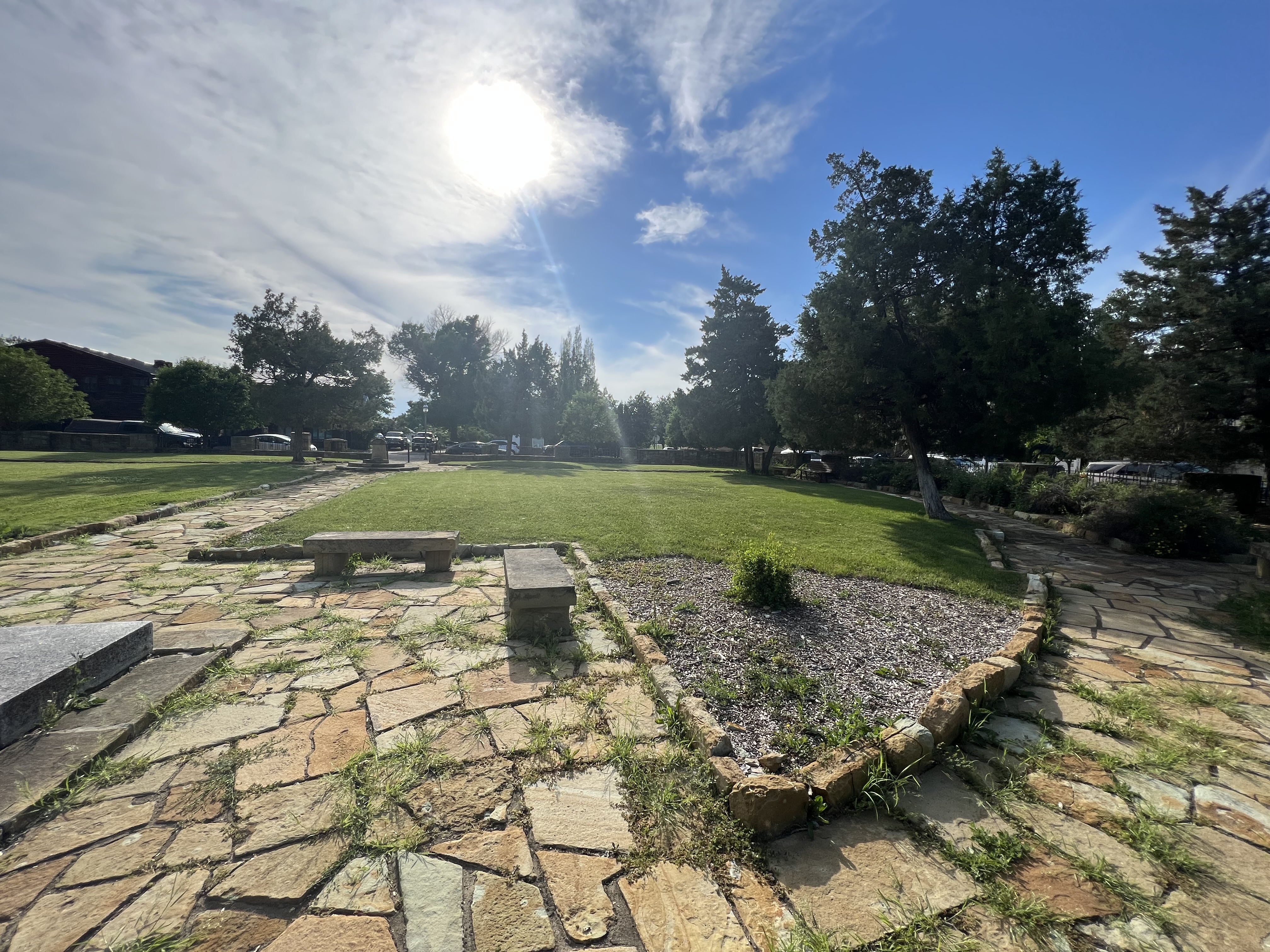
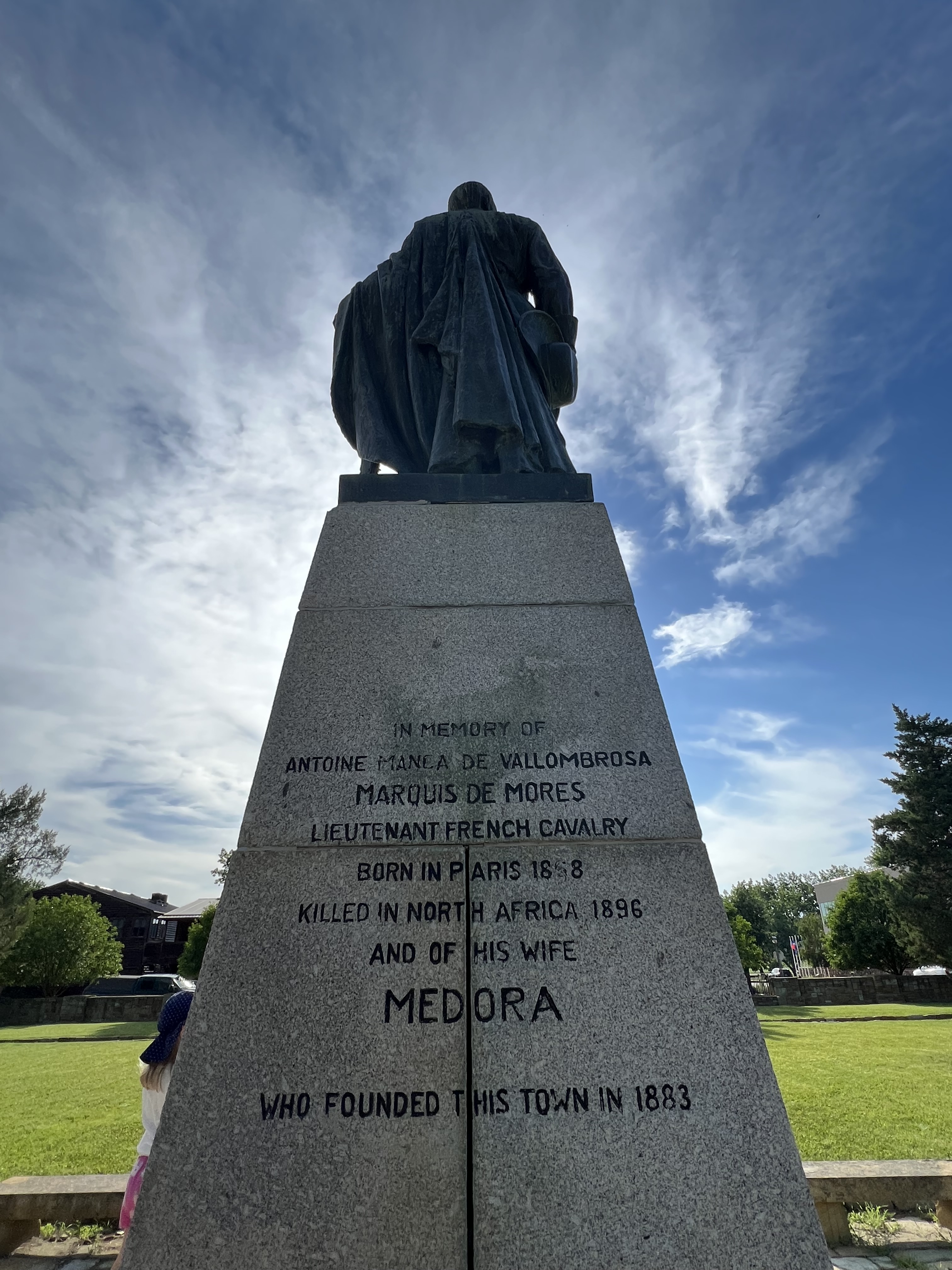
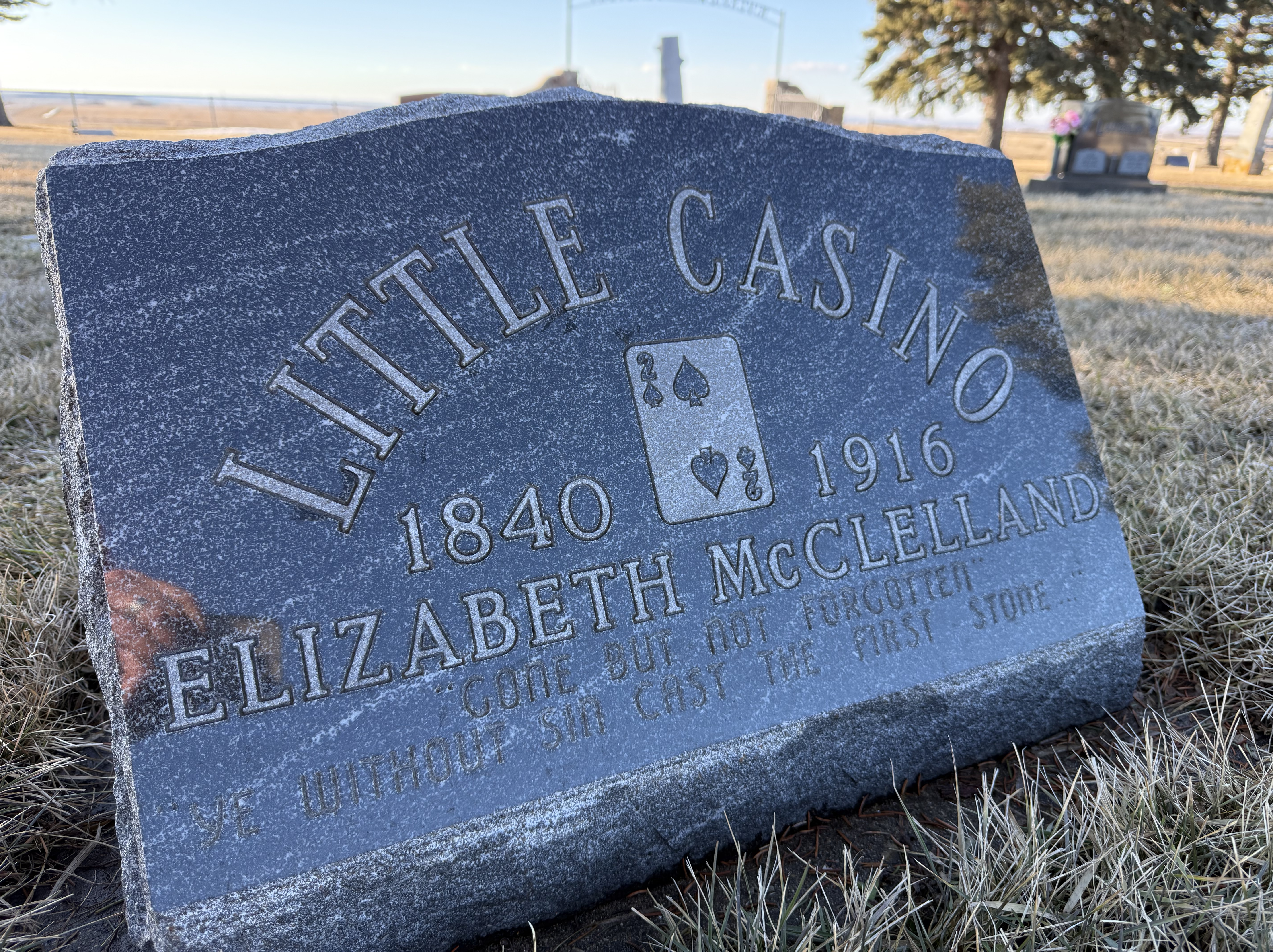
Directions to the Grave of Little Casino – Elizabeth McClelland (1840-1916) Dakota Territory & North Dakota

“Yeah, it’s Little Casino. That was her nickname. One of the earliest brothel madams in Dakota Territory, specifically in Bismarck, Dakota Territory. Her final resting place is a cemetery near Wilton, North Dakota.” The question often follows, “How do you get there?” This short blog post is directions to that spot. So when asked I can find this blog and just text it along for directions. This post isn’t about who Elizabeth was, as in biography. That’s for other posts. Now, on to the headstone in the cemetery.

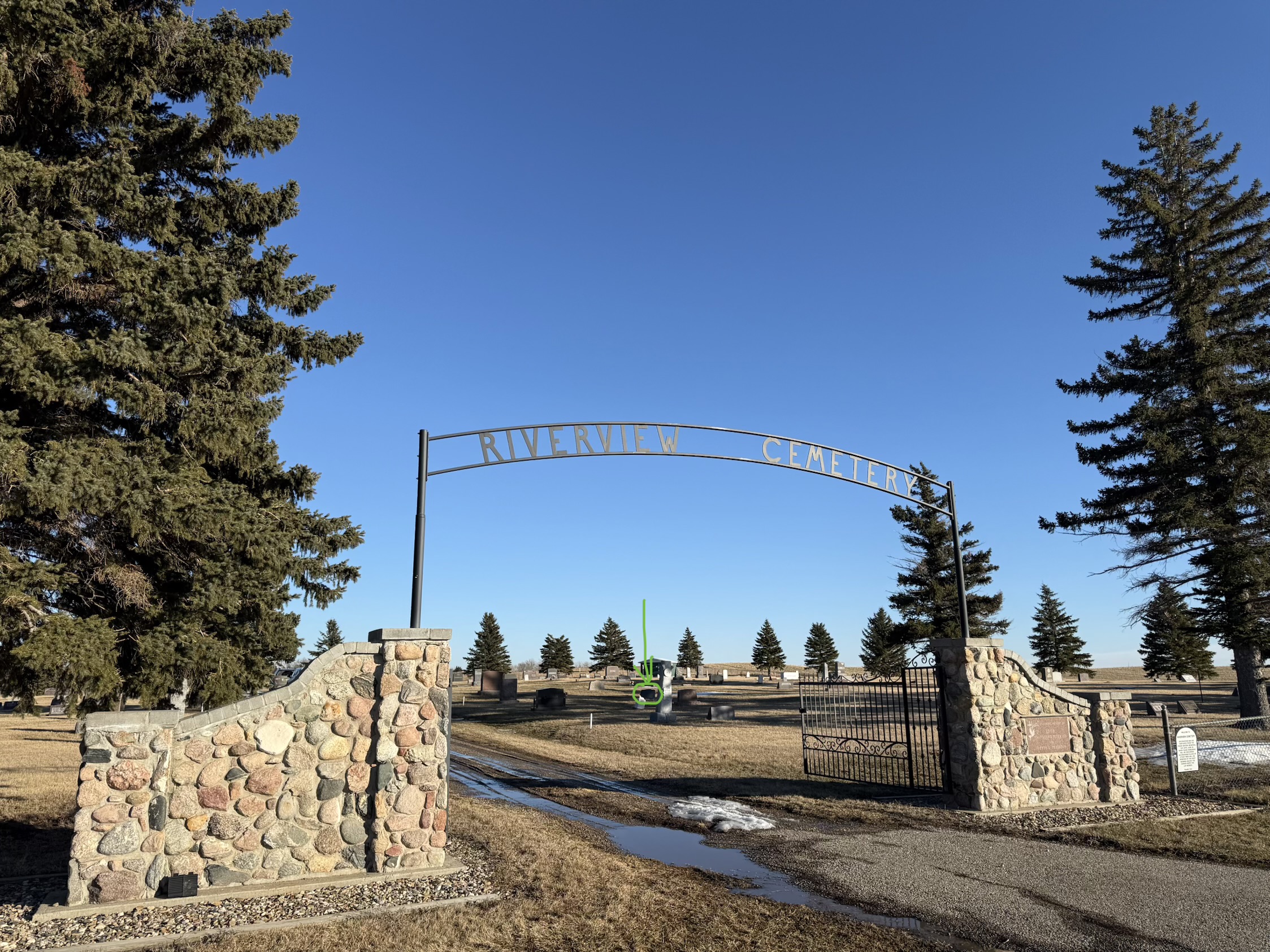
Heading into Wilton from the north or south on North Dakota Highway 83, turn west onto 318th Avenue NW/Burleigh Road from Highway 83. You are looking for Riverview Cemetery. It’s only about 1/4 mile west on 318th Avenue NW. Just to the north you’ll see a square perimeter of conifers. By now you’ll notice the headstones, too. Yes, that’s it. Below is a pic of the west facing entrance to Riverview Cemetery, along with a little green arrow in the photo. I added this when I was texting to some others the location of McClelland’s headstone.

Boom. Now you have it. Also, at least a couple regional historians have discussed one of the world’s oldest professions in the context of Dakota Territory and the Fargo-Moorhead area. So you should pick these two titles up as well. Carroll Engelhardt, Gateway to the Northern Plains: Railroads and the Birth of Fargo and Moorhead (Minneapolis: University of Minnesota Press, 2007) and Kristen R. Fellows, Angela J. Smith and Anna M. Munns (editors) Historical Sex Work: New Contributions from History and Archaeology (University Press of Florida, 2020).

Inscription at bottom of McClelland’s headstone: “Ye without sin cast the first stone…”


Abstract for 61st Annual Northern Great Plains History Conference

Earlier today I submitted my abstract to the listed coordinator for the 61st annual Northern Great Plains History Conference hosted this year at Montana State University from October 28-31, 2026. 

Abstract submission deadline is April 17, 2026. The link is here.  

My abstract is below👇🏼. We will see you this autumn in Bozeman:

An Irish-American Memory of Little Bighorn: Patrick Byrne’s 1926 Soldiers of the Plains

Abstract: In 1926, Patrick Byrne published Soldiers of the Plains, a book that introduced an Anglo-American readership to the Battle of Little Bighorn/Greasy Grass (LBG/GG) from a Native American perspective. Byrne deliberately published this work at the 50th observance of LBH/GG (1876-1926). As an orphaned Irish immigrant from Roscommon, Ireland, and a resident of Bismarck, Dakota Territory and later North Dakota, Byrne was intimately familiar with historical memory of nineteenth century colonization. He understood the nineteenth century Anglo-American attempted conquest of Northern Plains Tribes as analogous to the nineteenth century British imperial occupation and attempted colonization of Ireland. This paper explores the prologue to Byrne’s life that is the Irish potato famines, his emigration from Roscommon, Ireland to Bismarck, Dakota Territory, his professional experiences that led to his 1926 Soldiers of the Plains, and how his imprint throughout the Northern Plains persists to this day.