
On June 25, 2026, Shadd Piehl, Dakota Goodhouse, Prairie Rose Seminole and I physically visited Little Bighorn Battlefield National Monument (LBBNM) for the scheduled 150th (1876-2026) of the battle. That day, at approximately 2:58pm (mountain time), just after a 2-hour rain shower, the clouds parted and we were given a view of all the markers on the hillside along with smells of prairie grasses, and a distant horn from the Burlington Northern Santa Fe’s locomotive. The latter train noise provided a nod to why this battle took place 150 years prior, as the U.S. Military worked hand in hand with United States policy makers and the industrial railroad (the Northern Pacific Railway at that time, the Northern “N” being the part of BNSF today) to punch linear train tracks east-west across the continental interior. It was a global theme. (I’m not going to search for it now, but you can locate at about some time in the 1860s, a quote from Leo Tolstoy bemoaning or critiquing the railroad punching through the Siberian forests — railroads were punching linear everywhere).
Shadd and I rode out together to LBBNM that morning from Medora (which, as well, dedicated and opened the Theodore Roosevelt Presidential Library on July 4, 2026). From Interstate 94 heading west, we decided to take the Colstrip Exit, and head south on Montana Highway 39. While on that stretch, Shadd started chatting a bit about the late Wallace McRae, and one of his popularized cowboy poems, Reincarnation. Shadd mentioned that McRae tended to encourage the younger up and coming cowboy poets to push their craft in new directions. His words reminded me of the thoughtful historians I have had the privelidge and intensity to know over the years who also have done the same.
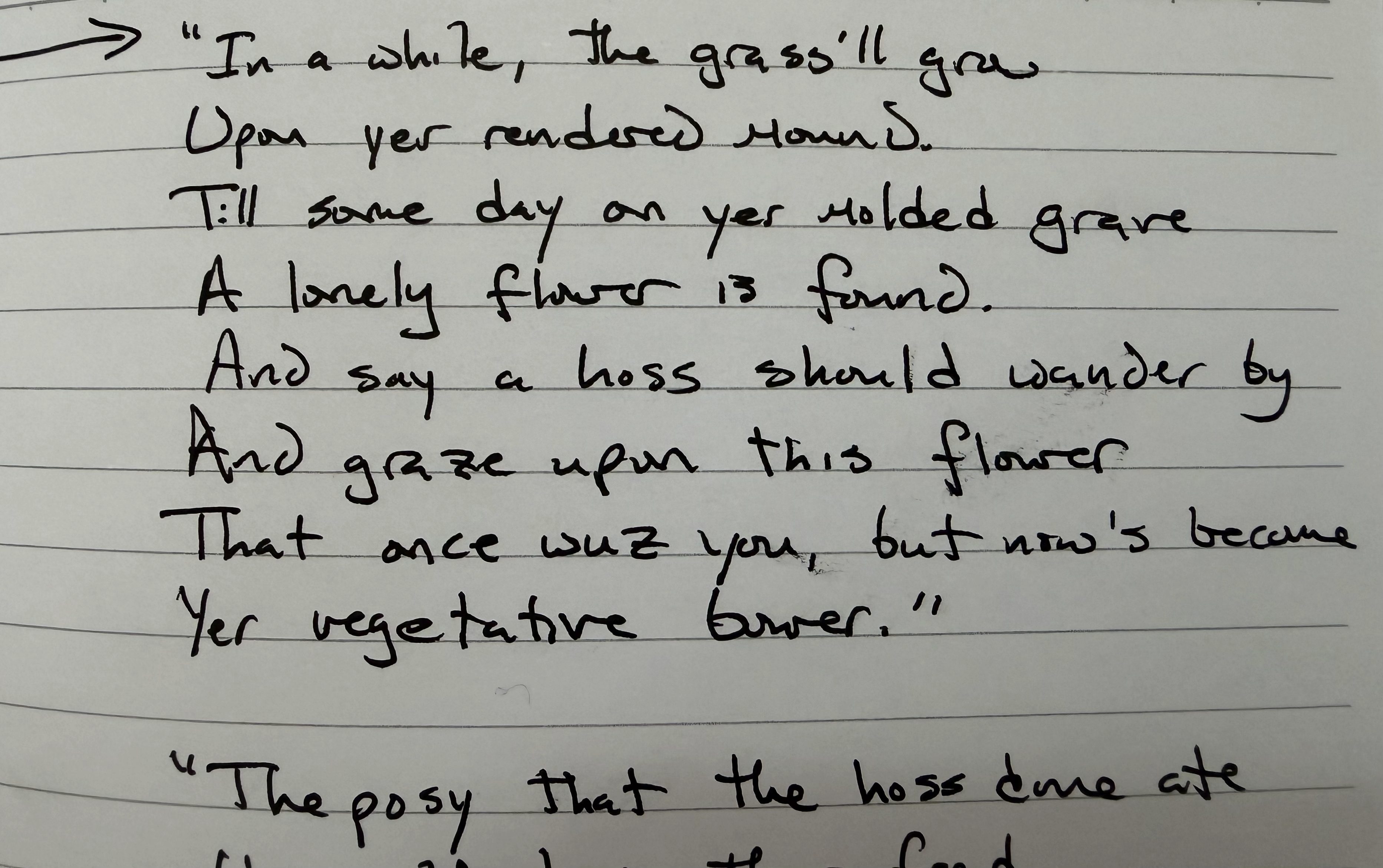
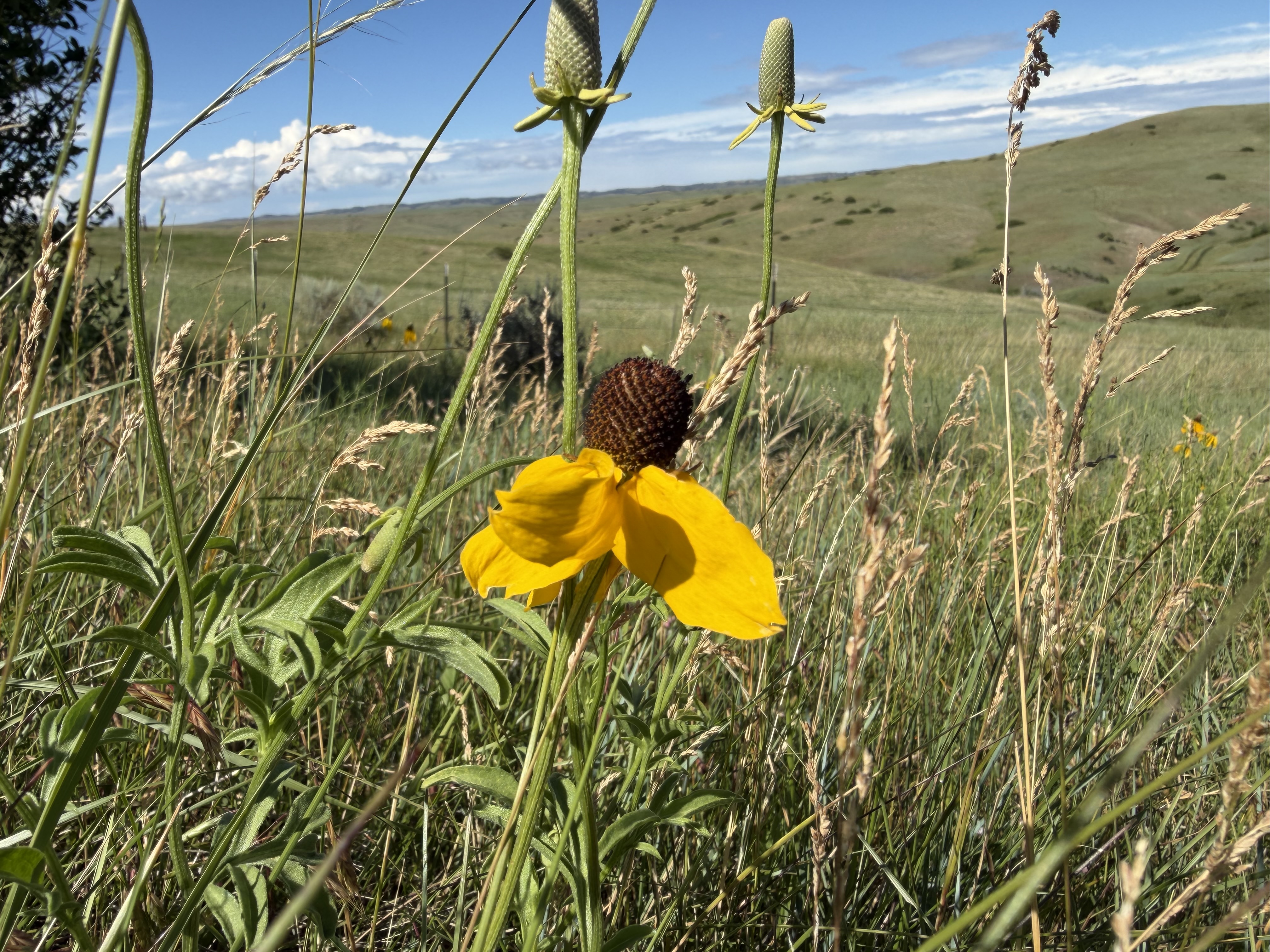
I didn’t get to read and sit with McRae’s “Reincarnation” until after I returned to the Northern Plains from LBBNM. I sat down on June 29, 2026, around 12:24AM (central) and transcribed it word for word into my journal. Writing in the analog has always impressed new paths into my memory better than typing it out on these here digital platforms. The third section of McRae’s poem is as follows, and below that a picture from our June 25, 2026 site visit. I thought about that and the time we spent at LBBNM, 150 years later, 1876 to 2026:

 The Edge of the Village
Leave a comment