Tag Archives: Tom Isern

Historic Garden Varieties Continued: Western Northern Dakota Territory and Southern France

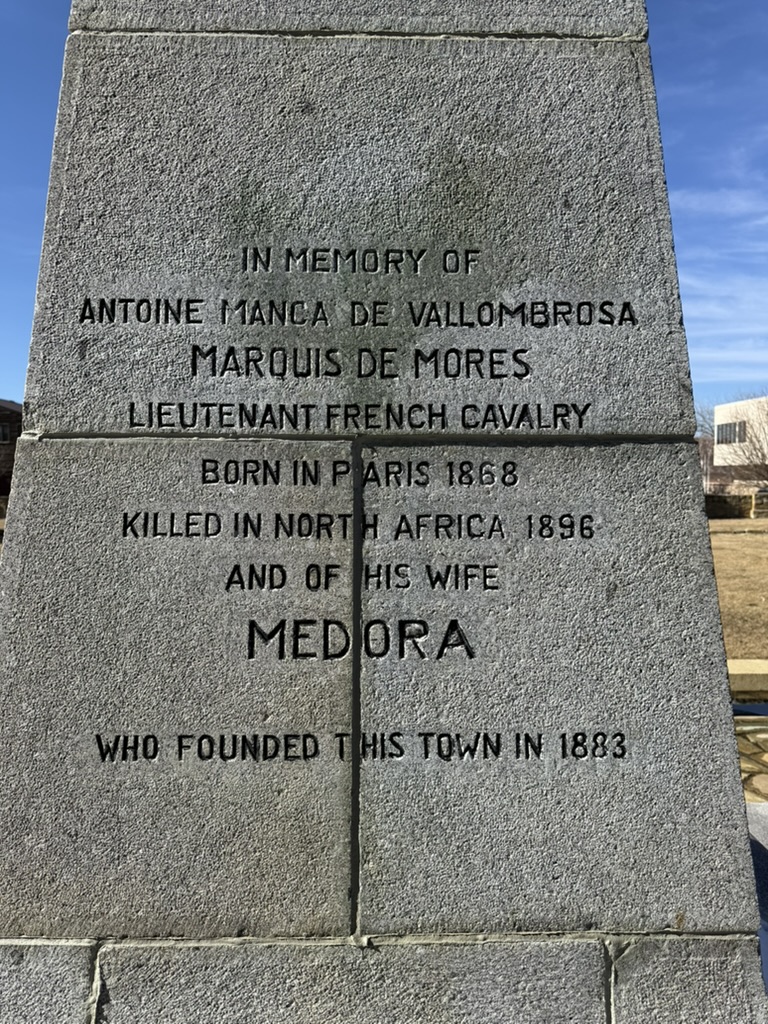
In the last couple weeks I found myself along with a small group of colleagues in Medora, western North Dakota. The four of us had a bunch of really good professional reasons for being in Medora, and as I needed to step away from the larger group to take a digital meeting phone call (complete with airpods), I decided to listen in on the digital meeting from the historic Marquis de Morès garden that the CCC built up in historic Medora, North Dakota. Just some general technical notes during the site visit.

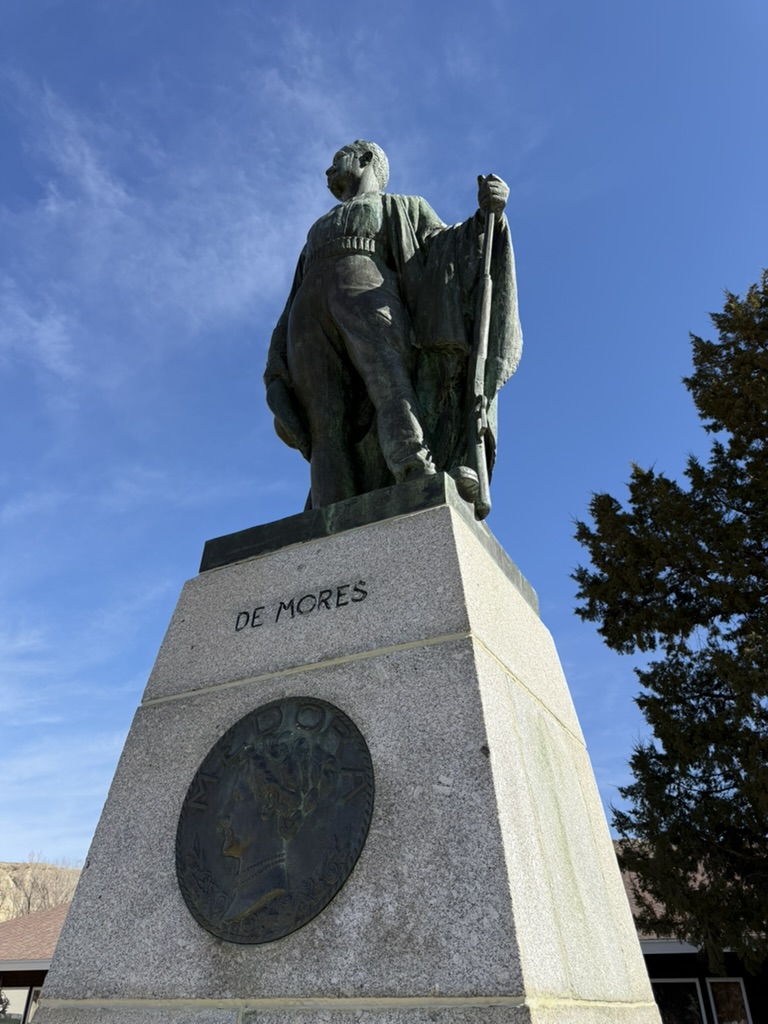
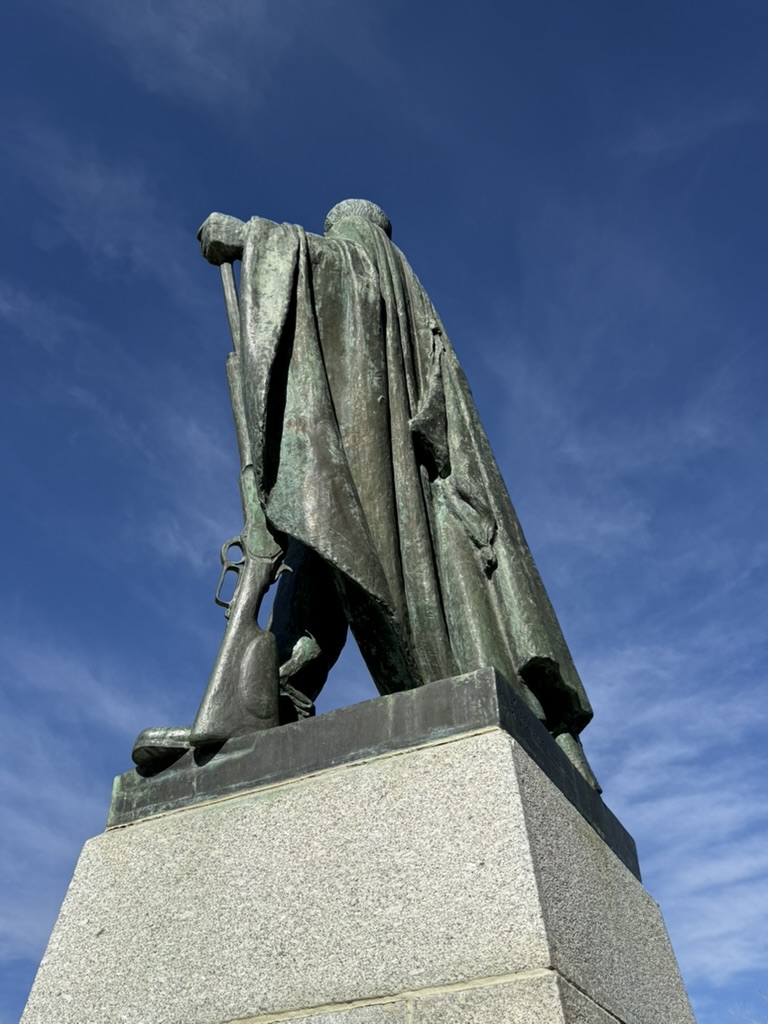
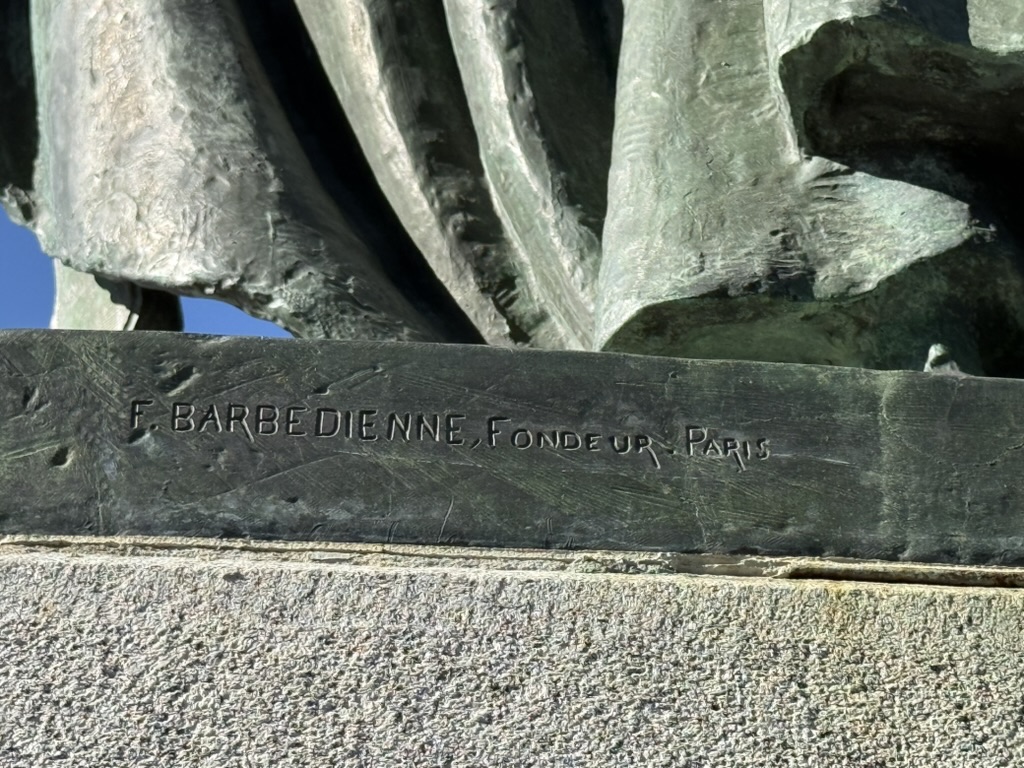
During heritage and history nerd training with Tom Isern at North Dakota State University, one thing Isern keyed his students in on was to look for inscribed names at the bases of memorials, statues, and sculptures. Names. Years. Anything. This seemingly simple technique was used when reviewing the Marquis de Morès’ pedestal statue. On the statue east elevation, at the base of the bronze, is the first initial, surname, title, and city, that appears in this order: F. Barbedienne, Foundeur. Paris. It’s a reference to this chap who has a body of work still floating around the globe that industrial capitalists continue to help make more valuable through some sort of emotional structural demand (aka, “market forces.”).

The years that Barbedienne lived, 1810-1892, and the years that this statue would or could have come about placed in Medora, did not match: the Marquis was only in the western northern Dakota Territory badlands in the 1880s, and he got himself killed in the 1890s. Barbedienne isn’t mentioned in the index of Sergio Luzzatto’s 2026 The First Fascist (Harvard University Press), but I’ll have to see if he appears in the index of the late D. Jerome Tweton‘s previous biography of the Marquis. If you read about the character and nature of the Marquis in Luzzatto’s work, and Tweton’s work, you could imagine the Marquis creating a bronze of himself to place IN the hamlet named after his wife, daughter of the 19th century New York banking powerhouse Hoffmann. The Marquis was big on ideas and funding them with other peoples’ money. It was, as Grandpa Simpson often said, the style of the times.

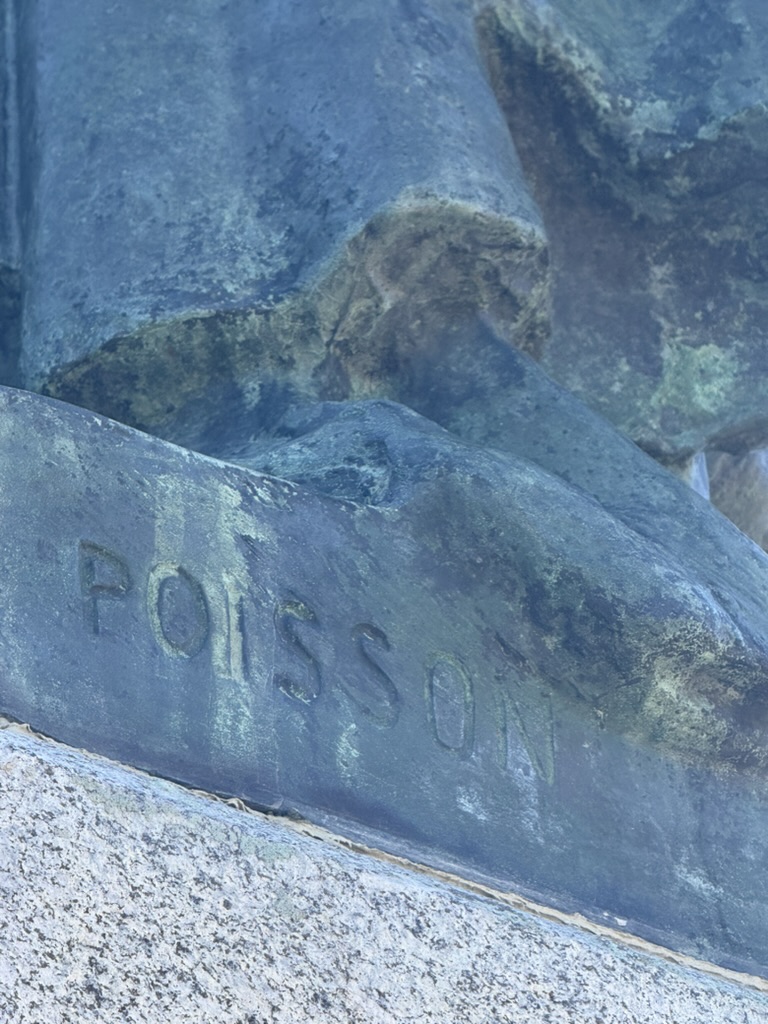
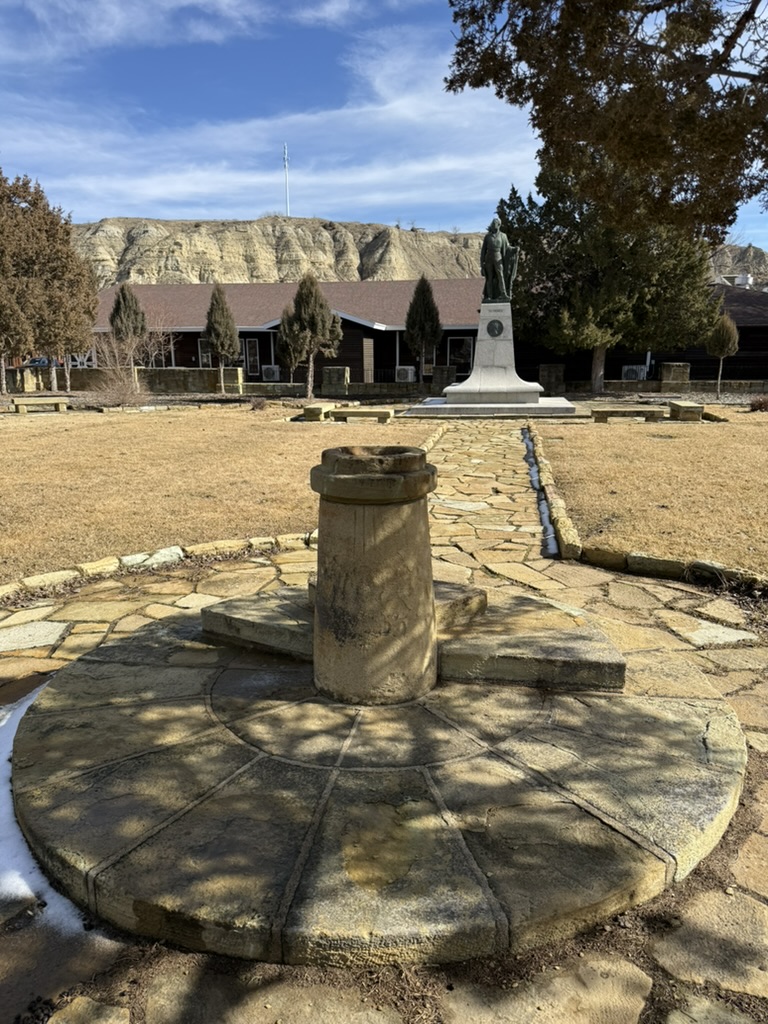
Anyhow, for inscriptions: one has to migrate to the north elevation of the statue, the base, where you’ll see this inscription: POISSON. That’s Pierre-Marie Poisson (1876-1953). You can research him digitally on the French Ministry of Culture website database. So one might imagine a research question (sometimes one doesn’t have the sort of travel budget of a Marquis) that thinks about whether or not Barbedienne created some scale version of this Marquis statue while the Marquis was alive. Then this Poisson chap finds that bronze, or statue (doesn’t exactly need to be bronze), and scales it to the size we see today, and casts it. Then it sits out here in Medora. Then in the 1930s, the CCC comes along and the CCC administrator looks at this and says, “we should do a larger garden of some sort around this.” The CCC also included a drinking fountain (which is out of commission as of my site visit). But this would indeed have been a welcome hydration reprieve. Could be cool to see the fountain restored. Some day. Sounds like a project that has some work ahead of it.

Some photos of that site visit of mine of the bronze and inscribed names. At the end is an image of the drinking fountain.
Second Wave Established – 1920s Great Plains

Yesterday (03/07/2024) on the social media platform Facebook, the Herodotus of the Great Plains, Professor Tom Isern, posted a note of and a link to Willa Cather’s 1923 essay in The Nation called, “NEBRASKA: The End of the First Cycle” (The Nation, 117, September 5, 1923: 236-238). Recapturing Isern’s post here, he said,

“Cather’s 1923 essay is a redefinition of the Great Plains historical identity. Writers such as Owen Wister despised immigrants. Walter Prescott Webb set them no place at the table. Great Plains history was being written by Anglo-Americans, and they owned it. Well, Cather flipped that scenario. She gave immigrants not just a place, but the place of honor. They are the best of us, Cather argues. This she says based on her personal experience and acquaintances; the immigrant presence infuses her Nebraska novels. Literature matters. Cather’s 1923 essay is required reading in my NDSU course on the Great Plains.”

Some more notes on that are below from Isern’s prompt above:

This 1923 essay got me thinking about the larger regionalist movements during this period that are sometimes book-ended (handily) by the two big ones in the first half of the 20th century (WWI and WWII). It seems like if you’re alive, reading this or anything today, props to your ancestors for figuring out how to survive the first half of the twentieth century. And that’s after their ancestors figured out how to navigate the long nineteenth century prior.

Of the 1923 essay, Cather’s following statement smacks thematically of Clell Gannon who, also in the 1920s, asserted his own version of northern plains historical identity into the soil. This phrase by Cather, here:

“When I stop at one of the graveyards in my own county, and see on the headstones the names of fine old men I used to know: ‘Eric Ericson, born Bergen, Norway . . . died Nebraska,’ ‘Anton Pucelik, born Prague, Bohemia . . . died Nebraska,’ I have always the hope that something went into the ground with those pioneers that will one day come out again. Something that will come out not only in sturdy traits of character, but in elasticity of mind, in an honest attitude toward the realities of life, in certain qualities of feeling and imagination.”

Willa Cather, The Nation, 1923

Clell Gannon was doing this sort of literature, art, and history place-making (I have heard the phrase “place esteem,” too) just a couple chess moves north on the northern plains. Either by way of his boat ride with George Will and Russell Reid down the Little Missouri River then the Missouri River (from Medora to Bismarck) in 1925. Or by way of his interior mural paintings in the Art Deco Burleigh County Courthouse in Bismarck, North Dakota. And other such elements.

Another thought from this 1923 essay by Cather is this: we (historians and those consumers of history) are in need of much more research and narrative building with how tribal citizens used their own agency to navigate these decades from the 1910s, 1920s, 1930s and 1940s — really the tinder and prologue to the needed American Indian Movement of the 1960s. Today, Phil Deloria is carving out published research and narrative from this era. In the 1910s and 1920s, Anglo-American historians often overlooked or didn’t include (all but with a sentence or a subordinate clause) Native America in its infinite dynamism during this period. If you get closer to the regions where the regionalists operate, though, Anglo Americans such as Aaron McGaffey Beede start emerging from the research.

In broad brush strokes, Beede advocated for his Anglo-American readership to 1) stop talking (what a concept) and; 2) start listening to and learning the Lakota language. I don’t have the verbatim quote in front of me, but from memory Beede says things to the effect of this: if you want to witness the divine amongst the Lakota, then stop and deliberately learn their language. Once you learn the language, you will hear the creator within that language.