Tag Archives: South Dakota

Humanities Updates from the Northern Great Plains

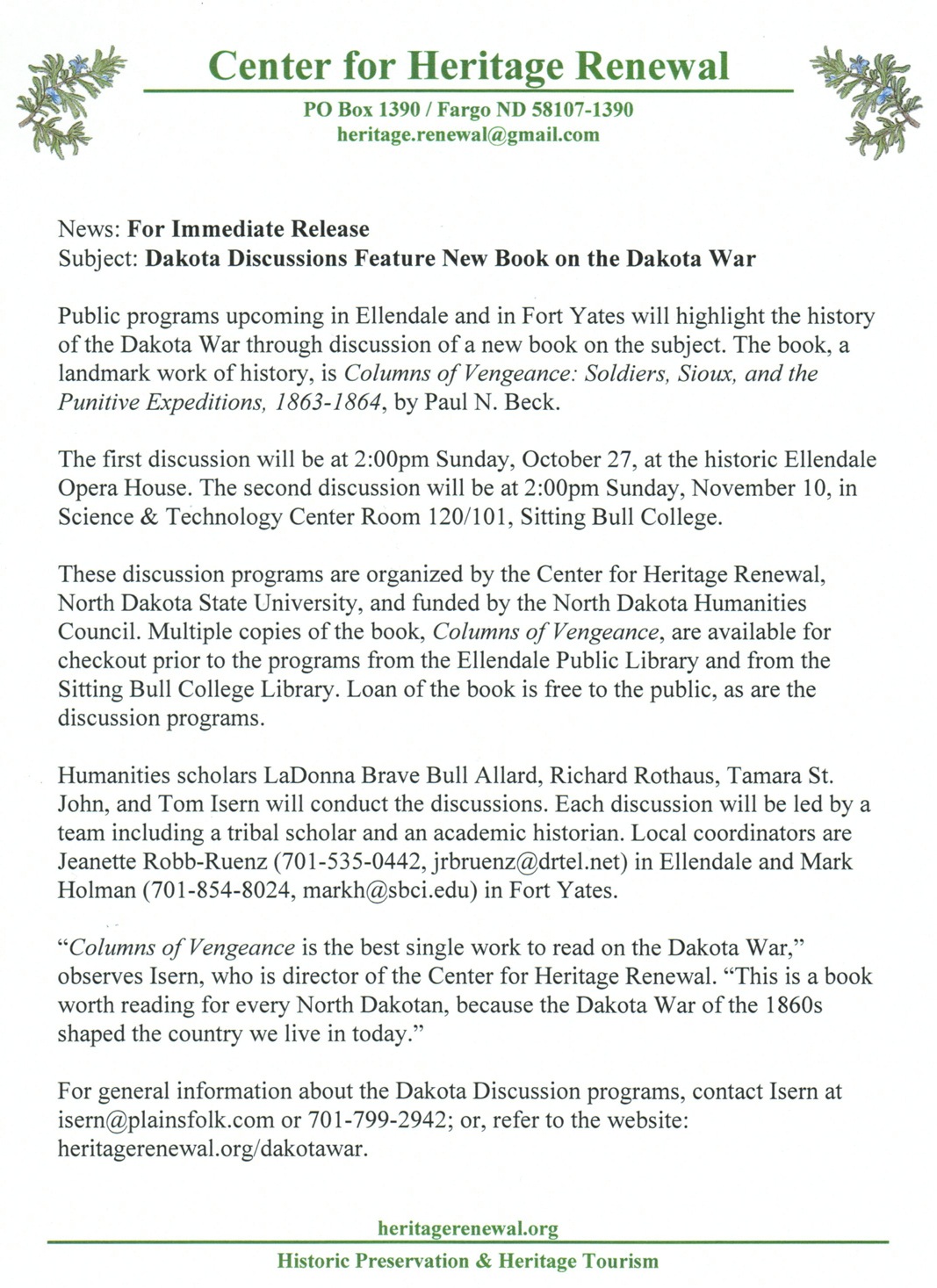
CHRBefore this morning gets away from me, I thought I’d provide two humanities updates taking place in the great state of North Dakota, central North America. The first is a link-reference to the progress of our Punk Archaeology manuscript; and the second concerns the official press release from NDSU’s Center for Heritage Renewal on our continued Dakota book discussions. Of this latter, the discussions bring together the public and scholars to consider the Dakota Conflict and the subsequent punitive campaigns from 1862-1864, and where we, Native and non-Native relations, are today.

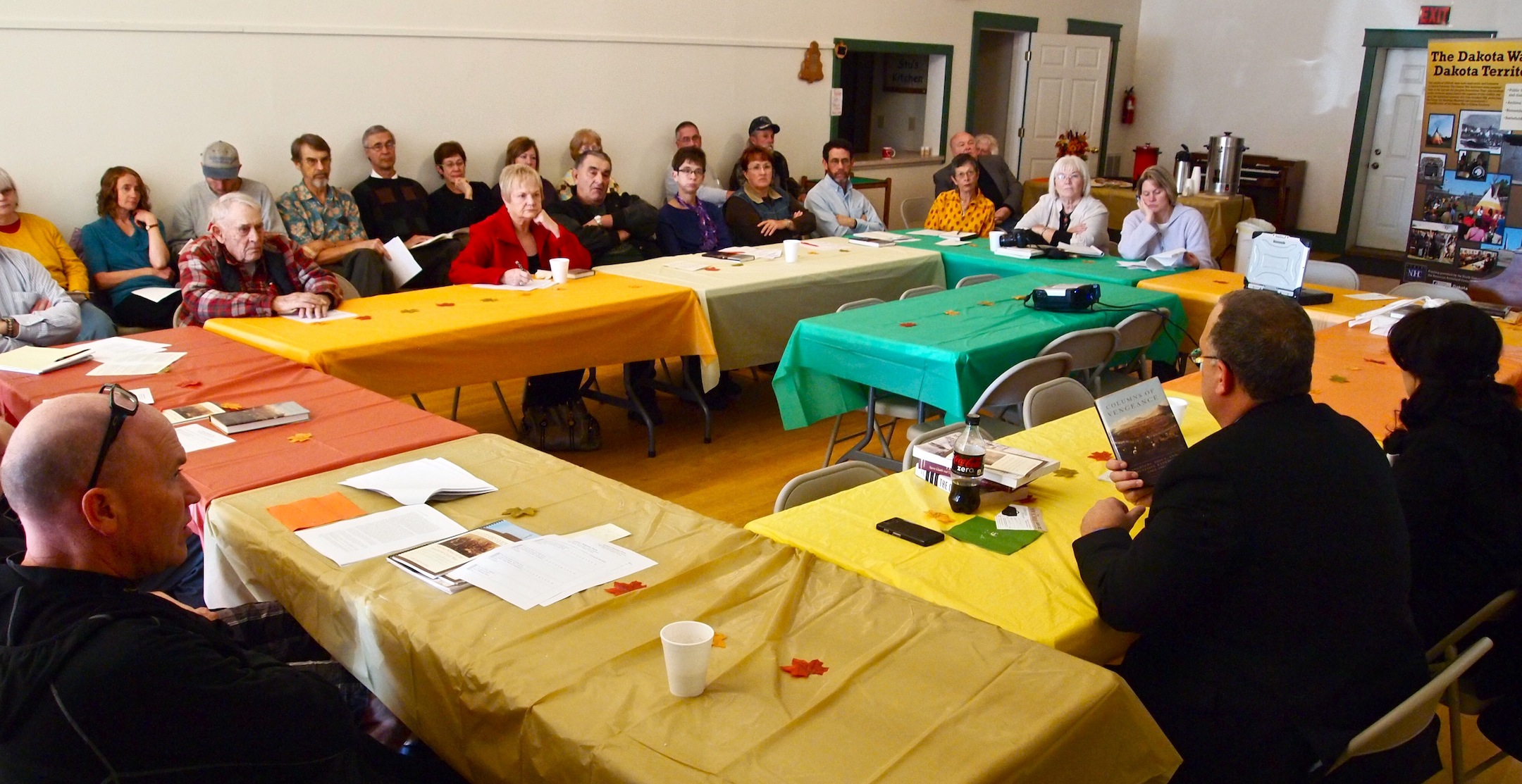
For more details, check out the uploaded hand-bill image to the left. Of this, the most recent discussion took place this Sunday past at the Opera House in Ellendale, Dickey County, North Dakota. This brought out a variety of topics, and the most attentive-grabbing and engaging at all of these events is that of Native historians and knowledge-keepers and scholars. After Tamara St. John, a Native historian and genealogist, spoke at this event, an attendee remarked on how (and I’m paraphrasing) they are starved for this kind of information.

For those of us up to our elbows in the history and historiography of the US-Dakota Conflict and Wars, we understand and often wrestle with accurate and precise and appropriate terminology, definitions, and so on. When we chat about this stuff with non-specialists, one of the most common remarks I have heard is this: “How come we weren’t taught any of this — attempted genocide, attempts at cultural destruction, attempts at forced assimilation — in our public education here in North Dakota, Minnesota and South Dakota?” I’m uncertain. But I do always insist on using attempts and attempted when talking about genocide, cultural destruction and assimilation. I do this because the Dakota, Lakota and Nakota, the Seven Council Fires, are alive and well today. We are pushing ahead as well with these discussions, and every time we have another conversation and chance to talk about this, legitimate history is happening. And if that is happening, so is that large, amorphous thing we call culture and the humanities.

When it comes to the public school systems, I’m sure there are plenty of politics behind all of the curriculum decisions from yesteryear and now. Perhaps that is something we in the future can consider, and perhaps in the future bring before various departments of public instruction in Minnesota, North Dakota and South Dakota. That would be at least one long-range goal to consider.

Nonetheless, the next discussion will be held at 2:00PM (CST) on November 10, 2013, at Sitting Bull College,  in the Science and Technology Center Room 120/101, Fort Yates, Standing Rock Reservation, North Dakota. And here is a photo from the discussion from last Sunday.
OLYMPUS DIGITAL CAMERA


Prairie Turnips

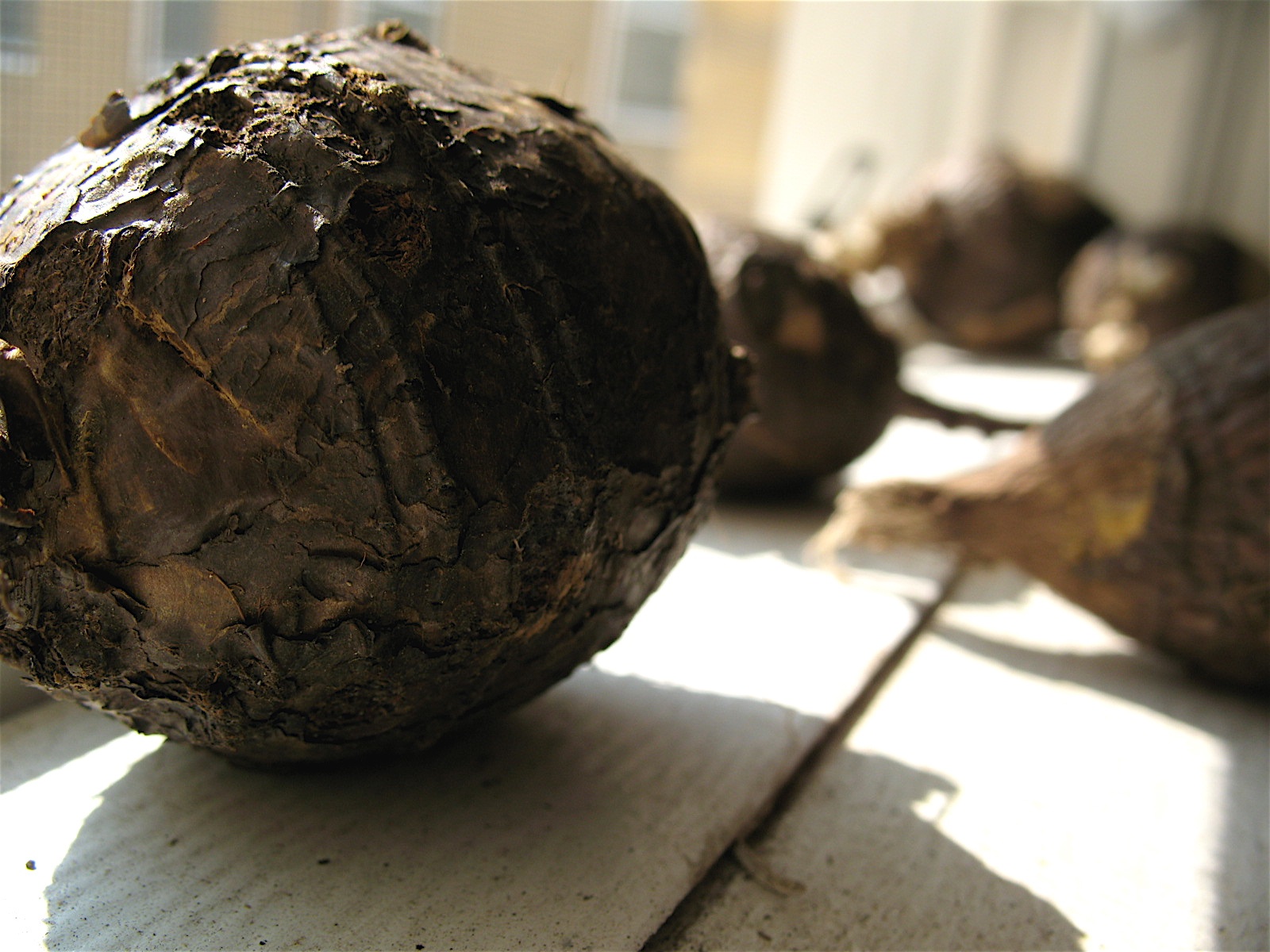
A prairie turnip.

A cluster of prairie turnips.

Where some see a prairie-scape of oblivion, others see a culinary buffet. Just last night I was cruising around in some old digital photos on the desktop, and I came across a couple shots of prairie turnips. I photographed them a couple years ago in the kitchen of a downtown Bismarck apartment I used to live in (the historic Mason Building), I think around 2008 or 2009.

During those summers, Tim Mentz, Jr., of Standing Rock, showed me on the northern Great Plains how to identify the prairie turnip. You can read the landscape for prairie turnips in July. This is when the vegetation sprouts above ground, making them visible. They also grow in certain areas on a hill (it may or may not have something to do with the ph levels of the soil — I’m in the humanities, folks). This, of course, leads to the idea that if you have two different people look at the same landscape, they will see it in a variety of different ways. I like listening to what others have to say about the landscape. Tim Mentz, Jr. always had my ear. We would often joke, too — when a bull was once staring at us and uprooting the topsoil with his front hoof, I asked Tim, “What does that mean?” Tim responded with, “That means we give him distance.”

It is customary to braid the turnips by the root ends, and then hang them to dry. Just like mushrooms (and other dried goods), they will reconstitute in liquid or water. I made turnip soup out of this batch.

With the husk pulled back, this is what the edible flesh of a prairie turnip looks like.

With the husk pulled back, this is what the edible flesh of a prairie turnip looks like.


More On the Civil War and Plains Indigenes Then and Now

Yesterday evening, while sitting around a campfire in northeastern North Dakota, I looked into A People’s History of the Civil War: Struggles for the Meaning of Freedom (The New Press, 2005) by David Williams, and this morning I am finally getting to Thomas Yellowtail, Native Spirit: The Sun Dance Way (World Wisdom, 2007). I’m primarily interested in different interpretations of Dakota, Lakota, and Nakota culture, specifically how this might bear on the historical record (which is why I’ve been blogging on it here, here, here, and broadly on the topic of war here).

In Chapter 7 of A People’s History of the Civil War, Williams says that due to the advanced positioning of the North and South, “Federal forces used the war as an excuse to quicken the pace of killing Native Americans and driving the survivors from their homelands.” (Williams, 2005: 390) This is true, and Williams is upfront about it. An internal American war gripped the eastern 1/3 of the nation (a nation that was both trying to stay together, and expand by overtaking indigenous lands), and certainly the South and North looked at the various territories and newly fabricated states to the west as part and parcel to the overall wartime efforts. Meanwhile, and at the same time, Britain watched America from Canada, and France and Mexico were having it out south of the Rio — think Cinco de Mayo, or the Battle of Puebla, where the Mexican army routed French imperial forces. If Native America could be removed or restricted to reservations, the newly acquired lands could be put into intense farming production. Williams’s work follows the intellectual stream of Howard Zinn, who championed the monograph and who also sparked the intellectual drive. If contrasting the standard Civil War historiography with Native scholarship, though, one starts to understand in much greater detail what else was at stake.

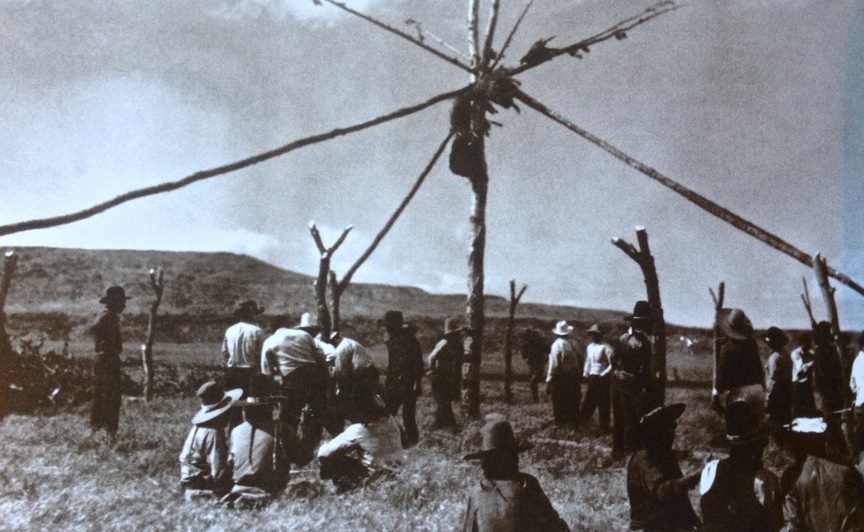
The building of a Crow Sun Dance Lodge from the 1940s. (Yellowtail, 2007: xviii)

The building of a Crow Sun Dance Lodge from the 1940s. (Yellowtail, 2007: xviii)

The introduction of Thomas Yellowtail’s work was written by Joe Medicine Crow, then (in 2007, when the book was published) a 92-year-old Crow tribal historian. Medicine Crow says his grandparents “were pre-reservation Indians who lived before the reservation was set up. They would go camping, hunting, and the men went on the war path.” (Yellowtail, 2007: xi) In reading this, it is important to understand that these activities — camping, hunting, and the war path — mean something much different than they do to us today. They were the very substructure of Plains indigene culture, and to camp and hunt and go on the war path meant one was able to support what we would today call a household (Jonathan Lear goes on in great detail and at length in his excellent work that everyone should read, Radical Hope). Being told by an outsider (or a colonizer) that you need to change the way you do things and that everything you did up to this point is now meaningless are also things that continuously need to be understood. It’d be likened to spending the time and energy to train as a professional welder, and then being told by an outsider that your efforts were for nought. And now here is a new way we’re going to do things. So put away that senseless welding torch and abandon the culture your fore-fathers and -mothers spent generations cultivating. In 1884, this is what the United States ordered, as Medicine Crow says: “The ‘Secretary’s Order’ of 1884… prohibited the Indians from practicing all activities related to their culture, including singing, dancing, and all traditional ceremonials.”

I’m afraid I’m getting a little preachy here, but the idea behind this has universal implications. If one ethnic group is able to do this to another ethnic group, then this means it can happen at any time to any one of us. In looking at that, is that a problem that could continue echoing through time? Yes. Certainly this — 19th-century Manifest Destiny — is something we can understand as happening at a particular time and place, and we can try to distance ourselves from it and say, “Well, we need to understand the historical actors on their own terms.” Yes, this is true (I’m as big of a fan as R.G. Collingwood as the next) But we still need to understand that the terms from yesteryear reverberate throughout the reservation and non-reservation world today (on July 11, 2013, Byron Dorgan had a excellent piece on these implications in the New York Times).


The Ethics of Plains Indigenes

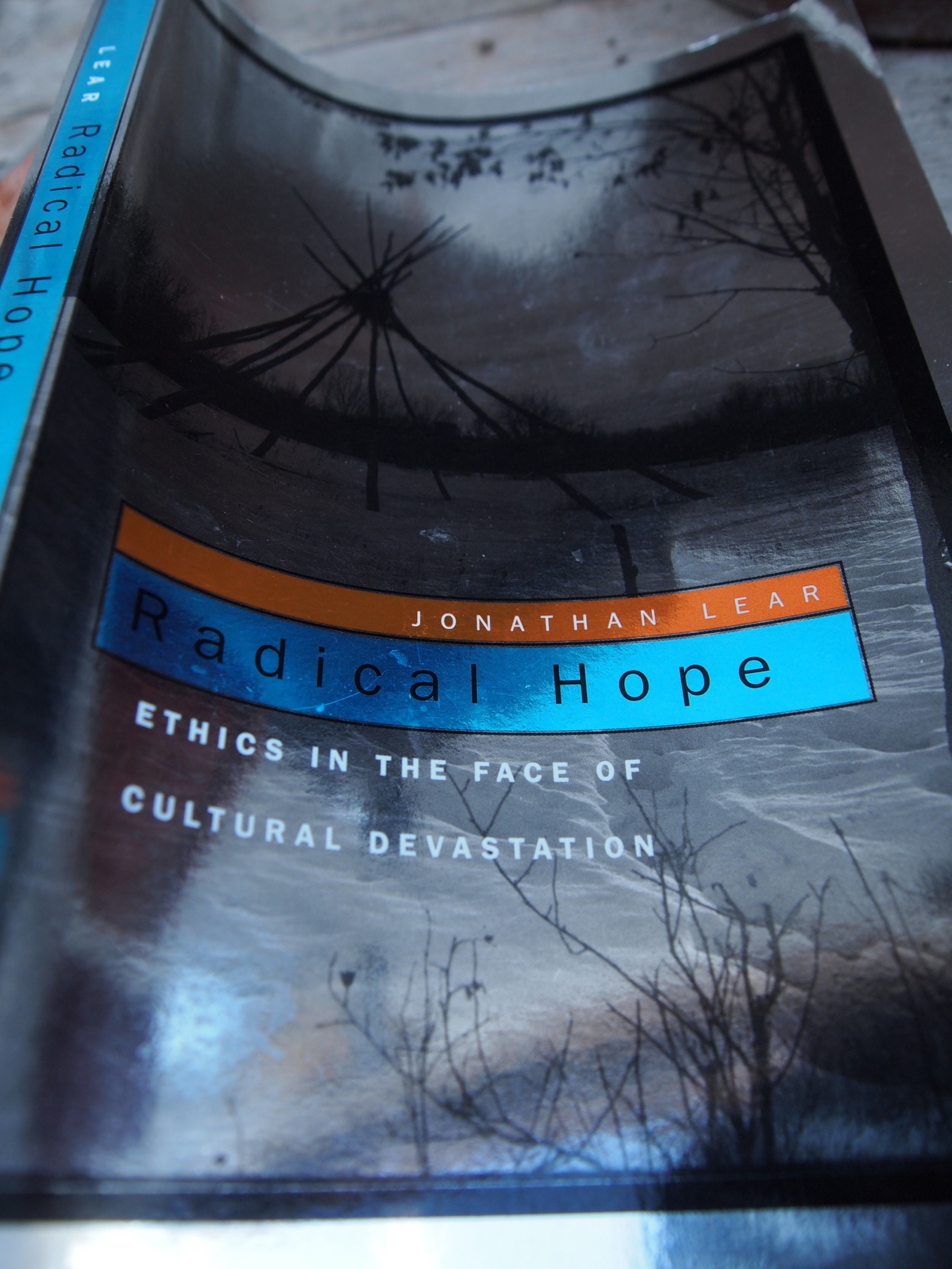
Radical HopeHere on the northern Great Plains, we are increasingly considering what the Dakota Wars from 150 years ago meant then and what it means today. A piece of scholarship I stumbled across while visiting the bookstore of Pompey’s Pillar in eastern Montana (where, famously, an Anglo-American incised his graffiti on some tall rock) is Jonathan Lear, Radical Hope: Ethics in the Face of Cultural Devastation (Harvard University Press, 2006). Lear uses the historical documents from Plenty Coups, a Crow leader who helped his people navigate the turn of the 19th century. What makes Lear’s monograph interesting is how he uses his training in philosophy and ethics to approach a previously unexplored topic of the Crow.

Throughout this book, the Dakota/Lakota/Nakota are mentioned, and how they and the Crow were ferocious enemies in the 19th century. Lear looks at this philosophically, though, and says,

One of the ironies that comes to light is that groups of people can be bitterest of enemies in real life, yet ontologically they are on the same side; and a real-life ally can turn out to be one’s ontological nemesis. The Crow and Sioux were bitterest of enemies… Still, their standoff sustained a world in which battles, planting coup-sticks, and counting coups all made sense. One has only to read Chief Sitting Bull’s pictorial autobiography to see that he was every bit as much concerned with counting coups as Plenty Coups was. And yet, with the United States as an ally — a questionable and unfaithful one to be sure, but still an ally in many ways — the Crow moved into a position in which their world fell apart. (Lear, 2006: 50-51)

The rearrangement of this way of life came to an end due to the advanced encroachment of Euro-Americans who, among other things, obliterated the bison food source of the Plains indigenes. Lear doesn’t just stop with the known history of how the bison were wiped out, though. Instead, he expands and explains how the bison food source was a serious component of the Crow’s cultural and ethical telos. Bison had been incorporated into nearly every element of the Crow way of life, and Lear gives excellent examples by unpacking phrases that Crow used for dinner. For example, Lear notes that there was no such thing as simply cooking a meal. Instead, the cooking of a meal had a greater social-psychology behind it. The phrase cooking and eating dinner was inextricably bound to “the cooking-of-a-meal-so-that-those-who-ate-it-would-be-healthy-to-hunt-and-fight.” (Lear, 2006: 40) See how the telos — the psychological extension of an immediate act providing a base for the future — is connected to the food, and that the food comes largely from the bison? Yes, of course. And so when Euro-Americans — whether Sully at Whitestone Hill, or Euro-American riflemen — obliterated the bison, it struck not only at that food source, but at the very culture of Plains indigenes. In short, read this book.


US-Dakota Wars, Then and Now: Ellendale, North Dakota, April 5, 2013

1862-and-2012Last night in Ellendale, North Dakota (not far from a September 1863 massacre site of memory and mourning that is Whitestone Hill), a panel discussion between Natives and non-Natives took place at the Ellendale Opera House. The discussion opened with introductory remarks by North Dakota State University’s Tom Isern, and then by philosopher of ethics, Professor Dennis Cooley (Dennis is co-founder of the Northern Plains Ethics Institute, linked to here). From there Richard Rothaus provided an overview of the US-Dakota Wars that started in the Minnesota River Valley, 1862, but did not end in Mankato with the largest execution in United States history. In the following years, the US engaged in a protracted punitive campaign against all Sioux, regardless of whether they participated in the US-Dakota Wars throughout the Minnesota River Valley in 1862 — the many were punished for the actions of a few.

I think one of the main reasons folks came to this — and they expressed it — was to listen to what Tamara St. John (Sisseton-Wahpeton Oyate, South Dakota) and Ladonna Brave Bull Allard (Standing Rock Tourism Director, North Dakota) had to say. Toward the end of the conversation, several of the Ellendale residents expressed immense thanks for the opportunity to listen, and one individual said they will use this panel discussion to navigate how to go about organizing the 150th year event at Whitestone Hill this September.

The US-Dakota War Panel Discussion from April 5, 2013, in Ellendale, North Dakota.

The US-Dakota War Panel Discussion from April 5, 2013, at the Opera House in Ellendale, North Dakota.

To solidify our imagined sense of geographic history, I thought that it might be helpful to circulate the following map above that situates Native America on the northern Great Plains circa 1862, and contrasts it with the 2013 Eisenhower Interstate system. Also, linked here is a audio recording of the panel discussion in Ellendale, North Dakota, from April 5, 2013, taken by Kenneth Smith. The entire event was sponsored by the North Dakota Humanities Council and the Center for Heritage Renewal.


Ernest Staples Osgood, “The Day of the Cattleman” (1929)

Central to Ernest Staples Osgood’s 1929 scholarship is how cattlemen in Wyoming and Montana ignored previous perceptions of the Great Plains as an uninhabitable desert, and instead recalibrated their perspective to make a life on the North American steppe. Once the cowboy got to the Great Plains, Osgood said,

The solitude of the desert passed, and men began to realize that this, our last frontier, was not a barrier between the river settlements and the mining communities in the mountains but an area valuable in itself, where men might live and prosper. (Osgood, 1929: 9)

The chapters that follow elaborate on how the nineteenth-century Euro-American pushed west of the Mississippi River to initially make their way across the Great Plains and into the Rocky Mountains and the Pacific Coast. By the time enough overland wagon trains arrived to the mountain basin, though, frontier fur traders and trappers had come down out of the Rockies to form encampments, and these settlements became stopping points and places of trade. The fur trader and trapper sold supplies to the wagon trains, swapping out locally-grazed cattle with emaciated wagon train cattle, the latter worn out from walking the hundreds of miles west. Once traded, the emaciated livestock revived themselves on the lush grasslands of the Great Plains, and they would fatten themselves up to be traded, sold or slaughtered.

Osgood LivestockThe increased arrival of the railroad supplanted the need for overland wagon trains, but the railroad itself brought laborers hungry for beef and protein. By this time, rumors about frontiersmen J.R. (Jim Bridger), Captain Richard Grant, and the firm Russell, Majors and Wadell making $15,000-to-$75,000 as cattlemen had landed in the ears of investors back east. (Osgood, 1929: 12-16) The response was profound in the post-Civil War world of the Great Plains. Texas ranchers utilized the warmer climes of the southern Great Plains as a place to breed cattle. After growing the herd, they then drove the cattle north to the lush grasslands of Wyoming, Montana and the Dakotas. After fattening up the cattle, the cowboy would drive them to railroad loading points and ship the livestock to markets in Chicago and beyond. Osgood explains a local Wyoming example of this, as in 1873 approximately 286 railcars of cattle were shipped from Wyoming to eastern markets. By 1877, only four years later, the number of rail cars shipping cattle east had increased to 1,649. (Osgood, 1929: 51)

Between 1879 and 1885, the Federal government did not care to impose legislation to manage the chaos intrinsic to the ranching industry on the Great Plains. This gave rise to local cattle and stockmen associations that sought, at least in ideal, to preserve an individual’s ownership of the herd, protect the herd, and regulate public grazing to prevent overcrowding. (Osgood, 1929: 114-115) In this vein, Osgood’s scholarship sets a stage for later works that might consider what the industrialization of the Great Plains meant for a growing world population, and this also speaks to World and Public historians. Today, non-American restaurants can be seen advertising “American” beef, and ruins of yesterday’s mining towns — Bannack, Montana included — still dot the landscape.

The ruins of the mining town of Bannack, Montana. Photo by archaeological comrade Brian Herbel of Missoula, Montana.

The ruins of the mining town of Bannack, Montana. Photo by archaeological comrade Brian Herbel of Missoula, Montana.

The big idea in Osgood’s book is that the large-scale Euro-American perception of the Great Plains had altered, once thought of in the first decade of the nineteenth century as a desert and by mid-century as an oasis for cattle and cowboy. Published in 1929, this book also reflects the language of the times, as Chapter 4 is titled “The Indian Barrier.” Whether the Euro-American understood it or not, they appropriated the positive perception of the Great Plains that the Native American already had. This is something Osgood could have drawn out quite a bit more in his work, but 1929 is far enough removed from 2013 that it makes a bit more sense to understand this piece of scholarship as history as much as it is understood as central to Great Plains historiography.


McGovern Archaeology

Today (10/21/2012), Sunday, George McGovern died in Sioux Falls, South Dakota at 90 years of age. He had been hospitalized for a time, slipping into a coma within the last couple days. During that time I started thinking about McGovern at the local level, at least in South and North Dakota. McGovern hailed from the small town farming

George McGovern buttons from a private collection. Photo taken on October 21, 2012.

community of Avon in southeastern South Dakota. He joined up with the Airforce at 19, and flew B-24 bomber missions against Nazi Europe. After the war McGovern returned to South Dakota, and with his GI Bill he worked toward a graduate degree in history and lectured at Dakota Wesleyan University in Mitchell, South Dakota. He eventually got into politics, and the state of South Dakota elected him for 3 terms to the United States Senate. In thinking about all of this, it seemed like a good idea to upload some George McGovern archaeology, at least a photo of his presidential buttons from his 1972 campaign against Richard Nixon. McGovern lost. Big time. He carried no more than one state in the election — apparently it’s a really good idea to find out a lot about your vice presidential running mate before you ask them to be your vice presidential running mate. But that was how things played out external to the Democratic Party. Internally, McGovern ushered in numerous progressive reforms. Ross K. Baker, a political science professor at Rutgers University, has pointed out that McGovern helped revolutionize the internal workings of the Democratic Party, driving out the old guard and absorbing the times that were a changing — thank you Bob. The buttons reflect those changing times and reforms. The buttons have a variety of iconography, including a rainbow, the sign for women with parallel horizontal lines

The McGovern Library at Dakota Wesleyan University in Mitchell, South Dakota. McGovern lectured history at this campus.

that signifies equality, the dove (certainly a sign of peace and love), and the geopolitical outline of North Dakota that emphasizes the state’s Peace Garden slogan. These photos came from the private collection of Molly McLain. No doubt there are more of these buttons tucked away in the attics, storage lockers and basements of a variety of homes across the country.

Another photo is of the McGovern Library at Dakota Wesleyan University. If I remember correctly, the building (not the McGovern Library) where McGovern lectured history at DWU still stands. To a large degree these buildings help connect our discombobulated present with the past, providing a kind of stability that is both real and imagined. McGovern lectured history in Mitchell, and he was from Avon, South Dakota. If looking at McGovern, it seems that you can do anything in this country if you put your heart and mind to it. It just so happened that McGovern also had a genuine soul (not every politician or individual has this). Here’s to George McGovern, and his well played life. …well played indeed.

A Google Earth image of Avon, South Dakota, the home town of George McGovern.


Wild Bill Hickok and Western Americana

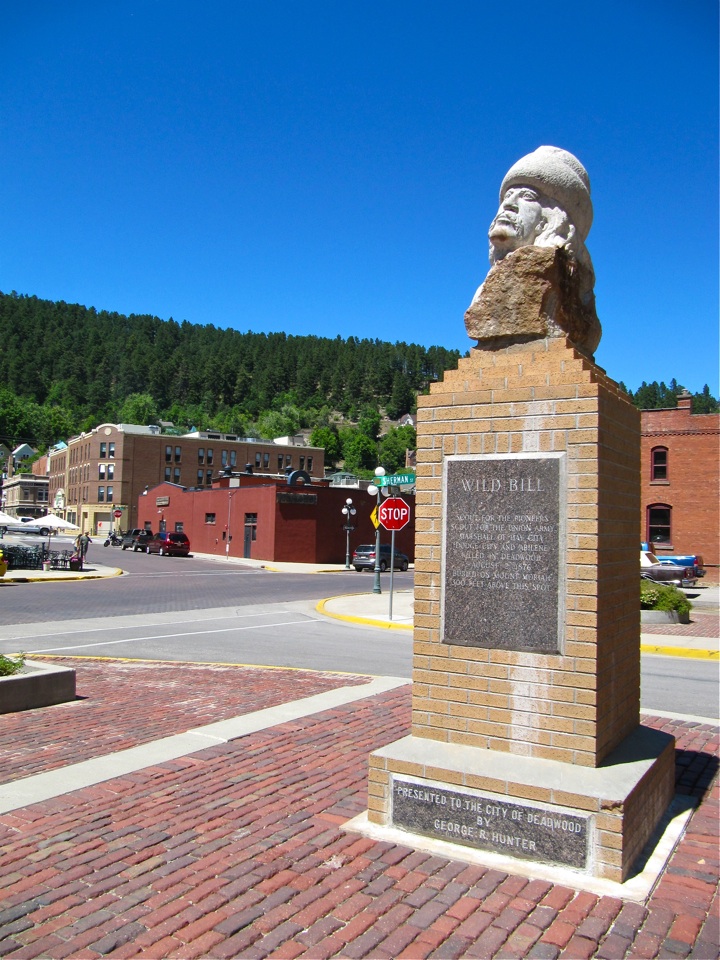
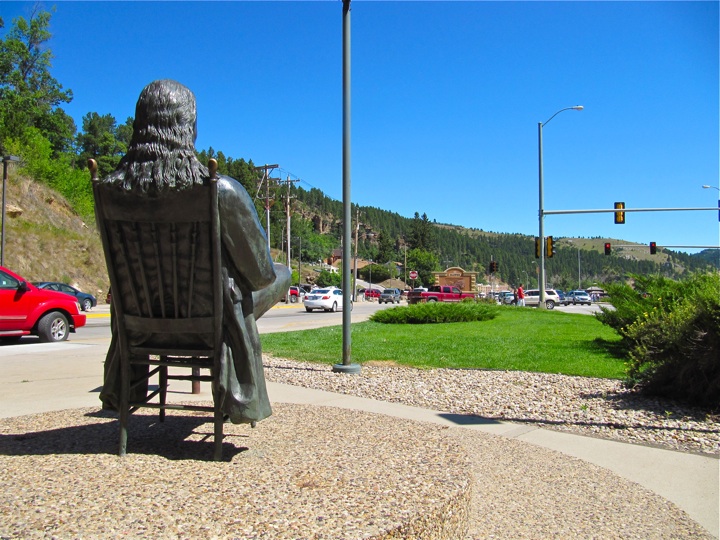
On August 2, 1876, Jack McCall forever immortalized himself and Wild Bill Hickok when said McCall shot and killed Wild Bill in Deadwood, southwestern Dakota Territory. Since then, any number of statues have been created to memorialize and deify Hickok. In Deadwood today, at least as of July 2012, there are numerous signs and busts of Hickok. His heroic and tragic story was popularized even further by the HBO series Deadwood (this is similar to the how Shakespeare popularized the story of Julius Caesar, too). Below is some of the Hickok iconography throughout Deadwood, South Dakota:

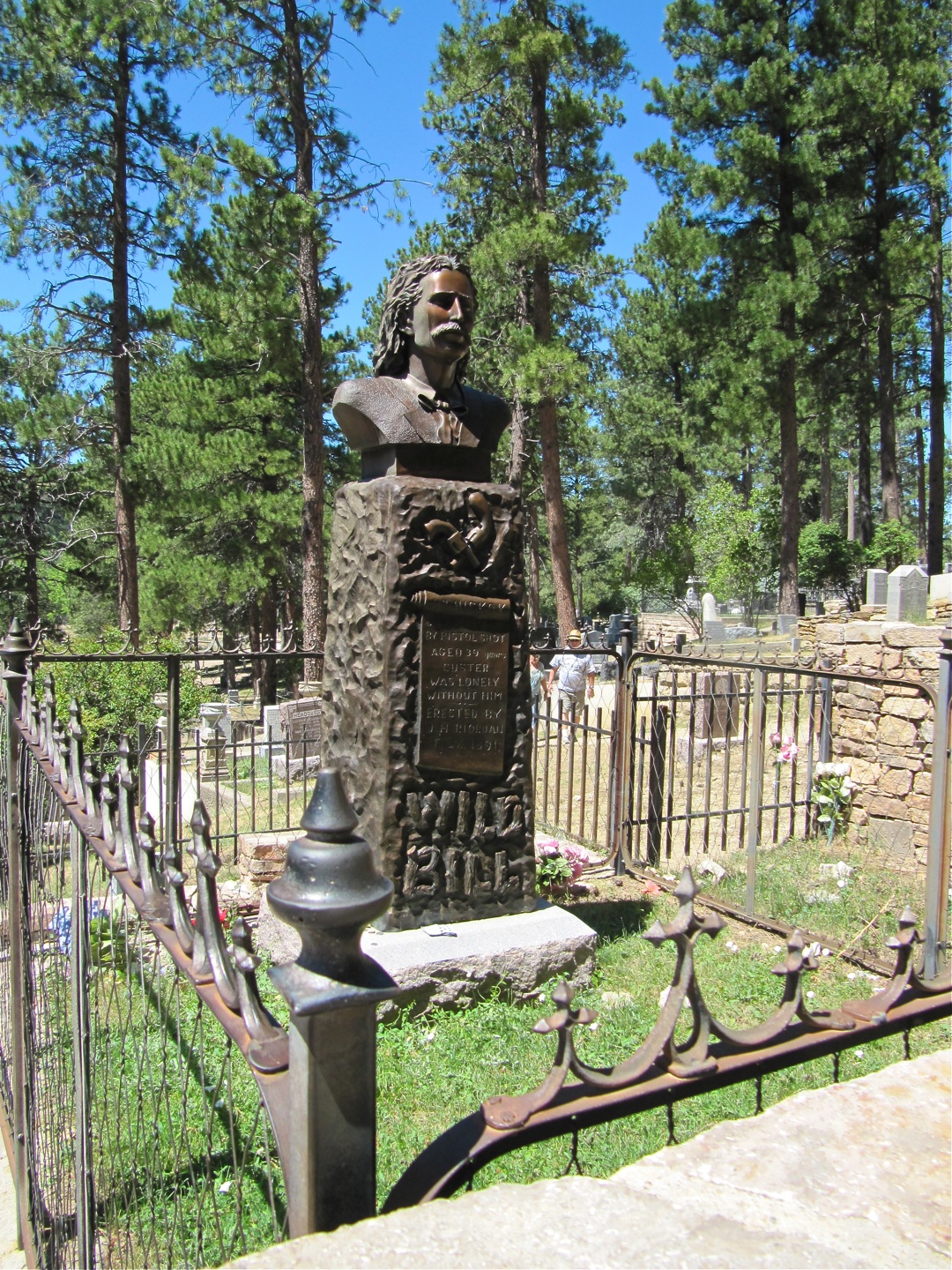
Wild Bill Hickok’s grave site at Mt. Moriah Cemetery in Deadwood, South Dakota.

Offerings at Wild Bill Hickok’s grave in Deadwood, South Dakota.

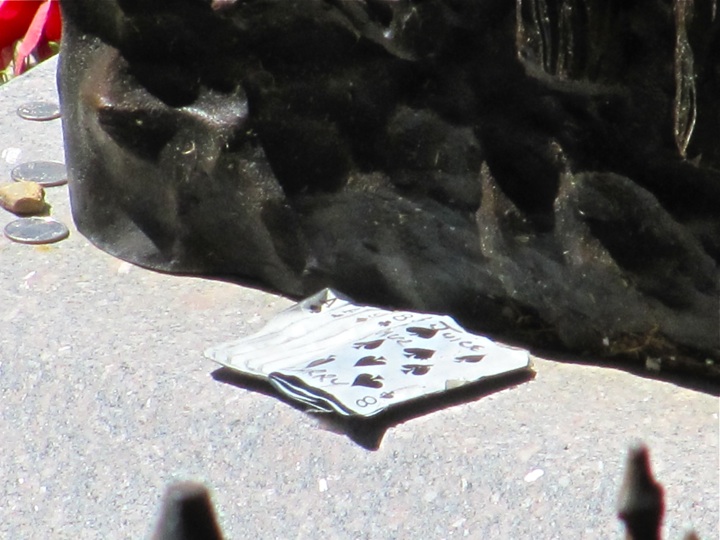
The “Dead Man’s Hand” at the base of Wild Bill Hickok’s grave in Deadwood, South Dakota.

Saloon #10 signage in downtown Deadwood.

Bust of Hickok in downtown Deadwood.

A 19th century bronze Hickok greets 21st century motorists entering Deadwood, South Dakota.