Tag Archives: Scandinavia

Present Reality and Past Memory: Scandinavian Diaspora, Then and Today

Over the weekend, I was able to attend the Norsk Høstfest, a long running annual festival in Minot, North Dakota that, as the self-descriptor says, is a celebration of “Scandinavian culture and heritage of the five Nordic countries of Denmark, Finland, Iceland, Norway, and Sweden.” This is a good descriptor (descriptors are difficult when trying to communicate in very short and sweet verbiage what one is trying to communicate to potential readers who don’t have a lot of time to sit and read long form or short form journalism, let alone slopped out blog posts on diaspora theory).

I’m not entirely satisfied with this interpretation just remaining as is. While at Høstfest, I texted a bit with a friend of mine in Helsinki (yes, Finland, not Minnesota). He texted back a couple times (when I texted him, it was around 2-3pm central standard time, which with the 8 hour difference, meant it was 10-11pm Helsinki/eastern Baltic Sea time).
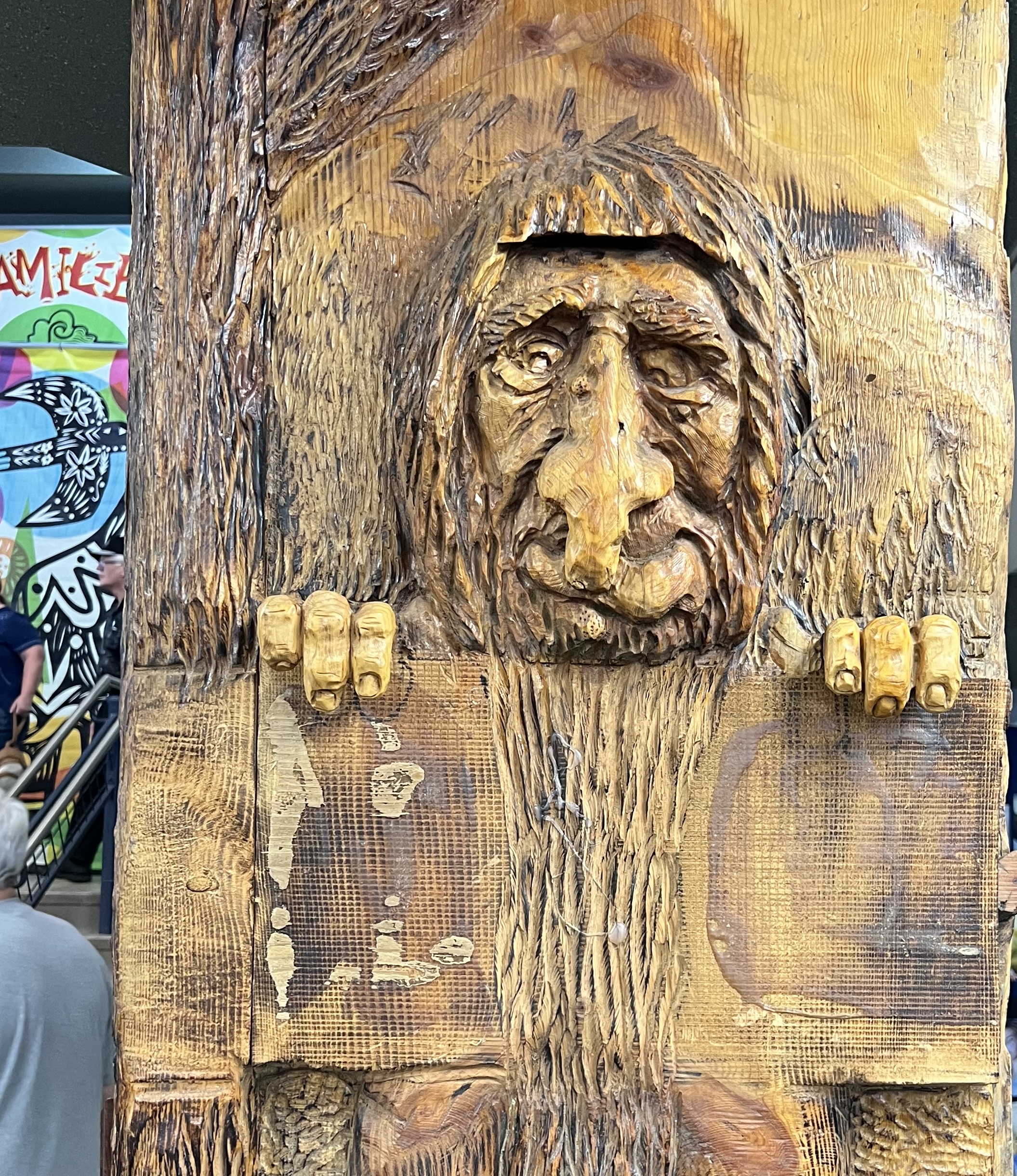
We got to a bit of spirited back and forth on authenticity: always a theme in any kind of cultural experience. Like when you return from an experience, sometimes the question was, “Was it authentic?” or the statement assertion is that, “That experience was authentic.” The text message exchange got me thinking about authenticity, the perception thereof, and trying to tease out a universal definition of what authenticity could mean. The word authenticity appears to me to be related to authority, and the word author, too. But these three words — authenticity, authority, author — are interconnected in the capacity that they assert through one (or a collective) of past memories and present experience the way things are or ought to be. Which when an author is asserting something, here’s a way in which to experience that: it’s okay to accept the author’s assertion. But one doesn’t have to agree with them.

Anyhow, texting with my friend in Helsinki, it appeared a bit odd how Finland was reflected in Minot, North Dakota (stay with me, here). So that returned to the topic of diaspora: peoples who have been spread from what they call their “original homeland” (but in the long history of people migrations, what does “original homeland” even mean), and the peoples who retain slivers or linear board sections of the culture they departed within the new spaces they settle and occupy.

Here’s where the cultural Instapot gets weird: the culture that left the homeland continues in the mindset of the migrating people, but the homeland culture continues to evolve in its own, new directions. So the Helsinki friend of mine, this morning, said something similar: he left Finland over 25 years ago, and when he returns he cannot seem to see the country he left behind. So the Finland he knows is in his mind. The present Finland, isn’t that. Because he recalls Finland in 1999 or so. The Finland today in 2024 is something different. Here we have two mental Finlands: the past memory of a Finland in the mind of the person that doesn’t live regularly in Finland, and the Finland Finland of today.

Here’s an historical case study on that, too: in The Multilingual Anthology of American Literature: A Reader of Original Texts with English Translations, edited by Marc Shell and Werner Sollors (New York and London: New York University Press, 2000), the section on Swedes, the opening page looks like this:
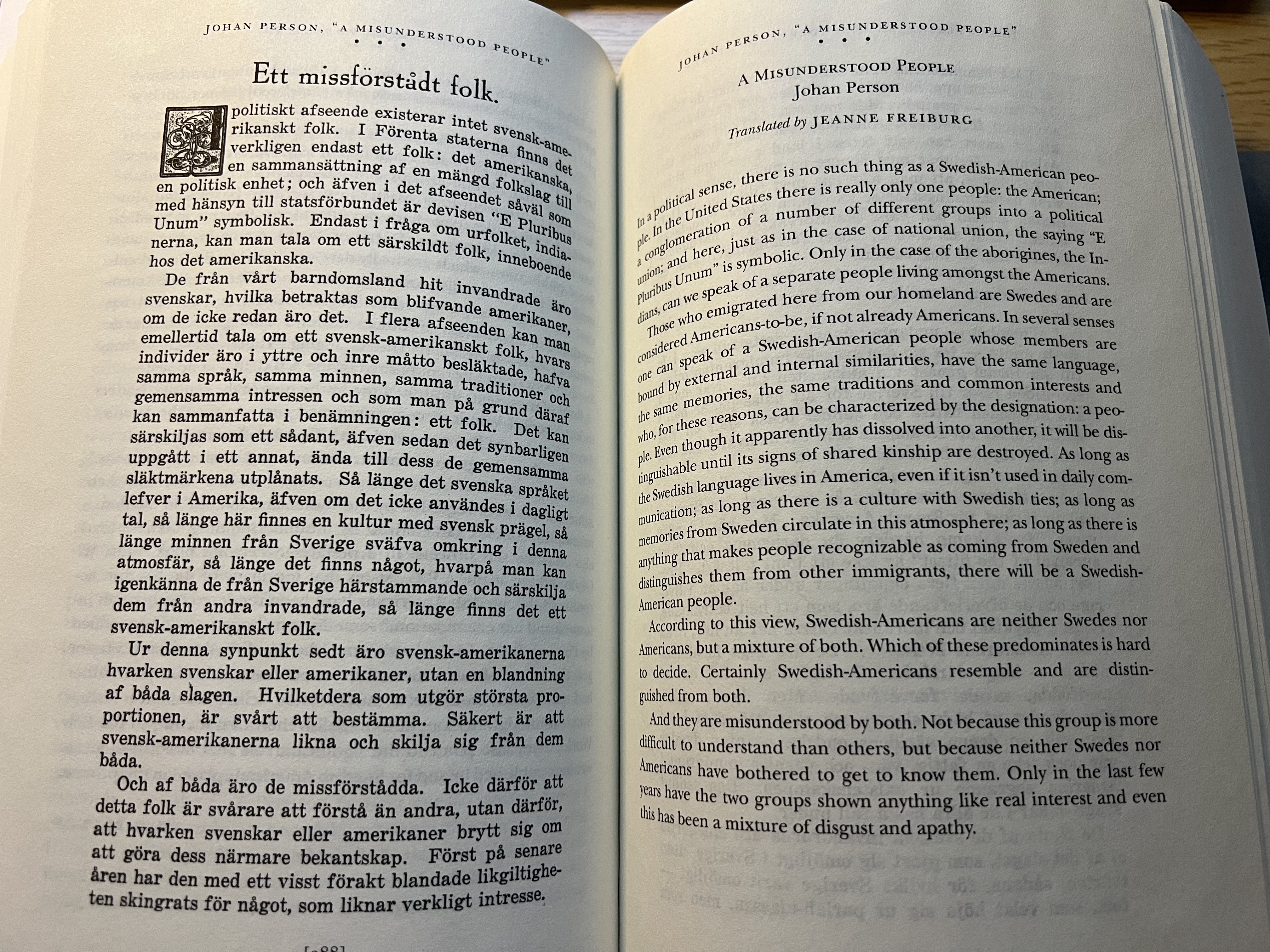
The third paragraph in reads this: “…Swedish-Americans are neither Swedes nor Americans, but a mixture of both.” So the diaspora cultural barges continue to float and evolve in their own directions and ways. And so do the host countries of their origins. Does it mean one group gets to really get in the face of another group and let them know, “This is how it is supposed to be!!!” I suppose. But it seems to reflect more of the insecurities of the assert-er than it does about anything else. And insecurities are okay, too: no human is human without them. It would appear the assertions are more grounded in a person’s or people’s want to have a cultural anchor of some sort, especially in a present that perceptively seems so out of control. Perceptively. Okay, that’s all I got on that. On with my day.


Fargo Trolls and Ragnarok Weekend

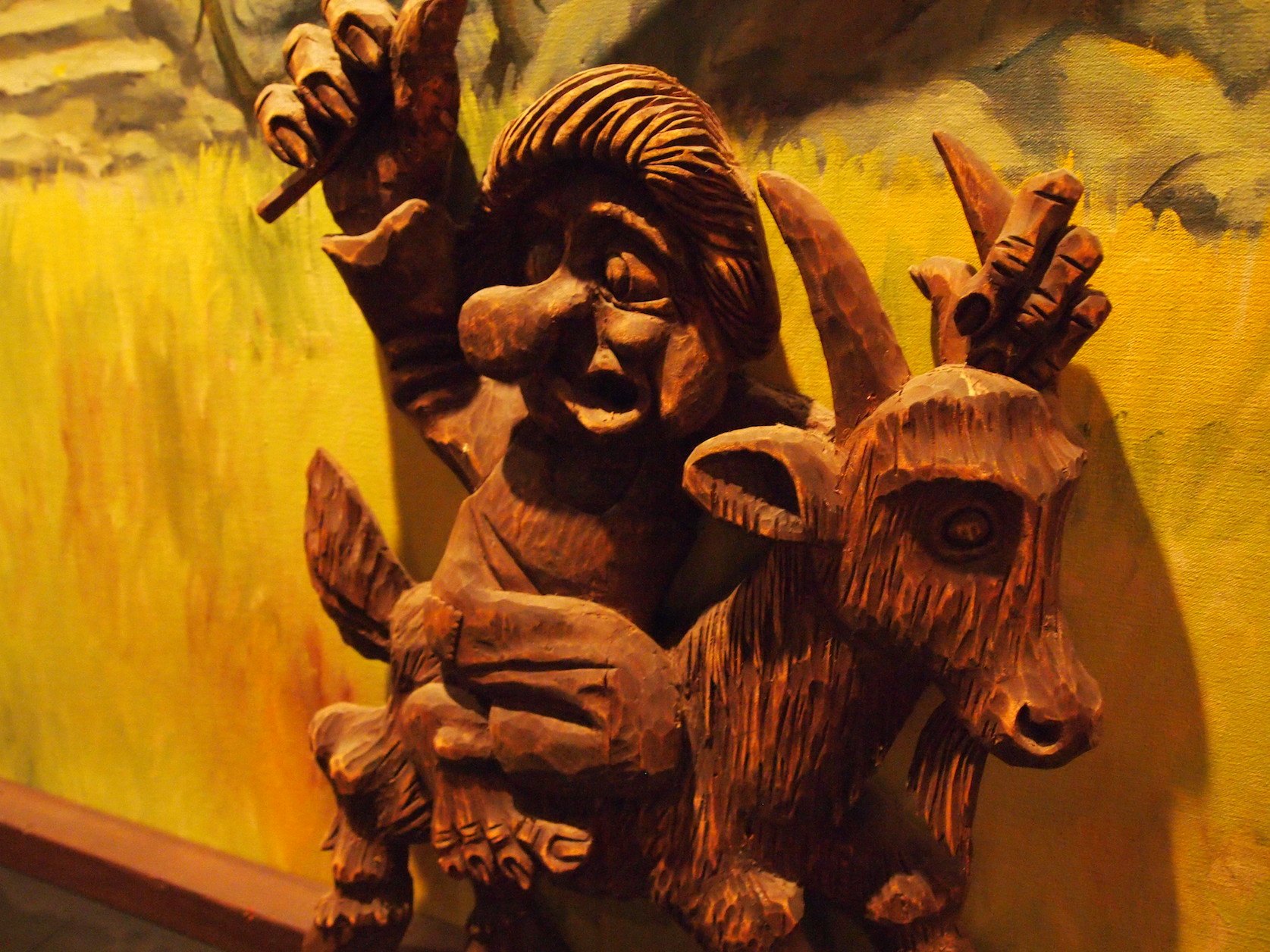
One of the many wood troll carvings at the Sons of Norway in Fargo, North Dakota.

One of the many wood troll carvings at the Sons of Norway in Fargo, North Dakota.

Since it has been reported by The Daily Mail that the Viking apocalypse — Ragnarok for those of us in the know — will happen this Saturday, February 22, I figured it doesn’t matter that the History Channel’s Vikings Season II premiers on February 27. I also figured that it would be appropriate to post three photos I took on Thorsdag evening at the Sons of Norway in downtown Fargo, North Dakota (pie day is every Thursday at lunch, too). Within the Sons of Norway is the Troll Bar which, in turn, is decorated with several wood Norsk troll carvings that run the perimeter of the tavern.

Trolls have increasingly interested me as of late. In genealogical e-mail conversations with Valerie Larson-Wolfe, a distant Swedish-American cousin of mine (who lives in Chico, California), she mentioned that our great-great-Swedish uncle August used to remark on how, as a young boy, he used to see trolls in and around his family’s farm near Ïvo in southern Sweden.

OLYMPUS DIGITAL CAMERAAs a historian, I am interested in this not necessarily to prove or disprove the existence of trolls. Rather, I’m interested in it in from the standpoint of a social historian or folklorist: if people say they are seeing trolls, they are doing this for social reasons that might not be clear to outsiders. I’m interested in unpacking those reasons. If you’re in Iceland, though, you get the privilege of having your Supreme Court decide on whether or not to protect known elf sites (links on that here, here and here).

OLYMPUS DIGITAL CAMERAThis, in turn, has gotten me thinking a bit more about sightings of small people in world history. On the northern Great Plains, it isn’t uncommon to hear stories from Mandan-Hidatsa or the Oceti Sakowin oyate of small people sightings. These sightings are amazingly important to particular cultures — much in the same way that the notions of a man walking on water or rising from the dead three days after the Roman Empire executed him are amazingly important to particular cultures too (yes, I just went there). Happy ragnarok weekend everyone. See you all on the other side (or on Monday).


Daughters of Norway, Fargo Chapter

Yesterday, late afternoon, I texted Sean Burt to see if he wanted to meet up for some long-overdue conversation at Würst Bier Hall in downtown Fargo, North Dakota. After he confirmed, I bundled up and started my southward trek down the east side of North Broadway. Along the way I noticed a woman taking a picture of the historic First Lutheran church. I asked if she was getting a good picture, and we chatted just a bit, and she said she was up from California for a meeting. I noted that she was a committed meeting-goer, coming from California to a Fargo winter for a meeting. Here is how the conversation roughly played out:

Aaron: “California is a long way to come for a meeting.”

Californian: “Yeah, but it’s worth it: a bunch of us just met here at First Lutheran about re-igniting the Daughters of Norway chapter here in Fargo.”

Aaron: “Ah, good deal. My great grandparents were Swede, and there’s a lot of continuity worth sharing throughout Scandinavia. Are you ethnic Norwegian?”

Californian: “No, I’m Polish.”

Aaron: “Oh, I see. Is your husband Norwegian?”

Californian: “No, he’s Algerian.”

Aaron: “Oh, I see. That makes sense. Well here’s my card. Let me know if and how I can help you in the future.”

So I was satisfied with having met an ethnic Pole from California who just finished a meeting in Fargo about firing up the Daughters of Norway once again. Heritage groups are fun that way. It’s only a matter of getting involved.


Historic Scandinavian Log Cabins: Then and Now

Yesterday I visited a project area in the Sheyenne River Valley in southeastern North Dakota, and on the way back from fieldwork I stopped by some static public historical signage and historical Scandinavian-American log cabins on one of America’s Scenic Byway routes. I snapped some photos, downloaded them in the computer last night, and then started to do a bit of research on the archaeological project area: history often informs the archaeology, since much happens with the history of an archaeological site before archaeologists have a chance to descend on it.

While looking through a series of digitized photos, I came across a historic photo in the Digital Horizons/ND Institute for Regional Studies archive. The photo is titled, “Building at Fort Ransom, N.D.,” and it is a log cabin today located some miles north of Fort Ransom, N.D. I compared the historic with the modern this morning. Below are the photos I’ve looked at: one is a 1950s photo of the cabin, and below that is a June 16, 2013 photo. Note the gable-end elevation, and compare the shapes of the logs, and the seams of the logs. You’ll notice that they match one another.

A photo of the Slattum cabin in the 1950s.

A photo of the Slattum cabin in the 1950s.

A June 16, 2013 photo of the Slattum Cabin. Note the gable end elevation, and compare the seams of the log cabin with the seams of the gable elevation in the 1950s photo. They are the same.

A June 16, 2013 photo of the Slattum Cabin. Note the gable end elevation, and compare the seams of the log cabin with the seams of the gable elevation in the 1950s photo. They are the same.

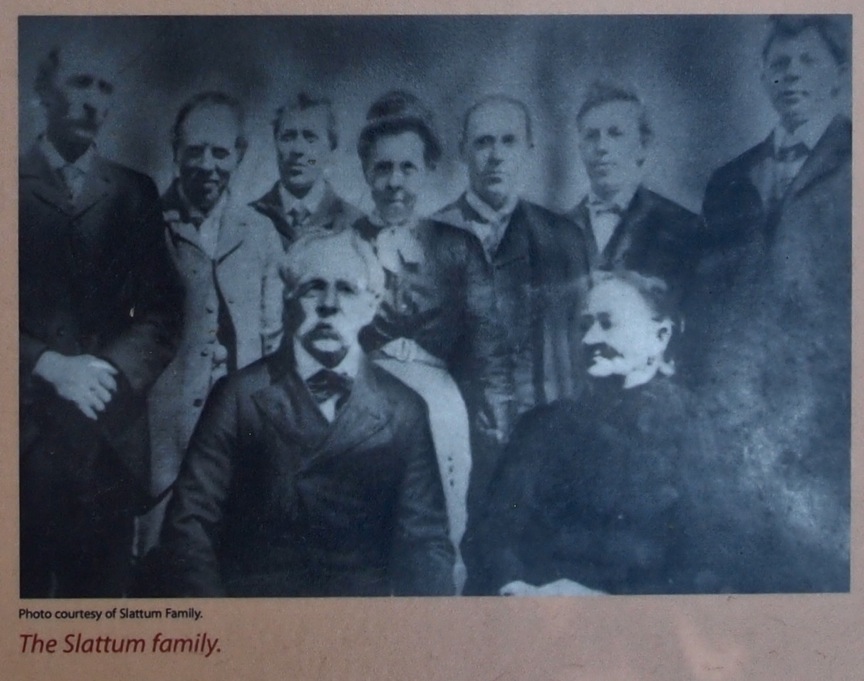
As the public historical signage said, this cabin was built in 1879 by Norwegian immigrant Theodore Slattum, and he originally hailed from Christiana, Norway. He immigrated to Fillmore County, Minnesota in 1870, and he and his wife, Jorgine, relocated to the Sheyenne River Valley in 1879, where they built this cabin. They also raised nine children in the cabin (they modified the original cabin from what it looks like here in the photos). In 1945, this cabin was moved to the Fort Ransom Historic Site, and then moved back to this original location at some point around the turn of the 20th century (this is likely why the description of the cabin’s provenience is what it is within Digital Horizons/NDIRS; and this is also an example of how history informs archaeology, and not the other way around).

The Slattum family, this photo from the public historical signage at the cabin site. Photo taken on June 16, 2013.

The Slattum family, this photo from the public historical signage at the cabin site. Photo taken on June 16, 2013.