Notes for Friday

A photo of Tumbleweed from yesterday. Tumbleweed is Harley's faithful friend.

A photo of Tumbleweed from yesterday. I thought I’d include a photo of this sweet nice dog, since almost everyone likes looking at photos of cats and dogs on the internet. Tumbleweed is Harley’s faithful friend.

Several things have been happening in the last week, so I thought I’d jot them down here.

1) Our dear friend Harley passed away, and funeral services will be held tomorrow (02/15/2014), Saturday at the Congregational United Church of Christ in Valley City, Barnes County, North Dakota. If you’re in the area we hope to see you there. Also, we know Harley cared deeply about farming. He also received an English degree back in the day from Jamestown University. It got me thinking about how we need more farmers with English or Humanities degrees in this country, and on this planet. I can elaborate later.

2) Minot State University invited me to give a talk on February 24, a Monday, on institutional memory and how that has shaped why and how we know what we know today about the US-Dakota Wars in North Dakota, with allusions of course to Minnesota and South Dakota. The talk will be held in the Aleshire Theatre starting at 7:00PM. I’ll speak at length for a while, showing slides of my established and latest research and such. There will also be a give-and-take session, since the idea behind being informed is to always allow oneself to be informed.

3) Dickinson State University also invited me to give a talk, and that will take place on March 7th, Friday afternoon. Specifics on that are still being decided on. So more on that later.

4) The sun is coming up on another cold winter day on the northern Great Plains. And that feels good.


Harley McLain

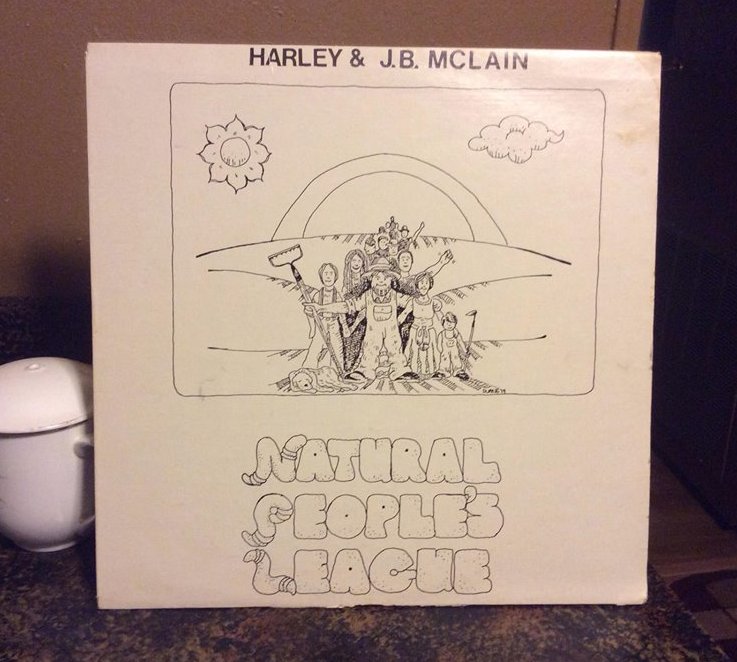
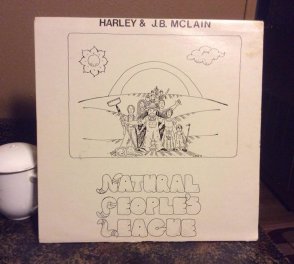
In 1979-1980, JB and Harley McLain (brothers) cut this wrote, played and cut this album in Hollywood. It appropriated the "NPL" acronym, but replaced the Non-Partisan League with the Natural People's League. Note the earthworms that make up the "NPL."

In 1979-1980, JB and Harley McLain (brothers) wrote, played and cut this album in Hollywood. It appropriated the “NPL” acronym, but replaced the Non-Partisan League with the Natural People’s League. Note the earthworms that make up the “NPL.” Photo by Darren King.

If you haven’t yet caught the passing of Harley McLain, here are some links on stories that The Bismarck Tribune, The Fargo Forum, and News Dakota have put together. Please take the time to read them. They are beautifully written. While I have only known Harley since 2012, it appears that the entire northern Great Plains has known him since at least the 1960s. This is testament to his beautiful soul.

I was thinking the other day about a photo of a younger Harley with his wife, Julie. In the photo Harley’s shirt read, “Question Authority.” He did that, of course. It made me think about how in Harley’s questioning of authority, he himself became his own author. In that, he believed in the state of North Dakota, and therefore the country and world (I’m convinced that he still does from the other side). He believed in it so much that he decided to speak up about a variety of issues, and with his particular charm and wit.

Tracy Potter, after hearing about Harley’s passing, remembered his good friend on Facebook. Tracy said,

Sad news today from Molly McLain. Her father, my friend, Harley McLain rejoined his beautiful wife Julie yesterday. Harley was a remarkable man, who had more influence on North Dakota with his guerrilla theatre approach to politics than many much more serious reformers. Out of his campaigns and legal action, North Dakota’s corrupt ballot structure (which Harley argued offended his “poetic sensibilities”) was ruled unconstitutional by Federal courts, giving us the modern, rotating ballot. Always fun, always interesting, and always the kindest, gentle heart. I’ll miss him.

Harley McLain, circa 2007.

Harley McLain, circa 2007. Photo by Logan Hanson.

Today and tomorrow and forever, we will continue recounting Harley stories and memories. They bring simultaneous tears and laughs. Harley impressed himself upon anyone who was within his range. Darren King, a slaying upright bassist and family friend of the McLain’s, said:

A couple of days ago North Dakota lost one of its great dreamers, political activists, songwriters, fathers, and forward thinkers. I look forward to jamming again someday Harley. Thanks for helping to raise me.

In conversations around the McLain family table last night, between JB McLain, Chris McLain, Molly McLain, Mira McLain, Matthew McLain, and Ben Simonson, we figured out that Harley, during his life, hung out with Allen Ginsberg, Hunter Thompson, potentially Keith Richards (happening into one another on some boat in the Mediterranean), and for a short time he lived down the street from one if not all of the Ramones. And these were just the individuals we pegged around the table last night. The list by no means is exhaustive.

The most important thing about Harley is that he would treat these individuals the same way he would treat anyone else: without pretension, with respect, and ready for insight and humor and give-and-take conversation. Harley loved people. He loved individuals. If you look at someone who knew Harley, you’re looking a bit at the man himself.

Bless you, Harley McLain. Thank you for the wonderful family you and Julie gave to North Dakota. And to use a bit of Scandinavian subtlety, I’m particularly fond of Molly.

From a sunny Valley City, North Dakota, Aaron L. Barth.


Bakken Oil Train Photo

A photo from a couple weeks ago of a BNSF train facing west with Bakken oil cars in tow. This was taken just east of Moorhead, Minnesota. If the train cars are going east, they are carrying oil. If they are going west, they are returning to pick more oil up.

Trains


Historian Frank Vyzralek

So I’m sitting here at my desk this Saturday morning looking up some more details of the crop lien system of farming from the 1860s to 1890, and reading academic articles on the origins of agribusiness. I’m doing this in preparation for this coming week’s lectures that deal with a period of American history from 1890-1900. I’m engaged in my usual over-preparation, which I’m fine with. In fact, I find that as my over-preparation intensifies, the glorious edgy feeling one gets before lectures and presentations begins to ebb.

But even earlier this morning I caught an article in The Bismarck Tribune on the passing of Frank Vyzralek. Sometimes it’s okay to stop reading articles on the crop lien system of farming so as to direct that energy toward thinking about the passing of a friend and colleague. So I thought I’d type out just a couple immediate thoughts that came to me after reading about Frank this morning.

  • In doing my own research at the State Historical Society of North Dakota over the years, it was common to see Frank — long white hair and long white beard — at the microfiche reader, with laptop, typing out notes for one area of research or another.
  • On occasion, I would bump into Frank at a local watering hole in north Bismarck. I think the last conversation I had with Frank happened years ago, this about Joseph Henry Taylor. I remember Frank sipped a glass of red wine as we traded Joe Taylor points back and forth.

Thanks for all the history, Frank. Thanks for reminding us how unique a place North Dakota was, and is.


Three Dakota Words

Every Tuesday and Thursday afternoon I sit in on and learn a bit more of the Dakota language with Dr. Clifford Canku (pronounced “chan-ku”), Dakota elder and professor of Dakota language at North Dakota State University (NDSU). The classroom setting is both structured and informal, and it has been incredible thus far. By this I mean eye-opening, as in language is the epitome of culture. It is the way we perceive of and describe our world. To understand a culture and its history requires us to understand the language. It’s a basic rule but it bears repeating.

On Tuesday Canku instructed our small student squad to select 10 Dakota words in which non-Dakota/Lakota/Nakota speakers have difficulty enunciating. Here are three from my selection, all of which begin with the letter č. This is a hard c, making a kind of “ch” noise. Also, you can always consult and listen to Canku going through the Dakota alphabet at this link here, too.

čáǧa (v.n.), to freeze, or become ice.

čantiŋ’za (v.n.), to be of good courage. — side note: this might be required to endure the season of čáǧa.

čanza’ni (v.n), to be well in heart; to be tranquil; or of good cheer. — again, see side note above.


The Barton Benes Collection in North Dakota

Barton's recreated apartment at the ND Museum of Art in Grand Forks, North Dakota.

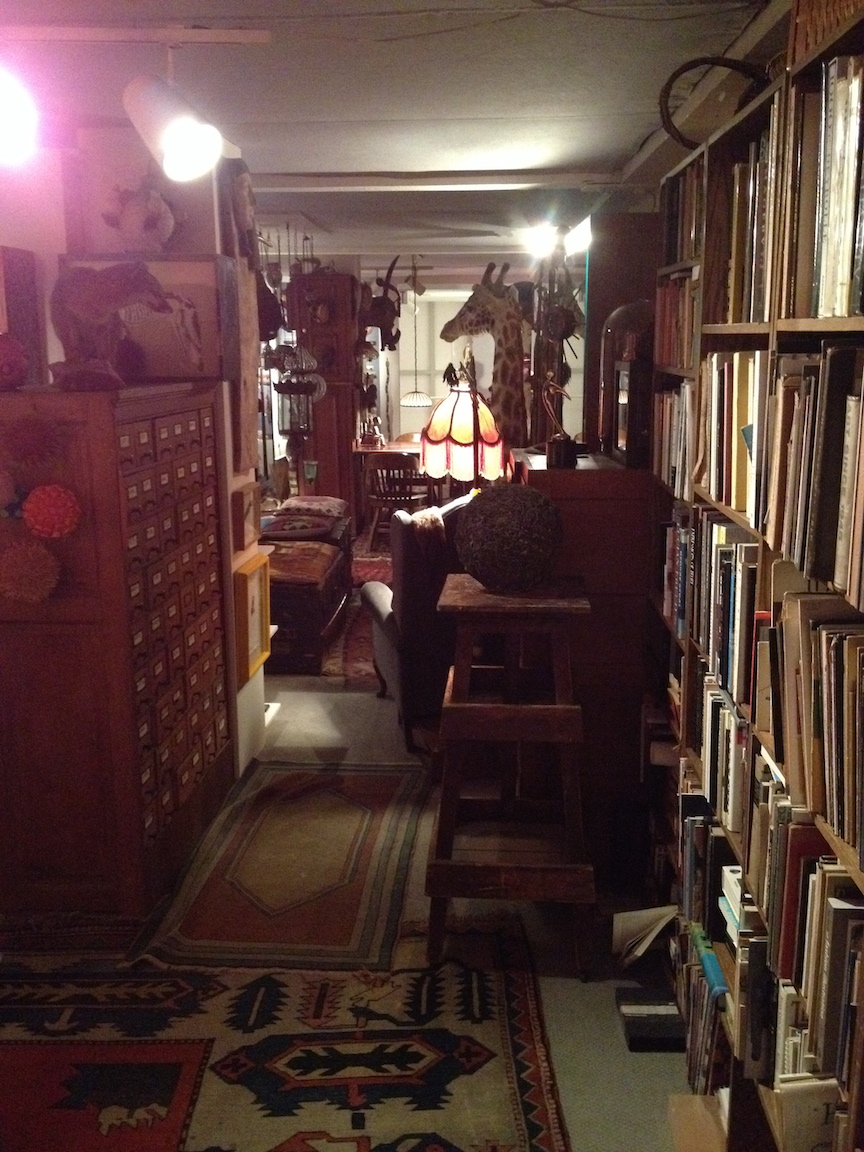
Barton’s recreated apartment at the ND Museum of Art in Grand Forks, North Dakota.

On June 18, 2012, Paul Vitello of The New York Times ran a story on the passing of Barton Lidice Benes (11/16/1942-05/30/2012), a New York sculptor who appropriated antiquarian methods of museum display into his finished works of art. Indeed, a source of inspiration for any historian, art historian, archaeologist, or punk archaeologist, this last Saturday I had the chance to visit his collection at the North Dakota Museum of Art, University of North Dakota, Grand Forks. In June 2012, Vitello said in his New York Times piece,

The North Dakota Museum of Art in Grand Forks, which in the early 1990s showed controversial artworks of his [Barton’s] that no other galleries would, plans to build a replica of his apartment and furnish it exactly as Mr. Benes left it.

So that’s what I did, along with Molly, J. Earl Miller, and Rick Gion. We had a chance to sit next to and chat with J.D. Jorgenson and Jimmy. J.D. is a Bismarck native who studied art at North Dakota State University in Fargo, and who now has a straw bale pottery barn in St. Joseph, Minnesota. Some day I will build a straw bale shop. That is what I decided after chatting with Jorgenson. Artists are excellent sources of inspiration, or firing up that spirit within humanity.

Barton appropriated antiquarian museum display methods into his works of art.

Barton appropriated antiquarian museum display methods into his works of art.

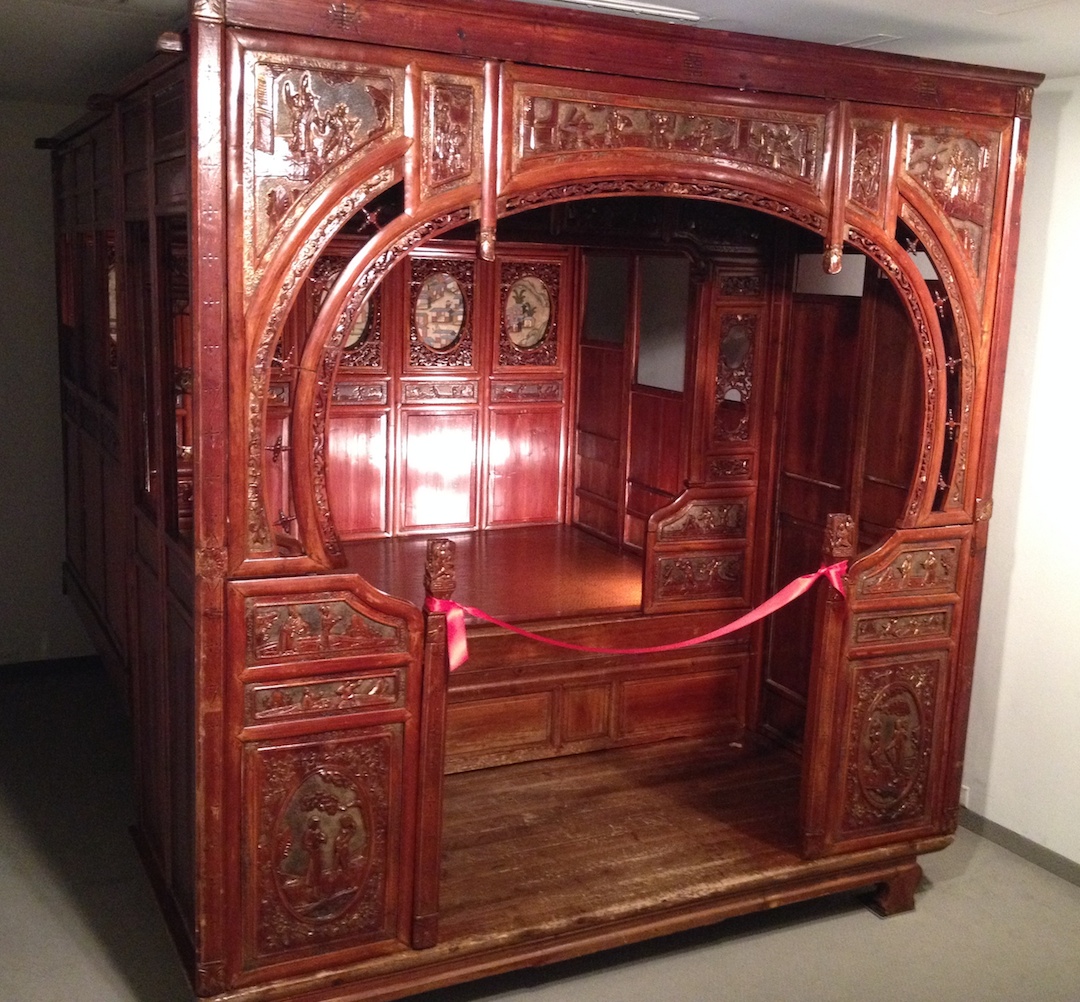
Here are a couple snap shots of Barton’s collection at the North Dakota Museum of Art, including an opium bed which, in turn, is a reflection of the 19th century imperial struggle between Great Britain and China. Note the other items, though, and how they are displayed. In a short documentary of Barton, he said that as a child he was mesmerized by museums, the artifacts, and how they were displayed. You can see that in his art as well. Another memorable moment from the documentary was when Barton pointed to a piece of furniture in his apartment, that of which he salvaged from a dumpster. Paraphrasing, he said something to the effect of, “You can’t find stuff like this in dumpsters anymore.”

An opium bed Barton purchased and had in his flat. This is now on display at the ND Museum of Art in Grand Forks, North Dakota.

An opium bed Barton purchased and had in his flat. This is now on display at the ND Museum of Art in Grand Forks, North Dakota.

Art is meant to provoke, to incite, and to get people talking. As an artist, Barton accomplished that.

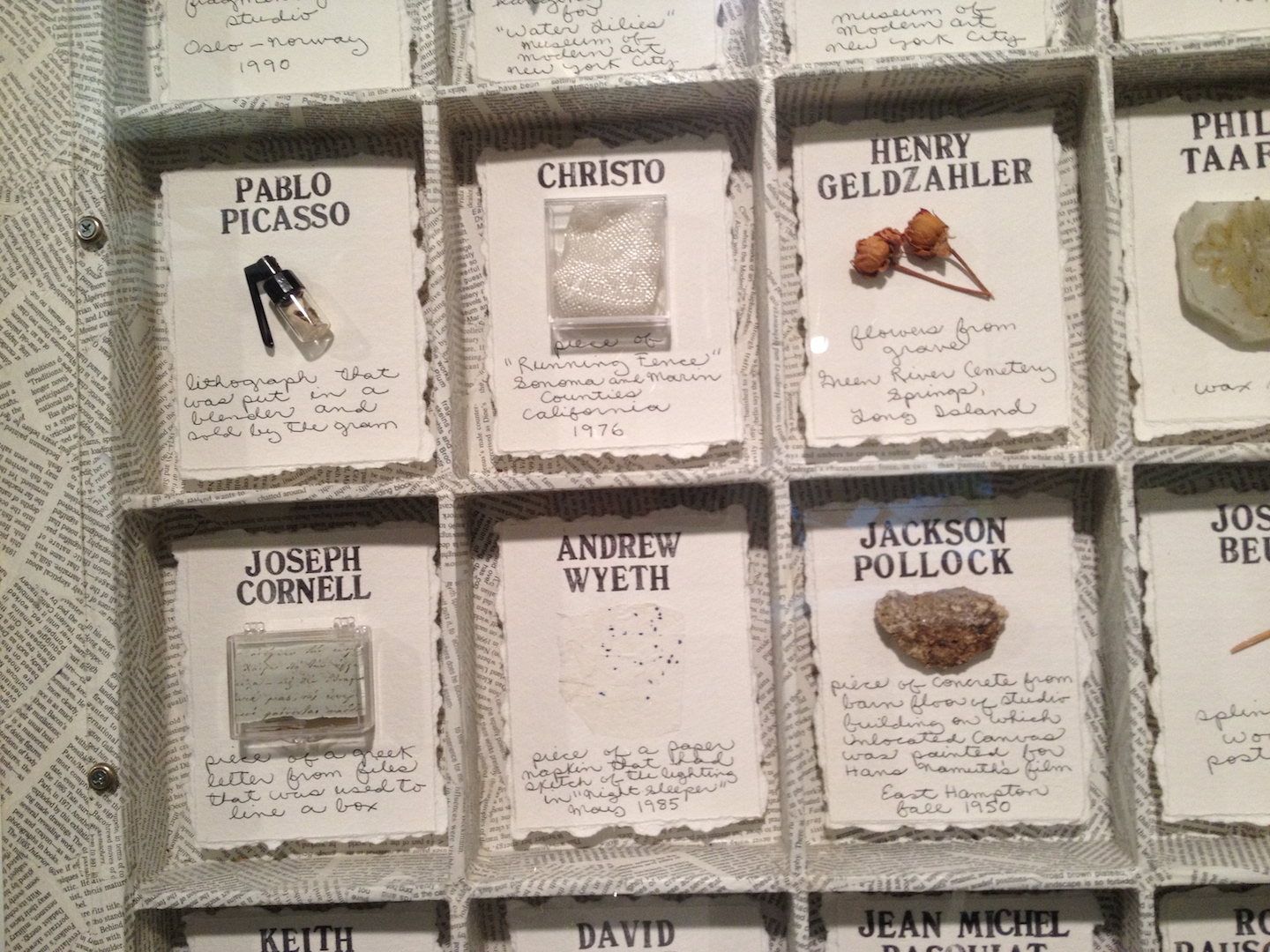
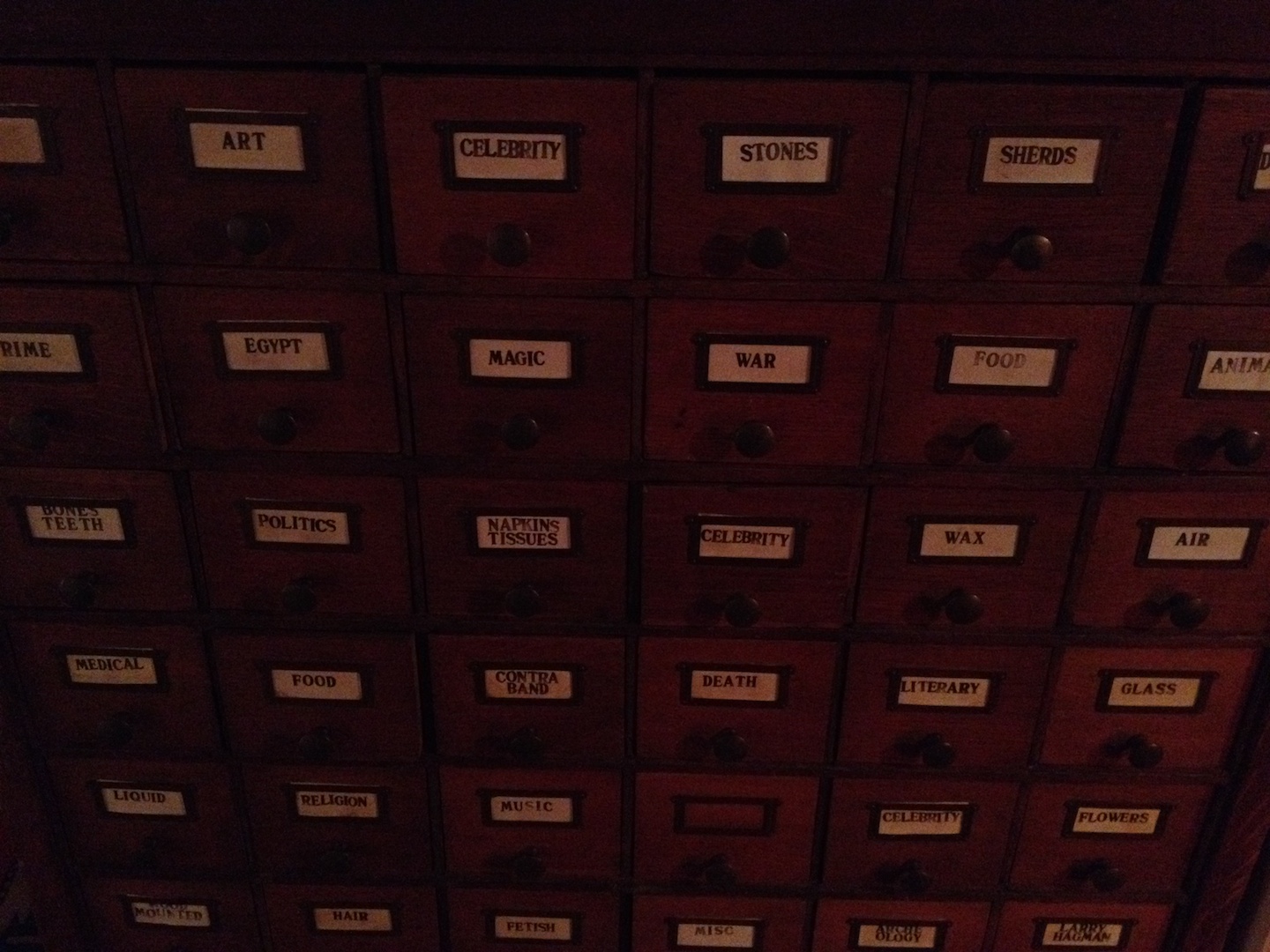
One of Barton's filing systems.

One of Barton’s filing systems. Take a close look at the subject titles.


Books and Boots

I call this photo, "Books and Boots."

I call this photo, “Books and Boots.”

Walking is fun no matter what season. It helps clear the head, and we get to see the world at a slower pace (meaning not from a car). Some thoughts on that here and here


New Americans from Sudan

First Sudanese Lutheran 1Last Sunday, as we on the northern Great Plains were enjoying our 357th blizzard of the winter, Molly and I drove down to southern Fargo to oblige an invite from the First Sudanese Lutheran Church of Fargo, North Dakota. We went to chat with this recently-arrived growing group of New Americans. They put out a huge spread of Sudanese food, too, prepared by no less than 3 Sudanese mothers the night prior.

After the benefit supper, on the drive home, I couldn’t help but think about the processes of global population movements in world history. This invariably led me to think about our grandparents and great grandparents and great-great grandparents who poured into the United States in the 19th century: think today about navigating immigration (the New American Sudanese are here because they are getting away from a lot of this, and a cease-fire update on that here too), finding transportation, learning about car and health insurance, learning a new language, and getting up to speed with the societal customs inherent to America’s increasingly industrial society, all while trying to keep a foot in the old ways too (this is why today we see things like the Sons of Norway, German-Russian, and Three Crowns organizations).

Some of the New Americans expressed an interest in future home ownership, and the gears in my brain started moving: “Who might be able to chat with these folks about the processes and options of home loans and real estate?…” These folks have jobs and they want to continue raising families. Homes are important for going about this. I was so wrapped up in conversation and getting filled up with Sudanese food (the delicious Sambusas were flowing like wine) that I didn’t get a chance to take a photo. But I do have this handy 2013 year-end reflection that I picked up.


Welk Homestead and German-Russian Interest

The spike in blog visits resulted from a post on the State Historical Society of North Dakota's acquisition of the German-Russian Lawrence Welk homestead in Emmons County, North Dakota.

The spike in visits to my personal blog resulted from a post on the German-Russian Lawrence Welk homestead in Emmons County, North Dakota.

Just a couple days ago I looked at the blogging stats for a short piece I did on the Welk Homestead, this posted on January 21, 2014. I know that I’m interested in local history the world over, meaning that wherever I go, I want to know what happened before. But I also know that just because I’m interested in something doesn’t mean others are interested in it too. In the case of the Welk Homestead, though, and in the case of this blog (which, at this point in time, has a regular audience of 46), the number of views skyrocketed when I made some historical links between Welk and the German-Russians, and the State Historical Society of North Dakota acquiring the homestead.

Over at NDSU’s Center for Heritage Renewal and the Heritage Trails Facebook page, we’ve been chatting about the styles of various German-Russian vernacular architecture in North Dakota. On January 21, I posted my Welk/German-Russian blog to the Heritage Trails Facebook page, and this generated some feedback. It went like this, a comparative conversation between a German-Russian home north of Kulm, LaMoure County, southeastern North Dakota and that of the Hutmacher Complex just southwest of Killdeer, Dunn County, west-central North Dakota.

Janinne Paulson: “Great photo, Aaron!”

Suzzanne Kelley: “Interesting that this [Kulm] family added the L-porch, as did the Hutmachers [near Killdeer]. We’ve found that the porch corners created problems for maintaining the roof structure; here, they have TWO places for problems with erosion from convergent lines of run-off. Just wondering how that worked for them.”

Aaron Barth: “Was the L-porch used as a separate mud room, and perhaps as the initial entry to keep the cold out of the main home in the winter?”

Suzzanne Kelley: “Yes, which I suppose is what made the addition not only viable but necessary, despite the pitfalls of seaming an addition onto the original structure.”

Aaron Barth: “Not freezing to death is probably better than a leaky roof.”

Tom Isern: “OK, I just now studied this photo, and it’s evident this [Kulm] dwelling has an earthen roof, like the Hutmacher house, except this one uses some milled lumber for rafters. Also, it appears to me the earthen roof is composed of sods. This is different from what we tried with restoration of the Hutmacher roof. Recently we acquired evidence indicating that sods indeed were used in the Hutmacher case. So now we have to explore that further, and, I suspect, recalibrate. Also, I think Suzzanne is being kind, as usual. I think the L built onto the long house is a design mistake, vernacular though it may be, sure to cause water problems eventually.”

Aaron Barth: “We need an NSF grant to let someone live in the Hutmacher and a German-Russian east Missouri River home for a year and a half. I’m only 23% kidding…”

Richard Rothaus: “TV series.”

The temps in North Dakota, while we were (and still are) blogging and social-media-ing about this, have been sustained sub-zero, described by international meteorologists as some kind of Polar Vortexing. We don’t let the weather discourage us. But it does make us think about how 19th century inhabitants of the northern Great Plains survived, perceived of, described and thrived during the winters. Earthen homes are excellent for this, though, whether Dakota, Lakota, Nakota, Mandan-Hidatsa, or German-Russian. Want to learn how folks survived in pre-industrial times? Listen to the local history.


Winterscape Driving

Winter Driving

Our view of winter driving before the sun set.

Typed out on Saturday, January 25, 2014:

Since Molly and I are driving in a borderline blizzard, at night, back from Bismarck to Fargo, and since she’s driving, I thought I’d type out some descriptions here while riding shotgun. We’re just passing Casselton, where the famous mushroom cloud rose up out of the northern Great Plains winterscape a little more than a month ago. It’s nearly pitch black here in the car, the only illumination coming from the buttons and dials on the dashboard and headlights from oncoming traffic in the northern, west-bound lane.

We’re keeping it at a steady 60mph, snow blowing thicker and thicker south-to-north across the road. More urgent travelers are passing us in the left lane. When they pass, they kick up the snow starting to drift in the left-lane, and it creates a kind of rooster tail that the wind immediately sweeps north. Beyond the interstate off in the prairie it is nearly pitch black. The illuminated billboards on the right side of the road emerge in the distance out of the blowing snow. As we approach they glow increasingly brighter. In this blowing snow at night, just as we pass the billboards, you can see how they create drift. As the wind hits the flat surface it swirls, and the blowing snow curls up over the top of the signage. All of this is brightened by the billboard flood lights.

On the radio is Garrison Keillor’s Prairie Home Companion. Of course, those of us who live on the prairie know Garrison gets his best material from our hour-to-hour reality. It’s good stuff. And we appreciate him for it.

We just passed I-94 Exit 343, and the lights of Fargo brighten, creating that orange pinkish hue through the blowing snow. This grows in intensity the closer we get. That you’re reading this blog entry means we safely made the Saturday night drive. Good weekend to you all.