Tag Archives: Great Plains

Gandolf the White Blizzard

It is the evening of January 11, 2013, and I am on the second floor of The Arts Center in downtown Jamestown, North Dakota. In the past couple days the Weather Channel and regional meteorologists have been psychologically preparing the public for the first intense blizzard of the year. The Weather Channel has subsequently named this blizzard Gandolf — yes, I’m serious. Originally I intended on making the Eisenhower Interstate 94 drive from Fargo to Jamestown after an NDSU departmental meeting concluded in the late afternoon, but eureka rattled through my brain earlier in the morning and I thought it would be better to make the drive then and there. My hope was to beat the thermometer from Fargo to Jamestown, knowing that the light rain would turn to ice as the temps dropped below 32 F. And if I didn’t make it to Jamestown, how would I be able to attend the art gallery reception for Walter Piehl on Saturday evening with Molly at The Arts Center? Yes, I needed to act.

Ice forming on the windshield and radio antenna during the early stages of Gandolf the White Blizzard.

Ice forming on the windshield and radio antenna during the early stages of Gandolf the White Blizzard.

The drive turned into a white-knuckled affair, a ’93 Chevrolet S-10 rear-wheel drive pickup providing joyous stress. I found that by keeping the speedometer at no more than 40mph, the rear wheels would stay secure to the pavement. During the drive, I also thought about how author Chuck Klosterman killed off several main characters (spoiler alert!) with a blizzard in Downtown Owl, this piece of fiction set in a small town in rural North Dakota in 1984. Then I thought about the book, Children’s Blizzard. Then I tried to stop thinking such thoughts, and I continued driving.

Note: when driving in winter rainstorms that are turning to ice, there are two opposing thoughts that bash at each other in the brain. It goes something like this: after a driver is 30 miles into a 90 mile drive, and just after the rear wheels slip a little at 50mph (the pick up will jerk a bit), the driver considers two options: turn around and endure another 30 mile drive back, or press on and gain another 30 miles. In the long term, if the driver retreats and makes it back home, they will have logged 60 miles, which, essentially means one could have been 2/3s the way to the destination. So I pushed on. Would I end up sliding off the road and into the ditch? Stop thinking about these thoughts. I did, and I made it to my destination. My advice: don’t do this. Ever. Anyhow, the photo pictured above is what the windshield looked like in the early stages of Gandolf the Grey, this between 8:30AM-to-12PM in Cass, Barnes and Stutsman counties, North Dakota.
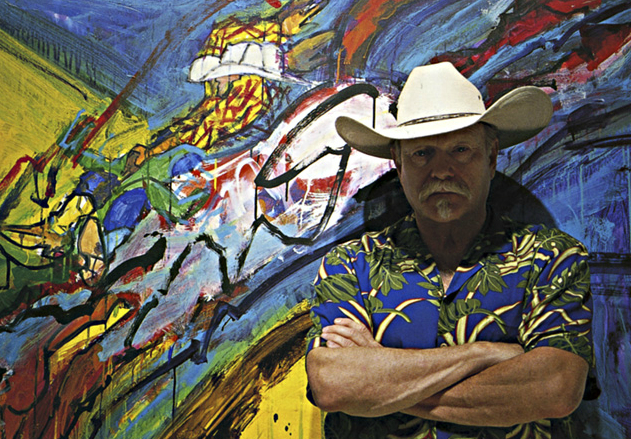
Walter Piehl and his art.

Walter Piehl and his art.

The below short video clip is an intensified Gandolf, when a winter rain storm receives more training to ultimately become Gandolf the White Blizzard. As I re-visit the video over and over from a historic building in downtown Jamestown, North Dakota, I can’t help but thinking how 100 years ago an individual in the building would have heard similar sounds from this very vantage. Note, for example, the subtle chug-chug-chug in the audio, this coming from a train just a block north. The large grain elevator (not visible) is located along the tracks. Yup, 100 years ago it was possible during a winter blizzard to hear the same blasts of shivering whispers blow through the small cracks in commercial brick construction, and also hear the thump-thump-thump of the iron horse on the Northern Pacific Railroad.  Historically, it is important to respect White Blizzards — lest they teach us mortality instead of just humility.

Leaning Towards Great Plains and World History

The final chapter in Mischa Honeck’s 2011 work, We Are the Revolutionists: German-Speaking Immigrants and American Abolitionists after 1848 is titled, “A Revolution Half Accomplished: Building Nations, Forgetting Emancipation” (Athens & London: The University of Georgia Press, 2011). To capture the opening point of this chapter title, a Thomas Nast cartoon illustration is included from a November 20, 1869 issue of Harper’s Weekly, “Uncle Sam’s Thanksgiving Dinner.” The illustration shows a global thanksgiving table with a “Universal Suffrage” centerpiece. Surrounding the table are representative cartoons from a variety of ethnicities, including African-American, Chinese, Russian, Native America, and so on. This cartoon does not capture the realities of U.S. policy toward Native America at that time, but it does reflect Nast’s personal ideals. This tension between the ideal (or the way things ought to be) and reality (the way things are) is a crucial element to setting down a good piece of history, and in this vein Honeck delivers.

During the American Civil War, Anglo-America battled with one-another over abolition and that “peculiar institution.” This struggle between brothers and cousins is captured by the ever-growing and all-important industry that is Civil War historiography, nostalgic Ken Burns documentaries notwithstanding. If wanting to think about the Civil War in the context of the Atlantic World, or in the context of Global or World History, however, Honeck is where to find it. Numerous immigrants arrived to the United States in the years preceding the Civil War, and Honeck’s history focuses on the German element.

By the late 1840s, population dynamics contributed to the upheaval of existing institutions throughout Europe, and political factions in Germany eventually induced the revolutions of 1848 — the revolutionaries had these crazy ideas about democracy and voting on their brains. On the ground throughout the cities of

A German lithograph from 1849 depicting the Aristocratic crackdown on the democratic revolutionaries of 1848. Note the coast of western France, and the two boats loaded with Europeans preparing to cross the Atlantic.

Europe, street fighting was the norm. In order to escape this street fighting and the Aristocratic reaction to the democratic requests, individual Germans started chain migrations, or emigrations out of Germany and into the United States. By the 1850s numerous pockets of German-Americans had began settling the Great Plains, including liberal German thinkers and the North American Turnerbund throughout the continent (New Ulm, Minnesota is an example of a free-thinking Turner Society settlement). There is a paradox with the arrival of German-American idealists to settle in territories and states throughout the Great Plains, though, and Honeck only hints at it (in his defense, though, his study is mainly concerned with the eastern 3/8s of the United States and the Atlantic World). That paradox is this: while German-Americans carried with them democratic ideals, their physical settlement on the Great Plains invariably contributed to the protracted displacement of indigenous populations.

Nonetheless, many German-Americans became part of the Union Army fighting force during the Civil War. Honeck references the words of the radical Eduard Schläger who in 1871 noted how German-Americans had abandoned those — ahem — silly notions of egalitarianism and gained, “…a growing respect for ‘Anglo-American business methods,’ particularly the disagreeable ones, such as ‘the greed for the dollar.'” Schläger was particularly grumpy, in part because he felt philosophical foundations were being undermined once a little or a lot of money was put on the table. Honeck concludes with how German-America appropriated ideas of industrial capitalism, and this is a ground-level view of how Max Weber’s nineteenth- and twentieth-century industrial capitalism eclipsed Adam Smith’s eighteenth-century notions of moral sentiments, empathy, sympathy, and compassion. We are well aware what happened throughout the Minnesota River Valley in August of 1862, from Fort Abercrombie, Dakota Territory to New Ulm, Minnesota and everywhere in between and on the periphery (including Mankato, Minnesota, the site of the largest mass execution in United States history). Native America would indeed feel the brunt and shock-wave of this industrial capitalism throughout the Great Plains, and there is definitely more work for historians and archaeologists to carry out. In this way much of the past has yet to be considered and written. Honeck’s concluding chapter is an excellent starting point to push scholarship in needed directions, at least as it concerns how Anglo- and German-American ideals gave way to the nation-making processes within the continental interior during and following the American Civil War.


Thoughts on Global Archaeology

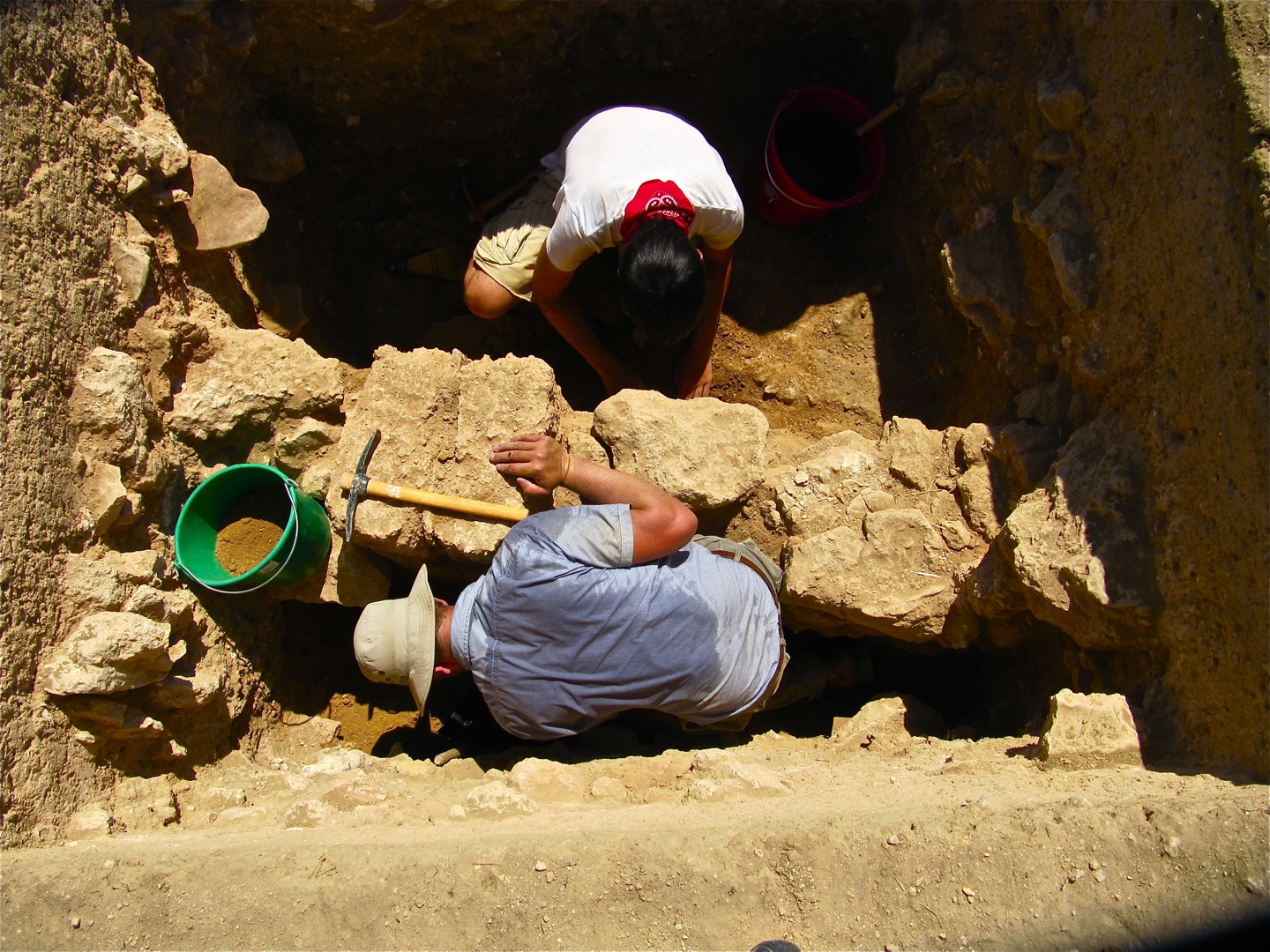
On June 5, 2012, my Pyla-Koutsopetria Archaeological Project excavation team hit glorious bedrock (something just over or around 1.8 meters below ground surface). Here is what happens when you sink a hand pick into clay and hit said bedrock. Reverberations shoot up and in through the handle, up to the hand, all while simultaneously returning audible reverberations produced by said metal pick striking bedrock (also known as “that sturdy clink”). The ear drum will pick this up and trigger cognition in a certain direction. It will induce a New World northern Great Plains’ers’ eyes to widen. Note: if you are privy to Native America and its history (and you always should be), you will arguably not regard yourself as from the New World (in academia, we sometimes refer to this as post-colonialism). However, when you are in the Mediterranean, you will need to somehow communicate differences from one side of the Atlantic to another. “Damn that Columbus.” Say this while smiling. If you carry Scandinavian historical identity with you, remind Columbus fanatics about this Smithsonian web-link. We all need balance.

The wall emerges. It’s okay to vacillate between the late Lewis Binford’s processualism and Ian Hodder’s post-processualism while uncovering subsurface Hellenistic architecture at this stage in the game. Say to yourself, “What does this all mean!?”

Anyhow, and upon hearing this bedrock clink, thank the archaeological comrade to your immediate east. “Thank you for also hitting bedrock.” Then pull the pick up out of the earth, swivel the handle 180 degrees, grip it again, and bring back the right arm to its physiological apex. When at its entire apex swing downward, coordinating the arm with gravity to aim the scraper end where the pick left off. Note: you will hear a similar clink and feel the handle vibrate again. With the pick lodged in the dirt and resting on the bedrock below, extend the free left arm toward the upended pick, enclose the left hand around the topside of it, and then drag the handle toward yourself with your right while pushing down on the backside with your left. Essentially, pull the scraper in to the body. Do this repeatedly, moving across the horizontal stratigraphy, only stopping to wipe the sweat from the brow (it otherwise will get into your eyes and produce a slight sting in the corners). This, in turn, will ultimately induce northern Great Plains and Old World historic and archaeological comparative thoughts.

No matter the location on the planet, archaeological excavation units are essentially closed quarter laboratories, where theory and data are in constant exchange with one-another. There is the material culture that continuously emerges from below, inanimate objects from a bygone age (note: do not ever, ever, refer to skeletal remains as “inanimate objects.” You will deservedly be destroyed by the present). These objects carry and reflect the imprint of humanity. Know them. Respect them. They are from civilizations and cultures that pushed in certain directions for an infinite amount of reasons. While in the excavation unit, thoughts will continue, at least when bounced off the word culture (this word and idea re-popularized by Fernand Braudelin the 20th century).  This latter word, culture, is analogous with the word cult (and even agriculture, and monoculture), or the process of doing things together and in a particular direction. These are some thoughts that will rip through your brain.

Hellenistic Imagined Community (name-dropping thanks here to Benedict Anderson). Map taken from U of Texas web-link: http://www.utexas.edu/courses/macedonia/maps_hellenistic_kingdoms_.htm

In addition to this, your archaeological physiology will be in constant exchange with meteorology and the weather. This may be reflected in the saying, “If you can’t stand the heat, then get out of the excavation unit.” You will be uncertain how warm it has been getting at the Vigla site on Cyprus — “What does this Centigrade mean? And why can’t the world just get on board with Fahrenheit? What does it all mean?!” Never mind all of these thoughts. Keep them to yourself. If you know the sun is going to be up and about, definitely wear a brimmed hat (sombreros have been suggested), collars if you can, sunscreen for certain. If your shirt is in its second day of rotation, you may take offense at your own odor about mid-afternoon of that second day. It’s okay to announce this to your crew. Be calm in your tone, though. “I am taking offense at my own body odor. I just wanted to announce that.” In the correct context, all of this will lighten things up a bit.

But back to this exchange in the excavation unit, the one that is set down on top of a 3rd century BC Hellenistic site. As the fortification wall grows up out of the ground (you’re excavating around it), you will begin admiring the mason who some 2,300 years prior chiseled these ashlar blocks and roughed out stones here and there to assemble this wall. “Is it a partition wall? Is it one phase of an exterior wall? What’s with all the military-like artifacts we keep coming down on within these walls? MAKE SENSE OF ALL THIS, DAMMIT!!!” You’re brain will think these things, a kind of psychological inversion into itself. After climbing out of the test unit, scribble a distilled and filtered variation of these thoughts down in the subjective note section of your excavation unit forms. Use big words here and there. They tend to be more timeless than relativistic lay-terms. Also: a slight breeze may push up over the plateau and evaporate the sweat out of your drenched shirt. Be sure to say to the crew, “Don’t come out of the excavation unit: it’s cold up here, something like 90 degrees Fahrenheit, or whatever,  and you’ll catch a chill and perhaps your death. Stay down and warm in the breeze-less 90+ degree excavation unit.”

As mentioned above, excavation units can become cramped. But this doesn’t matter because you’ll have kept the bigger idea and picture in mind. The mind convinces the body that an inevitability is at stake: we will finish this excavation unit, record it properly, and be satisfied with questions we answered, and the new questions generated by the unanticipated finds — happens every time.

While in the western portion of the excavation unit and while facing north, you will have to bring the pick down close to the emerging foundation wall. This will invariably bring your knuckles into direct contact with the said foundation wall. With one repeated swing after another, your knuckles hitting the wall is ultimately a game of chance and odds. At some point they will scrape the wall. When this happens, you’ll immediately think of the epilogue Tom Isern set down in Prairie Churches. Tom was re-roofing a prairie church, and he maneuvered in a way on the ladder that was in discord with gravity, and amazingly he captured himself, but only after dragging his forearm across the said church roof. One imagines that a bit of Tom, at least the DNA from his scrape, was set into this church roof. Similar situation when your knuckles whack and scrape the side of subsurface Hellenistic architecture in the Levant. You’ll see a dash of blood and think, “Well, there it is. Better take a picture and Web 2.0/Digital Humanities this thing on the Internets…”